Items related to Wooroloo
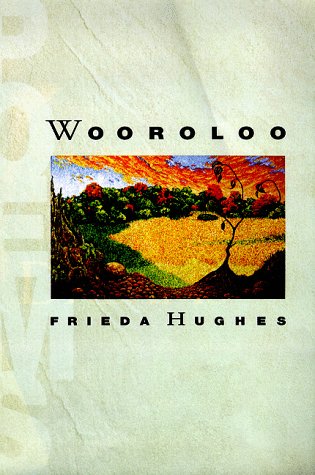

"Wild oats pale as peroxide lie down amongThe bottle brushes. A beaten army, bleaching.Life bled into the earth already, and seeds awaiting, Stiff little spiked children wanting water. . . ."
Welcome to the meticulously observed world of Frieda Hughes. It is a world of tangible materiality constantly on the brink of change, a world populated with foxes and fire, fathers and lovers, mothers and birdmen--a world that is ultimately combustible, fragile, fearsome, and elegiacally beautiful. Hughes maps the landscape, both within and without, in language possessed of an almost painterly sensitivity and a sublime mastery of craft. The self she depicts is one who is tested by loss, danger, betrayal, and abandonment, yet one who is transformed through experience into a world beyond nihilism and despair: a place that makes possible truth, strength of character, and the redemptive powers of love.
Though a writer of unusual literary pedigree, Frieda Hughes is first and foremost an original voice, and Wooroloo foretells what is certain to be an important body of work from this exquisite literary artist.
"synopsis" may belong to another edition of this title.
Review:
What to make of a poem called "Dead Cow" that begins: "Balloon-cow at roadside/Offers up her odour/To the flies that skate/The currents of her openings"? This collection of poems by Frieda Hughes contains many poems about animals and viscera. In addition to cows, there are sheep, foxes, spiders, birds, ferrets, fish, giraffes--even a walrus; there are also poems about hysterectomies and cesareans, unhappy marriages and, underlying them all, references both stylistically and thematically to Hughes's famously unhappy parents, Sylvia Plath and Ted Hughes. Her poems borrow her father's images and her mother's preoccupations--Plath's difficult relationship with her mother, for example, is passed on to the next generation in "Granny": "You loved me not, just saw/A copy of the face/You gave birth to/Wanted to catch it without warning/Not like last time/When it slipped away for burial. Defied you." Where these poems are strongest is in Hughes's powerful use of visual imagery--not surprising, since she is an award-winning painter. A line such as "She is sticks of seen-through blue/And pale yellows of skin" is evocative, indeed. Taken on its own merits, Wooroloo is problematic poetry; read as a codicil to Hughes's parents' work, it makes for an intriguing family artifact.
About the Author:
Frieda Hughes, daughter of Sylvia Plath and Ted Hughes, is a poet, writer and painter. She has published five poetry collections and seven children's books and was The Times poetry columnist. She regularly exhibits her paintings in London and at her private gallery in Wales.
"About this title" may belong to another edition of this title.
- PublisherHarper
- Publication date1998
- ISBN 10 0060192712
- ISBN 13 9780060192716
- BindingHardcover
- Edition number1
- Number of pages80
- Rating
Buy New
Learn more about this copy
US$ 54.27
Shipping:
US$ 4.00
Within U.S.A.
Top Search Results from the AbeBooks Marketplace
Stock Image
Wooroloo
Seller:
Rating

Book Description Hardcover. Condition: new. New. Fast Shipping and good customer service. Seller Inventory # Holz_New_0060192712
Buy New
US$ 54.27
Convert currency
Stock Image
Wooroloo
Seller:
Rating
Book Description Hardcover. Condition: new. New. Seller Inventory # Wizard0060192712
Buy New
US$ 56.17
Convert currency
Stock Image
Wooroloo
Published by
HarperCollins,, NY:
(1998)
ISBN 10: 0060192712
ISBN 13: 9780060192716
New
Hardcover
Quantity: 1
Seller:
Rating
Book Description Condition: new. Seller Inventory # FrontCover0060192712
Buy New
US$ 55.70
Convert currency
Stock Image
Wooroloo
Seller:
Rating
Book Description Hardcover. Condition: new. New Copy. Customer Service Guaranteed. Seller Inventory # think0060192712
Buy New
US$ 55.76
Convert currency
Stock Image
Wooroloo
Seller:
Rating
Book Description Hardcover. Condition: new. Buy for Great customer experience. Seller Inventory # GoldenDragon0060192712
Buy New
US$ 68.29
Convert currency
Stock Image
WOOROLOO
Seller:
Rating
Book Description Condition: New. New. In shrink wrap. Looks like an interesting title! 0.65. Seller Inventory # Q-0060192712
Buy New
US$ 99.94
Convert currency