
Items related to The Gladiator (Secret History of Rome's Warrior...
Synopsis
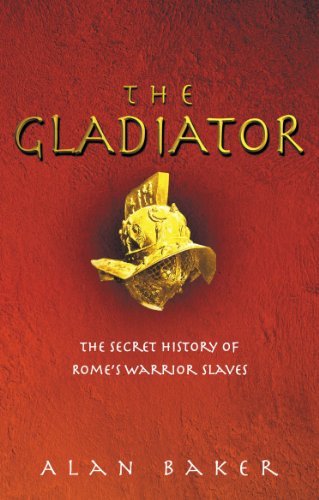
Alan Baker weaves an extraordinary, vivid picture of Roman life as his compelling and evocative history tells the story of Rome's most notable gladiators. They were condemned and feared by emperors, slaughtered and adored by the masses and worshipped by their female fans, yet their lives were invariably violently short. Whether their enemy was a starved tiger or a battle-hardened criminal, their numbered days were dark and bloody. Yet men gave up their wealth and freedom to become gladiators and noble-women gave up their positions to be with them. The Gladiator illuminates the extraordinary lives of Spartacus, Commodus, Eppia and others - bringing the same energy and passion to the page that Ridley Scott's cinematic triumph bough to the screen.
"synopsis" may belong to another edition of this title.
About the Author
Alan Baker was born in Birmingham in 1964 and studied English at the University of Reading.
From Publishers Weekly
In a lurid, sometimes sensational, tabloid-like account of Roman gladiatorial life, British author Baker (Invisible Eagle: The History of Nazi Occultism) offers an encyclopedic examination. While there were a few famous gladiators, such as Spartacus, the majority of these warriors were unnamed slaves, criminals or prisoners of war whose lives were nasty, brutish and short. Baker points out that there were different groups of gladiators, each with its own style of fighting. The Thracians, for example, used a round shield and sword, while the retiarii (net-men) used a net and trident spear. The games themselves were sponsored by the emperor, whose popularity was often secured by the magnitude of the contests he hosted. Using historical accounts of various games, Baker imaginatively re-creates a day at the Coliseum in Rome, which included a series of fights between criminals one armed, the other defenseless staged in a round robin manner until only one criminal was left standing; the victor was then killed unceremoniously by a Roman guard. The afternoon brought on the great battles between the "trained" gladiators, like the Thracians and the retiarii. The blood and dust from one combat had barely cleared before another began. Although they reflected the virtue of killing and facing death with the courage and dignity that dominated the Roman Empire, gladiatorial contests came to an end in the fifth century, when Christianity became the official state religion and when the empire itself was weakening. Baker builds upon an already established wealth of scholarship e.g., Michael Grant's Gladiators (2000) as he offers a lively, voyeuristic glimpse into the ancient world. Fans of the Ridley Scott movie won't be disappointed.
Copyright 2001 Cahners Business Information, Inc.
"About this title" may belong to another edition of this title.
Search results for The Gladiator (Secret History of Rome's Warrior...

Seller Image
The Gladiator: The Secret History of Rome's Warrior Slaves
Seller: WeBuyBooks, Rossendale, LANCS, United Kingdom
Seller rating 5 out of 5 stars

paperback. Condition: Good. Most items will be dispatched the same or the next working day. A copy that has been read but remains in clean condition. All of the pages are intact and the cover is intact and the spine may show signs of wear. The book may have minor markings which are not specifically mentioned. Seller Inventory # rev2357151598
Buy Used
US$ 1.51
US$ 6.94 shipping
Ships from United Kingdom to U.S.A.
Ships from United Kingdom to U.S.A.
Quantity: 1 available
Seller Image
The Gladiator: The Secret History of Rome's Warrior Slaves
Seller: WeBuyBooks, Rossendale, LANCS, United Kingdom
Seller rating 5 out of 5 stars
paperback. Condition: Very Good. Most items will be dispatched the same or the next working day. A copy that has been read, but is in excellent condition. Pages are intact and not marred by notes or highlighting. The spine remains undamaged. Seller Inventory # rev6557793716
Buy Used
US$ 1.51
US$ 6.94 shipping
Ships from United Kingdom to U.S.A.
Ships from United Kingdom to U.S.A.
Quantity: 1 available
Stock Image
The Gladiator : The Secret History of Rome's Warrior Slaves
Seller: Better World Books, Mishawaka, IN, U.S.A.
Seller rating 5 out of 5 stars
Condition: Good. Pages intact with minimal writing/highlighting. The binding may be loose and creased. Dust jackets/supplements are not included. Stock photo provided. Product includes identifying sticker. Better World Books: Buy Books. Do Good. Seller Inventory # 42707118-75
Stock Image
The Gladiator: The Secret History of Rome's Warrior Slaves
Seller: AwesomeBooks, Wallingford, United Kingdom
Seller rating 5 out of 5 stars
Paperback. Condition: Very Good. The Gladiator: The Secret History of Rome's Warrior Slaves This book is in very good condition and will be shipped within 24 hours of ordering. The cover may have some limited signs of wear but the pages are clean, intact and the spine remains undamaged. This book has clearly been well maintained and looked after thus far. Money back guarantee if you are not satisfied. See all our books here, order more than 1 book and get discounted shipping. . Seller Inventory # 7719-9780091886547
Buy Used
US$ 4.19
US$ 5.51 shipping
Ships from United Kingdom to U.S.A.
Ships from United Kingdom to U.S.A.
Quantity: 1 available
Seller Image
The Gladiator (Secret History of Rome's Warrior Slaves)
Published by
Vintage/Ebury (a Division of R, 2002
ISBN 10: 0091886546
ISBN 13: 9780091886547
Used
Softcover
Seller: Goodwill Southern California, Los Angeles, CA, U.S.A.
Seller rating 5 out of 5 stars
Condition: good. Paperback Book. Seller Inventory # 4CJWRU000JMW
Stock Image
The Gladiator (Secret History of Rome's Warrior Slaves)
Published by
Vintage/Ebury (a Division of R, 2002
ISBN 10: 0091886546
ISBN 13: 9780091886547
Used
Softcover
Seller: MusicMagpie, Stockport, United Kingdom
Seller rating 5 out of 5 stars
Condition: Very Good. 1785102867. 7/26/2026 9:54:27 PM. Seller Inventory # U9780091886547
Buy Used
US$ 4.43
US$ 7.34 shipping
Ships from United Kingdom to U.S.A.
Ships from United Kingdom to U.S.A.
Quantity: 1 available
Stock Image
The Gladiator : The Secret History of Rome's Warrior Slaves
Seller: Better World Books Ltd, Dunfermline, United Kingdom
Seller rating 5 out of 5 stars
Condition: Good. Pages intact with minimal writing/highlighting. The binding may be loose and creased. Dust jackets/supplements are not included. Stock photo provided. Product includes identifying sticker. Better World Books: Buy Books. Do Good. Seller Inventory # 42707118-75
Buy Used
US$ 6.26
US$ 6.69 shipping
Ships from United Kingdom to U.S.A.
Ships from United Kingdom to U.S.A.
Quantity: 1 available
Stock Image
The Gladiator : The Secret History of Rome's Warrior Slaves
Seller: Better World Books Ltd, Dunfermline, United Kingdom
Seller rating 5 out of 5 stars
Condition: Good. Former library copy. Pages intact with minimal writing/highlighting. The binding may be loose and creased. Dust jackets/supplements are not included. Includes library markings. Stock photo provided. Product includes identifying sticker. Better World Books: Buy Books. Do Good. Seller Inventory # 42710790-20
Buy Used
US$ 6.26
US$ 6.69 shipping
Ships from United Kingdom to U.S.A.
Ships from United Kingdom to U.S.A.
Quantity: 2 available
Stock Image
The Gladiator: The Secret History of Rome's Warrior Slaves
Published by
Vintage/Ebury (a Division of R, 2002
ISBN 10: 0091886546
ISBN 13: 9780091886547
Used
Paperback
Seller: WorldofBooks, Goring-By-Sea, WS, United Kingdom
Seller rating 5 out of 5 stars
Paperback. Condition: Very Good. The book has been read, but is in excellent condition. Pages are intact and not marred by notes or highlighting. The spine remains undamaged. Seller Inventory # GOR001606734
Buy Used
US$ 5.85
US$ 7.49 shipping
Ships from United Kingdom to U.S.A.
Ships from United Kingdom to U.S.A.
Quantity: 2 available
Stock Image
The Gladiator: The Secret History of Rome's Warrior Slaves
Seller: Bahamut Media, Reading, United Kingdom
Seller rating 4 out of 5 stars

Paperback. Condition: Very Good. Shipped within 24 hours from our UK warehouse. Clean, undamaged book with no damage to pages and minimal wear to the cover. Spine still tight, in very good condition. Remember if you are not happy, you are covered by our 100% money back guarantee. Seller Inventory # 6545-9780091886547
Buy Used
US$ 4.19
US$ 9.34 shipping
Ships from United Kingdom to U.S.A.
Ships from United Kingdom to U.S.A.
Quantity: 1 available