
Items related to The Window
Synopsis
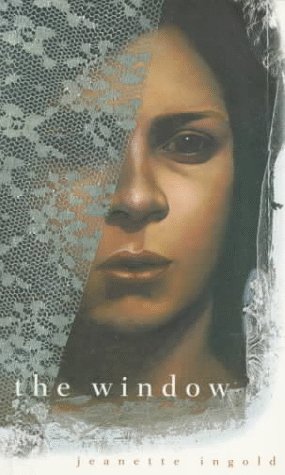
A girl, blinded by the auto accident that killed her mother, comes to terms with her disability--and her new life. “This is a sensitive and well-told story, inhabited by appealing and believable characters, and given a twist by the unexpected element of the supernatural.”--Kirkus Reviews
"synopsis" may belong to another edition of this title.
About the Author
JEANETTE INGOLD, the author of six young adult novels, has been writing since she worked as a reporter on a daily newspaper many years ago. Her novel Hitch was a Christopher Award winner. She lives in Missoula, Montana.
Reviews
Grade 6-9-Mandy, blinded in an automobile accident that killed her mother, goes to live with her two great uncles and a great aunt whom she has never met. Once on the family homestead in northern Texas, she travels to her grandmother's teenage years when she leans out of her attic bedroom window. Through her travels into the past, she pieces together the tragic story of the family she never knew existed and learns much about herself. In the present-day world, Mandy is adjusting to a new school, new friends, and being blind. She makes friends with ease, and their support helps her adjust to all of the other changes she is experiencing. There is no real conflict in this novel. The only real tension arises in the past world and transfers to the present day when Mandy tries to piece together the mystery of her mother's and grandmother's lives. By placing the protagonist in the home of her great uncle and aunt, and by making Mandy's adjustment to her new life relatively smooth, Ingold avoids many of the weaknesses of the YA time-travel genre. Mandy is not running from anything; however, the knowledge she gains through her journeys into the past allows her to see her own life more clearly and to adjust to her new circumstances more easily.
Lucinda Lockwood, Thomas Haney Secondary School, Maple Ridge, BC
Copyright 1996 Reed Business Information, Inc.
Excerpt. © Reprinted by permission. All rights reserved.
Chapter 1: "Stay seated, Mandy," the flight attendant says. "When the other passengers have gotten off, I'll come get you."
Right. She should try staying seated herself, when everybody else is standing up and the guy by the window wants out and stuff's tumbling from the overhead bins and you get bumped half into the aisle.
A man says, "Watch it," and some other man says, "Hey." Suddenly there's a pocket of hot silence. Everyone around has just realized I can't see.
"Those must be your folks. They've got a sign with MANDY on it."
Then a woman is hugging me, Aunt Emma, I guess. Her front is soft and she's shorter than me. She laughs, flustered. "I knew you were fifteen, but somehow I hadn't pictured...I mean, I thought of you younger..."
A man hugs me, and another, hugs of wool jackets and aftershave, clumsy big hugs, and their voices rumble.
One tells me he's my uncle Gabriel. Great-uncle Gabriel. They're all greats, for that matter, Great-uncles Abe and Gabriel and Great-aunt Emma, who is Gabriel's wife.
"So, Mandy," he says. "I hope you're going to liven up our gloomy old house."
"Gabriel, hush," Aunt Emma whispers. "It's too soon."
"Don't worry about me," I say. "It's OK."
And even if it's not, I can take care of myself.
That's my gift. Other girls get blond hair and nice families and brains that tell them the right things to say. I've got knowing how to take care of myself, and how to face what I have to face.
Like that night I woke up in the hospital and heard the nurses talking about whether they should take me to my mom. One said, "I hate for her to see," as if there was any way I could through bandages over eyes that had stopped working.
Besides, did that nurse think I couldn't imagine how my mom was? That I couldn't guess what happened to people when they got thrown from cars and smashed against utility poles?
I fussed until she put me into a wheelchair, took me to another floor, to intensive care, and I was too dumb to wonder why I was getting to go there now when they hadn't let me for days and days.
"Here's your mother," the nurse told me, and I had to take her word for it. The only sounds in the room were machine sounds.
I found my mother's arm, reached for her face, but the nurse moved my hand away. "You'll dislodge the tubing."
I listened for Mom to make some noise, even to just breathe out loud, but all the room became one steady, tiny monitor blip.
"Hey, Mom," I said, "you sure we can afford the rent here?"
I could feel the nurse get uptight, knew she was thinking: Hard case; people like these don't have feelings like they should.
"Don't worry, Mom," I said. "I'll get along."
My mom died the next morning, without me ever knowing if she'd heard.
This is my first time to Texas. The cold air surprises me. Somehow I thought Texas, even in the north, would be warm and dusty-smelling, not damp and cold and made empty by a wind without scent. There is no sun; I would feel it through my eyelids. I would see it. I can see sunlight, bright light. There is none this day.
We drive a long while after leaving the Dallas airport, first over highway and then back roads, and then I'm inside a house and still chilly. Aunt Emma puts a bundlely sweater on my shoulders and I hear a furnace coming roaring on. "Cold November," says Uncle Abe. "We'll have heat in just a few minutes."
I can't stop a shiver.
"Em," says Abe, "guess we've got another cold-blooded one," and I think he's saying that I'm mean, but he's not.
Gabriel says, "You Uncle Abe means thin-blooded. Emma always wants the heat up."
The house smells of cooking, onion and broccoli and meats layered one meal into the next, nice smells, but smells.
And of flowers, but not sweet ones like my roommate's at the hospital. I ask Aunt Emma what kind and she says marigolds. "About the last, I guess. We could get frost any night now."
"Most people plant marigolds to keep deer away," says Gabriel, "that's how bad they smell. But Em likes them."
"An honest smell," says Aunt Emma, "and they're easy to grow." Her answer starts another question. It seems to hang in the air: This Mandy, does she grow easy?
No, I want to shout. I don't grow easy. I'm trying the best I can and messing up terribly and I don't see how the three of you are going to make anything any better.
No, I want to shout. Don't you read? It's never easy to raise a child, not even for the people whose job it's supposed to be. Mothers grow children. Not great-aunts and old uncles.
No, I want to shout. Stare at me, in this bundlely sweater. I don't even know quite where to look, now that you're silent and your voices don't tell me where you are. Do I look easy to grow?
"May I see my room, please?" I ask.
Again that silence. I'd said, May I see. You'd think I'd know better, would have learned these last weeks what see and look do to people who can, when they hear the words said in front of someone who can't. When someone who can't says them herself.
"Certainly," answers Aunt Emma. She laughs, an embarrassed little laugh. "Actually, we have a choice for you. About what room you want, I mean. There's one here on this floor..."
(Copyright c 1996 by Jeanette Ingold. Published by Harcourt, Inc. Reproduced with permission. All rights reserved.)
"About this title" may belong to another edition of this title.
Search results for The Window

Stock Image
The Window
Seller: World of Books (was SecondSale), Montgomery, IL, U.S.A.
Seller rating 5 out of 5 stars

Paperback. Condition: Good. A girl, blinded by the auto accident that killed her mother, comes to terms with her disability--and her new life. This is a sensitive and well-told story, inhabited by appealing and believable characters, and given a twist by the unexpected element of the supernatural. --Kirkus Reviews. Seller Inventory # 00092649524
Seller Image
The Window
Published by
Harcourt Brace and Company, 1996
ISBN 10: 0152012648
ISBN 13: 9780152012649
Used
Softcover
Seller: 3Brothers Bookstore, Egg harbor township, NJ, U.S.A.
Seller rating 5 out of 5 stars
Condition: very_good. Cover may have light wear, pages in very good condition and binding is sturdy; may have other light shelf wear or creases. May have notes or highlighting. Seller Inventory # EVV.0152012648.VG
Seller Image
The Window
Published by
Harcourt Brace and Company, 1996
ISBN 10: 0152012648
ISBN 13: 9780152012649
Used
Softcover
Seller: Zoom Books East, Glendale Heights, IL, U.S.A.
Seller rating 5 out of 5 stars
Condition: good. Book is in good condition and may include underlining highlighting and minimal wear. The book can also include "From the library of" labels. May not contain miscellaneous items toys, dvds, etc. . We offer 100% money back guarantee and 24 7 customer service. Seller Inventory # ZEV.0152012648.G
Stock Image
The Window
Published by
Harcourt Brace and Company, 1996
ISBN 10: 0152012648
ISBN 13: 9780152012649
Used
Paperback
Seller: Once Upon A Time Books, Siloam Springs, AR, U.S.A.
Seller rating 4 out of 5 stars

Paperback. Condition: Good. This is a used book in good condition and may show some signs of use or wear . This is a used book in good condition and may show some signs of use or wear . Seller Inventory # mon0003558964
Stock Image
The Window
Seller: World of Books Inc, Montgomery, IL, U.S.A.
Seller rating 4 out of 5 stars
Paperback. Condition: Good. A girl, blinded by the auto accident that killed her mother, comes to terms with her disability--and her new life. This is a sensitive and well-told story, inhabited by appealing and believable characters, and given a twist by the unexpected element of the supernatural. --Kirkus Reviews. Seller Inventory # CIN0152012648G
Stock Image
The Window
Published by
Harcourt Brace and Company, 1996
ISBN 10: 0152012648
ISBN 13: 9780152012649
Used
Paperback
Seller: ThriftBooks-Atlanta, AUSTELL, GA, U.S.A.
Seller rating 5 out of 5 stars
Paperback. Condition: Very Good. No Jacket. May have limited writing in cover pages. Pages are unmarked. ~ ThriftBooks: Read More, Spend Less. Seller Inventory # G0152012648I4N00
Stock Image
The Window
Published by
Harcourt Brace and Company, 1996
ISBN 10: 0152012648
ISBN 13: 9780152012649
Used
Softcover
Seller: Wonder Book, Frederick, MD, U.S.A.
Seller rating 5 out of 5 stars
Condition: As New. Like New condition. A near perfect copy that may have very minor cosmetic defects. Seller Inventory # N00M-04133
Stock Image
The Window
Published by
Harcourt Children's Books, New York, 1996
ISBN 10: 0152012648
ISBN 13: 9780152012649
Used
Mass Market Paperback
Seller: Vashon Island Books, Vashon, WA, U.S.A.
Seller rating 5 out of 5 stars
Mass Market Paperback. Condition: Very Good. First Paperback Edition. Size: 12mo - over 6¾" - 7¾" tall. Book. Seller Inventory # G11220
Stock Image
The Window
Published by
Harcourt Brace and Company, 1996
ISBN 10: 0152012648
ISBN 13: 9780152012649
Used
Paperback
Seller: Richard's Books, Boise, ID, U.S.A.
Seller rating 5 out of 5 stars
Paperback. Condition: Very Good. COPYRIGHT 1996. SIGNED AND INSCRIBED BY AUTHOR ON PRE-TITLE PAGE. COVER HAS VERY LIGHT SHELF WEAR. OWNERS NAME ON PRE-TITLE PAGE. 181 PAGE TEXT HAS VERY LIGHT WEAR IF ANY. FICTION. 4.25'' X 7''. WE USE BUBBLE MAILERS. Seller Inventory # SKU1023823
Stock Image
The Window
Published by
Harcourt Brace and Company, 1996
ISBN 10: 0152012648
ISBN 13: 9780152012649
Used
paperback
Seller: Cathy's Half Price Books, Havertown, PA, U.S.A.
Seller rating 4 out of 5 stars
paperback. Condition: Very Good. Very good with no marks, damage or labels. Seller Inventory # 68286