
Items related to Inside the Human Genome: A Case for Non-Intelligent...
Synopsis
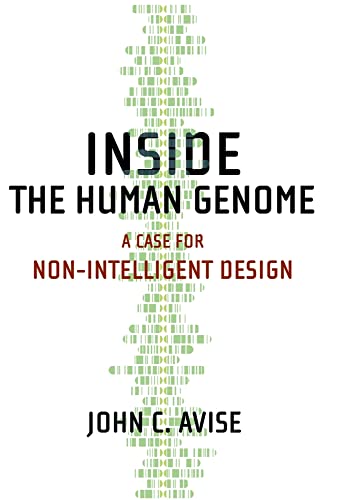
Humanity's physical design flaws have long been apparent--we get hemorrhoids and impacted wisdom teeth, for instance--but do the imperfections extend down to the level of our genes? Inside the Human Genome is the first book to examine the philosophical question of why, from the perspectives of biochemistry and molecular genetics, flaws exist in the biological world. Distinguished evolutionary geneticist John Avise offers a panoramic yet penetrating exploration of the many gross deficiencies in human DNA--ranging from mutational defects to built-in design faults--while at the same time offering a comprehensive treatment of recent findings about the human genome. The author shows that the overwhelming scientific evidence for genomic imperfection provides a compelling counterargument to intelligent design. He also develops a case that theologians should welcome rather than disavow these discoveries. The evolutionary sciences can help mainstream religions escape the shackles of Intelligent Design, and thereby return religion to its rightful realm--not as the secular interpreter of the biological minutiae of our physical existence, but rather as a respectable philosophical counselor on grander matters of ultimate concern.
"synopsis" may belong to another edition of this title.
About the Author
John C. Avise is Distinguished Professor of Ecology and Evolutionary Biology, at the University of California, Irvine, and an elected member of both the National Academy of Sciences and the American Academy of Arts and Sciences.
Reviews
A challenger to advocates of intelligent design, Avise is a professor of evolutionary biology who selects the human genome as the field of argument. Presenting himself as understanding where the intelligent-design community is coming from, Avise roots its ideas in a historical context of biology’s pioneers. Most, including Darwin in his youth, detected a divine hand in the living world, so in awe were they of its complex beauty. Agreeing about the complexity, Avise turns things around and wonders why the genome is so “baroque.” The multistep process of DNA replication, the supporting role of mitochondrial DNA, and DNA flaws such as disease-causing genes fall shy of an optimal design; throughout his text, Avise weighs the persuasiveness of evolution against invocation of an intelligent designer as explanations for the less-than-best shape of the genome. Readers who are familiar with the terms of molecular biology and are interested in the holdings or activities of the intelligent-design community are the best audience for Avise’s even-tempered exploration. --Gilbert Taylor
"About this title" may belong to another edition of this title.
Search results for Inside the Human Genome: A Case for Non-Intelligent...

Stock Image
Inside the Human Genome: A Case for Non-Intelligent Design
Published by
Oxford University Press Inc, 2010
ISBN 10: 0195393430
ISBN 13: 9780195393439
Used
Hardcover
Seller: World of Books (was SecondSale), Montgomery, IL, U.S.A.
Seller rating 5 out of 5 stars

Hardback. Condition: Very Good. Humanity's physical design flaws have long been apparent--we get hemorrhoids and impacted wisdom teeth, for instance--but do the imperfections extend down to the level of our genes? Inside the Human Genome is the first book to examine the philosophical question of why, from the perspectives of biochemistry and molecular genetics, flaws exist in the biological world. Distinguished evolutionary geneticist John Avise offers a panoramic yet penetrating exploration of the many gross deficiencies in human DNA-ranging from mutational defects to built-in design faults--while at the same time offering a comprehensive treatment of recent findings about the human genome. The author shows that the overwhelming scientific evidence for genomic imperfection provides a compelling counterargument to intelligent design. He also develops a case that theologians should welcome rather than disavow these discoveries. The evolutionary sciences can help mainstream religions escape the shackles of Intelligent Design, and thereby return religion to its rightful realm--not as the secular interpreter of the biological minutiae of our physical existence, but rather as a respectable philosophical counselor on grander matters of ultimate concern. Seller Inventory # CIN0195393430VG
Seller Image
Inside the Human Genome: A Case for Non-Intelligent Design
Published by
Oxford University Press, 2010
ISBN 10: 0195393430
ISBN 13: 9780195393439
Used
Hardcover
Seller: Bay State Book Company, North Smithfield, RI, U.S.A.
Seller rating 5 out of 5 stars
Condition: very_good. Seller Inventory # BSM.1FJYA
Stock Image
Inside the Human Genome: A Case for Non-Intelligent Design
Published by
Oxford University Press Inc, 2010
ISBN 10: 0195393430
ISBN 13: 9780195393439
Used
Hardcover
Seller: World of Books Inc, Montgomery, IL, U.S.A.
Seller rating 4 out of 5 stars

Hardback. Condition: Very Good. Humanity's physical design flaws have long been apparent--we get hemorrhoids and impacted wisdom teeth, for instance--but do the imperfections extend down to the level of our genes? Inside the Human Genome is the first book to examine the philosophical question of why, from the perspectives of biochemistry and molecular genetics, flaws exist in the biological world. Distinguished evolutionary geneticist John Avise offers a panoramic yet penetrating exploration of the many gross deficiencies in human DNA-ranging from mutational defects to built-in design faults--while at the same time offering a comprehensive treatment of recent findings about the human genome. The author shows that the overwhelming scientific evidence for genomic imperfection provides a compelling counterargument to intelligent design. He also develops a case that theologians should welcome rather than disavow these discoveries. The evolutionary sciences can help mainstream religions escape the shackles of Intelligent Design, and thereby return religion to its rightful realm--not as the secular interpreter of the biological minutiae of our physical existence, but rather as a respectable philosophical counselor on grander matters of ultimate concern. Seller Inventory # CIN0195393430VG
Stock Image
Inside the Human Genome: A Case for Non-Intelligent Design
Published by
Oxford University Press, 2010
ISBN 10: 0195393430
ISBN 13: 9780195393439
Used
Hardcover
Seller: HPB-Movies, Dallas, TX, U.S.A.
Seller rating 4 out of 5 stars
hardcover. Condition: Very Good. Connecting readers with great books since 1972! Used books may not include companion materials, and may have some shelf wear or limited writing. We ship orders daily and Customer Service is our top priority! Seller Inventory # S_455051287
Stock Image
Inside the Human Genome
Seller: ThriftBooks-Dallas, Dallas, TX, U.S.A.
Seller rating 5 out of 5 stars
Hardcover. Condition: Very Good. No Jacket. Former library book; May have limited writing in cover pages. Pages are unmarked. ~ ThriftBooks: Read More, Spend Less. Seller Inventory # G0195393430I4N10
Stock Image
Inside the Human Genome
Seller: ThriftBooks-Atlanta, AUSTELL, GA, U.S.A.
Seller rating 5 out of 5 stars
Hardcover. Condition: Very Good. No Jacket. May have limited writing in cover pages. Pages are unmarked. ~ ThriftBooks: Read More, Spend Less. Seller Inventory # G0195393430I4N00
Stock Image
Inside the Human Genome: A Case for Non-Intelligent Design
Published by
Oxford University Press, 2010
ISBN 10: 0195393430
ISBN 13: 9780195393439
Used
Hardcover
Seller: HPB-Ruby, Dallas, TX, U.S.A.
Seller rating 5 out of 5 stars
hardcover. Condition: Very Good. Connecting readers with great books since 1972! Used books may not include companion materials, and may have some shelf wear or limited writing. We ship orders daily and Customer Service is our top priority! Seller Inventory # S_477237211
Stock Image
Inside the Human Genome : A Case for Non-Intelligent Design
Published by
Oxford University Press, Incorporated, 2010
ISBN 10: 0195393430
ISBN 13: 9780195393439
Used
Hardcover
Seller: Better World Books, Mishawaka, IN, U.S.A.
Seller rating 5 out of 5 stars
Condition: Good. Former library copy. Pages intact with minimal writing/highlighting. The binding may be loose and creased. Dust jackets/supplements are not included. Includes library markings. Stock photo provided. Product includes identifying sticker. Better World Books: Buy Books. Do Good. Seller Inventory # 4059982-75
Stock Image
Inside the Human Genome : A Case for Non-Intelligent Design
Published by
Oxford University Press, Incorporated, 2010
ISBN 10: 0195393430
ISBN 13: 9780195393439
Used
Hardcover
Seller: Better World Books, Mishawaka, IN, U.S.A.
Seller rating 5 out of 5 stars
Condition: Good. Pages intact with minimal writing/highlighting. The binding may be loose and creased. Dust jackets/supplements are not included. Stock photo provided. Product includes identifying sticker. Better World Books: Buy Books. Do Good. Seller Inventory # 11703318-6
Seller Image
Inside the Human Genome: A Case for Non-Intelligent Design
Published by
Oxford University Press, 2010
ISBN 10: 0195393430
ISBN 13: 9780195393439
Used
Hardcover
Seller: MERS Goodwill, Saint Louis, MO, U.S.A.
Seller rating 5 out of 5 stars
Condition: acceptable. Used - Acceptable: All pages and the cover are intact, but shrink wrap, dust covers, or boxed set case may be missing. Pages may include limited notes, highlighting, or minor water damage but the text is readable. Pages may include limited notes and highlighting, but the text cannot be obscured or unreadable. Any access codes or passwords originally included with the book may be expired, used or no longer valid. Image is stock photo and cover art edition may be different than pictured. Seller Inventory # MERV.0195393430.A