
Items related to A Third Face: My Tale of Writing, Fighting, and Filmmaking
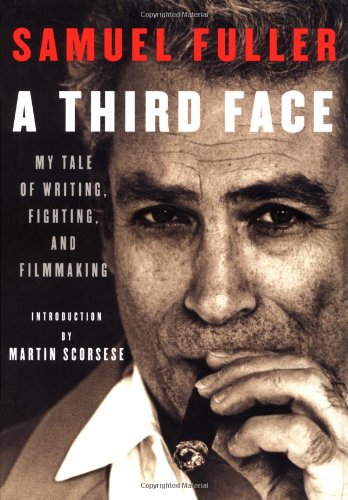
Synopsis
In his new book, Samuel Fuller, independent director-producer extraordinaire, tells the story of
his life, a life that spanned most of the twentieth century. His twenty-nine tough, gritty pictures made from 1949 to 1989 set out to capture the truth of war, racism, and human frailties, and incorporate some of his own experiences.
He writes of his years in the newspaper business—selling papers as a boy on the streets of New York, working for Hearst’s New York Journal American, first as a copyboy, then as personal runner for the famous Hearst editor in chief Arthur Brisbane. His film Park Row was inspired by his years as a reporter for the New York Evening Graphic, where his beat included murders, suicides, state executions, and race riots—he scooped every other New York paper with his coverage of the death by drug overdose of the legendary Jeanne Eagels.
Fuller writes about hitchhiking across the country, seeing America firsthand at the height of the Great Depression. He writes of his years in the army . . . fighting with the first infantry division in World War II, called the Big Red One . . . on the front lines during the invasion of North Africa and Sicily, and landing on Omaha Beach on D Day, June 6, 1944. These experiences he later captured in his hugely successful pictures The Big Red One, The Steel Helmet, and Merrill’s Marauders, which was based on the true story of a three-thousand-man infantry that fought behind enemy lines in Burma in 1944.
Fuller talks about directing his first picture (he also wrote the script), I Shot Jesse James . . . and how, as a result, he was sought after by every major studio, choosing to work for Darryl Zanuck of Twentieth Century Fox. We see him becoming one of the most prolific, independent-minded writer-directors, turning out seven pictures in six years, among them Pickup on South Street, House of Bamboo, and China Gate. He writes about making Underworld U.S.A., a movie that shows how gangsters in the 1960s were no longer seen as thugs but as “respected” tax-paying executives . . . about the making of the movie Shock Corridor—about a journalist trying to solve a murder in a lunatic asylum—which exposed the conditions in mental institutions . . . and about White Dog (written in collaboration with Curtis Hanson), a film so controversial that Paramount’s then studio heads, Jeffrey Katzenberg and Michael Eisner, refused to release it.
Honest, open, engrossing. A must for anyone interested in movies.
"synopsis" may belong to another edition of this title.
About the Author
Samuel Fuller was born in Worcester, Massachusetts, in 1911. He wrote, produced, and directed twenty-nine films and wrote eleven novels. Fuller lived in Los Angeles with his wife and their daughter and died at the age of eighty-five in 1997. A Third Face was completed by Jerome Rudes, Fuller’s longtime friend, and his wife, Christa Lange Fuller.
Jerome Rudes was born in San Antonio, Texas. He graduated from the University of Texas and received a master’s degree in film from Northwestern University. In 1984, he created the French-American Film Workshop in Avignon, France (now the Avignon Film Festival), and in 1995 started the Avignon/New York Film Festival. Rudes lives in New York and Provence.
Christa Lange Fuller was born in Winterberg, Germany. As an actress, she appeared in New Wave films directed by Jean-Luc Godard. She graduated from UCLA, where she received a master’s degree in French literature. She was married to Samuel Fuller in 1967 and lives in Los Angeles, California, with their daughter, Samantha, and grandchild, Samira.
From the Back Cover
Sam Fuller's A Third Face is an extraordinary account of the glory days of Hollywood when passion ruled instead of focus groups and creative accounting. Sam was not only a brilliant director and storyteller, but also a heroic man who fought the real war as a combat infantryman as well as the war against the front offices of the studios. This book will move and excite you, and you will learn what Hollywood is really like from the inside and what war is really like (which Fuller portrays in many of his films). It is aptly subtitled 'My Tale of Writing, Fighting, and Filmmaking.'
--- David Brown
From the Inside Flap
In his new book, Samuel Fuller, independent director-producer extraordinaire, tells the story of
his life, a life that spanned most of the twentieth century. His twenty-nine tough, gritty pictures made from 1949 to 1989 set out to capture the truth of war, racism, and human frailties, and incorporate some of his own experiences.
He writes of his years in the newspaper business—selling papers as a boy on the streets of New York, working for Hearst's New York Journal American, first as a copyboy, then as personal runner for the famous Hearst editor in chief Arthur Brisbane. His film Park Row was inspired by his years as a reporter for the New York Evening Graphic, where his beat included murders, suicides, state executions, and race riots—he scooped every other New York paper with his coverage of the death by drug overdose of the legendary Jeanne Eagels.
Fuller writes about hitchhiking across the country, seeing America firsthand at the height of the Great Depression. He writes of his years in the army . . . fighting with the first infantry division in World War II, called the Big Red One . . . on the front lines during the invasion of North Africa and Sicily, and landing on Omaha Beach on D Day, June 6, 1944. These experiences he later captured in his hugely successful pictures The Big Red One, The Steel Helmet, and Merrill's Marauders, which was based on the true story of a three-thousand-man infantry that fought behind enemy lines in Burma in 1944.
Fuller talks about directing his first picture (he also wrote the script), I Shot Jesse James . . . and how, as a result, he was sought after by every major studio, choosing to work for Darryl Zanuck of Twentieth Century Fox. We see him becoming one of the most prolific, independent-minded writer-directors, turning out seven pictures in six years, among them Pickup on South Street, House of Bamboo, and China Gate. He writes about making Underworld U.S.A., a movie that shows how gangsters in the 1960s were no longer seen as thugs but as "respected" tax-paying executives . . . about the making of the movie Shock Corridor—about a journalist trying to solve a murder in a lunatic asylum—which exposed the conditions in mental institutions . . . and about White Dog (written in collaboration with Curtis Hanson), a film so controversial that Paramount's then studio heads, Jeffrey Katzenberg and Michael Eisner, refused to release it.
Honest, open, engrossing. A must for anyone interested in movies.
Reviews
" `Hammer!' Hell if I know why that was the first goddamned word that came out of my mouth," writes cult filmmaker Fuller (1911-1997) in his autobiography's opening line. But "hammer" is an apt word for Fuller's abrupt, shocking style. With such classics as Pickup on South Street and Run of the Arrow, Fuller brought seriousness and art to the Hollywood B-movie. "I'm a storyteller," he proclaims, and this straightforward, unsentimental account of his life and substantial career is reflective of his film sensibility. The book details Fuller's early days as a journalist on the crime beat who wrote expos‚s of the Klan and later as a soldier in WWII. During his long career, Fuller wrote and directed 23 films, wrote another 16 and published 11 novels. Famous for his gritty stories with stark plot details-the bald prostitute beating up her pimp in The Naked Kiss; the asylum race riot started by a black man who thinks he's in the KKK in Shock Corridor-Fuller was one of Hollywood's most political filmmakers, and his memoir neatly conflates his artistic and political visions. Of Shock Corridor, he reflects, "It had the subtlety of a sledgehammer. I was dealing with insanity, racism, patriotism, nuclear warfare, and sexual perversion... my madhouse was a metaphor for America." Always energetic and often gossipy-he writes of his odd, intense friendship with Jim Morrison and how Barbara Stanwyck did her own stunts in Forty Guns-Fuller's last work is a joy and an important addition to film and popular culture literature. 171 photos.
Copyright 2002 Reed Business Information, Inc.
Ebullient and cantankerous, director Sam Fuller probably hadmore personality than anyone else in the movie business. It camethrough clearly in his films, particularly in the outrageously lurid,low-budget likes of Shock Corridor and The Naked Kiss.Happily, it is also fully displayed in his wildly entertainingautobiography, which with characteristic excitement recalls breakinginto Hollywood, describes the shooting of his 29 films, and relateshis struggles to continue working on underfunded projects in Europeafter the studio system died in the late 1960s. Fuller's earlier lifewas actually more colorful and exciting than his Hollywood years. At17 he became a crime reporter for a New York tabloid, at which hedeveloped his expertise in sensationalism, and later he took part inthe D-Day landing at Omaha Beach. He always saw himself as astoryteller first--he turned to directing to keep his scripts frombeing butchered--and his final story (he died at 85 in 1997) showsthat his own life was the greatest tale he had to tell. ((ReviewedOctober 1, 2002))Gordon Flagg
Copyright © American Library Association. All rights reserved
"About this title" may belong to another edition of this title.
Search results for A Third Face: My Tale of Writing, Fighting, and Filmmaking

Seller Image
A Third Face: My Tale of Writing, Fighting, and Filmmaking
Seller: Greenworld Books, Arlington, TX, U.S.A.
Seller rating 5 out of 5 stars

Condition: good. Fast Free Shipping â" Good condition. It may show normal signs of use, such as light writing, highlighting, or library markings, but all pages are intact and the book is fully readable. A solid, complete copy that's ready to enjoy. Seller Inventory # GWV.0375401652.G
Stock Image
A Third Face: My Tale of Writing, Fighting, and Filmmaking
Seller: Open Books, Chicago, IL, U.S.A.
Seller rating 5 out of 5 stars
Hardcover. Condition: Good. No dust jacket. Open Books is a nonprofit social venture that provides literacy experiences for thousands of readers each year through inspiring programs and creative capitalization of books. Seller Inventory # mon0000823276
Stock Image
A Third Face: My Tale of Writing, Fighting, and Filmmaking
Seller: ThriftBooks-Atlanta, AUSTELL, GA, U.S.A.
Seller rating 5 out of 5 stars
Hardcover. Condition: Good. No Jacket. Pages can have notes/highlighting. Spine may show signs of wear. ~ ThriftBooks: Read More, Spend Less. Seller Inventory # G0375401652I3N00
Stock Image
A Third Face: My Tale of Writing, Fighting, and Filmmaking
Seller: HPB Inc., Dallas, TX, U.S.A.
Seller rating 5 out of 5 stars
Hardcover. Condition: Very Good. Connecting readers with great books since 1972! Used books may not include companion materials, and may have some shelf wear or limited writing. We ship orders daily and Customer Service is our top priority! Seller Inventory # S_468595928
Stock Image
A Third Face: My Tale of Writing, Fighting, and Filmmaking
Published by
Knopf (edition First Edition), 2002
ISBN 10: 0375401652
ISBN 13: 9780375401657
Used
Hardcover
First Edition
Seller: BooksRun, Philadelphia, PA, U.S.A.
Seller rating 5 out of 5 stars
Hardcover. Condition: Fair. First Edition. With dust jacket. The item might be beaten up but readable. May contain markings or highlighting, as well as stains, bent corners, or any other major defect, but the text is not obscured in any way. Seller Inventory # 0375401652-7-1-29
Stock Image
A Third Face: My Tale of Writing, Fighting, and Filmmaking
Seller: HPB-Movies, Dallas, TX, U.S.A.
Seller rating 5 out of 5 stars
Hardcover. Condition: Very Good. Connecting readers with great books since 1972! Used books may not include companion materials, and may have some shelf wear or limited writing. We ship orders daily and Customer Service is our top priority! Seller Inventory # S_482741456
Stock Image
A Third Face : My Tale of Writing, Fighting, and Filmmaking
Published by
Knopf Doubleday Publishing Group, 2002
ISBN 10: 0375401652
ISBN 13: 9780375401657
Used
Hardcover
Seller: Better World Books: West, Reno, NV, U.S.A.
Seller rating 5 out of 5 stars
Condition: Good. Pages intact with minimal writing/highlighting. The binding may be loose and creased. Dust jackets/supplements are not included. Stock photo provided. Product includes identifying sticker. Better World Books: Buy Books. Do Good. Seller Inventory # 6061945-6
Seller Image
A Third Face: My Tale of Writing, Fighting and Filmmaking
Seller: Browsing Is Arousing, Middlebury, VT, U.S.A.
Seller rating 4 out of 5 stars

Condition: Very Good. Hardcover in a bright, unclipped dust jacket, 592 pages, b&w illustrations. Samuel Fuller, independent director-producer extraordinaire, tells the story of his life, a life that spanned most of the twentieth century. His twenty-nine tough, gritty pictures made from 1949 to 1989 set out to capture the truth of war, racism, and human frailties, and incorporate some of his own experiences. He writes of his years in the newspaper business?selling papers as a boy on the streets of New York, working for Hearst?s New York Journal American, first as a copyboy, then as personal runner for the famous Hearst editor in chief Arthur Brisbane. His film Park Row was inspired by his years as a reporter for the New York Evening Graphic, where his beat included murders, suicides, state executions, and race riots?he scooped every other New York paper with his coverage of the death by drug overdose of the legendary Jeanne Eagels. Fuller talks about directing his first picture (he also wrote the script), I Shot Jesse James . . . and how, as a result, he was sought after by every major studio, choosing to work for Darryl Zanuck of Twentieth Century Fox. We see him becoming one of the most prolific, independent-minded writer-directors, turning out seven pictures in six years, among them Pickup on South Street, House of Bamboo, and China Gate. He writes about making Underworld U.S.A., a movie that shows how gangsters in the 1960s were no longer seen as thugs but as ?respected? tax-paying executives . . . about the making of the movie Shock Corridor?about a journalist trying to solve a murder in a lunatic asylum?which exposed the conditions in mental institutions . . . and about White Dog (written in collaboration with Curtis Hanson), a film so controversial that Paramount?s then studio heads, Jeffrey Katzenberg and Michael Eisner, refused to release it. Clean copy. Record # 378530. Seller Inventory # 378530
Stock Image
A Third Face: My Tale of Writing, Fighting, and Filmmaking (First Edition)
Published by
Knopf, New York, 2002
ISBN 10: 0375401652
ISBN 13: 9780375401657
Used
Hardcover
First Edition
Seller: Dan Pope Books, West Hartford, CT, U.S.A.
Seller rating 5 out of 5 stars
Hardcover. Condition: Fine. Dust Jacket Condition: Fine. 1st Edition. New York, Knopf, 2002. First edition (stated). First printing. Hardbound. Fine in a fine jacket. A clean tight copy. Publisher's price intact on front jacket flap ($35.00). Comes with archival-quality mylar jacket protector. Fuller wrote the book with his wife, Christa Lang, and Jerome Rudes. Scorsese, Martin (introduction). Seller Inventory # Nonfiction-Cinema-CLS
Stock Image
A Third Face : My Tale of Writing, Fighting, and Filmmaking
Published by
Knopf. New York., 2002
ISBN 10: 0375401652
ISBN 13: 9780375401657
Used
Hardcover
Signed
Seller: Limestone Books, Austin, TX, U.S.A.
Seller rating 4 out of 5 stars
Hardcover. Condition: Fine. No Jacket. NF/-. First edition, first printing. Signed by Christa Lang Fuller and Jerome Henry Rudes on title page. 592 pp. Signed by Author(s). Seller Inventory # 14414