
Items related to The Change in the Weather: People, Weather and the...
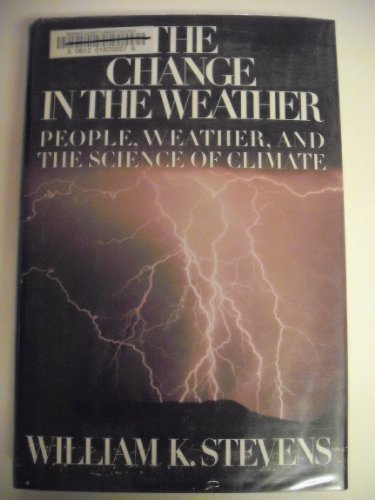
Synopsis
Is something going on with the weather?
A record-setting heat wave that just won't release its blistering grip. Balmy winter weeks followed by a sudden crippling snowstorm. Torrential rainfalls of rising frequency and force, deluging areas untouched by flood for decades. And coast-to-coast, a virtually endless parade of dramatically televised weather disasters--each seemingly more extreme than the last.
Examining today's headline-making questions through the authoritative lens of science and history, New York Times science reporter William K. Stevens's The Change in the Weather offers a definitive look at the science of climatic change. He introduces us to the international community of scientists leading the effort to determine whether a new era of climate has already dawned, one in which the extreme will become increasingly commonplace in an ever-warming world. From the impact of our own behavior on the delicate balance that keeps our climate hospitable to the degree to which we're too late to do anything about it, the answers and their implications could not be more profound.
How did we get here? How bad is it? How much worse will it get? How dramatically will it change life as we know it, and how quickly? The climate-science community's newfound consensus--that the earth is indeed getting warmer, and human activity is at least partially at fault--remains a topic of fierce debate, and Stevens helps us understand both the science and politics we'll need to know in the coming years.
Charting the "grand drama" that began with the formation of the planet and its atmosphere billions of years ago, Stevens reveals the patterns of extreme climate change that have always characterized earth history. He explores the inextricable link between the fate of humanity and the climate--from the shaping of human evolution to the devastation of entire civilizations--and our efforts to make sense of these vast forces beyond our control. And he both shows us these forces at work today, as manifested in melting Alaskan glaciers or distressingly brown New England autumns, and offers an informed speculative glimpse at what may be in store for the end of our new century.
As we enter the third millennium amid unfounded predictions of apocalyptic weather disaster, the very real debate about our planet's fate rages on beneath the clamor. An armchair scientist's guide to the science of climate--past, present, and future--The Change in the Weather is an eye-opening and authoritative exploration of today's world and tomorrow's uncertainty.
"synopsis" may belong to another edition of this title.
About the Author
William K. Stevens is a science reporter for The New York Times. The author of Miracle Under the Oaks: The Revival of Nature in America, he lives in Montclair, New Jersey.
From the Inside Flap
going on with the weather?
A record-setting heat wave that just won't release its blistering grip. Balmy winter weeks followed by a sudden crippling snowstorm. Torrential rainfalls of rising frequency and force, deluging areas untouched by flood for decades. And coast-to-coast, a virtually endless parade of dramatically televised weather disasters--each seemingly more extreme than the last.
Examining today's headline-making questions through the authoritative lens of science and history, New York Times science reporter William K. Stevens's The Change in the Weather offers a definitive look at the science of climatic change. He introduces us to the international community of scientists leading the effort to determine whether a new era of climate has already dawned, one in which the extreme will become increasingly commonplace in an ever-warming world. From the impact of our own behavior on the delicate balance that keeps our climate hospitable to t
Reviews
Over the past decade, a scientific consensus has emerged that global warming is real and is largely the consequence of human activity--specifically, the burning of fossil fuels for energy, transportation and industrial activity. As such, global warming may be the most important political issue and technological challenge of the next two centuries--or so intimates New York Times science reporter Stevens (Miracle Under the Oaks) in this balanced, authoritative and accessible volume. Stevens makes clear, however, that quantifying the impact of global warming will be difficult, which makes developing and implementing necessary international solutions--already challenging because of the conflicting interests of different countries--an intractable problem. The author skillfully describes the complex science of climate: the ever-changing patterns of global flows of air, water and energy. The world already faces extremes of temperature and precipitation. Yet the floods, droughts, heat waves, blizzards and other exceptional weather of the past decade may be just the beginning. Stevens predicts that rising sea levels caused by melting polar ice caps, coupled with increasingly intense storm surges, may threaten coastal cities and island nations around the world. Agricultural patterns and regional ecology may change dramatically. Prevailing winds, weather cycles and ocean currents may shift. Humanity, that most adaptable of species, will be challenged to keep up. Mainstream and contrarian scientists may make different predictions and propose different policies, but few would dispute Stevens's ominous closing sentence: "The experiment is running, and time will tell." (Jan.)
Copyright 1999 Reed Business Information, Inc.
A thorough, and thoroughly fascinating, report on the world's ever-changing climate and the phenomenon of global warming. Stevens, a New York Times science writer, has been reporting on the science and politics of climate and weather for the past decade. His opening descriptions of a horrific heat wave in Chicago in 1995 and of a massive flood there the following year are attention-grabbers that draw the reader quickly into his larger story. His themes are the enormous climatic changes that have occurred throughout the earth's history, the ways climate has shaped human evolution, and mankind's growing but still imperfect understanding of climate and weather. Stevens is both an amiable guide through the history of climatic change on our planet and a skilled presenter of the natural workings of the weather system, and of the science of everyday weather as it evolved from superstition and folk sayingsWhen stones sweat,/Rain you'll get''to data-driven empiricism to physics-driven theory. He has interviewed dozens of scientists to clarify the current debate over global warming, a debate taking place in the political arena and pitting industrial against developing nations and environmentalists against the fossil-fuel industry. While mainstream scientists have reached a consensus that the atmosphere is warming and that human activity is partly responsible, contrarians argue that too little is yet known to substantiate this claim. Stevens presents the arguments of both sides and explores the still-to-be-answered questions of what the impact of global warming may be and what, if anything, to do about it. Without being an alarmist, he presents scenarios in which extremes of precipitationone result of atmospheric warmingbring floods and record-breaking snowstorms in some areas and desert-forming droughts in others as rising sea levels alter coastlines and swamp low-lying islands. Comprehensive and colorful reporting that provides readers with a informed perspective from which to view tomorrow's natural-disaster headlines. (Author tour) -- Copyright ©1999, Kirkus Associates, LP. All rights reserved.
Concerns about climate change continue to grab headlines. The effects of greenhouse gases and the temperature of Pacific Ocean surface waters have suddenly become everyday topics. Stevens approaches climate change from a historical point of view. Starting with evidence from the geological record, he outlines current knowledge of paleoclimatology and what it may predict about current and future weather trends. He also examines weather's role in the world's religious and literary traditions. The scientific revolution and the development of technology to measure atmospheric gases overturned many ancient ideas about weather's origins. Stevens' outlining of recent advances in mathematical modeling of the atmosphere is accessible even to those with only rudimentary scientific background. The author's evenhandedness in presenting all viewpoints in the politically charged global warming debate adds to his work's credibility. Mark Knoblauch
Stevens, who writes for the weekly science section of the New York Times, presents a well-researched report of climatology. In a story-like fashion, similar in style to his first book Miracle Under the Oaks: The Revival of Nature in America, Stevens chronicles the spectrum of controversy surrounding the ongoing "global warming" debate: natural weather variation vs. human impact. Though the author suggests that signs of a warmer world are evident and the consequences of more extreme weather events lie ahead, the book is a nice acquisition to a library's collection because it adds the perspectives of those contrary to his reasoning. The detailed interviews of international scientists and historians also supplement this resource. Recommended for science libraries as well as for weather enthusiasts.
-Trisha Stevenson, New York University Sch. of Medicine Lib.
Copyright 2000 Reed Business Information, Inc.
Excerpt. © Reprinted by permission. All rights reserved.
Origins
FOR AT LEAST a million years and hundreds of thousands of generations, the ape-people survived essentially unchanged.
The average ape-woman weighed about 65 pounds, and the ape-man about 100, and they stood three to four feet tall. Each had a brain about the size of an orange—roughly as big as that of the species they most resembled, the chimpanzees. Like the chimps, they spent much of their time in the treetops of the thick, lush African forest. The fruits they mostly lived on grew there, and the forest canopy offered safety from ground-dwelling saber-toothed cats and other killers for whom the ape-people were easy prey. Three million years in the future, the inheritors of the ape-people's genes would deduce that the ape-humans' daily routine, like the chimpanzees', was to move through the forest, picking fruit as they went, scavenging an occasional piece of carrion, and killing and eating an occasional small animal. After combing perhaps two or three miles of landscape in a day they would retire to the treetops, there to sleep in relative safety from the predators below.
In most other ways, there was a wide difference between the ape-people and the chimps. The former walked upright, on two legs, the first species of their evolutionary family to do so routinely. But not all the time. The result, as often happens in evolution, was a compromise: The ape-human could neither climb as well as an ape nor walk as well as a modern human. The ape-people, it would seem, lived a two-part existence—in the trees and on the ground. In a departure from the ape lifestyle, their walking ability enabled them to venture farther into open spaces within the forest to look for food; they were not tied so closely to what was available in the trees.
Their world was hardly an Eden. The ape-human probably could not run fast, and so would have been unable to escape from a big cat or hyena without a substantial head start. Constant vigilance was necessary while on the ground, and numerous ancient skulls crushed by carnivores testify that the ape-human was more prey than predator.
Nevertheless, the ape-people have to be judged an evolutionary success: Their kind persisted perhaps ten times as long as modern humans have so far existed.
A little less than 3 million years ago, that long and successful run was coming to an end. Great forces were about to transform not only the world of the ape-people but also the ape-people themselves. No mysterious black monolith, planted on the savanna by some extraterrestrial force to strike the spark of humanity, was responsible. Rather, great ice sheets were beginning to grow far to the north. The Inheritors, with bigger brains amplified by computers, would later deduce that the ice sheets were accompanied by a drop in the temperature of the North Atlantic Ocean of as much as 25 degrees Fahrenheit, causing cooler, drier air to blow from Europe over Africa. They would also discover that as the northern ice sheets grew higher, they diverted colder, drier air toward the homeland of the ape-people.
The effect of these far-reaching climatic changes was to make Africa drier. This in turn shrank the forest refuges of the ape-people and expanded the open grasslands. All of this forced a survival crisis on the ape-people and the other animals of their world. They would have to adapt or die.
Out of the crisis would emerge the genus Homo, our genus.
Behind that development lay more than four and a half billion years of an unimaginably complex and violent coevolution of the earth's climate system and the life it shaped, and by which it was reshaped in return.
THE EARTH AND ITS ATMOSPHERE were born of fire and fury, setting in motion vast processes that are still playing out today and that will continue, scientists believe, for eons to come.
As far as modern scientists can tell, a slowly rotating cloud of dust and gases like hydrogen and helium, perhaps 15 billion miles across, a nebula floating in interstellar space, began to contract. Gravity pulled the smaller dust particles toward larger ones and the cloud began to spin faster and faster, flattening into a disk. Gradually, as the particles compressed into a single mass, the nascent sun materialized. Ever more intense compression boosted the temperature of the mass to nearly 2 million degrees Fahrenheit, setting off nuclear fusion. In fusion, hydrogen atoms combine to form helium, and energy is released as sunshine.
As the sun formed, not all the material in the rotating disk was drawn into it; some continued to orbit the new star. From this rocky material, the planets formed. No earthlings were around to see this, of course, but astronomers have observed many such disks around young stars, and they are confident that our solar system formed in the same way.
In the currently favored scenario of the earth's birth and the formation of its atmosphere, everything happened quickly, relative to geological time. Myriad chunks of rock orbiting the sun coalesced into the building blocks of planets. These planetesimals, as scientists call them, then began to merge with each other, and soon a planet took shape. As it grew bigger, its gravity force increased, attracting more and more planetesimals. The shock of the colliding planetesimals created such heat—several thousand degrees—that all of the naturally occurring water, nitrogen, and carbon in the planetesimals and on the new earth was instantly vaporized.
When the proto-planet reached only three-tenths of its eventual diameter of almost 8,000 miles, it began to hold the vaporized chemicals in its gravitational field, and an atmosphere thus started to accumulate. Scientists cannot be exactly sure about what the early atmosphere was like. "We don't have any direct data," says James F. Kasting of Pennsylvania State University, an expert on the early earth and ancient climates. "We're sort of relying on theoretical models we build up partly on computers and in our heads."
But according to the dominant view, a key constituent of the early atmosphere was the one that provokes such contention today: carbon. Reacting with sunlight, it took the form of carbon dioxide, a powerful heat-trapping greenhouse gas. Like other greenhouse gases, carbon dioxide lets visible radiation from the sun penetrate to the planet's surface, where it is absorbed and reemitted as infrared radiation. Then the greenhouse gas reabsorbs this heat-producing radiation and bounces part of it back to the surface, warming the planet. Water vapor is an even more potent greenhouse gas, and most of the early atmosphere consisted of water in the form of steam. This combination of factors, along with heat from the interior, might have made the earth some 2,000 degrees Fahrenheit warmer than it otherwise would have been.
The young earth is thus believed to have been a largely molten ball hidden behind a cloud of steam. For perhaps 100 million years, or maybe in as few as 10 million, it continued to absorb hits by planetesimals big and small. Some were probably the size of full-fledged planets. The single most violent and jarring event in the earth's history took place in this early period, it is widely believed by scientists, when a planet-size body struck the earth a glancing blow, chipping off massive chunks that reaccreted to form the moon.
The formation of the earth and its atmosphere were largely completed between about 4.6 billion and 4.5 billion years ago. If all the time between 4.6 billion years ago and today were compressed into a century, the main period of the earth's formation would have taken between one and a half and three years. For about the next fifteen years (some 700 million years in actual time), heavy bombardment by smaller planetesimals, asteroids, and comets continued. Eventually, as the raw materials of the accreting earth were used up, bombardment slowed and the new planet cooled enough to allow the steam in the atmosphere to condense and fall as rain, forming the first ocean. Asteroids and comets still crashed into the earth from time to time, and if they were big enough, as they often were, they would revaporize the ocean. Eventually it would condense again. This may have happened repeatedly.
"About this title" may belong to another edition of this title.
Search results for The Change in the Weather: People, Weather and the...

Stock Image
The Change in the Weather: People, Weather and the Science of Climate
Seller: Wonder Book, Frederick, MD, U.S.A.
Seller rating 5 out of 5 stars

Condition: Good. Good condition. Very Good dust jacket. A copy that has been read but remains intact. May contain markings such as bookplates, stamps, limited notes and highlighting, or a few light stains. Seller Inventory # O14N-00432
Stock Image
The Change in the Weather: People, Weather and the Science of Climate
Seller: Wonder Book, Frederick, MD, U.S.A.
Seller rating 5 out of 5 stars
Condition: Very Good. Very Good condition. Very Good dust jacket. A copy that may have a few cosmetic defects. May also contain light spine creasing or a few markings such as an owner's name, short gifter's inscription or light stamp. Seller Inventory # J11D-01327
Stock Image
The Change in the Weather: People, Weather and the Science of Climate
Seller: ThriftBooks-Dallas, Dallas, TX, U.S.A.
Seller rating 5 out of 5 stars
Hardcover. Condition: Good. No Jacket. Pages can have notes/highlighting. Spine may show signs of wear. ~ ThriftBooks: Read More, Spend Less. Seller Inventory # G0385320124I3N00
Stock Image
The Change in the Weather: People, Weather and the Science of Climate
Seller: Midtown Scholar Bookstore, Harrisburg, PA, U.S.A.
Seller rating 5 out of 5 stars
Hardcover. Condition: Good. some shelfwear/edgewear, may have remainder mark or previous owner's name - still NICE! Standard-sized. Seller Inventory # 0385320124-01
Stock Image
The Change in the Weather : People, Weather and the Science of Climate
Published by
Random House Publishing Group, 1999
ISBN 10: 0385320124
ISBN 13: 9780385320122
Used
Hardcover
Seller: Better World Books: West, Reno, NV, U.S.A.
Seller rating 5 out of 5 stars
Condition: Good. Pages intact with minimal writing/highlighting. The binding may be loose and creased. Dust jackets/supplements are not included. Stock photo provided. Product includes identifying sticker. Better World Books: Buy Books. Do Good. Seller Inventory # 15844198-20
Stock Image
The Change in the Weather: People, Weather and the Science of Climate
Seller: Books Revisited, Saint Cloud, MN, U.S.A.
Seller rating 4 out of 5 stars

Hardcover. Condition: Very Good. Very good hardcover in very good dust jacket, previous owners name on first page. Seller Inventory # 165806
Stock Image
The Change in the Weather: People, Weather, and the Science of Climate
Published by
Delacorte Pubns Inc, New York, New York, U.S.A., 2000
ISBN 10: 0385320124
ISBN 13: 9780385320122
Used
Soft cover
First Edition
Seller: Granada Bookstore, IOBA, Woodlawn, IL, U.S.A.
Seller rating 5 out of 5 stars
Soft cover. Condition: Fine. Advance Reading Copy. Advance reading copy. A definitive book on the science of climate. Seller Inventory # 011593
Stock Image
The Change in the Weather: People, Weather, and the Science of Climate
Published by
Delacorte Press, New York, 1999
ISBN 10: 0385320124
ISBN 13: 9780385320122
Used
Hardcover
First Edition
Seller: Presidential Book Shop or James Carroll, Alexandria, VA, U.S.A.
Seller rating 5 out of 5 stars
Cloth. Condition: Near Fine. Dust Jacket Condition: Near Fine. First Edition. xxiv, 357 p. An insightful look at climate change. Includes publicity release from the publisher. Size: 8vo - over 7¾" - 9¾" tall. Seller Inventory # 002776
Stock Image
THE CHANGE IN THE WEATHER. People, Weather, and the Science of Climate
Published by
Delacorte Press, New York, 1999
ISBN 10: 0385320124
ISBN 13: 9780385320122
Used
Hardcover
First Edition
Seller: Alkahest Books, Deerfield, IL, U.S.A.
Seller rating 5 out of 5 stars
hardcover. Condition: Fine. Dust Jacket Condition: fine. First Edition, First Printing. Octavo (approx. 6 1/4" wide by 9 1/2") xxiii [1] 357 pages. Book and dust jacket are in fine condition. 091306A. Seller Inventory # 000022693
Stock Image
The Change in the Weather: People, Weather and the Science of Climate
Published by
Delacorte Press, 1999
ISBN 10: 0385320124
ISBN 13: 9780385320122
Used
Hardcover
First Edition
Seller: Jay W. Nelson, Bookseller, IOBA, Austin, MN, U.S.A.
Seller rating 5 out of 5 stars
Hardcover. Condition: Near Fine. Dust Jacket Condition: Near Fine. 1st Edition. Near fine book and jacket. Seller Inventory # 114666