
Items related to Zora Neale Hurston: A Life in Letters
Synopsis
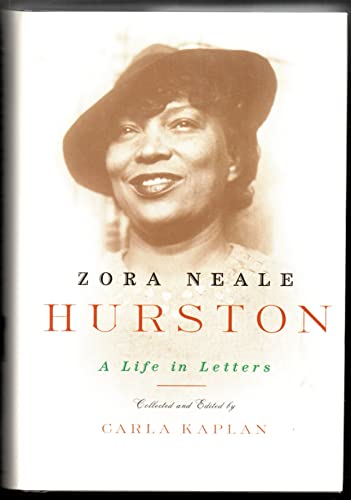
A landmark collection of more than five hundred letters written by a woman at the heart of the Harlem Renaissanc--an author who remains one of the most intriguing people in American cultural history.
Alice Walker’s 1975 Ms. magazine article "Looking for Zora" reintroduced Zora Neale Hurston to the American literary landscape, and ushered in a virtual renaissance for a writer who was a bestselling author at her peak in the 1930s, but died penniless and in obscurity some three decades later.
Since that rediscovery of novelist, anthropologist, playwright, folklorist, essayist, and poet Zora Neale Hurston, her books--from the classic love story Their Eyes Were Watching God to her controversial autobiography, Dust Tracks on the Road--have sold millions of copies. Hurston is now taught in American, African American, and women's studies courses in high schools and universities from coast to coast.
Now, in Zora Neale Hurston: A Life in Letters, the fascinating life of one of the most enigmatic literary figures of the twentieth century comes alive. Through letters to Harlem Renaissance friends Langston Hughes, Alain Locke, Dorothy West, and Carl Van Vechten, and to bestselling author Marjorie Kinnan Rawlings and Fannie Hurst, among others, readers experience the exuberance and trials of Hurston’s life. Her letters to her patron, Mrs. Charlotte "Godmother" Osgood Mason, are laced with equal amounts of cynicism and reverence, and offer a fascinating glimpse of the perilously thin line Hurston tread to maintain vital monetary support as she pursued her art and avant-garde lifestyle (which included crossing the country collecting folklore, and a job as story editor at Paramount Pictures in the 1940s).
Meticulously edited and annotated, this landmark collection of letters will provide her fans, as well as those discovering Hurston for the first time, with a penetrating and profound portrait into the life, writings (four novels, a play, an autobiography, and countless essays), and impressive imagination of one of the most amazing characters to grace American letters.
"synopsis" may belong to another edition of this title.
About the Author
CARLA KAPLAN is a professor of English at the University of Southern California and a noted Hurston scholar. She is the author of The Erotics of Talk: Women's Writings and Feminist Paradigms. She lives in Los Angeles, California.
From the Back Cover
"Zora Neale Hurston's letters offer us nothing less than a spontaneous autobiography by one of the great writers of the twentieth century. The contradictions in her personality--of which we know from her published writings and the assessments of her critics--do not disappear, but they make sense through these passionate, revealing, sometimes heartbreaking, sometimes hilarious, and always readable letters. Carla Kaplan has annotated them thoroughly, and her head-notes, decade by decade, trace Hurston's life with the care of a good scholar and the narrative skill of a good biographer."
–Bruce Kellner, author of The Harlem Renaissance: A Historical Dictionary for the Era and editor of Early Modern African American Writers
"This valuable contribution to our understanding and appreciation of Zora Neale Hurston and her times will forever shape how we think and talk about the woman and the icon. Professor Carla Kaplan has done an extraordinary job of collecting, editing and contextualizing the correspondence. Her own well-researched and well-written commentary is informative without being intrusive. The volume is destined to become a classic supporting our sense that Hurston really is one of the great minds of the twentieth century and proving that Carla Kaplan is destined to be one of the great scholars of the twenty-first century."
-Farah Jasmine Griffin, author of If You Can’t Be Free, Be a Mystery: In Search of Billie Holliday
"Carla Kaplan's Zora Neale Hurston: A Life in Letters is a wonderful book, easily the most valuable new volume by or about Hurston in many a year. Here is Hurston in her bodacious glory--jaunty and in pain, colorful, elusive, superbly intelligent, deceptive, an orginal personality and an original mind. Kaplan's work as an editor is impeccable, her vision of Zora luminous. All lovers of Zora Neale Hurston must read this book.”
-Arnold Rampersad, Stanford University, author of The Life of Langston Hughes (2 vols.)
"Zora Neale Hurston: A Life in Letters is as welcome as a sun burst, which is what Zora Hurston in life was like. One of her favorite expressions was 'bodacious'. Carla Kaplan's edited collection is just that, and we should all be enormously grateful to her for gathering up the words of the incomparable ingenue of the Harelm Renaissance."
-David Levering Lewis, author of the Pulitzer Prize-winning W.E.B. DuBois: The Fight for Equality and the American Century 1919-1963
"'Being different has its drawbacks,'Hurston writes in Carla Kaplan's new collection of Zora Neale Hurston's letters. Every filmmaker I know identifies with Zora's creativity, but mostly her courage. You don't have to be a woman to find comfort and understanding in Zora's words, but you will find meaning."
-Julie Dash, award-winning director of Daughters of the Dust
"Like Phoeby in Their Eyes Were Watching God, I sit on the porch listening to the storyteller. This time, the storyteller is Hurston herself who speaks to us through hundreds of letters written to over seventy different people from the time of the Harlem Renaissance to the beginnings of the Cold War. Brilliantly assembled and introduced by Carla Kaplan, the letters reveal the struggles of a black woman from the South searching for personal happiness while trying to establish a literary reputation in New York City. In the process, they weave a rich and multifaceted portrait of American and African American literature, drama, and anthropological writing of the period. The cast of characters is as vast as it is varied: it includes both blacks and whites, patrons and dependents, the famous and the infamous, the remembered and the forgotten. Like Phoeby, you will listen spellbound."
-Carla Peterson, author of Doers of the Word: African American Women Speakers and Writers in the North (1830-1880)
"This is a wonderful addition to what we need to understand about a spirited, extraordinary life."
–Alice Walker
"There is no greater story of rediscovery in modern American literature than that of Zora Neale Hurston. Like Herman Melville in a previous era, she went from nearly complete obscurity to a position of unquestioned canonical importance in just a few years. This superb collection of her letters now provides us a remarkable window into Hurston's life and opinions, her evanescent career,and her relationship with many of the leading writers and intellectuals of her day."
-Eric Sundquist, UCLA Foundation Professor of Literature
From the Inside Flap
A landmark collection of more than five hundred letters written by a woman at the heart of the Harlem Renaissanc--an author who remains one of the most intriguing people in American cultural history.
Alice Walker s 1975 Ms. magazine article "Looking for Zora" reintroduced Zora Neale Hurston to the American literary landscape, and ushered in a virtual renaissance for a writer who was a bestselling author at her peak in the 1930s, but died penniless and in obscurity some three decades later.
Since that rediscovery of novelist, anthropologist, playwright, folklorist, essayist, and poet Zora Neale Hurston, her books--from the classic love story Their Eyes Were Watching God to her controversial autobiography, Dust Tracks on the Road--have sold millions of copies. Hurston is now taught in American, African American, and women's studies courses in high schools and universities from coast to coast.
Now, in Zora Neale Hurston: A Life in Letters, the fascinating life of one of the most enigmatic literary figures of the twentieth century comes alive. Through letters to Harlem Renaissance friends Langston Hughes, Alain Locke, Dorothy West, and Carl Van Vechten, and to bestselling author Marjorie Kinnan Rawlings and Fannie Hurst, among others, readers experience the exuberance and trials of Hurston s life. Her letters to her patron, Mrs. Charlotte "Godmother" Osgood Mason, are laced with equal amounts of cynicism and reverence, and offer a fascinating glimpse of the perilously thin line Hurston tread to maintain vital monetary support as she pursued her art and avant-garde lifestyle (which included crossing the country collecting folklore, and a job as story editor at Paramount Pictures in the 1940s).
Meticulously edited and annotated, this landmark collection of letters will provide her fans, as well as those discovering Hurston for the first time, with a penetrating and profound portrait into the life, writings (four novels, a play, an autobiography, and countless essays), and impressive imagination of one of the most amazing characters to grace American letters.
Reviews
Many of the questions that Hurston scholars have asked are addressed, and occasionally answered, in this momentous collection of letters by one of the leading figures of the Harlem Renaissance: Why did she constantly alter her age? Did she take a job as a maid toward the end of her life out of desperation or, as she claimed, for a lark? Why did she switch from writing about blacks to writing about whites? And why didn't she ever write anything about her teen years? Kaplan, a leading Hurston scholar at the University of Southern California, calls the letters "one of the few existing sources of personal commentary by a black female intellectual on American life and literature." Spanning the 1920s to the 1950s, Hurston's letters reveal an energetic writer of many voices. The collection includes confiding, sharp-tongued missives to close friends Langston Hughes and Carl Van Vechten; correspondence with Franz Boas, one of the fathers of American anthropology and Hurston's mentor at Barnard College; and her saccharine (and perhaps ironic) notes of gratitude and supplication to wealthy white patron Charlotte Osgood Mason. A portrait emerges of a heterodox woman who alienated many of her supporters with her increasingly conservative politics and was hampered all her life by financial troubles and romantic disappointments. At 864 pages, this volume contains numerous mundane letters, but it is a comprehensive document of the notoriously unself-revealing woman, beautifully executed. Illus.
Copyright 2002 Reed Business Information, Inc.
*Starred Review* Kaplan's collection of Hurston's many extant letters is clearly a labor of love. Supplying readers with more than 500 letters, she also has devoted more than 100 pages to biographical analysis and has included a chronology and glossary of Hurston's many correspondents and friends, making this not merely a collection of letters but a comprehensive introduction to an important American writer. The letters span four decades, the 1920s through the 1950s, and reveal a vibrant, forthcoming, and increasingly frank woman who constantly struggled to balance the pursuit of a literary life with nagging financial necessities. When Hurston burst onto the Harlem Renaissance scene in the 1920s, she attracted the attention of other writers--both black and white. It was in the 1930s that she produced her major works and her most lively and plentiful correspondence. "I shall wrassle me up a future or die trying," she wrote to her patron, Charlotte Osgood Mason. Indeed she did, for not only did she write novels, she tirelessly researched African American folklore, an interest that led her across the country in pursuit of stories and legends. Hurston is an especially vibrant and emotive correspondent, and Kaplan's magnificent and comprehensive collection allows readers a peek into her psyche and creative process. Kristine Huntley
Copyright © American Library Association. All rights reserved
Arguably one of the most significant figures in the African American literary tradition of the 20th century, Zora Neal Hurston (1891-1960) has only recently been acknowledged for her superb achievements. The author of four novels, including the highly acclaimed Their Eyes Were Watching God (1937), plus an autobiography, numerous essays, and two books on black folklore, she became the first black student to graduate from Barnard College and later studied anthropology at Columbia. A principal in the Harlem Renaissance, she shared fame with her contemporaries, including Langston Hughes and Dorothy West. But recognition was limited; Hurston had to endure a string of menial jobs and died penniless and obscure. This collection of over 500 letters, chronologically arranged and carefully edited and annotated by noted Hurston scholar Kaplan, reveals a gifted yet complex personality at once humorous, cynical, and analytical. These letters to friends, editors, fellow writers, and others trace a life of humble beginnings, turmoil, and frustrations. Interest in Hurston is on the rise, as indicated by the recent publication of Every Tongue Got to Confess, a recently rediscovered collection of folklore she gathered, recommending this for all academic libraries and larger public libraries with extensive literature collections. Richard K. Burns, MSLS, Hatboro, PA
Copyright 2002 Cahners Business Information, Inc.
Excerpt. © Reprinted by permission. All rights reserved.
Chapter 1
"DE TALKIN' GAME"
The Twenties (and Before)
First and foremost a storyteller, with profound appreciation for the power of a well-crafted tale, Hurston moved to New York in 1925 and used her storytelling talent to refashion her life along mythic lines, erasing everything that didn't contribute to the new person she had determined to create. That person would have known hardships and hard times, but mostly in a general way. She might have disappointments, but they would never become obstacles. She would be tough and independent and young (in her early twenties, like her friends). Above all, she would be game for everything, full of enthusiasm and ideas. Nothing would be beyond her. She would live up to her proud heritage as a daughter of Eatonville, America's first incorporated all-black town--even if that meant starting over from scratch.
Accordingly, the only full-scale biography of Zora Neale Hurston starts by describing how "in the first week of January, 1925, Zora Neale Hurston arrived in New York."1 Hurston begins her life over again in the twenties, establishing herself as a writer, social scientist, and active member of the nation's first major upsurge of African American arts.
During this period, she developed her own aesthetic: an embroidered realism equally committed to liveliness and accuracy. Her developing style as a writer mirrored her personality: hardheaded and sentimental, constrained and effusive, objective and fanciful, all at the same time. The Harlem Renaissance--for all its own self-conscious mythmaking--afforded Hurston the necessary ground on which to build this new life. It gave her a collective enterprise in which she could play a valued role. Among its many circles she could find the publishers, editors, writers, artists, scientists, intellectuals, producers, directors, and patrons she needed to develop all the venues in which she sought to bring the African American vernacular to the American public. This period opened the door to a number of intimate friendships, an inner circle of confidants among whom Hurston hoped to find soulmates who could bridge their differences of race, class, gender, and upbringing. Characteristically, Hurston seemed unfazed by the dazzle of New York's Roaring Twenties. Whereas Harlem was a revelation for many African Americans who had never before been in such a teeming community of black people, Hurston had been raised in an all-black town and was well accustomed to urban life by 1925. She knew that this brief flourishing of America's interest in black culture was a golden moment-perhaps she even sensed how very fleeting that fascination would be-and she wasted no time in using it to advance her personal and artistic goals.
Fashioning a serious career in this period meant becoming a good correspondent, keeping in touch with colleagues, friends, agents, editors, and publishers. Frequently, Hurston wrote multiple letters on a given day. Occasionally, she wrote more than one letter in a day to the same person. As far as can be determined, only one letter survives from earlier than the mid-twenties, although it is almost certain that she wrote to family and friends when she was attending Morgan State Academy and later Howard Preparatory. Without such a record, however, much of her early life remains a mystery. This may be how she wanted it.
What Hurston has written of her early years is peculiar. In her autobiography, Dust Tracks on a Road, she offers a story of her origins that reads like pure fiction. She even marks it as "hear-say," a tall tale in the American tradition she called "lying."
As she tells it, her mother found herself without benefit of midwife, friend, or the strength to "even reach down to where I was."2 If an elderly white gentleman had not chanced on her birthing, she would surely have died. Like a "fairy godmother," he counsels Hurston on her future. Included in his advice is an admonition not to "be a nigger" because "Niggers lie and lie." Hurston's only comment on this strange advice is to insist that he was color-blind and harmless. Why did Hurston choose to repeat--or invent--that story in her autobiography? Was she positioning herself as a daughter of two worlds, black and white? Was she suggesting that white patronage--for good or ill--had always been a feature of her life? Did she want her life to read like a racial fairy tale? Or to make a parody of American fairy tales of race?
Wherever we look for information on Hurston's early life, we find interesting fictions she has left behind. The birth dates she gave for herself throughout her life-1898, 1899, 1900, 1901, 1902, 1903, and 1910-are all inaccurate, as scholars have recently discovered.3 Hurston was born on January 15, 1891, making her between seven and nineteen years older than she claimed.4 Neither was she actually born in Eatonville, as she claimed.
Like her parents, Hurston was born in Notasulga, Alabama, a place she describes as "an outlying district of landless Negroes, and whites not too much better off. It was 'over the creek,' which was just like saying on the wrong side of the railroad tracks…There was no rise to the thing." Hurston speculates that "the ordeal of share-cropping on a southern Alabama cotton plantation was crushing to [her father's] ambition."
If Alabama was a desolate place, with conditions one longtime resident described as "outrageous [in] every way that you can think,"5 Eatonville, Florida, when the Hurstons arrived in 1892,6 represented opportunity. The Hurstons prospered there. Hurston's father, John, became a Baptist minister and pastor of the Macedonia Baptist Church, then served as Eatonville's mayor from 1912 to 1916. John Hurston was known as "a vocal and knowledgeable politician...instrumental in the development of some of Eatonville's first municipal laws."7
Eatonville was a fascinating small town founded in 1887 (Hurston gives the date as 1886), distinguished by being the nation's first incorporated black town-and perhaps the nation's oldest continually all-black town as well.8 Hurston's Eatonville is more distinguished yet: a utopian, imagined world where blacks lived near whites "without a single instance of enmity," people lived a "simple" life of "open kindnesses, anger, hate, love, [and] envy," "you got what your strengths would bring you," and where the Hurston family enjoyed a nice "piece of ground with two big Chinaberry trees shading the front gate," many bushes and flowers, "plenty of orange, grapefruit, tangerine, guavas and other fruits in our yard," and an eight-room house. In Hurston's Eatonville, "we had all that we wanted."
Jonah's Gourd Vine, Hurston's first novel, is largely autobiographical and one of two novels (the other never published) that Hurston set in Eatonville. It provides as much (maybe more) information about Hurston's early life as anything else she wrote, including her own autobiography. John "Buddy" Pearson, modeled on Hurston's father, John, is a larger-than-life character. He can carry his little brother "under his arm like a shock of corn." He is a "fine stud" and "splendid specimen" who grows into manhood as "a walking orgasm" and "a living exultation."9 John's sexual energy leads to "meandering" that proves fatal. Like this character, Hurston's father was so powerful that his children called him "Big Nigger." Like John Pearson, he was without "steering gear," a man whose "share" of weaknesses derailed his life and sabotaged his daughter's. He and Hurston were estranged for years. When he died on August 10, 1918, in Memphis, Hurston was living in Baltimore and, according to her autobiography, had already left him behind. It was her mother, not her larger-than-life father, who had always encouraged her to "jump at de sun."
Little is said about this supportive and encouraging mother, just as Hurston would have little to say in print about any of her marriages. Jonah's Gourd Vine and Dust Tracks on a Road both describe the scene of her mother's death, on September 19, 1904,10 when Hurston was thirteen (not the "nine year old" child she claims to have been in Dust Tracks) in almost identical terms. With her arms pinned behind her, Hurston watched her neighbors perform their local rituals of death: clock and looking glass shrouded in cloth, pillow taken from under the deceased's head, deathbed turned to the east (to disable the corpse's reflection, hasten dying, and protect the household), all countermanded by her mother's own dying instructions to avoid all superstition. Hurston referred often to the "years of agony" she suffered over failing to carry out her mother's deathbed directions. My mother "depended on me for a voice," she wrote, but she had let the townswomen triumph.
Of the years immediately following her mother's death, little is known, except that they were difficult. Hurston's teen years, from 1905 to 1912, consequently, are often known as "the missing decade" or the "lost years," years Hurston hid by changing her age and by revealing nothing from that time period. What is known about these years comes largely from Dust Tracks, a notoriously unreliable, guardedly written, heavily censored book. That story, also fictionalized, goes like this: Hurston's father remarried shortly after her mother's death, and Hurston's new stepmother was intolerable. Rather than accept being an outsider in her own home, Hurston left: living in a boarding school, with two of her brothers in Jacksonville, with friends of the family, with families for whom she worked as a domestic, with her brother Dick in Sanford, Florida, and with her brother Bob in Memphis. Finally, she moved to Baltimore, Maryland, where her sister Sarah lived and where, after...
"About this title" may belong to another edition of this title.
Search results for Zora Neale Hurston: A Life in Letters

Stock Image
Zora Neale Hurston: A Life in Letters
Published by
Bantam Doubleday Dell Publishing Group Inc, 2002
ISBN 10: 0385490356
ISBN 13: 9780385490351
Used
Hardcover
Seller: World of Books (was SecondSale), Montgomery, IL, U.S.A.
Seller rating 5 out of 5 stars

Hardback. Condition: Good. I mean to live and die by my own mind, Zora Neale Hurston told the writer Countee Cullen. Arriving in Harlem in 1925 with little more than a dollar to her name, Hurston rose to become one of the central figures of the Harlem Renaissance, only to die in obscurity. Not until the 1970s was she rediscovered by Alice Walker and other admirers. Although Hurston has entered the pantheon as one of the most influential American writers of the 20th century, the true nature of her personality has proven elusive. Now, a brilliant, complicated and utterly arresting woman emerges from this landmark book. Carla Kaplan, a noted Hurston scholar, has found hundreds of revealing, previously unpublished letters for this definitive collection; she also provides extensive and illuminating commentary on Hurston's life and work, as well as an annotated glossary of the organizations and personalities that were important to it. From her enrollment at Baltimore's Morgan Academy in 1917, to correspondence with Marjorie Kinnan Rawlings, Langston Hughes, Dorothy West and Alain Locke, to a final query letter to her publishers in 1959, Hurston's spirited correspondence offers an invaluable portrait of a remarkable, irrepressible talent. Seller Inventory # 00108086951
Stock Image
Zora Neale Hurston: A Life in Letters
Published by
Bantam Doubleday Dell Publishing Group Inc, 2002
ISBN 10: 0385490356
ISBN 13: 9780385490351
Used
Hardcover
Seller: World of Books (was SecondSale), Montgomery, IL, U.S.A.
Seller rating 5 out of 5 stars
Hardback. Condition: Very Good. I mean to live and die by my own mind, Zora Neale Hurston told the writer Countee Cullen. Arriving in Harlem in 1925 with little more than a dollar to her name, Hurston rose to become one of the central figures of the Harlem Renaissance, only to die in obscurity. Not until the 1970s was she rediscovered by Alice Walker and other admirers. Although Hurston has entered the pantheon as one of the most influential American writers of the 20th century, the true nature of her personality has proven elusive. Now, a brilliant, complicated and utterly arresting woman emerges from this landmark book. Carla Kaplan, a noted Hurston scholar, has found hundreds of revealing, previously unpublished letters for this definitive collection; she also provides extensive and illuminating commentary on Hurston's life and work, as well as an annotated glossary of the organizations and personalities that were important to it. From her enrollment at Baltimore's Morgan Academy in 1917, to correspondence with Marjorie Kinnan Rawlings, Langston Hughes, Dorothy West and Alain Locke, to a final query letter to her publishers in 1959, Hurston's spirited correspondence offers an invaluable portrait of a remarkable, irrepressible talent. Seller Inventory # CIN0385490356VG
Stock Image
Zora Neale Hurston: A Life in Letters
Seller: Half Price Books Inc., Dallas, TX, U.S.A.
Seller rating 5 out of 5 stars
Hardcover. Condition: Very Good. Connecting readers with great books since 1972! Used books may not include companion materials, and may have some shelf wear or limited writing. We ship orders daily and Customer Service is our top priority! Seller Inventory # S_487560293
Stock Image
Zora Neale Hurston: A Life in Letters
Published by
Bantam Doubleday Dell Publishing Group Inc, 2002
ISBN 10: 0385490356
ISBN 13: 9780385490351
Used
Hardcover
Seller: World of Books Inc, Montgomery, IL, U.S.A.
Seller rating 4 out of 5 stars

Hardback. Condition: Good. I mean to live and die by my own mind, Zora Neale Hurston told the writer Countee Cullen. Arriving in Harlem in 1925 with little more than a dollar to her name, Hurston rose to become one of the central figures of the Harlem Renaissance, only to die in obscurity. Not until the 1970s was she rediscovered by Alice Walker and other admirers. Although Hurston has entered the pantheon as one of the most influential American writers of the 20th century, the true nature of her personality has proven elusive. Now, a brilliant, complicated and utterly arresting woman emerges from this landmark book. Carla Kaplan, a noted Hurston scholar, has found hundreds of revealing, previously unpublished letters for this definitive collection; she also provides extensive and illuminating commentary on Hurston's life and work, as well as an annotated glossary of the organizations and personalities that were important to it. From her enrollment at Baltimore's Morgan Academy in 1917, to correspondence with Marjorie Kinnan Rawlings, Langston Hughes, Dorothy West and Alain Locke, to a final query letter to her publishers in 1959, Hurston's spirited correspondence offers an invaluable portrait of a remarkable, irrepressible talent. Seller Inventory # CIN0385490356G
Stock Image
Zora Neale Hurston: A Life in Letters
Published by
Bantam Doubleday Dell Publishing Group Inc, 2002
ISBN 10: 0385490356
ISBN 13: 9780385490351
Used
Hardcover
Seller: World of Books Inc, Montgomery, IL, U.S.A.
Seller rating 4 out of 5 stars
Hardback. Condition: Very Good. I mean to live and die by my own mind, Zora Neale Hurston told the writer Countee Cullen. Arriving in Harlem in 1925 with little more than a dollar to her name, Hurston rose to become one of the central figures of the Harlem Renaissance, only to die in obscurity. Not until the 1970s was she rediscovered by Alice Walker and other admirers. Although Hurston has entered the pantheon as one of the most influential American writers of the 20th century, the true nature of her personality has proven elusive. Now, a brilliant, complicated and utterly arresting woman emerges from this landmark book. Carla Kaplan, a noted Hurston scholar, has found hundreds of revealing, previously unpublished letters for this definitive collection; she also provides extensive and illuminating commentary on Hurston's life and work, as well as an annotated glossary of the organizations and personalities that were important to it. From her enrollment at Baltimore's Morgan Academy in 1917, to correspondence with Marjorie Kinnan Rawlings, Langston Hughes, Dorothy West and Alain Locke, to a final query letter to her publishers in 1959, Hurston's spirited correspondence offers an invaluable portrait of a remarkable, irrepressible talent. Seller Inventory # CIN0385490356VG
Stock Image
Zora Neale Hurston: A Life in Letters
Seller: Books From California, Simi Valley, CA, U.S.A.
Seller rating 4 out of 5 stars
Hardcover. Condition: Very Good. Seller Inventory # mon0004245832
Stock Image
Zora Neale Hurston : A Life in Letters
Published by
Doubleday Religious Publishing Group, The, 2002
ISBN 10: 0385490356
ISBN 13: 9780385490351
Used
Hardcover
Seller: Better World Books, Mishawaka, IN, U.S.A.
Seller rating 5 out of 5 stars
Condition: Good. Former library copy. Pages intact with minimal writing/highlighting. The binding may be loose and creased. Dust jackets/supplements are not included. Includes library markings. Stock photo provided. Product includes identifying sticker. Better World Books: Buy Books. Do Good. Seller Inventory # 3235710-6
Stock Image
Zora Neale Hurston : A Life in Letters
Published by
Doubleday Religious Publishing Group, The, 2002
ISBN 10: 0385490356
ISBN 13: 9780385490351
Used
Hardcover
Seller: Better World Books: West, Reno, NV, U.S.A.
Seller rating 5 out of 5 stars
Condition: Very Good. Former library copy. Pages intact with possible writing/highlighting. Binding strong with minor wear. Dust jackets/supplements may not be included. Includes library markings. Stock photo provided. Product includes identifying sticker. Better World Books: Buy Books. Do Good. Seller Inventory # 4618228-6
Seller Image
Zora Neale Hurston: A Life in Letters
Published by
Doubleday, 2002
ISBN 10: 0385490356
ISBN 13: 9780385490351
Used
Hardcover
First Edition
Seller: Sutter & St. P Booksellers, San Antonio, TX, U.S.A.
Seller rating 5 out of 5 stars
Hardcover. Condition: Very Good. Dust Jacket Condition: Very Good. 1st Edition. Octavo. White paper boards with brown cloth backstrip, pictorial dust jacket. Top board mildly bowed, text block starting to come away from casing at head of spine, mild edge wear on boards. Jacket has sticker residue, edge wear, some smudges and closed tears. Now in protective mylar. Text clean and unmarked. Seller Inventory # 006824
Stock Image
Zora Neale Hurston: A Life in Letters
Published by
Doubleday, 2002
ISBN 10: 0385490356
ISBN 13: 9780385490351
Used
Hardcover
First Edition
Seller: Frank J. Raucci, Bookseller, Wallingford, CT, U.S.A.
Seller rating 5 out of 5 stars
Hardcover. Condition: Fine. Dust Jacket Condition: Near Fine. 1st Edition. First Edition, 1st printing. A bright, clean, tight copy sans flecks, tears, stains, discoloration, etc. with all text and illustrations clear/unmarked in a MYLAR PROTECTIVE COVER. "Now, in 'Zora Neale Hurston: A Life in Letters,' the fascinating life of one of the most enigmatic literary figures of the twentieth century comes alive." ILLUSTRATED in archival black and white photography with accompanying descriptive captions. 880 pages. ' LH5. Seller Inventory # 018898