
Items related to Fraud
Synopsis
You've heard him on This American Life! Now read his book!
Wherever he is, David Rakoff is a fish out of water. Whether impersonating Sigmund Freud in a department store window during the holidays, climbing an icy mountain in cheap loafers, playing an evil modeling agent on a daytime soap opera, or learning primitive survival skills in the wilds of New Jersey, Rakoff doesn't belong. Nor does he try to. Still, he continually finds himself off in the far-flung hinterlands of our culture, notebook or microphone in hand, hoping to conjure that dyed-in-the-wool New York condescension.
And Rakoff tries to be nasty; heaven knows nothing succeeds like the cheap sneer, but he can't quite help noticing that these are actual human beings he's writing about. In his attempts not to pull any punches, the most damaging blows, more often than not, land squarely on his own jaw--hilariously satirizing the writer, not the subject.
And therein lies David Rakoff's genius and his burgeoning appeal. The wry and the heartfelt join in his prose to resurrect that most neglected of literary virtues: wit.
Read the blurbs again on the back. They signal the arrival of a brilliant new American essayist. (Okay, Canadian.)
"synopsis" may belong to another edition of this title.
About the Author
David Rakoff is a regular contributor to Salon, Outside magazine, and PRI's This American Life, and has written for the New York Times Magazine, GQ, Esquire, Harper's Bazaar, New York Observer, and many other publications. He lives in New York City.
From the Back Cover
Advance Praise for Fraud:
"With Fraud, David Rakoff manages to successfully pass himself off as the wittiest and most perceptive man in the world."
--David Sedaris, author of Me Talk Pretty One Day
"David Rakoff's hilarious, bittersweet stories are epic struggles between smoky bars and the great outdoors, management and labor, Santa Claus and Sigmund Freud, New York versus everywhere else, and, not least, neighbor-to-the-North against South. Rakoff is such an American original it turns out he's Canadian. Vive the brain drain!"
--Sarah Vowell, author of Take the Cannoli
"It's hard to come up with a pithy remark for the back of this book, knowing that the author could--in half the time and a third of the words--come up with something funnier, more piercing, and more deeply revealing. Like a whore with a heart of gold, David Rakoff says all the nasty things we want to hear--and then reveals, after we've paid our money--that actually--it's all about love."
--Ira Glass, This American Life
"David Rakoff is a comic saint: He travels to unspeakable lands, chats with lunatics, and we reap the rewards. He is a sublime tour guide, an ideal mix of the crabby and the debonair."
--Paul Rudnick, author of Jeffrey and the screenplay for the movie In and Out.
"The love child of S. J. Perelman and Elaine May, the by-blow of Benchley and Parker--without his bay window and her bad habits--David Rakoff is everything the Algonquin Table should have been."
--Amy Bloom, author of A Blind Man Can See How Much I Love You
"Rakoff likes to paint himself as a sneering, city-slick New Yorker, urbane to a fault, an outsider anywhere unpaved. But then, in the woods, on a mountaintop, looking for 'Hidden People' outside Reykjavik, he reveals himself, despite his searing and hilarious observations, his 'effete lexicon,' to be a completely unrelenting romantic, always looking, and often finding, experiences that edify and cleanse, people who are true and good. And while he doesn't seem to count himself among their ranks, it takes one to know one."
--Dave Eggers, author of A Heartbreaking Work of Staggering Genius
From the Inside Flap
You've heard him on <i>This American Life</i>! Now read his book!<br><br>Wherever he is, David Rakoff is a fish out of water. Whether impersonating Sigmund Freud in a department store window during the holidays, climbing an icy mountain in cheap loafers, playing an evil modeling agent on a daytime soap opera, or learning primitive survival skills in the wilds of New Jersey, Rakoff doesn't belong. Nor does he try to. Still, he continually finds himself off in the far-flung hinterlands of our culture, notebook or microphone in hand, hoping to conjure that dyed-in-the-wool New York condescension.<br><br>And Rakoff tries to be nasty; heaven knows nothing succeeds like the cheap sneer, but he can't quite help noticing that these are actual human beings he's writing about. In his attempts not to pull any punches, the most damaging blows, more often than not, land squarely on his own jaw--hilariously satirizing the writer, not the subject.<br><br>And therein lies David Rakoff's genius and his burgeoning appeal. The wry and the heartfelt join in his prose to resurrect that most neglected of literary virtues: wit.<br><br>Read the blurbs again on the back. They signal the arrival of a brilliant new American essayist. (Okay, Canadian.)<br>
Reviews
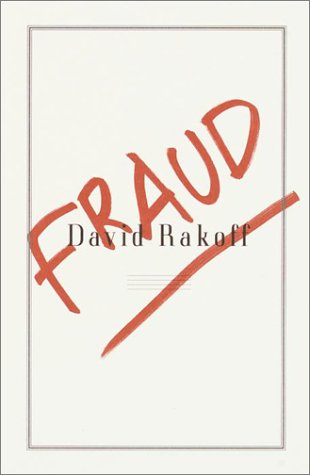
A talented new humorist springs onto the scene: Rakoff has a rapier wit, slashing in all directions with slice-of-life insights and cutting remarks, sometimes nicking himself with self-deprecation in his dexterous duello with the American experience. Rakoff is a public radio personality, and his first collection contains his material from public radio's This American Life and from Outside and Salon, as well as a few new pieces. Assigned to visit a New Age retreat for a Buddhism workshop led by Steven Seagal, to look for elves in Iceland, to attend the Aspen Comedy Festival and to train at a wilderness survival camp, Rakoff endures urban dweller misadventures with a spin that occasionally remind one of Fran Lebowitz, such as during his hike up a New Hampshire mountain: "If only the mist would part to reveal a beautiful, beautiful parking lot, I will get through this." Outstanding is "Lush Life," a look at the delusions and despair of low-paid NYC editorial assistants, "complicit believers in the mythic glamour of a literary New York" yet forced to subsist on "salmonella-friendly" free snacks in "unhappening bars" where they can avoid former classmates with six-figure incomes. Rakoff can be as funny as Dave Barry or George Carlin, but he adds a touch of pathos, peeling away poignant layers unexplored by other humor writers. The author's woodcut illustrations are barely adequate, since the book cries out for Ralph Steadman art. The book cries out, period. (May 15)Forecast: With national print advertising and a national author tour in the offing, plus his radio exposure, Rakoff will quickly find his readership and they him. The crude pink marker scrawl of the title will make the book an eye-catching item in store displays.
Copyright 2001 Cahners Business Information, Inc.
Rakoff--urban, gay, Canadian, and Jewish--exposes fraud in a variety of guises in his tightly wound and hilarious essays, including his own sense of imposture while on assignment in a small New England town at Christmas. A Salon writer and a member of the smart, witty, and hip National Public Radio coterie of David Sedaris, Sarah Vowell, and Ira Glass, with whom he collaborated on This American Life, Rakoff, charming like a snake, writes with verve, irony, and insight, cajoling readers into recognizing the stale, even absurd assumptions underlying so much of what society deems normal, desirable, and worthy of acclaim. Whether he's recalling his self-defining experience on a kibbutz or the whiny but lapdog-eager life of a New York publishing assistant, or observing Steven Seagal at the Omega Institute for Holistic Studies (where Rakoff discerns "narcissism posing as altruism"), or chronicling his brief appearance on a soap opera (acting is his "hobby"), or venomously critiquing contemporary movie humor, Rakoff is unfailingly on target. Donna Seaman
Copyright © American Library Association. All rights reserved
Though replete with wit (Rakoff clearly prefers to provoke a smirk rather than a belly laugh), this book should not be relegated to the humor shelves. And despite the frequent use of first person, indeed the starring role the author often grants himself, most readers won't think of this as autobiography, much less memoir. Journalist, actor, and radio commentator Rakoff has gathered in his first book what can best be described as essays on contemporary culture. The only real theme is his attitude self-deprecating when not self-doubting but no more enchanted with the rest of humanity and the contrivance of his position as irreconcilable outsider. By his own estimate, Rakoff is too thin, gay, Jewish, Canadian, and devoutly urban, while these essays find him climbing a New Hampshire mountain on Christmas day, reporting on the U.S. Comedy Arts Festival in Aspen, playing a modeling agent on a daytime soap, tagging along with Austrians invited to teach in the New York City public school system, and so forth. These situations, however, are mere excuses to expose small parts of the world in which we live. Rakoff's real talent, and there is plenty of it on display here, resides in his powers of social and personal analysis in the guise of description. Highly recommended for general collections. Eric Bryant, "Library Journal"
Copyright 2001 Reed Business Information, Inc.
Excerpt. © Reprinted by permission. All rights reserved.
Erla Steffansdottir makes her miving as a piano teacher, but is more widely known as one of Iceland's most noted Elf communicators. Her maps of Hidden People sites are on sale in tourist shops all around Iceland.She claims she has been seeing elves and Hidden People her whole life. I have been led to believe that my chances of meeting Erla would be slim to none, that she is difficult, that she will not be helpful, that she traffics in arbitrary rivalries in the Elf-spotting community.
I'm inclined to believe the rumors after my initial encounter when I first call to set up the interview. Erla actually seems to be sobbing on the other end of the phone, all the while talking to me. Then again, in her defense, who actually picks up the phone in the middle of a crying jag? Besides, without having to push, she tells me to come the next day at four o'clock.
I was expecting a wild hair, clanking jewelry, a tatterdemalion velvet cape from whose folds wafted the scent of incense, a house full of candles, dream catchers, cats, and bad art. Instead, I found a friendly if somewhat shy woman in her forties living in a lovely apartment on the top floor of a Reykjavik townhouse with a bay window. Aside from a tiny elf figure made of three painted stones, piled up snowman style outside her front door, Erla's house is decorated in the tasteful, middle class aesthetic one might expect of a piano teacher: landscape paintings, old furniture. The place is warm and cozy on a particularly blustering, windy day.
Erla's friend Bjork is there to translate, although Erla's English is sufficient to slap me down at our rather awkward beginning. I ask when she first realized she could see Hidden People. "This is very stupid to ask when I see. When I was born. Like that one right there." she says, indicating a place on the coffee table beside a Danish modern glass ashtray. She then catches herself. "Oh that's right. You can't see it." she shakes her head slightly, amused at her forgetfulness that others do not possess her gift. It's a somewhat disingenuous moment, like when your friend, newly back from a semester in Paris, says to you, "It's like, uhm, oh I forget the English word, how you say....fromage?"
Apparently the coffee table in front of me is a veritable marketplace of elves milling about, many of them in separate dimensions and oblivious to one another. Bjork takes over, essentially ferrying me through this gnomish cocktail party:
"One sits there, two are walking over here, one sits there. When she plays music they come. It attracts them."
I am suddenly overcome with a completely inappropriate urge: the barely suppressed impulse to slam my hand down on the coffee table really, really hard, right where she's pointing.
Apparently the elves on the table are in too remote a dimension, and are too small to talk to. Conveniently, every home also comes equipped with a House Elf, about the size of the average three-year-old, with whom one can communicate. "Every home?" I ask.
"Yes you have one in your house in New York, too." Bjork assures me.
If only my House Elf, sick and tired of my skepticism, was taking pains to prove his existence once and for all by cleaning my apartment for me at that very moment, I joke. Leadest of balloons.
But Bjork points out that house elves are a privilege, not a right. When the energy of a given house gets too negative, she says, when there is drinking or fighting, the elves will leave. Not terribly surprisingly, mysticism, New Age philosophy, Recovery-speak, and elves are conflated as one. Erla says that elves are a manifestation of nature, they are inherently good; without them we would choke on our own pollution. There is almost no more urban point of view of nature than this pastoral, idyllic one: Humankind bad, Nature good. As in, drinking and fighting bad, elves and flowers good. But it's a false dichotomy. After all, following this logic, Sistine Chapel bad, Ebola virus good?
"About this title" may belong to another edition of this title.
Search results for Fraud

Stock Image
Fraud
Seller: Orion Tech, Kingwood, TX, U.S.A.
Seller rating 5 out of 5 stars

Hardcover. Condition: Good. Seller Inventory # 038550084X-3-26643325
Stock Image
Fraud
Seller: Gulf Coast Books, Cypress, TX, U.S.A.
Seller rating 5 out of 5 stars
Hardcover. Condition: Good. Seller Inventory # 038550084X-3-18419689
Stock Image
The Fraud
Published by
Bantam Doubleday Dell Publishing Group Inc, 2001
ISBN 10: 038550084X
ISBN 13: 9780385500845
Used
Hardcover
Seller: World of Books (was SecondSale), Montgomery, IL, U.S.A.
Seller rating 5 out of 5 stars
Hardback. Condition: Good. At the heart of Anita Brookner's new novel lies a double mystery: What has happened to Anna Durrant, a solitary woman of a certain age who has disappeared from her London flat? And why has it taken four months for anyone to notice? As Brookner reconstructs Anna's life and character through the eyes of her acquaintances, she gives us a witty yet ultimately devastating study of self-annihilating virtue while exposing the social, fiscal, and moral frauds that are the underpinnings of terrifying rectitude. Seller Inventory # 00098849228
Stock Image
The Fraud
Published by
Bantam Doubleday Dell Publishing Group Inc, 2001
ISBN 10: 038550084X
ISBN 13: 9780385500845
Used
Hardcover
Seller: World of Books (was SecondSale), Montgomery, IL, U.S.A.
Seller rating 5 out of 5 stars
Hardback. Condition: Fair. At the heart of Anita Brookner's new novel lies a double mystery: What has happened to Anna Durrant, a solitary woman of a certain age who has disappeared from her London flat? And why has it taken four months for anyone to notice? As Brookner reconstructs Anna's life and character through the eyes of her acquaintances, she gives us a witty yet ultimately devastating study of self-annihilating virtue while exposing the social, fiscal, and moral frauds that are the underpinnings of terrifying rectitude. Seller Inventory # 00096671094
Seller Image
Fraud
Seller: Greenworld Books, Arlington, TX, U.S.A.
Seller rating 5 out of 5 stars
Condition: very_good. Fast Free Shipping â" Very Good condition book with a firm cover and clean pages. Shows normal use and some light wear or limited notes markings. A solid, nice copy to enjoy. Seller Inventory # GWV.038550084X.VG
Seller Image
Fraud
Seller: Greenworld Books, Arlington, TX, U.S.A.
Seller rating 5 out of 5 stars
Condition: good. Fast Free Shipping â" Good condition. It may show normal signs of use, such as light writing, highlighting, or library markings, but all pages are intact and the book is fully readable. A solid, complete copy that's ready to enjoy. Seller Inventory # GWV.038550084X.G
Stock Image
Fraud
Seller: BooksRun, Philadelphia, PA, U.S.A.
Seller rating 5 out of 5 stars
Hardcover. Condition: Very Good. 1. With dust jacket. It's a well-cared-for item that has seen limited use. The item may show minor signs of wear. All the text is legible, with all pages included. It may have slight markings and/or highlighting. Seller Inventory # 038550084X-11-18-29
Stock Image
Fraud
Seller: Evergreen Goodwill, Seattle, WA, U.S.A.
Seller rating 5 out of 5 stars
hardcover. Condition: Good. Seller Inventory # mon0000434730
Stock Image
Fraud
Seller: Once Upon A Time Books, Siloam Springs, AR, U.S.A.
Seller rating 4 out of 5 stars

hardcover. Condition: Acceptable. This is a used book. It may contain highlighting/underlining and/or the book may show heavier signs of wear . It may also be ex-library or without dustjacket. This is a used book. It may contain highlighting/underlining and/or the book may show heavier signs of wear . It may also be ex-library or without dustjacket. Seller Inventory # mon0001188098
Stock Image
The Fraud
Published by
Bantam Doubleday Dell Publishing Group Inc, 2001
ISBN 10: 038550084X
ISBN 13: 9780385500845
Used
Hardcover
Seller: World of Books Inc, Montgomery, IL, U.S.A.
Seller rating 4 out of 5 stars
Hardback. Condition: Fair. At the heart of Anita Brookner's new novel lies a double mystery: What has happened to Anna Durrant, a solitary woman of a certain age who has disappeared from her London flat? And why has it taken four months for anyone to notice? As Brookner reconstructs Anna's life and character through the eyes of her acquaintances, she gives us a witty yet ultimately devastating study of self-annihilating virtue while exposing the social, fiscal, and moral frauds that are the underpinnings of terrifying rectitude. Seller Inventory # CIN038550084XA