
Items related to The Art of the Novel
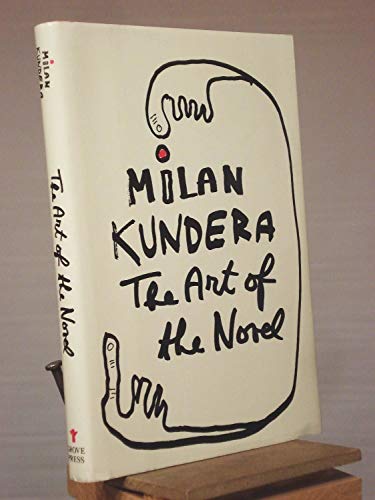
Synopsis
Landmark collection of essays on subject. The first appearance of the title in English. The artistic manifesto of the greatest living "postmodern" novelist. Written with a strong philosophical and aesthetic background, the book's greatest value is as the perfect antidote to the countless, dreary "critical theory" studies churned out by unimaginative and mediocre university professor/hacks. One of the most eloquent books on the novelist's art, it is indispensable to a greater understanding of Milan Kundera's roots, influences and very deeply held beliefs as a novelist as well as to the very possibilities of the novel itself as an art form. Wise, tender, poetic, intelligent and witty, as is to be expected from Kundera's novels, and to be found in these essays, too. The question is no longer whether Kundera deserves to win the Nobel Prize but whether the award is worthy of him. 2005, ModernRare.com
"synopsis" may belong to another edition of this title.
About the Author
The Franco-Czech novelist Milan Kundera was born in Brno and has lived in France, his second homeland, since 1975. He is the author of the novels The Joke, Farewell Waltz, Life Is Elsewhere, The Book of Laughter and Forgetting, The Unbearable Lightness of Being, and Immortality, and the short-story collection Laughable Loves—all originally written in Czech. His most recent novels Slowness, Identity, and Ignorance, as well as his nonfiction works The Art of the Novel, Testaments Betrayed, The Curtain, and Encounter, were originally written in French.
Excerpt. © Reprinted by permission. All rights reserved.
Part One
The Depreciated Legacy of Cervantes
In 1935, three years before his death, Edmund Husserl gave his celebrated lectures in Vienna and Prague on the crisis of European humanity. For Husserl, the adjective "European" meant the spiritual identity that extends beyond geographical Europe (to America, for instance) and that was born with ancient Greek philosophy. In his view, this philosophy, for the first time in history, apprehended the world (the world as a whole) as a question to be answered. It interrogated the world not in order to satisfy this or that practical need but because "the passion to know had seized mankind."
The crisis Husserl spoke of seemed to him so profound that he wondered whether Europe was still able to survive it. The roots of the crisis lay for him at the beginning of the Modern Era, in Galileo and Descartes, in the one-sided nature of the European sciences, which reduced the world to a mere object of technical and mechanical investigation and put the concrete world of life, die Lebenswelt as he called it, beyond their horizon.
The rise of the sciences propelled man into the tunnels of the specialized disciplines. The more he advanced in knowledge, the less clearly could he see either the world as a whole or his own self, and he plunged further into what Husserl's pupil Heidegger called, in a beautiful and almost magical phrase, "the forgetting of being."
Once elevated by Descartes to "master and proprietor of, nature," man has now become a mere thing to the forces (of technology, of politics, of history) that bypass him, surpass him, possess him. To those forces, man's concrete being, his "world of life" (die Lebenswelt), has neither value nor interest: it is eclipsed, forgotten from the start.
"About this title" may belong to another edition of this title.
Search results for The Art of the Novel

Seller Image
The Art of the Novel
Seller: Bay State Book Company, North Smithfield, RI, U.S.A.
Seller rating 5 out of 5 stars

Condition: acceptable. The book is complete and readable, with all pages and cover intact. Dust jacket, shrink wrap, or boxed set case may be missing. Pages may have light notes, highlighting, or minor water exposure, but nothing that affects readability. May be an ex-library copy and could include library markings or stickers. Seller Inventory # BSM.1C8YV
Seller Image
The Art of the Novel
Seller: ZBK Books, Carlstadt, NJ, U.S.A.
Seller rating 5 out of 5 stars
Condition: like_new. Fast & Free Shipping â" Excellent condition book with clean cover and pages. Barely handled, with minimal wear. An outstanding copy, close to enjoy! Seller Inventory # ZWV.0571148190.LN
Stock Image
The Art of the Novel
Seller: World of Books (was SecondSale), Montgomery, IL, U.S.A.
Seller rating 5 out of 5 stars
Hardback. Condition: Good. Seller Inventory # 00100817038
Stock Image
The Art of the Novel
Seller: World of Books (was SecondSale), Montgomery, IL, U.S.A.
Seller rating 5 out of 5 stars
Hardback. Condition: Fair. Seller Inventory # 00110721075
Stock Image
The Art of the Novel
Seller: World of Books Inc, Montgomery, IL, U.S.A.
Seller rating 4 out of 5 stars

Hardback. Condition: Fair. Seller Inventory # CIN0571148190A
Stock Image
The Art of the Novel
Seller: World of Books Inc, Montgomery, IL, U.S.A.
Seller rating 4 out of 5 stars
Hardback. Condition: Good. Seller Inventory # CIN0571148190G
Stock Image
The Art of the Novel
Seller: Better World Books, Mishawaka, IN, U.S.A.
Seller rating 5 out of 5 stars
Condition: Good. Pages intact with minimal writing/highlighting. The binding may be loose and creased. Dust jackets/supplements are not included. Stock photo provided. Product includes identifying sticker. Better World Books: Buy Books. Do Good. Seller Inventory # 17263705-20
Seller Image
The Art of the Novel
Seller: WeBuyBooks, Rossendale, LANCS, United Kingdom
Seller rating 5 out of 5 stars
hardcover. Condition: Good. Most items will be dispatched the same or the next working day. A copy that has been read but remains in clean condition. All of the pages are intact and the cover is intact and the spine may show signs of wear. The book may have minor markings which are not specifically mentioned. Seller Inventory # rev6794526417
Buy Used
US$ 3.73
US$ 8.14 shipping
Ships from United Kingdom to U.S.A.
Ships from United Kingdom to U.S.A.
Quantity: 1 available
Stock Image
The Art of the Novel
Seller: Better World Books Ltd, Dunfermline, United Kingdom
Seller rating 5 out of 5 stars
Condition: Good. Pages intact with minimal writing/highlighting. The binding may be loose and creased. Dust jackets/supplements are not included. Stock photo provided. Product includes identifying sticker. Better World Books: Buy Books. Do Good. Seller Inventory # 17263705-20
Buy Used
US$ 6.21
US$ 6.62 shipping
Ships from United Kingdom to U.S.A.
Ships from United Kingdom to U.S.A.
Quantity: 1 available
Stock Image
The Art of the Novel
Seller: WorldofBooks, Goring-By-Sea, WS, United Kingdom
Seller rating 5 out of 5 stars
Hardback. Condition: Very Good. The book has been read, but is in excellent condition. Pages are intact and not marred by notes or highlighting. The spine remains undamaged. Seller Inventory # GOR001950978
Buy Used
US$ 6.30
US$ 7.41 shipping
Ships from United Kingdom to U.S.A.
Ships from United Kingdom to U.S.A.
Quantity: 2 available