
Items related to The Tree That Would Not Die
Synopsis
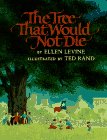
The story of a five-hundred-year-old Treaty Oak in Austin, Texas, is told from the tree's point of view, covers the nation's history that took place during the tree's lifetime, and describes the malicious 1989 poisoning that nearly destroyed it.
"synopsis" may belong to another edition of this title.
Reviews
Grade 1-3?The "Treaty Oak" in Austin, TX, becomes a wise old storyteller in this beautifully illustrated tale. From its sprouting from an acorn through the years of "First Peoples," European settlers, slavery, the Depression, and other historical events to the attempt to poison it in 1989, this tree tells all. While the sweeping full-color illustrations lend drama to the account, the text itself sometimes seems contrived. Events are transferred to the spot where the oak grows to make the story a better vehicle for chronicling the plight of Texas and various Texans. Its anthropomorphic wisdom about human shortcomings becomes annoying. But by the end of this story, the adventure of the building of Texas is fraught with human frailty, and this great old tree seems badly in need of counseling.?Steve Matthews, Foxcroft School, Middleburg, VA
Copyright 1995 Reed Business Information, Inc.
Ages 6^-9. Told in the first person from the viewpoint of the Treaty Oak, a 400-year-old oak tree that was poisoned in 1989, this picture book chronicles American history from the seemingly narrow perspective of what the tree might have seen. And it saw plenty: the good, the bad, and the ugly. Levine handles the difficulties of persona and time frame with grace, using sensory details to give immediacy to the quickly shifting scenes. Beginning with the acorn sprouting into a seedling, the tree tells of the birds and buffalo it shaded and the first people, who met beneath its branches. Later the Spaniards came, then Stephen Austin, who is said to have made peace with the Indians at the "Treaty Oak," as it is now known. The tree saw pioneers clear and plant the fields, watched Texans locate their new capital on the land, and hid an escaped slave in its branches. Cowboys herded their cattle nearby. Railroads, paved roads, and telephone poles crossed the land. People who lost their jobs during the Depression slept under the tree. Threatened by modern developers, the land around the tree was made into a park. Children will feel wrenched by the tree's poisoning but heartened by the outpouring of love, prayers, poems, and money to help save the Treaty Oak. Beautifully designed and painted, the artwork records the growth of the tree and the drama of unfolding history in a series of engaging spreads. Particularly effective are the scene-within-a-scene pictures of the young tree and the use of black pages for the poisoning. Without personifying the tree or diminishing its dignity, both Levine and Rand tell its story in a way that makes readers care, perhaps even moving them to tears. Carolyn Phelan
"About this title" may belong to another edition of this title.
Search results for The Tree That Would Not Die

Stock Image
The Tree That Would Not Die
Seller: World of Books (was SecondSale), Montgomery, IL, U.S.A.
Seller rating 5 out of 5 stars

Hardback. Condition: Good. Rand, Ted (illustrator). Seller Inventory # 00106432853
Stock Image
The Tree That Would Not Die
Seller: World of Books (was SecondSale), Montgomery, IL, U.S.A.
Seller rating 5 out of 5 stars
Hardback. Condition: Fair. Rand, Ted (illustrator). Seller Inventory # 00107637699
Stock Image
The Tree That Would Not Die
Seller: BooksRun, Philadelphia, PA, U.S.A.
Seller rating 5 out of 5 stars
Library Binding. Condition: Fair. Rand, Ted (illustrator). Soft Cover. With dust jacket. The item might be beaten up but readable. May contain markings or highlighting, as well as stains, bent corners, or any other major defect, but the text is not obscured in any way. Seller Inventory # 0590437240-7-1-29
Seller Image
The Tree That Would Not Die
Seller: Greenworld Books, Arlington, TX, U.S.A.
Seller rating 5 out of 5 stars
Condition: very_good. Rand, Ted (illustrator). Fast Free Shipping â" Very Good condition book with a firm cover and clean pages. Shows normal use and some light wear or limited notes markings. A solid, nice copy to enjoy. Seller Inventory # GWV.0590437240.VG
Stock Image
The Tree That Would Not Die
Seller: BooksRun, Philadelphia, PA, U.S.A.
Seller rating 5 out of 5 stars
Library Binding. Condition: Fair. Rand, Ted (illustrator). Soft Cover. With dust jacket. The item might be beaten up but readable. May contain markings or highlighting, as well as stains, bent corners, or any other major defect, but the text is not obscured in any way. Seller Inventory # 0590437240-7-22-29
Stock Image
The Tree That Would Not Die
Seller: Half Price Books Inc., Dallas, TX, U.S.A.
Seller rating 5 out of 5 stars
Library Binding. Condition: Very Good. Rand, Ted (illustrator). Connecting readers with great books since 1972! Used books may not include companion materials, and may have some shelf wear or limited writing. We ship orders daily and Customer Service is our top priority! Seller Inventory # S_464318437
Stock Image
The Tree That Would Not Die
Seller: ThriftBooks-Dallas, Dallas, TX, U.S.A.
Seller rating 5 out of 5 stars
Unknown. Condition: Very Good. No Jacket. Rand, Ted (illustrator). May have limited writing in cover pages. Pages are unmarked. ~ ThriftBooks: Read More, Spend Less. Seller Inventory # G0590437240I4N00
Stock Image
The Tree That Would Not Die
Seller: ThriftBooks-Atlanta, AUSTELL, GA, U.S.A.
Seller rating 5 out of 5 stars
Unknown. Condition: Very Good. No Jacket. Rand, Ted (illustrator). May have limited writing in cover pages. Pages are unmarked. ~ ThriftBooks: Read More, Spend Less. Seller Inventory # G0590437240I4N00
Stock Image
The Tree That Would Not Die
Seller: ThriftBooks-Reno, Reno, NV, U.S.A.
Seller rating 5 out of 5 stars
Unknown. Condition: Very Good. No Jacket. Rand, Ted (illustrator). May have limited writing in cover pages. Pages are unmarked. ~ ThriftBooks: Read More, Spend Less. Seller Inventory # G0590437240I4N00
Stock Image
The Tree That Would Not Die
Seller: HPB-Ruby, Dallas, TX, U.S.A.
Seller rating 5 out of 5 stars
Library Binding. Condition: Very Good. Rand, Ted (illustrator). Connecting readers with great books since 1972! Used books may not include companion materials, and may have some shelf wear or limited writing. We ship orders daily and Customer Service is our top priority! Seller Inventory # S_433244130