
Items related to The Tao of Jung: The Way of Integrity
Synopsis
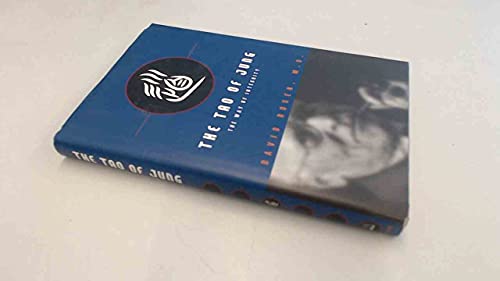
This startling and revealing new interpretation of Jung's life and psychology is based on the insight that he was essentially a Taoist. Drawing throughout on Jung's own letters, aphorisms, and other writings, The Tao of Jung looks at Jung through six crises of his personal development, including his break with Freud and his later work with the I Ching.
In structure the book is modeled on the classic Tao Te Ching - the world's most translated book after the Bible. David Rosen traces parallels between Jung's natural world and the psyche and that of Taoist philosophy, exploring the integration of opposites such as shadow/persona, yin/yang, dark/light, feminine/masculine; the Great Mother as the origin of all things; the I Ching and synchronicity; the Way of Integrity and individuation; and the need to release the ego and surrender to the Self or Tao.
"synopsis" may belong to another edition of this title.
About the Author
David H. Rosen, M.D., holds the only American full professorship in Jungian psychology, at Texas A&M University.
Reviews
Jungian concepts such as archetypes and the collective unconscious have become part of our culture's worldview, just as have some principles of Asian philosophies. So the insights in this book combining the two can be expected to intrigue many of today's readers. Indeed, psychoanalyst Rosen's (Transforming Depression) brief analysis of Jung's life in terms of Taoist principles is more an inspirational work than a biography. Jung became fascinated by Chinese religion and philosophy later in life, he explains. Rosen attempts to illuminate Jung's psychic development in terms of the Chinese concept of crisis, expressed by the pictographs for danger and opportunity. Jung's crisis, in Rosen's view, consisted of his break with Freud, with the pre-Freud and Freudian years represented by danger, the post-break years by opportunity. The text here consists mainly of biographical anecdotes juxtaposed with quotes from the Taoist masters Chuang-tzu and Lao-tzu and selections from the I Ching, some of which are more relevant than others. Rosen's approach works best for Jung's years at Bollinger, where the middle-aged and then the older Jung expressed his deepest understandings in stone carvings as well as in words. At Bollinger, Jung, already steeped in ancient lore, lived the life of a Taoist sage as he "integrated yin and yang forces and became a modest person in harmony with nature."
Copyright 1996 Reed Business Information, Inc.
David Rosen, M.D., who has the unique distinction of holding the only American full professorship in Jungian psychology, has written a biography of pioneering psychoanalyst Carl Jung, illustrating the development of Jung's philosophy of psychology and its similarities to the Tao Te Ching. Rosen traces the six crises of Jung's personal development, explaining how each stage compares to a tenet of the "way of the Tao." At the end of his life, Jung was introduced to Taoism and himself remarked on the similarities between the two philosophies. Rosen writes clearly and meticulously documents all of his references to Jung and the Tao. His work serves as a good introduction to both Taoism and Jungian psychology. Ted Leventhal
Psychiatrist Rosen has written a biographical study of his mentor, Carl Jung (1875-1961), from a Taoist standpoint. The text alternates between Jung's life and commentary based on quotations from the Tao Te Ching, which was well known to Jung. The integration of opposites?the balancing of yin and yang?structures the examination of the life events, dreams, and theories of both Jung and Rosen. In limpid prose, the author leads us on a journey of religious certainty along the Way, making use of mandalas and Chinese pictographs, sychronicity and facile dream interpretation. The converted will revel, while the skeptic will squirm at the mystical, self-justifying, banal connections. When presenting more straightforward biography, Rosen is both critical and forgiving of Jung's sexual affairs and his transient support of Nazism. In addition, he offers readers a surprisingly candid glimpse of the collapse of his own marriage over the writing of this book: "We, too, can let go of ego, confront shadow,...be guided by the soul and the spirit...[and] surrender to the natural way of integrity." For a more balanced, nonidolatrous approach by a Jungian from Asia, see Hayao Kawai's Buddhism and the Art of Psychotherapy (LJ 7/96).?E. James Lieberman, George Washington Univ., Washington, D.C.
Copyright 1996 Reed Business Information, Inc.
"About this title" may belong to another edition of this title.
Search results for The Tao of Jung: The Way of Integrity

Seller Image
The Tao of Jung: The Way of Integrity
Seller: Zoom Books Company, Lynden, WA, U.S.A.
Seller rating 5 out of 5 stars

Condition: very_good. Book is in very good condition and may include minimal underlining highlighting. The book can also include "From the library of" labels. May not contain miscellaneous items toys, dvds, etc. . We offer 100% money back guarantee and 24 7 customer service. Seller Inventory # ZBV.0670860697.VG
Seller Image
The Tao of Jung: The Way of Integrity
Seller: Austin Goodwill 1101, Austin, TX, U.S.A.
Seller rating 5 out of 5 stars
Condition: good. Book shows general signs of use and handling. May have light wear on the cover or edges and minimal writing or highlighting. Binding remains tight, and pages are clean and readable. Seller Inventory # CTXV.0670860697.G
Stock Image
The Tao of Jung: The Way of Integrity
Seller: Hawking Books, Edgewood, TX, U.S.A.
Seller rating 4 out of 5 stars

Condition: Very Good. Very Good Condition. Clean, tight and Neat. Five star seller - Buy with confidence! Seller Inventory # X0670860697X2
Stock Image
The Tao of Jung: The Way of Integrity
Seller: ThriftBooks-Reno, Reno, NV, U.S.A.
Seller rating 5 out of 5 stars
Hardcover. Condition: Very Good. No Jacket. May have limited writing in cover pages. Pages are unmarked. ~ ThriftBooks: Read More, Spend Less. Seller Inventory # G0670860697I4N00
Stock Image
The Tao of Jung: The Way of Integrity
Seller: Bookmans, Tucson, AZ, U.S.A.
Seller rating 5 out of 5 stars
Hardcover. Condition: Good. Satisfaction 100% guaranteed. Seller Inventory # mon0002770335
Stock Image
The Tao of Jung: The Way of Integrity
Seller: ThriftBooks-Dallas, Dallas, TX, U.S.A.
Seller rating 5 out of 5 stars
Hardcover. Condition: Very Good. No Jacket. May have limited writing in cover pages. Pages are unmarked. ~ ThriftBooks: Read More, Spend Less. Seller Inventory # G0670860697I4N00
Stock Image
The Tao of Jung: The Way of Integrity
Seller: ThriftBooks-Atlanta, AUSTELL, GA, U.S.A.
Seller rating 5 out of 5 stars
Hardcover. Condition: Very Good. No Jacket. May have limited writing in cover pages. Pages are unmarked. ~ ThriftBooks: Read More, Spend Less. Seller Inventory # G0670860697I4N00
Stock Image
The Tao of Jung: The Way of Integrity
Seller: Half Price Books Inc., Dallas, TX, U.S.A.
Seller rating 5 out of 5 stars
hardcover. Condition: Very Good. Connecting readers with great books since 1972! Used books may not include companion materials, and may have some shelf wear or limited writing. We ship orders daily and Customer Service is our top priority! Seller Inventory # S_480472656
Stock Image
The Tao of Jung: The Way of Integrity
Published by
Viking Adult, 1996
ISBN 10: 0670860697
ISBN 13: 9780670860692
Used
Hardcover
First Edition
Seller: Jay W. Nelson, Bookseller, IOBA, Austin, MN, U.S.A.
Seller rating 5 out of 5 stars
Hardcover. Condition: Near Fine. Dust Jacket Condition: Near Fine. 1st Edition. Near fine book and jacket. Seller Inventory # 102719
Stock Image
THE TAO OF JUNG: THE WAY OF INTEGRITY
Published by
Viking Arkana, New York, 1996
ISBN 10: 0670860697
ISBN 13: 9780670860692
Used
Hardcover
First Edition
Seller: JB's Book Vault, Buffalo, WY, U.S.A.
Seller rating 5 out of 5 stars
Hardcover. Condition: Fine. Dust Jacket Condition: Fine dust. First Edition. Book is in FINE condition - bright boards and sound binding. Dust jacket is in FINE condition - bright, intact and whole. W.04; 8vo - over 7¾" - 9¾" tall. Seller Inventory # 001877