Items related to Where Wizards Stay Up Late: The Origins of the Internet
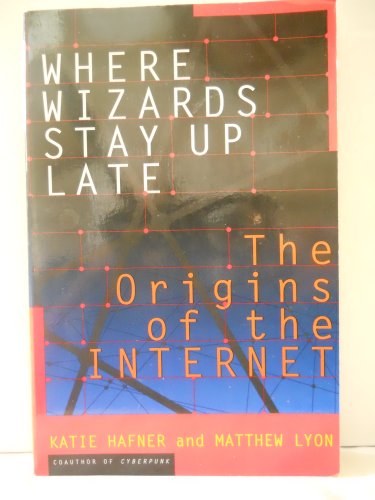

A history of the Internet and the story of the scientists behind its creation describes the 1960s effort funded by the Defense Department and the technologies that contributed to its monumental growth
"synopsis" may belong to another edition of this title.
Review:
Considering that the history of the Internet is perhaps better documented internally than any other technological construct, it is remarkable how shadowy its origins have been to most people, including die-hard Net-denizens!
About the Author:
At last, Hafner and Lyon have written a well-researched story of the origins of the Internet substantiated by extensive interviews with its creators who delve into many interesting details such as the controversy surrounding the adoption of our now beloved "@" sign as the separator of usernames and machine addresses. Essential reading for anyone interested in the past -- and the future -- of the Net specifically, and telecommunications generally.
Katie Hafner is a technology correspondent at Newsweek and coauthor of Cyberpunk: Outlaws and Hackers on the Computer Frontier. Matthew Lyon and Katie Hafner are married and live in the San Francisco Bay area.
"About this title" may belong to another edition of this title.
- PublisherSimon & Schuster
- Publication date1996
- ISBN 10 0684812010
- ISBN 13 9780684812014
- BindingHardcover
- Number of pages304
- Rating
Buy New
Learn more about this copy
US$ 26.14
Shipping:
US$ 3.00
Within U.S.A.
Other Popular Editions of the Same Title
Top Search Results from the AbeBooks Marketplace
Stock Image
Where Wizards Stay Up Late: The Origins of the Internet
Published by
Simon & Schuster
(1996)
ISBN 10: 0684812010
ISBN 13: 9780684812014
New
Hardcover
Quantity: 1
Seller:
Rating

Book Description Condition: new. Seller Inventory # newMercantile_0684812010
Buy New
US$ 26.14
Convert currency
Stock Image
Where Wizards Stay Up Late: The Origins of the Internet
Published by
Simon & Schuster
(1996)
ISBN 10: 0684812010
ISBN 13: 9780684812014
New
Hardcover
Quantity: 1
Seller:
Rating
Book Description Hardcover. Condition: new. New. Fast Shipping and good customer service. Seller Inventory # Holz_New_0684812010
Buy New
US$ 25.28
Convert currency
Stock Image
Where Wizards Stay Up Late: The Origins of the Internet
Published by
Simon & Schuster
(1996)
ISBN 10: 0684812010
ISBN 13: 9780684812014
New
Hardcover
Quantity: 1
Seller:
Rating
Book Description Hardcover. Condition: new. New. Seller Inventory # Wizard0684812010
Buy New
US$ 28.25
Convert currency
Stock Image
Where Wizards Stay Up Late: The Origins of the Internet
Published by
Simon & Schuster
(1996)
ISBN 10: 0684812010
ISBN 13: 9780684812014
New
Hardcover
Quantity: 1
Seller:
Rating
Book Description Hardcover. Condition: new. Buy for Great customer experience. Seller Inventory # GoldenDragon0684812010
Buy New
US$ 28.69
Convert currency
Stock Image
Where Wizards Stay Up Late: The Origins of the Internet
Published by
Simon & Schuster
(1996)
ISBN 10: 0684812010
ISBN 13: 9780684812014
New
Hardcover
Quantity: 1
Seller:
Rating
Book Description Hardcover. Condition: new. New Copy. Customer Service Guaranteed. Seller Inventory # think0684812010
Buy New
US$ 31.15
Convert currency
Stock Image
Where Wizards Stay Up Late: The Origins of the Internet
Published by
Simon Schuster
(1996)
ISBN 10: 0684812010
ISBN 13: 9780684812014
New
Hardcover
Quantity: 1
Seller:
Rating
Book Description Condition: new. Seller Inventory # FrontCover0684812010
Buy New
US$ 33.44
Convert currency
Stock Image
Where Wizards Stay Up Late: The Origins of the Internet
Published by
Simon & Schuster
(1996)
ISBN 10: 0684812010
ISBN 13: 9780684812014
New
Hardcover
Quantity: 1
Seller:
Rating
Book Description Hardcover. Condition: New. Seller Inventory # DADAX0684812010
Buy New
US$ 40.70
Convert currency
Stock Image
WHERE WIZARDS STAY UP LATE: THE
Published by
Simon & Schuster
(1996)
ISBN 10: 0684812010
ISBN 13: 9780684812014
New
Hardcover
Quantity: 1
Seller:
Rating

Book Description Condition: New. New. In shrink wrap. Looks like an interesting title! 1.35. Seller Inventory # Q-0684812010
Buy New
US$ 58.63
Convert currency
Seller Image
Where Wizards Stay Up Late: The Origins of the Internet
Published by
Simon & Schuster
(1996)
ISBN 10: 0684812010
ISBN 13: 9780684812014
New
Hardcover
Quantity: 1
Seller:
Rating
Book Description Condition: new. Book is in NEW condition. Satisfaction Guaranteed! Fast Customer Service!!. Seller Inventory # PSN0684812010
Buy New
US$ 61.63
Convert currency