Synopsis
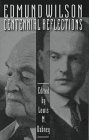
Edmund Wilson helped shape American letters from the early 1920's through the mid-'60s. He remains a presence in our literary culture, and his accounts of art and society have influenced a younger generation of readers and thinkers. This vibrant collection emerges from symposiums held at the Mercantile Library and at Princeton University in 1995, Wilson's centennial year. At these occasions, prominent critics, literary journalists, and historians aired a variety of points of view about his work and personality. Assembled and edited by Lewis Dabney, this book shows new intellectual voices interacting with veterans who knew Wilson and his times.
In the first part, Morris Dickstein, Jason Epstein, Barbara Epstein, David Bromwich, Jed Perl, and Mark Krupnick comment on Wilson's development as a critic, his faith in reason and his personal romanticism, his version of modernism and eclectic interest in the arts, as well as the sources of his later writing about Judaism. In the second section, a reading of the journals from The Twenties to The Sixties by Neale Reinitz and a chapter from Dabney's biography-in-progress lead to the reminiscences of Elizabeth Hardwick, Jason Epstein, Mary Meigs, Roger Straus, and Alfred Kazin, as well as Michael C. D. Macdonald, the son of family friends, and the Dead Sea Scrolls scholar James Sanders giving an authentic sense of Wilson's place in the literary life. Two of his important works, the study of the Marxist intellectual tradition in To the Finland Station and of Civil War literature in Patriotic Gore, anchor the discussion in the third part. Here David Remnick and Daniel Aaron debate his radical commitment, joined by Arthur Schlesinger and others in a vigorous exchange, and Randall Kennedy's attack on Wilson's neglect of nineteenth-century black writers provokes a response from Toni Morrison. Instructive essays by Andrew Delbanco and Louis Menand, and discerning comments by Paul Berman and Sean Wilentz round out the volume.
Originally published in 1997.
The Princeton Legacy Library uses the latest print-on-demand technology to again make available previously out-of-print books from the distinguished backlist of Princeton University Press. These editions preserve the original texts of these important books while presenting them in durable paperback and hardcover editions. The goal of the Princeton Legacy Library is to vastly increase access to the rich scholarly heritage found in the thousands of books published by Princeton University Press since its founding in 1905.
"synopsis" may belong to another edition of this title.
Reviews
This solid but too disparate collection of essays and panel discussions (drawn from a series of 1995 symposia celebrating the centenary of his birth) revisits Wilson's life, work, and legacy. Though he longed to be a novelist, Wilson found his greatest success with such classic critical and historical works as Axel's Castle, Patriotic Gore, and To the Finland Station. He had a true gift for elucidation and was keenly enough attuned to the subtleties of his culture to become an active shaping force. In the words of Random House editor Jason Epstein: ``He will eventually prove to be one of the greatest of our writers. Not so much for his individual works . . . but as perhaps the greatest teacher our literature has ever produced.'' Despite the similar accolades that lard this collection, one has to at least ask the question: Why? To critique the critic, to embed the historian in history, is to risk the law of diminishing returns, never mind academic navel-gazing. However, Dabney, a professor of English at the University of Wyoming and editor of several books by and about Wilson, has chosen most of his material well, and the list of contributors, from Arthur Schlesinger to Alfred Kazin and Louis Menand, is certainly impressive. But it is the nature of essays to be narrowly focused, and this leads here to a wallowing in minutiae. Essays on Wilson's philo-Semitism, romanticism, and lack of attention to minority writers, while well realized, are only fractionally revealing. More enlightening are the essays that broadly consider Wilson and his abiding cultural importance, particularly Louis Menand's ``Edmund Wilson and His Times'' and Paul Berman's ``Wilson and Our Non-Wilsonian Age.'' While the general reader will probably be lost throughout a good portion of this collection, it is a neat treat for die-hard Wilsonians. -- Copyright ©1997, Kirkus Associates, LP. All rights reserved.
"About this title" may belong to another edition of this title.

