
Items related to An Introduction to English Runes
Synopsis
Introduction to the use of runes as a practical script for a variety of purposes in Anglo-Saxon England.
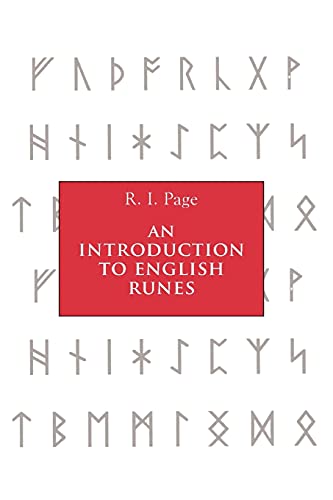
Runes are quite frequently mentioned in modern writings, usually imprecisely as a source of mystic knowledge, power or insight. This book sets the record straight. It shows runes working as a practical script for a variety of purposes in early English times, among both indigenous Anglo-Saxons and incoming Vikings. In a scholarly yet readable way it examines the introduction of the runic alphabet (the futhorc) to England in the fifth and sixth centuries, the forms and values of its letters, and the ways in which it developed, up until its decline at the end of the Anglo-Saxon period. It discusses how runes were used for informal and day-to-day purposes, on formal monuments, as decorative letters in prestigious manuscripts, for owners' or makers' names on everyday objects, perhaps even in private letters.
For the first time, the book presents, together with earlier finds, the many runic objects discovered over the last twenty years, with a range of inscriptions on bone, metal and stone, even including tourists' scratched signatures found on the pilgrimage routes through Italy. It gives an idea of the immense range of informationon language and social history contained in these unique documents.
The late R.I. PAGE was former Professor of Anglo-Saxon in the University of Cambridge.
"synopsis" may belong to another edition of this title.
About the Author
The late R.I. PAGE was former Professor of Anglo-Saxon in the University of Cambridge.
"About this title" may belong to another edition of this title.
Search results for An Introduction to English Runes

Stock Image
An Introduction to English Runes
Seller: WorldofBooks, Goring-By-Sea, WS, United Kingdom
Seller rating 5 out of 5 stars

Paperback. Condition: Very Good. The book has been read, but is in excellent condition. Pages are intact and not marred by notes or highlighting. The spine remains undamaged. Seller Inventory # GOR005796976
Buy Used
US$ 25.15
US$ 7.40 shipping
Ships from United Kingdom to U.S.A.
Ships from United Kingdom to U.S.A.
Quantity: 2 available
Stock Image
An Introduction to English Runes
Seller: World of Books (was SecondSale), Montgomery, IL, U.S.A.
Seller rating 5 out of 5 stars
Paperback. Condition: Good. Introduction to the use of runes as a practical script for a variety of purposes in Anglo-Saxon England. Seller Inventory # 00105577885
Seller Image
Introduction to English Runes
Seller: GreatBookPrices, Columbia, MD, U.S.A.
Seller rating 5 out of 5 stars
Condition: As New. Unread book in perfect condition. Seller Inventory # 1519524
Seller Image
Introduction to English Runes
Seller: GreatBookPrices, Columbia, MD, U.S.A.
Seller rating 5 out of 5 stars
Condition: New. Seller Inventory # 1519524-n
Seller Image
An Introduction to English Runes (Paperback or Softback)
Published by
Boydell Press 6/18/2006, 2006
ISBN 10: 085115946X
ISBN 13: 9780851159461
New
Paperback or Softback
Seller: BargainBookStores, Grand Rapids, MI, U.S.A.
Seller rating 5 out of 5 stars
Paperback or Softback. Condition: New. An Introduction to English Runes. Book. Seller Inventory # BBS-9780851159461
Seller Image
An Introduction to English Runes
Published by
Boydell and Brewer Ltd, GB, 2006
ISBN 10: 085115946X
ISBN 13: 9780851159461
New
Paperback
Seller: Rarewaves.com USA, London, LONDO, United Kingdom
Seller rating 5 out of 5 stars
Paperback. Condition: New. Introduction to the use of runes as a practical script for a variety of purposes in Anglo-Saxon England.Runes are quite frequently mentioned in modern writings, usually imprecisely as a source of mystic knowledge, power or insight. This book sets the record straight. It shows runes working as a practical script for a variety of purposes in early English times, among both indigenous Anglo-Saxons and incoming Vikings. In a scholarly yet readable way it examines the introduction of the runic alphabet (the futhorc) to England in the fifth and sixth centuries, the forms and values of its letters, and the ways in which it developed, up until its decline at the end of the Anglo-Saxon period. It discusses how runes were used for informal and day-to-day purposes, on formal monuments, as decorative letters in prestigious manuscripts, for owners' or makers' names on everyday objects, perhaps even in private letters. For the first time, the book presents, together with earlier finds, the many runic objects discovered over the last twenty years, with a range of inscriptions on bone, metal and stone, even including tourists' scratched signatures found on the pilgrimage routes through Italy. It gives an idea of the immense range of informationon language and social history contained in these unique documents. The late R.I. PAGE was former Professor of Anglo-Saxon in the University of Cambridge. Seller Inventory # LU-9780851159461
Buy New
US$ 36.56
Free Shipping
Ships from United Kingdom to U.S.A.
Ships from United Kingdom to U.S.A.
Quantity: 14 available
Seller Image
An Introduction to English Runes
Published by
Boydell and Brewer Ltd, GB, 2006
ISBN 10: 085115946X
ISBN 13: 9780851159461
New
Paperback
Seller: Rarewaves USA, HEBRON, KY, U.S.A.
Seller rating 5 out of 5 stars
Paperback. Condition: New. Introduction to the use of runes as a practical script for a variety of purposes in Anglo-Saxon England.Runes are quite frequently mentioned in modern writings, usually imprecisely as a source of mystic knowledge, power or insight. This book sets the record straight. It shows runes working as a practical script for a variety of purposes in early English times, among both indigenous Anglo-Saxons and incoming Vikings. In a scholarly yet readable way it examines the introduction of the runic alphabet (the futhorc) to England in the fifth and sixth centuries, the forms and values of its letters, and the ways in which it developed, up until its decline at the end of the Anglo-Saxon period. It discusses how runes were used for informal and day-to-day purposes, on formal monuments, as decorative letters in prestigious manuscripts, for owners' or makers' names on everyday objects, perhaps even in private letters. For the first time, the book presents, together with earlier finds, the many runic objects discovered over the last twenty years, with a range of inscriptions on bone, metal and stone, even including tourists' scratched signatures found on the pilgrimage routes through Italy. It gives an idea of the immense range of informationon language and social history contained in these unique documents. The late R.I. PAGE was former Professor of Anglo-Saxon in the University of Cambridge. Seller Inventory # LU-9780851159461
Stock Image
Introduction to English Runes
Published by
Boydell Press 2006-05-18, 2006
ISBN 10: 085115946X
ISBN 13: 9780851159461
New
Paperback
Seller: Chiron Media, Wallingford, United Kingdom
Seller rating 5 out of 5 stars
Paperback. Condition: New. Brand new book, sourced directly from publisher. Dispatch time is 24-48 hours from our warehouse. Book will be sent in robust, secure packaging to ensure it reaches you securely. Seller Inventory # 6666-GRD-9780851159461
Buy New
US$ 30.92
US$ 6.60 shipping
Ships from United Kingdom to U.S.A.
Ships from United Kingdom to U.S.A.
Quantity: 3 available
Stock Image
An Introduction to English Runes
Seller: California Books, Miami, FL, U.S.A.
Seller rating 5 out of 5 stars
Condition: New. Seller Inventory # I-9780851159461
Stock Image
An Introduction to English Runes
Seller: World of Books Inc, Montgomery, IL, U.S.A.
Seller rating 4 out of 5 stars

Paperback. Condition: Good. Introduction to the use of runes as a practical script for a variety of purposes in Anglo-Saxon England. Seller Inventory # CIN085115946XG