
Items related to Transforming Leadership: The Pursuit of Happiness
Synopsis
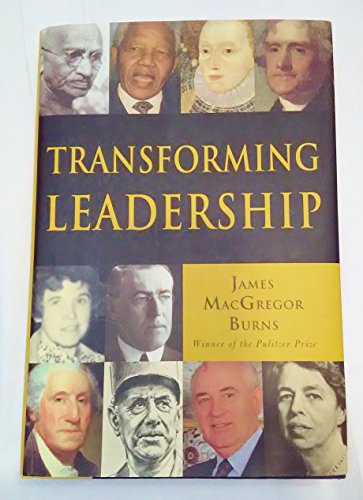
An award-winning historian critically examines the role of leadership in the twenty-first century, outlining a program of "Transforming Leadership," through which leaders can become agents of positive social change. 25,000 first printing.
"synopsis" may belong to another edition of this title.
About the Author
James MacGregor Burns is senior scholar at the Jepson School of Leadership Studies at the University of Richmond and Woodrow Wilson Professor of Political Science Emeritus at Williams College. He is the author of numerous books, including Transforming Leadership, The American Experiment, The Deadlock of Democracy, Roosevelt: The Lion and the Fox, Roosevelt: The Soldier of Freedom, and The Three Roosevelts (with coauthor Susan Dunn).
Reviews
Twenty-five years after the publication of Leadership, Burns expands upon his theories about how leaders cultivate their successors to explore how they create environments conducive to social and personal development. He distinguishes between "transactional" leaders, who thrive on cutting deals, and "transforming" leaders, whose sweeping changes totally revamp political institutions. Although the book relies on a variety of historical examples, it devotes particular attention to Franklin Roosevelt, about whom Burns has written extensively in the past (The Lion and the Fox; The Soldier of Freedom). Burns's underlying theory imagines leadership as part of a broader social process in which leaders and followers are closely interrelated. Starting with psychologist Abraham Maslow's theories of the hierarchy of human needs, the book suggests leaders attain their power through their responsiveness to others' desires for security, self-esteem and personal development, putting themselves in a position to "create and expand the opportunities that empower people to pursue happiness for themselves." As such, leadership is an inherently positive process, distinguishable from tyranny by the latter's inability to promote liberty and equality. Amusing asides, in which Burns describes how he attempted to apply his understanding of leadership principles to raising his children, enliven the scholarly consideration of leadership's evolution over the centuries. These accessible anecdotes, as well as Burns's explications of historical examples, will ensure the book's influence extends beyond its most obvious implications for political science.
Copyright 2003 Reed Business Information, Inc.
Burns continues to study the art of leadership in this new examination of what he calls transitional leadership. Taking into account Jefferson's famous words, Burns states that the most successful leaders are those who are conscious of the pursuit of happiness. But what exactly is the pursuit of happiness? Burns believes it begins with the basic human necessities of food and shelter and includes the desire for dignity and respect. Some leaders are just deal makers and opportunists for a select group, but the author defines transitional leaders as those who aim "for the protection and nourishing of happiness, for extending the opportunity to pursue happiness to all people." Analyzing past leaders (FDR, Gandhi, Mao Tse-tung, among others) and changes and revolutions in leadership around the world, Burns gives concise histories behind the subject matters before dissecting the different leadership styles of monarchs, politicians, and social reformers and the impact they have made throughout the world. An excellent examination of the art of motivating, organizing, and directing people for the common good. Michelle Kaske
Copyright © American Library Association. All rights reserved
"About this title" may belong to another edition of this title.
Search results for Transforming Leadership: The Pursuit of Happiness

Stock Image
Transforming Leadership: The Pursuit of Happiness
Seller: World of Books (was SecondSale), Montgomery, IL, U.S.A.
Seller rating 5 out of 5 stars

Hardback. Condition: Good. In 1978, Pulitzer Prize and National Book Award-winning historian James MacGregor Burns published Leadership, a seminal book dealing with how leaders interact with society and through their efforts have the power to shape the course of history. The book became the basis for an emerging field of leadership studies that has been applied throughout the social sciences as well as in business and government. Now Burns has returned to the subject, offering a new vision of leadership-Transforming Leadership-that focuses on the ways that leaders emerge from being ordinary transactional brokers and deal-makers to become real agents of major social change who empower their followers. Through the course of the book, Burns illuminates the evolution of leadership structures, from the chieftains of tribal African societies, through Europe's absolute monarchies, to the blossoming of the Enlightenment's views of liberty that came to fruition in the American Revolution. Along the way he looks at key moments in leadership, and the great leaders who made them, including Cleopatra, Elizabeth I, James Madison, Napoleon, Mao, Gandhi, and Mikhail Gorbachev. Part One: ChangeChapter 1: The Mysteries of Leadership An introduction to Burns' concept of leadership-how leaders differ from tyrants, and transactional leaders from transforming leaders-and how this differs from other Great Man views of history. Chapter 2: Searching for the X-FactorLooking at his own studies of FDR and other leaders, Burns looks at how change emanates from society, and how this shapes community and society. Leadership is the X-Factor that brings change from concept to social reality. Part Two: LeadersChapter 3: Kings and Queens, Knights and Pawns Using the game of chess as a metaphor for leadership action in monarchical society, Burns looks at the leadership systems of African tribes, and how monarchy evolved to the absolute model in post-Renaissance Europe, with a portrait of Elizabeth I's successful leadership during a turbulent period in English history. Chapter 4: Leaders as Planners A look at transforming leadership outside the political arena, including the building of the Suez and Panama Canals and Charles Eliot and the making of Harvard University into a world-renown institution. Part Three: LeadershipChapter 5: The Transformation of American Leadership A look at the American Revolutionary Period, and how leaders like Jefferson, Hamilton, and Madison created the Declaration of Independence and the Constitution that first brought to political life the 18th century enlightenment ideals of Life, Liberty, and the Pursuit of Happiness-from the foundation of America's political culture to the formation of America's political parties. Chapter 6: France: Trials of Leadership How the French Revolution, begun in the spirit of Libety, Equality, and Fraternity spun out of control because of the leadership failures of men like Robespierre-and how it ultimately resulted in the military strongman Napoleon coming to power, with dire consequences for Europe. Chapter 7: Leadership as Conflict Burns argues that conflict is an essential component to getting beyond transactional leadership into transforming leadership-that ideals and ideas must clash to yield continuing and meaningful social change. He looks through the historical prism of the 19th century Tory Party's Loyal Opposition in Britain (to view its success) and Gorbachev's Perestroika and Glasnost initiatives of the 1980s (and why they failed). Part Four: PeopleChapter 8: The Anatomy of Motivation A look at the human causes behind the necessity for social change, what the great thinkers have had to say about it from Rousseau to Marx, and how wants become needs that create demands for change. Chapter 9: Creative Leadership From da Vinci to Einstein, the genius intellect has been able to transform our understanding of the world through his or her creative vision. Burns argues that creativity is an essential part of building coalitions and finding solutions for the problems we face, and profiles Gandhi's creative leadership in India against the British Empire as a prime example, as well as how societies can encourage the creativity necessary to foster positive change. Chapter 10: The Leader-Follower Paradox Presents the Burns Paradox: If leadership and followership are dynamically intertwined, is there really any way to begin understanding their interaction? He argues that leadership begins with the followers, whose wants and needs become expressed through the intervention of leaders who can articulate them. Burns explores this further through the prism of FDR's New Deal program and re-election effort in 1936. Chapter 11: Conflict: The Arming of Leadership Burns argues that great leaders seek out conflict, and how leaders from Martin Luther King Jr. to Nelson Mandela have created enduring change by engaging forthrightly in political conflict. PARTTTTTT FIVE: TransformationChapter 12: The Power of Values Citing examples as diverse as Eleanor Roosevelt's championing of the Universal Declaration of Human Rights and the Avignon Papacy's enduring leadership of the Church following its exile from Rome, Burns shows how creating lasting values is the hallmark of enduring leadership. Chapter 13: The People, Yes? How intellectual and creative leaders must engage with the people to forge transformation in our society, including examples like the Tennessee Valley Authority. EPILOGUE: Global Poverty: Putting Leadership to WorkIn a provocative culmination of his examination of leadership, Burns proposes a leadership challenge to the foremost problem facing humanity in the 21st century: global poverty. He outlines an international UN-led initiative for a grass-roots campaign to promote development throughout the impoverished nations of the world, based on the successful model devised and operated to provide low-cost community healthcare in India. Seller Inventory # 00104141996
Stock Image
Transforming Leadership: The Pursuit of Happiness
Seller: World of Books (was SecondSale), Montgomery, IL, U.S.A.
Seller rating 5 out of 5 stars
Hardback. Condition: Fair. In 1978, Pulitzer Prize and National Book Award-winning historian James MacGregor Burns published Leadership, a seminal book dealing with how leaders interact with society and through their efforts have the power to shape the course of history. The book became the basis for an emerging field of leadership studies that has been applied throughout the social sciences as well as in business and government. Now Burns has returned to the subject, offering a new vision of leadership-Transforming Leadership-that focuses on the ways that leaders emerge from being ordinary transactional brokers and deal-makers to become real agents of major social change who empower their followers. Through the course of the book, Burns illuminates the evolution of leadership structures, from the chieftains of tribal African societies, through Europe's absolute monarchies, to the blossoming of the Enlightenment's views of liberty that came to fruition in the American Revolution. Along the way he looks at key moments in leadership, and the great leaders who made them, including Cleopatra, Elizabeth I, James Madison, Napoleon, Mao, Gandhi, and Mikhail Gorbachev. Part One: ChangeChapter 1: The Mysteries of Leadership An introduction to Burns' concept of leadership-how leaders differ from tyrants, and transactional leaders from transforming leaders-and how this differs from other Great Man views of history. Chapter 2: Searching for the X-FactorLooking at his own studies of FDR and other leaders, Burns looks at how change emanates from society, and how this shapes community and society. Leadership is the X-Factor that brings change from concept to social reality. Part Two: LeadersChapter 3: Kings and Queens, Knights and Pawns Using the game of chess as a metaphor for leadership action in monarchical society, Burns looks at the leadership systems of African tribes, and how monarchy evolved to the absolute model in post-Renaissance Europe, with a portrait of Elizabeth I's successful leadership during a turbulent period in English history. Chapter 4: Leaders as Planners A look at transforming leadership outside the political arena, including the building of the Suez and Panama Canals and Charles Eliot and the making of Harvard University into a world-renown institution. Part Three: LeadershipChapter 5: The Transformation of American Leadership A look at the American Revolutionary Period, and how leaders like Jefferson, Hamilton, and Madison created the Declaration of Independence and the Constitution that first brought to political life the 18th century enlightenment ideals of Life, Liberty, and the Pursuit of Happiness-from the foundation of America's political culture to the formation of America's political parties. Chapter 6: France: Trials of Leadership How the French Revolution, begun in the spirit of Libety, Equality, and Fraternity spun out of control because of the leadership failures of men like Robespierre-and how it ultimately resulted in the military strongman Napoleon coming to power, with dire consequences for Europe. Chapter 7: Leadership as Conflict Burns argues that conflict is an essential component to getting beyond transactional leadership into transforming leadership-that ideals and ideas must clash to yield continuing and meaningful social change. He looks through the historical prism of the 19th century Tory Party's Loyal Opposition in Britain (to view its success) and Gorbachev's Perestroika and Glasnost initiatives of the 1980s (and why they failed). Part Four: PeopleChapter 8: The Anatomy of Motivation A look at the human causes behind the necessity for social change, what the great thinkers have had to say about it from Rousseau to Marx, and how wants become needs that create demands for change. Chapter 9: Creative Leadership From da Vinci to Einstein, the genius intellect has been able to transform our understanding of the world through his or her creative vision. Burns argues that creativity is an essential part of building coalitions and finding solutions for the problems we face, and profiles Gandhi's creative leadership in India against the British Empire as a prime example, as well as how societies can encourage the creativity necessary to foster positive change. Chapter 10: The Leader-Follower Paradox Presents the Burns Paradox: If leadership and followership are dynamically intertwined, is there really any way to begin understanding their interaction? He argues that leadership begins with the followers, whose wants and needs become expressed through the intervention of leaders who can articulate them. Burns explores this further through the prism of FDR's New Deal program and re-election effort in 1936. Chapter 11: Conflict: The Arming of Leadership Burns argues that great leaders seek out conflict, and how leaders from Martin Luther King Jr. to Nelson Mandela have created enduring change by engaging forthrightly in political conflict. PARTTTTTT FIVE: TransformationChapter 12: The Power of Values Citing examples as diverse as Eleanor Roosevelt's championing of the Universal Declaration of Human Rights and the Avignon Papacy's enduring leadership of the Church following its exile from Rome, Burns shows how creating lasting values is the hallmark of enduring leadership. Chapter 13: The People, Yes? How intellectual and creative leaders must engage with the people to forge transformation in our society, including examples like the Tennessee Valley Authority. EPILOGUE: Global Poverty: Putting Leadership to WorkIn a provocative culmination of his examination of leadership, Burns proposes a leadership challenge to the foremost problem facing humanity in the 21st century: global poverty. He outlines an international UN-led initiative for a grass-roots campaign to promote development throughout the impoverished nations of the world, based on the successful model devised and operated to provide low-cost community healthcare in India. Seller Inventory # 00104151854
Stock Image
Transforming Leadership: The Pursuit of Happiness
Seller: World of Books (was SecondSale), Montgomery, IL, U.S.A.
Seller rating 5 out of 5 stars
Hardback. Condition: Very Good. In 1978, Pulitzer Prize and National Book Award-winning historian James MacGregor Burns published Leadership, a seminal book dealing with how leaders interact with society and through their efforts have the power to shape the course of history. The book became the basis for an emerging field of leadership studies that has been applied throughout the social sciences as well as in business and government. Now Burns has returned to the subject, offering a new vision of leadership-Transforming Leadership-that focuses on the ways that leaders emerge from being ordinary transactional brokers and deal-makers to become real agents of major social change who empower their followers. Through the course of the book, Burns illuminates the evolution of leadership structures, from the chieftains of tribal African societies, through Europe's absolute monarchies, to the blossoming of the Enlightenment's views of liberty that came to fruition in the American Revolution. Along the way he looks at key moments in leadership, and the great leaders who made them, including Cleopatra, Elizabeth I, James Madison, Napoleon, Mao, Gandhi, and Mikhail Gorbachev. Part One: ChangeChapter 1: The Mysteries of Leadership An introduction to Burns' concept of leadership-how leaders differ from tyrants, and transactional leaders from transforming leaders-and how this differs from other Great Man views of history. Chapter 2: Searching for the X-FactorLooking at his own studies of FDR and other leaders, Burns looks at how change emanates from society, and how this shapes community and society. Leadership is the X-Factor that brings change from concept to social reality. Part Two: LeadersChapter 3: Kings and Queens, Knights and Pawns Using the game of chess as a metaphor for leadership action in monarchical society, Burns looks at the leadership systems of African tribes, and how monarchy evolved to the absolute model in post-Renaissance Europe, with a portrait of Elizabeth I's successful leadership during a turbulent period in English history. Chapter 4: Leaders as Planners A look at transforming leadership outside the political arena, including the building of the Suez and Panama Canals and Charles Eliot and the making of Harvard University into a world-renown institution. Part Three: LeadershipChapter 5: The Transformation of American Leadership A look at the American Revolutionary Period, and how leaders like Jefferson, Hamilton, and Madison created the Declaration of Independence and the Constitution that first brought to political life the 18th century enlightenment ideals of Life, Liberty, and the Pursuit of Happiness-from the foundation of America's political culture to the formation of America's political parties. Chapter 6: France: Trials of Leadership How the French Revolution, begun in the spirit of Libety, Equality, and Fraternity spun out of control because of the leadership failures of men like Robespierre-and how it ultimately resulted in the military strongman Napoleon coming to power, with dire consequences for Europe. Chapter 7: Leadership as Conflict Burns argues that conflict is an essential component to getting beyond transactional leadership into transforming leadership-that ideals and ideas must clash to yield continuing and meaningful social change. He looks through the historical prism of the 19th century Tory Party's Loyal Opposition in Britain (to view its success) and Gorbachev's Perestroika and Glasnost initiatives of the 1980s (and why they failed). Part Four: PeopleChapter 8: The Anatomy of Motivation A look at the human causes behind the necessity for social change, what the great thinkers have had to say about it from Rousseau to Marx, and how wants become needs that create demands for change. Chapter 9: Creative Leadership From da Vinci to Einstein, the genius intellect has been able to transform our understanding of the world through his or her creative vision. Burns argues that creativity is an essential part of building coalitions and finding solutions for the problems we face, and profiles Gandhi's creative leadership in India against the British Empire as a prime example, as well as how societies can encourage the creativity necessary to foster positive change. Chapter 10: The Leader-Follower Paradox Presents the Burns Paradox: If leadership and followership are dynamically intertwined, is there really any way to begin understanding their interaction? He argues that leadership begins with the followers, whose wants and needs become expressed through the intervention of leaders who can articulate them. Burns explores this further through the prism of FDR's New Deal program and re-election effort in 1936. Chapter 11: Conflict: The Arming of Leadership Burns argues that great leaders seek out conflict, and how leaders from Martin Luther King Jr. to Nelson Mandela have created enduring change by engaging forthrightly in political conflict. PARTTTTTT FIVE: TransformationChapter 12: The Power of Values Citing examples as diverse as Eleanor Roosevelt's championing of the Universal Declaration of Human Rights and the Avignon Papacy's enduring leadership of the Church following its exile from Rome, Burns shows how creating lasting values is the hallmark of enduring leadership. Chapter 13: The People, Yes? How intellectual and creative leaders must engage with the people to forge transformation in our society, including examples like the Tennessee Valley Authority. EPILOGUE: Global Poverty: Putting Leadership to WorkIn a provocative culmination of his examination of leadership, Burns proposes a leadership challenge to the foremost problem facing humanity in the 21st century: global poverty. He outlines an international UN-led initiative for a grass-roots campaign to promote development throughout the impoverished nations of the world, based on the successful model devised and operated to provide low-cost community healthcare in India. Seller Inventory # 00110269989
Stock Image
Transforming Leadership
Published by
Grove/Atlantic, Incorporated, 2003
ISBN 10: 0871138662
ISBN 13: 9780871138668
Used
Hardcover
Seller: Better World Books, Mishawaka, IN, U.S.A.
Seller rating 5 out of 5 stars
Condition: Good. Pages intact with minimal writing/highlighting. The binding may be loose and creased. Dust jackets/supplements are not included. Stock photo provided. Product includes identifying sticker. Better World Books: Buy Books. Do Good. Seller Inventory # 4847178-6
Stock Image
Transforming Leadership
Published by
Grove/Atlantic, Incorporated, 2003
ISBN 10: 0871138662
ISBN 13: 9780871138668
Used
Hardcover
Seller: Better World Books, Mishawaka, IN, U.S.A.
Seller rating 5 out of 5 stars
Condition: Good. Former library copy. Pages intact with minimal writing/highlighting. The binding may be loose and creased. Dust jackets/supplements are not included. Includes library markings. Stock photo provided. Product includes identifying sticker. Better World Books: Buy Books. Do Good. Seller Inventory # GRP102574786
Stock Image
Transforming Leadership
Published by
Grove/Atlantic, Incorporated, 2003
ISBN 10: 0871138662
ISBN 13: 9780871138668
Used
Hardcover
Seller: Better World Books, Mishawaka, IN, U.S.A.
Seller rating 5 out of 5 stars
Condition: Very Good. Former library copy. Pages intact with possible writing/highlighting. Binding strong with minor wear. Dust jackets/supplements may not be included. Includes library markings. Stock photo provided. Product includes identifying sticker. Better World Books: Buy Books. Do Good. Seller Inventory # 3585330-6
Stock Image
Transforming Leadership: The Pursuit of Happiness
Seller: ThriftBooks-Dallas, Dallas, TX, U.S.A.
Seller rating 5 out of 5 stars
Hardcover. Condition: Very Good. No Jacket. Missing dust jacket; May have limited writing in cover pages. Pages are unmarked. ~ ThriftBooks: Read More, Spend Less. Seller Inventory # G0871138662I4N01
Stock Image
Transforming Leadership: The Pursuit of Happiness
Seller: ThriftBooks-Atlanta, AUSTELL, GA, U.S.A.
Seller rating 5 out of 5 stars
Hardcover. Condition: Very Good. No Jacket. May have limited writing in cover pages. Pages are unmarked. ~ ThriftBooks: Read More, Spend Less. Seller Inventory # G0871138662I4N00
Stock Image
Transforming Leadership: The Pursuit of Happiness
Seller: World of Books Inc, Montgomery, IL, U.S.A.
Seller rating 4 out of 5 stars

Hardback. Condition: Good. In 1978, Pulitzer Prize and National Book Award-winning historian James MacGregor Burns published Leadership, a seminal book dealing with how leaders interact with society and through their efforts have the power to shape the course of history. The book became the basis for an emerging field of leadership studies that has been applied throughout the social sciences as well as in business and government. Now Burns has returned to the subject, offering a new vision of leadership-Transforming Leadership-that focuses on the ways that leaders emerge from being ordinary transactional brokers and deal-makers to become real agents of major social change who empower their followers. Through the course of the book, Burns illuminates the evolution of leadership structures, from the chieftains of tribal African societies, through Europe's absolute monarchies, to the blossoming of the Enlightenment's views of liberty that came to fruition in the American Revolution. Along the way he looks at key moments in leadership, and the great leaders who made them, including Cleopatra, Elizabeth I, James Madison, Napoleon, Mao, Gandhi, and Mikhail Gorbachev. Part One: ChangeChapter 1: The Mysteries of Leadership An introduction to Burns' concept of leadership-how leaders differ from tyrants, and transactional leaders from transforming leaders-and how this differs from other Great Man views of history. Chapter 2: Searching for the X-FactorLooking at his own studies of FDR and other leaders, Burns looks at how change emanates from society, and how this shapes community and society. Leadership is the X-Factor that brings change from concept to social reality. Part Two: LeadersChapter 3: Kings and Queens, Knights and Pawns Using the game of chess as a metaphor for leadership action in monarchical society, Burns looks at the leadership systems of African tribes, and how monarchy evolved to the absolute model in post-Renaissance Europe, with a portrait of Elizabeth I's successful leadership during a turbulent period in English history. Chapter 4: Leaders as Planners A look at transforming leadership outside the political arena, including the building of the Suez and Panama Canals and Charles Eliot and the making of Harvard University into a world-renown institution. Part Three: LeadershipChapter 5: The Transformation of American Leadership A look at the American Revolutionary Period, and how leaders like Jefferson, Hamilton, and Madison created the Declaration of Independence and the Constitution that first brought to political life the 18th century enlightenment ideals of Life, Liberty, and the Pursuit of Happiness-from the foundation of America's political culture to the formation of America's political parties. Chapter 6: France: Trials of Leadership How the French Revolution, begun in the spirit of Libety, Equality, and Fraternity spun out of control because of the leadership failures of men like Robespierre-and how it ultimately resulted in the military strongman Napoleon coming to power, with dire consequences for Europe. Chapter 7: Leadership as Conflict Burns argues that conflict is an essential component to getting beyond transactional leadership into transforming leadership-that ideals and ideas must clash to yield continuing and meaningful social change. He looks through the historical prism of the 19th century Tory Party's Loyal Opposition in Britain (to view its success) and Gorbachev's Perestroika and Glasnost initiatives of the 1980s (and why they failed). Part Four: PeopleChapter 8: The Anatomy of Motivation A look at the human causes behind the necessity for social change, what the great thinkers have had to say about it from Rousseau to Marx, and how wants become needs that create demands for change. Chapter 9: Creative Leadership From da Vinci to Einstein, the genius intellect has been able to transform our understanding of the world through his or her creative vision. Burns argues that creativity is an essential part of building coalitions and finding solutions for the problems we face, and profiles Gandhi's creative leadership in India against the British Empire as a prime example, as well as how societies can encourage the creativity necessary to foster positive change. Chapter 10: The Leader-Follower Paradox Presents the Burns Paradox: If leadership and followership are dynamically intertwined, is there really any way to begin understanding their interaction? He argues that leadership begins with the followers, whose wants and needs become expressed through the intervention of leaders who can articulate them. Burns explores this further through the prism of FDR's New Deal program and re-election effort in 1936. Chapter 11: Conflict: The Arming of Leadership Burns argues that great leaders seek out conflict, and how leaders from Martin Luther King Jr. to Nelson Mandela have created enduring change by engaging forthrightly in political conflict. PARTTTTTT FIVE: TransformationChapter 12: The Power of Values Citing examples as diverse as Eleanor Roosevelt's championing of the Universal Declaration of Human Rights and the Avignon Papacy's enduring leadership of the Church following its exile from Rome, Burns shows how creating lasting values is the hallmark of enduring leadership. Chapter 13: The People, Yes? How intellectual and creative leaders must engage with the people to forge transformation in our society, including examples like the Tennessee Valley Authority. EPILOGUE: Global Poverty: Putting Leadership to WorkIn a provocative culmination of his examination of leadership, Burns proposes a leadership challenge to the foremost problem facing humanity in the 21st century: global poverty. He outlines an international UN-led initiative for a grass-roots campaign to promote development throughout the impoverished nations of the world, based on the successful model devised and operated to provide low-cost community healthcare in India. Seller Inventory # CIN0871138662G
Stock Image
Transforming Leadership: The Pursuit of Happiness
Seller: World of Books Inc, Montgomery, IL, U.S.A.
Seller rating 4 out of 5 stars
Hardback. Condition: Fair. In 1978, Pulitzer Prize and National Book Award-winning historian James MacGregor Burns published Leadership, a seminal book dealing with how leaders interact with society and through their efforts have the power to shape the course of history. The book became the basis for an emerging field of leadership studies that has been applied throughout the social sciences as well as in business and government. Now Burns has returned to the subject, offering a new vision of leadership-Transforming Leadership-that focuses on the ways that leaders emerge from being ordinary transactional brokers and deal-makers to become real agents of major social change who empower their followers. Through the course of the book, Burns illuminates the evolution of leadership structures, from the chieftains of tribal African societies, through Europe's absolute monarchies, to the blossoming of the Enlightenment's views of liberty that came to fruition in the American Revolution. Along the way he looks at key moments in leadership, and the great leaders who made them, including Cleopatra, Elizabeth I, James Madison, Napoleon, Mao, Gandhi, and Mikhail Gorbachev. Part One: ChangeChapter 1: The Mysteries of Leadership An introduction to Burns' concept of leadership-how leaders differ from tyrants, and transactional leaders from transforming leaders-and how this differs from other Great Man views of history. Chapter 2: Searching for the X-FactorLooking at his own studies of FDR and other leaders, Burns looks at how change emanates from society, and how this shapes community and society. Leadership is the X-Factor that brings change from concept to social reality. Part Two: LeadersChapter 3: Kings and Queens, Knights and Pawns Using the game of chess as a metaphor for leadership action in monarchical society, Burns looks at the leadership systems of African tribes, and how monarchy evolved to the absolute model in post-Renaissance Europe, with a portrait of Elizabeth I's successful leadership during a turbulent period in English history. Chapter 4: Leaders as Planners A look at transforming leadership outside the political arena, including the building of the Suez and Panama Canals and Charles Eliot and the making of Harvard University into a world-renown institution. Part Three: LeadershipChapter 5: The Transformation of American Leadership A look at the American Revolutionary Period, and how leaders like Jefferson, Hamilton, and Madison created the Declaration of Independence and the Constitution that first brought to political life the 18th century enlightenment ideals of Life, Liberty, and the Pursuit of Happiness-from the foundation of America's political culture to the formation of America's political parties. Chapter 6: France: Trials of Leadership How the French Revolution, begun in the spirit of Libety, Equality, and Fraternity spun out of control because of the leadership failures of men like Robespierre-and how it ultimately resulted in the military strongman Napoleon coming to power, with dire consequences for Europe. Chapter 7: Leadership as Conflict Burns argues that conflict is an essential component to getting beyond transactional leadership into transforming leadership-that ideals and ideas must clash to yield continuing and meaningful social change. He looks through the historical prism of the 19th century Tory Party's Loyal Opposition in Britain (to view its success) and Gorbachev's Perestroika and Glasnost initiatives of the 1980s (and why they failed). Part Four: PeopleChapter 8: The Anatomy of Motivation A look at the human causes behind the necessity for social change, what the great thinkers have had to say about it from Rousseau to Marx, and how wants become needs that create demands for change. Chapter 9: Creative Leadership From da Vinci to Einstein, the genius intellect has been able to transform our understanding of the world through his or her creative vision. Burns argues that creativity is an essential part of building coalitions and finding solutions for the problems we face, and profiles Gandhi's creative leadership in India against the British Empire as a prime example, as well as how societies can encourage the creativity necessary to foster positive change. Chapter 10: The Leader-Follower Paradox Presents the Burns Paradox: If leadership and followership are dynamically intertwined, is there really any way to begin understanding their interaction? He argues that leadership begins with the followers, whose wants and needs become expressed through the intervention of leaders who can articulate them. Burns explores this further through the prism of FDR's New Deal program and re-election effort in 1936. Chapter 11: Conflict: The Arming of Leadership Burns argues that great leaders seek out conflict, and how leaders from Martin Luther King Jr. to Nelson Mandela have created enduring change by engaging forthrightly in political conflict. PARTTTTTT FIVE: TransformationChapter 12: The Power of Values Citing examples as diverse as Eleanor Roosevelt's championing of the Universal Declaration of Human Rights and the Avignon Papacy's enduring leadership of the Church following its exile from Rome, Burns shows how creating lasting values is the hallmark of enduring leadership. Chapter 13: The People, Yes? How intellectual and creative leaders must engage with the people to forge transformation in our society, including examples like the Tennessee Valley Authority. EPILOGUE: Global Poverty: Putting Leadership to WorkIn a provocative culmination of his examination of leadership, Burns proposes a leadership challenge to the foremost problem facing humanity in the 21st century: global poverty. He outlines an international UN-led initiative for a grass-roots campaign to promote development throughout the impoverished nations of the world, based on the successful model devised and operated to provide low-cost community healthcare in India. Seller Inventory # CIN0871138662A