
Items related to After You've Gone: A Novel
Synopsis
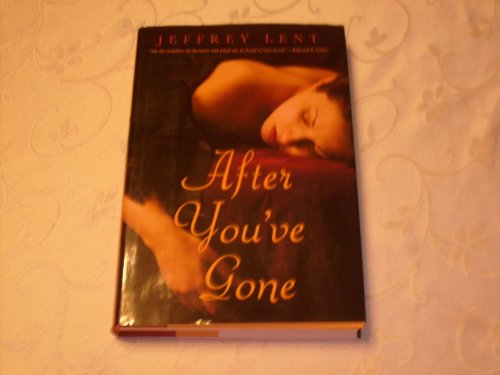
In After You’ve Gone, a historical novel set in Nova Scotia, New York, and Amsterdam, Jeffrey Lent beautifully charts the sweep of a life and the discovery—and loss—of life-defining love. Henry Dorn has spent years building a family, but it only takes a single afternoon for it to fall apart. The woman with whom he fell in love in the first blush of youth, who has been his perfect mate through a lively young marriage ripened by the raising of three children, has been lost. The car wreck that killed her also took their son Robert, a veteran of the Great War whose bitterness and addiction to morphine had slowly been driving him and Henry apart. Restless, broken, questing but unsure for what, Henry buys a steamer ticket for Amsterdam, planning to research his family history and start life anew. But nothing could have prepared him for the young woman he meets on the ship: the fiery, self-sufficient Lydia Pearce, one of a new generation of women. At first Henry does not know what to make of Lydia but, before long, they have fallen into an affair of a depth and significance for which neither was prepared. And just as quickly as he was robbed of Olivia, Henry is faced with the gift of new possibilities—and the need to reconcile them with those already lost. From a hardscrabble Nova Scotia fishing town, to a women’s college in New York, to a 1920s Europe alive with the unbuttoning of sexuality but scarred by war, After You’ve Gone is a gorgeous tale spanning several pivotal decades in American life, and an unforgettable portrait of one man and the extraordinary women he loved.
"synopsis" may belong to another edition of this title.
About the Author
Jeffrey Lent is the author of three previous novels, A Peculiar Grace, Lost Nation and In the Fall, which was a national bestseller. He lives in New York State with his wife and two daughters.
Reviews
From The Washington Post's Book World/washingtonpost.com Reviewed by Wendy Smith Ever since his breathtakingly beautiful first novel, "In the Fall," was published in 2000, it's been clear that Jeffrey Lent is not just a formidably accomplished writer but a vaultingly ambitious one as well. He continued to crisscross American history and plumb the human heart in "Lost Nation" (2002) and "A Peculiar Grace" (2007). Neither was as perfectly modulated as his brilliant debut, but both featured the same gorgeous prose, searching intelligence and keen understanding of our tangled attachments to the past and each other. Those qualities are again evident in Lent's latest work, perhaps the saddest story he's yet told. In the fall of 1922, 55-year-old Henry Dorn is living in Amsterdam and learning to play the cello. Eighteen months earlier, his wife, Olivia, and son, Robert, were killed in a car crash, possibly because Robert was "drunk and doped and driving his own mother and going too fast," as Henry bitterly puts it. Returning from World War I wounded and addicted to morphine, Robert had caused the only serious breach in the Dorns' long, loving marriage. Now, Henry must live with the memory of his wife upbraiding him, not long before her death, "How did he fail you? When? Better to ask yourself how you failed him and still do. You assail him at every opportunity. . . . I'm sorry to say this Henry but you've disappointed me." As the narrative excavates the jumbled layers of Henry's past, the magnitude of his bereavement becomes apparent. Few people write as well as Lent about the sexual and emotional fulfillment of great love: We see that Henry and Olivia were as happy together as two people can be over the course of 30 years, that he's come to Holland (from which his ancestors emigrated centuries ago) because their home in New York's Finger Lakes region is unbearable without her, and that he's taken up the cello because his wife's piano playing forged one of their closest bonds. ("While she played," Lent writes, "he would rest one hand against the small of her back as he loomed gentle, her page-turner, her husband and lover.") We also see, in vignettes of Henry's childhood in Nova Scotia, that he has prior knowledge of harsh, unforgiving parents and men who fail to measure up. As always, Lent's specificity with dates and places roots his characters' personal odysseys in palpable historical reality. Henry's past forms the backdrop to his affair in Amsterdam with Lydia Pearce, whom he meets on the Atlantic crossing. It's a measure of how sensitively Lent constructs this scenario that we're not shocked by the relationship coming so soon after Olivia's death. Henry has been acquainted with "the unpredictability of life" since he was a little boy, and we realize that he is a man who moves forward. Lydia, the wary survivor of two brutally truncated romances, is not sure she's ready to move beyond the warm companionship she and Henry enjoy in Amsterdam. Yet she's drawn to him by his ease with her independent, unconventional nature. He's receptive when she introduces him to a new kind of music (jazz), and he's unfazed -- indeed, aroused -- when she takes him to a cabaret. The author tenderly portrays two seasoned, rueful adults tentatively embracing greater commitment in moving but slightly schematic scenes that don't quite achieve the gravity of Lent's many-faceted portrait of Henry's marriage. Lydia sometimes seems more a carefully assembled collection of traits than a flesh-and-blood woman. But no writer does everything equally well, and if Lent's design occasionally overmasters his characters, we're compensated by his profound insight into this bleak underlying truth: "How alone a person lives." That single, stark sentence points the way to a jolting denouement that will infuriate many readers, but Lent demands unflinching acceptance from his audience and offers in return only an oblique hint that the future may hold something more than despair. As usual, this gifted writer aims to challenge, not to console.
Copyright 2009, The Washington Post. All Rights Reserved.
A widower, suddenly bereft, finds an unexpected future when he goes to Amsterdam looking for his past in Lent's intricate and rewarding fourth novel. Henry Dorn is an upright college professor whose relatively tranquil existence is upended when his wife and son are killed in a car accident in the 1920s. As the novel follows Henry in flashbacks to before and after the crash, we get a closeup view of the loss of innocence of a person and a world. Henry's relationship with his son, a morphine-addicted WWI veteran, had grown deeply fraught, while glimpses of Henry's childhood in Nova Scotia reveal a hardscrabble fishing family torn apart. After the accident, Henry travels to Amsterdam to research his family history, and an unexpected affair kicks off a period of indulgence on a continent whose need for postwar recovery matches his own psychic wounds. At times, the dialogue can feel wooden, but the narrative's course back and forth through time and across the Atlantic creates an aura of mystery and tension that's amplified by Lent's vivid depiction of the era. It's a nice contrast to the aimless youngsters often associated with the lost generation canon. (Mar.)
Copyright © Reed Business Information, a division of Reed Elsevier Inc. All rights reserved.
"About this title" may belong to another edition of this title.
Search results for After You've Gone: A Novel

Stock Image
After You've Gone: A Novel
Seller: ThriftBooks-Dallas, Dallas, TX, U.S.A.
Seller rating 5 out of 5 stars

Hardcover. Condition: Very Good. No Jacket. Former library book; May have limited writing in cover pages. Pages are unmarked. ~ ThriftBooks: Read More, Spend Less. Seller Inventory # G0871138948I4N10
Stock Image
After You've Gone: A Novel
Seller: ThriftBooks-Atlanta, AUSTELL, GA, U.S.A.
Seller rating 5 out of 5 stars
Hardcover. Condition: Very Good. No Jacket. May have limited writing in cover pages. Pages are unmarked. ~ ThriftBooks: Read More, Spend Less. Seller Inventory # G0871138948I4N00
Stock Image
After You've Gone: A Novel
Seller: ThriftBooks-Dallas, Dallas, TX, U.S.A.
Seller rating 5 out of 5 stars
Hardcover. Condition: Very Good. No Jacket. May have limited writing in cover pages. Pages are unmarked. ~ ThriftBooks: Read More, Spend Less. Seller Inventory # G0871138948I4N00
Stock Image
After You've Gone: A Novel
Published by
Grove Press / Atlantic Monthly Press, 2009
ISBN 10: 0871138948
ISBN 13: 9780871138941
Used
Hardcover
Seller: World of Books (was SecondSale), Montgomery, IL, U.S.A.
Seller rating 5 out of 5 stars
Hardback. Condition: Very Good. After You?ve Gone in paperback, it is a moving, sublime love story set in the cataclysmic decades around the turn of the twentieth century. Henry Dorn has spent years building a family, but it only takes a single afternoon for it to fall apart. Abruptly widowed of the love of his life, Henry buys a steamer ticket for Amsterdam, the city of his heritage, hoping to start life anew. But nothing could have prepared him for the woman he meets on the ship: the fiery, self-sufficient Lydia Pearce, one of a new generation of women. Before long the two have fallen into an affair of a depth and significance for which neither was prepared. But the memory of his wife and the vexed relationship he had with their son haunt Henry in the midst of his new beginning. Jeffrey Lent is one of our finest novelists, and After You?ve Gone delivers a tale that beautifully charts the sweep of a life, the grim reach of a war, and the discovery?and loss?of life-defining love. Seller Inventory # 00103960498
Stock Image
After You've Gone: A Novel
Published by
Grove Press / Atlantic Monthly Press, 2009
ISBN 10: 0871138948
ISBN 13: 9780871138941
Used
Hardcover
Seller: World of Books (was SecondSale), Montgomery, IL, U.S.A.
Seller rating 5 out of 5 stars
Hardback. Condition: Good. After You?ve Gone in paperback, it is a moving, sublime love story set in the cataclysmic decades around the turn of the twentieth century. Henry Dorn has spent years building a family, but it only takes a single afternoon for it to fall apart. Abruptly widowed of the love of his life, Henry buys a steamer ticket for Amsterdam, the city of his heritage, hoping to start life anew. But nothing could have prepared him for the woman he meets on the ship: the fiery, self-sufficient Lydia Pearce, one of a new generation of women. Before long the two have fallen into an affair of a depth and significance for which neither was prepared. But the memory of his wife and the vexed relationship he had with their son haunt Henry in the midst of his new beginning. Jeffrey Lent is one of our finest novelists, and After You?ve Gone delivers a tale that beautifully charts the sweep of a life, the grim reach of a war, and the discovery?and loss?of life-defining love. Seller Inventory # 00084436042
Stock Image
After You've Gone
Published by
Grove/Atlantic, Incorporated, 2009
ISBN 10: 0871138948
ISBN 13: 9780871138941
Used
Hardcover
First Edition
Seller: Better World Books, Mishawaka, IN, U.S.A.
Seller rating 5 out of 5 stars
Condition: Very Good. First Edition. Former library copy. Pages intact with possible writing/highlighting. Binding strong with minor wear. Dust jackets/supplements may not be included. Includes library markings. Stock photo provided. Product includes identifying sticker. Better World Books: Buy Books. Do Good. Seller Inventory # 9354638-6
Stock Image
After You've Gone: A Novel
Seller: Wonder Book, Frederick, MD, U.S.A.
Seller rating 5 out of 5 stars
Condition: As New. Like New condition. Very Good dust jacket. A near perfect copy that may have very minor cosmetic defects. Seller Inventory # J07Q-00519
Stock Image
After You've Gone: A Novel
Published by
Grove Press / Atlantic Monthly Press, 2009
ISBN 10: 0871138948
ISBN 13: 9780871138941
Used
Hardcover
Seller: World of Books Inc, Montgomery, IL, U.S.A.
Seller rating 4 out of 5 stars

Hardback. Condition: Good. After You?ve Gone in paperback, it is a moving, sublime love story set in the cataclysmic decades around the turn of the twentieth century. Henry Dorn has spent years building a family, but it only takes a single afternoon for it to fall apart. Abruptly widowed of the love of his life, Henry buys a steamer ticket for Amsterdam, the city of his heritage, hoping to start life anew. But nothing could have prepared him for the woman he meets on the ship: the fiery, self-sufficient Lydia Pearce, one of a new generation of women. Before long the two have fallen into an affair of a depth and significance for which neither was prepared. But the memory of his wife and the vexed relationship he had with their son haunt Henry in the midst of his new beginning. Jeffrey Lent is one of our finest novelists, and After You?ve Gone delivers a tale that beautifully charts the sweep of a life, the grim reach of a war, and the discovery?and loss?of life-defining love. Seller Inventory # CIN0871138948G
Stock Image
After You've Gone: A Novel
Published by
Grove Press / Atlantic Monthly Press, 2009
ISBN 10: 0871138948
ISBN 13: 9780871138941
Used
Hardcover
Seller: World of Books Inc, Montgomery, IL, U.S.A.
Seller rating 4 out of 5 stars
Hardback. Condition: Very Good. After You?ve Gone in paperback, it is a moving, sublime love story set in the cataclysmic decades around the turn of the twentieth century. Henry Dorn has spent years building a family, but it only takes a single afternoon for it to fall apart. Abruptly widowed of the love of his life, Henry buys a steamer ticket for Amsterdam, the city of his heritage, hoping to start life anew. But nothing could have prepared him for the woman he meets on the ship: the fiery, self-sufficient Lydia Pearce, one of a new generation of women. Before long the two have fallen into an affair of a depth and significance for which neither was prepared. But the memory of his wife and the vexed relationship he had with their son haunt Henry in the midst of his new beginning. Jeffrey Lent is one of our finest novelists, and After You?ve Gone delivers a tale that beautifully charts the sweep of a life, the grim reach of a war, and the discovery?and loss?of life-defining love. Seller Inventory # CIN0871138948VG
Seller Image
After You've Gone: A Novel
Seller: Goodwill of Greater Milwaukee and Chicago, Racine, WI, U.S.A.
Seller rating 5 out of 5 stars
Condition: good. Book is considered to be in good or better condition. The actual cover image may not match the stock photo. Hard cover books may show signs of wear on the spine, cover or dust jacket. Paperback book may show signs of wear on spine or cover as well as having a slight bend, curve or creasing to it. Book should have minimal to no writing inside and no highlighting. Pages should be free of tears or creasing. Stickers should not be present on cover or elsewhere, and any CD or DVD expected with the book is included. Book is not a former library copy. Seller Inventory # SEWV.0871138948.G