
Items related to Zen Architecture: The Building Process As Practice
Synopsis
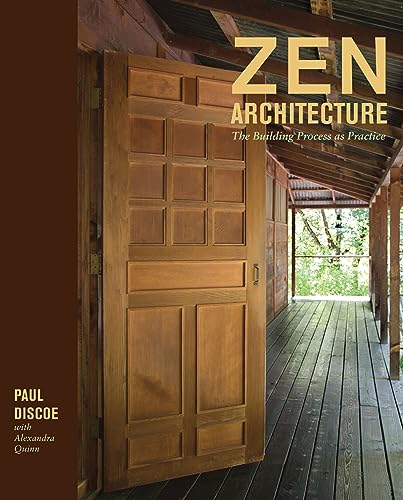
Paul Discoe was in on the ground floor of Zen architecture in the United States. In the 1960s he became a student of Zen Buddhism, studying and building at the Tassajara complex in northern California. His own wood-based Zen-Buddhism architectural structures and renovations in the United States and Europe are the focus of this book. With passionate prose, Discoe identifies the elements of Buddhism that are represented in his buildings and describes the trials and triumphs of blending current building methods and codes of the United States with ancient Japanese joinery techniques. Zen-Inspired Architecture has delightful photography of his structures, and the illustrations show just how a Zen structure has its beginnings.
"synopsis" may belong to another edition of this title.
About the Author
An ordained Zen Buddhist priest, Paul Discoe studied Art History and Philosophy as an undergraduate in the United States and Buddhist temple design and construction in Japan. He became a student of Suzuki-roshi at Tassajara Zen Mountain Center in California, and after four years, Suzuki sent him to Japan to train under a traditional master builder for five years. Upon returning, Discoe founded Joinery Structures in 1988. His projects include the Kojin-an Zen temple in Oakland for Akiba Sensei, the Founder's Hall and Kitchen at Tassajara, the Lindesfarne Guest House and Wheelwright Center, the Abbot's House at Green Gulch, as well as several prestigious homes and projects internationally. His current project is the Sonoma Mandala project on Sonoma Mountain in California, which will be a significant Zen temple complex in North America.
Alexandra Quinn is a writer, editor, and freelance arts management consultant living in San Francisco. Her publications include exhibition catalogs, educational guides to museum exhibitions, and Candy Story, translated from the French novel by Marie Redonnet.
Roslyn Banish is a San Francisco-based photographer. She has authored a number of documentary books, combining photographs and text. Roslyn received a Master's degree in photography from the Institute of Design in Chicago.
From the Back Cover
ZEN ARCHITECTURE The Building Process as Practice
Paul Discoe with Alexandra Quinn
Photographs by Roslyn Banish
In Zen Architecture: The Building Process as Practice, Paul Discoe shares the result of over forty years of study, design, building, and Zen Buddhist practice. From simple hand sketches to the completion of Zen temples, residential projects, grand estates, and modular structures, this book illustrates a singular vision influenced by traditional Japanese woodworking, contemporary life, and Buddhism. With a commitment to the environment and a deep respect for wood, his primary building material, Paul Discoe's work incorporates sustainable practices and recycled materials. Experience the architectural process as an embodiment of Zen practice through skillful craftsmanship, ancient woodworking techniques, and the integration of contemporary engineering and living standards.
An ordained Zen Buddhist priest, Paul Discoe studied art history and philosophy as an undergraduate in the United States and Buddhist temple design and construction in Japan. He became a student of Suzuki Roshi at Tassajara Zen Mountain Center in California, and, after four years, Suzuki sent him to Japan to train under a traditional master builder for five years. Upon returning, Discoe founded Joinery Structures in 1988. His projects include the Kojin-an Zen temple in Oakland for Akiba Sensei, the founder's hall and kitchen at Tassajara, the Lindesfarne guesthouse and Wheelwright Center, and the abbot's house at Green Gulch, as well as several prestigious homes and projects internationally. His current project is a system of prefabricated building parts, made of salvaged and recycled materials, that can be assembled in many forms.
The featured Zen architecture of Paul Discoe:
- Tassajara Zen Mountain Center
- Green Gulch Farm
- City Center
- Felsentor
- Kojin-an-Zen Temple
- Occidental Road House
- Wall Road House
- Northern California Guesthouse
- Woodside Home and Garden Complex
- Manhattan Loft
- Rikyu Kit of Parts
- Cardboard Zendo<.>
Alexandra Quinn is a freelance arts management consultant, writer, and editor living in San Francisco. Her publications include Candy Story, translated from the French novel by Marie Redonnet.
Roslyn Banish is a San Francisco-based photographer. She has authored a number of documentary books, combining photographs and text. Roslyn received a master's degree in photography from the Institute of Design in Chicago.
From the Inside Flap
ZEN ARCHITECTURE The Building Process as Practice
Paul Discoe with Alexandra Quinn
Photographs by Roslyn Banish
In Zen Architecture: The Building Process as Practice, Paul Discoe shares the result of over forty years of study, design, building, and Zen Buddhist practice. From simple hand sketches to the completion of Zen temples, residential projects, grand estates, and modular structures, this book illustrates a singular vision influenced by traditional Japanese woodworking, contemporary life, and Buddhism. With a commitment to the environment and a deep respect for wood, his primary building material, Paul Discoe's work incorporates sustainable practices and recycled materials. Experience the architectural process as an embodiment of Zen practice through skillful craftsmanship, ancient woodworking techniques, and the integration of contemporary engineering and living standards.
An ordained Zen Buddhist priest, Paul Discoe studied art history and philosophy as an undergraduate in the United States and Buddhist temple design and construction in Japan. He became a student of Suzuki Roshi at Tassajara Zen Mountain Center in California, and, after four years, Suzuki sent him to Japan to train under a traditional master builder for five years. Upon returning, Discoe founded Joinery Structures in 1988. His projects include the Kojin-an Zen temple in Oakland for Akiba Sensei, the founder's hall and kitchen at Tassajara, the Lindesfarne guesthouse and Wheelwright Center, and the abbot's house at Green Gulch, as well as several prestigious homes and projects internationally. His current project is a system of prefabricated building parts, made of salvaged and recycled materials, that can be assembled in many forms.
The featured Zen architecture of Paul Discoe:
- Tassajara Zen Mountain Center
- Green Gulch Farm
- City Center
- Felsentor
- Kojin-an-Zen Temple
- Occidental Road House
- Wall Road House
- Northern California Guesthouse
- Woodside Home and Garden Complex
- Manhattan Loft
- Rikyu Kit of Parts
- Cardboard Zendo<.>
Alexandra Quinn is a freelance arts management consultant, writer, and editor living in San Francisco. Her publications include Candy Story, translated from the French novel by Marie Redonnet.
Roslyn Banish is a San Francisco-based photographer. She has authored a number of documentary books, combining photographs and text. Roslyn received a master's degree in photography from the Institute of Design in Chicago.
Excerpt. © Reprinted by permission. All rights reserved.
When we enter these buildings and gardens that emerge from such compassionate effort, we are graciously supported to study everything and to see the truth embodied in all beings. Seeing the truth we are happy. Paul''s work is from beginning to end for the sake of all beings realizing this happiness. Thank you, Zengyu.
"About this title" may belong to another edition of this title.
Search results for Zen Architecture: The Building Process As Practice

Stock Image
Zen Architecture: The Building Process As Practice
Seller: Bellwetherbooks, McKeesport, PA, U.S.A.
Seller rating 4 out of 5 stars

hardcover. Condition: Fine. LIKE NEW!!! Has a red or black remainder mark on bottom/exterior edge of pages. Seller Inventory # mon0000053175
Stock Image
Zen Architecture: The Building Process as Practice
Seller: Bookmans, Tucson, AZ, U.S.A.
Seller rating 5 out of 5 stars

Hardcover. Condition: Acceptable. Wear and tear to dust jacket. Satisfaction 100% guaranteed. Seller Inventory # mon0002728997
Stock Image
ZEN Architecture: The Building Process as Practice
Seller: World of Books (was SecondSale), Montgomery, IL, U.S.A.
Seller rating 5 out of 5 stars
Hardback. Condition: Good. Paul Discoe was in on the ground floor of Zen architecture in the United States. In the 1960s he became a student of Zen Buddhism, studying and building at the Tassajara complex in northern California. His own wood-based Zen-Buddhism architectural structures and renovations in the United States and Europe are the focus of this book. With passionate prose, Discoe identifies the elements of Buddhism that are represented in his buildings and describes the trials and triumphs of blending current building methods and codes of the United States with ancient Japanese joinery techniques. Zen-Inspired Architecture has delightful photography of his structures, and the illustrations show just how a Zen structure has its beginnings. An ordained Zen Buddhist priest, Paul Discoe studied Art History and Philosophy as an undergraduate in the United States and Buddhist temple design and construction in Japan. He became a student of Suzuki-roshi at Tassajara Zen Mountain Center in California, and after four years, Suzuki sent him to Japan to train under a traditional master builder for five years. Upon returning, Discoe founded Joinery Structures in 1988. His projects include the Kojin-an Zen temple in Oakland for Akiba Sensei, the Founder's Hall and Kitchen at Tassajara, the Lindesfarne Guest House and Wheelwright Center, the Abbot's House at Green Gulch, as well as several prestigious homes and projects internationally. His current project is the Sonoma Mandala project on Sonoma Mountain in California, which will be a significant Zen temple complex in North America.Alexandra Quinn is a writer, editor, and freelance arts management consultant living in San Francisco. Her publications include exhibition catalogs, educational guides to museum exhibitions, and Candy Story, translated from the French novel by Marie Redonnet.Roslyn Banish is a San Francisco-based photographer. She has authored a number of documentary books, combining photographs and text. Roslyn received a Master's degree in photography from the Institute of Design in Chicago. Seller Inventory # CIN1423600096G
Stock Image
ZEN Architecture: The Building Process as Practice
Seller: World of Books Inc, Montgomery, IL, U.S.A.
Seller rating 4 out of 5 stars
Hardback. Condition: Good. Paul Discoe was in on the ground floor of Zen architecture in the United States. In the 1960s he became a student of Zen Buddhism, studying and building at the Tassajara complex in northern California. His own wood-based Zen-Buddhism architectural structures and renovations in the United States and Europe are the focus of this book. With passionate prose, Discoe identifies the elements of Buddhism that are represented in his buildings and describes the trials and triumphs of blending current building methods and codes of the United States with ancient Japanese joinery techniques. Zen-Inspired Architecture has delightful photography of his structures, and the illustrations show just how a Zen structure has its beginnings. An ordained Zen Buddhist priest, Paul Discoe studied Art History and Philosophy as an undergraduate in the United States and Buddhist temple design and construction in Japan. He became a student of Suzuki-roshi at Tassajara Zen Mountain Center in California, and after four years, Suzuki sent him to Japan to train under a traditional master builder for five years. Upon returning, Discoe founded Joinery Structures in 1988. His projects include the Kojin-an Zen temple in Oakland for Akiba Sensei, the Founder's Hall and Kitchen at Tassajara, the Lindesfarne Guest House and Wheelwright Center, the Abbot's House at Green Gulch, as well as several prestigious homes and projects internationally. His current project is the Sonoma Mandala project on Sonoma Mountain in California, which will be a significant Zen temple complex in North America.Alexandra Quinn is a writer, editor, and freelance arts management consultant living in San Francisco. Her publications include exhibition catalogs, educational guides to museum exhibitions, and Candy Story, translated from the French novel by Marie Redonnet.Roslyn Banish is a San Francisco-based photographer. She has authored a number of documentary books, combining photographs and text. Roslyn received a Master's degree in photography from the Institute of Design in Chicago. Seller Inventory # CIN1423600096G
Stock Image
Zen Architecture: The Building Process As Practice
Seller: thebookforest.com, San Rafael, CA, U.S.A.
Seller rating 4 out of 5 stars
Condition: Good. Signed Copy hardcover. Page block firm and clean, binding unblemished, boards straight, without markings of any kind. Gift inscribed by author on front end paper. Without DJ. Supporting Bay Area Friends of the Library since 2010. Well packaged and promptly shipped. Seller Inventory # BAY17-00247
Seller Image
ZEN ARCHITECTURE: THE BUILDING PROCESS AS PRACTICE
Published by
Gibbs Smith, Layton, UT, 2008
ISBN 10: 1423600096
ISBN 13: 9781423600091
Used
Hardcover
First Edition
Seller: Blackwood Bookhouse; Joe Pettit Jr., Bookseller, Eugene, OR, U.S.A.
Seller rating 5 out of 5 stars
Hardcover. Condition: Very Good. Dust Jacket Condition: Very Good. First Edition. Layton, UT: Gibbs Smith, 2008. First edition. 10 1/4 x 8 3/8 inches: pp. 240. Brown, photographic glossy paper dust jacket with cornflower yellow and green type. Green textured boards with cornflower yellow type. Light edge and corner wear, scuffing to dust jacket. Some light rubbing at edges and corners, light bumping to bottom boards. Text is unmarked. Binding tight. Seller Inventory # 1157
Stock Image
Zen Architecture: The Building Process As Practice
Seller: Revaluation Books, Exeter, United Kingdom
Seller rating 5 out of 5 stars
Hardcover. Condition: Brand New. 240 pages. 10.25x8.25x1.00 inches. In Stock. Seller Inventory # 1423600096
Buy New
US$ 114.39
US$ 20.09 shipping
Ships from United Kingdom to U.S.A.
Ships from United Kingdom to U.S.A.
Quantity: 1 available