
Items related to The Press Gang: Writings on Cinema from New York Press,...
Synopsis
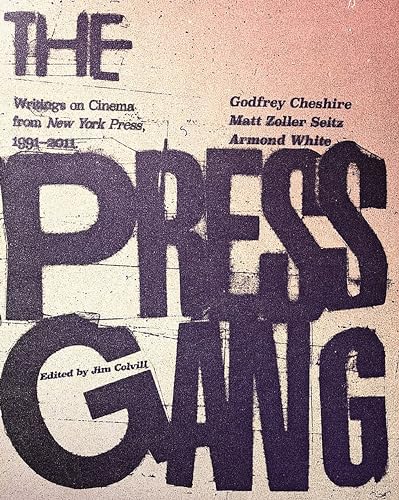
A dialogue about cinema's legacy and best directors through essays by three of the best long-form critics out there, collected from the legendary NYPress for the first time.
Comprising of the kind of long-form criticism that is all too rare these days, the weekly film columns in the NYPress included polemics, reviews, interviews, festival reports and features. A far cry from what is often derisively termed the "consumer report" mode of criticism, Cheshire, Seitz and White were passionately engaged with the film culture of both their own time, and what had come before. They constituted three distinctly different voices: equally accomplished, yet notably individual, perspectives on cinema. Their distinctive tastes and approaches were often positioned in direct dialogue with each other, a constant critical conversation that frequently saw each writer directly challenging his colleagues. Dialogue is important in criticism, and here you can find a healthy example of it existing under one proverbial roof. This three-way dialogue between Cheshire, Seitz and White assesses the 1990s in cinema, along with pieces on New York's vibrant repertory scene that allow us to read the authors' takes on directors such as Hitchcock, Lean, Kubrick, Welles, Fassbinder and Bresson; as well as topics such as the legacy of Star Wars, film noir, early film projection in New York City, the New York Film Critics Circle, Sundance, the terrorist attacks of 9/11 and the emerging cinema of Iran and Taiwan.
"synopsis" may belong to another edition of this title.
About the Author
Godfrey Cheshire is an award-winning film critic and filmmaker based in New York City. His writings have appeared in the New York Times, Variety, The Village Voice, Film Comment, Cineaste, Sight & Sound, RogerEbert.com and other publications. He is the director of the documentary Moving Midway and author of In the Time of Kiarostami: Writings on Iranian Cinema and Conversations with Kiarostami.
Matt Zoller Seitz is the TV critic for New York magazine, the editor-at-large of RogerEbert.com, a finalist for the Pulitzer Prize in criticism, and the author of The Wes Anderson Collection, The Oliver Stone Experience, Man Men Carousel, Guillermo del Toro's The Devil's Backbone (with Simon Abrams), and TV: The Book and The Sopranos Sessions (both with Alan Sepinwall).
Armond White won the 2014 American Book Award for Anti-Censorship. He is a film critic for National Review and was arts editor for The City Sun, CityArts and reviewer for Out magazine. He is author of The Resistance: Ten Years of Pop Culture That Shook the World, Rebel for the Hell of It: The Art-Life of Tupac Shakur, Keep Moving: The Michael Jackson Chronicles, New Position: The Prince Chronicles and Make Spielberg Great Again.
Jim Colvill is a freelance editor and publisher based in New York City. He publishes books on cinema with The Film Desk.
"About this title" may belong to another edition of this title.
Search results for The Press Gang: Writings on Cinema from New York Press,...

Stock Image
The Press Gang: Writings on Cinema from New York Press 1991 - 2011
Published by
Seven Stories Press,U.S., 2020
ISBN 10: 1609809777
ISBN 13: 9781609809775
Used
Paperback
Seller: World of Books (was SecondSale), Montgomery, IL, U.S.A.
Seller rating 5 out of 5 stars

Paperback. Condition: Good. A dialogue about cinema's legacy and best directors through essays by three of the best long-form critics out there, collected from the legendary NYPress for the first time. Comprising of the kind of long-form criticism that is all too rare these days, the weekly film columns in the NYPress included polemics, reviews, interviews, festival reports and features. A far cry from what is often derisively termed the "consumer report" mode of criticism, Cheshire, Seitz and White were passionately engaged with the film culture of both their own time, and what had come before. They constituted three distinctly different voices: equally accomplished, yet notably individual, perspectives on cinema. Their distinctive tastes and approaches were often positioned in direct dialogue with each other, a constant critical conversation that frequently saw each writer directly challenging his colleagues. Dialogue is important in criticism, and here you can find a healthy example of it existing under one proverbial roof. This three-way dialogue between Cheshire, Seitz and White assesses the 1990s in cinema, along with pieces on New York's vibrant repertory scene that allow us to read the authors' takes on directors such as Hitchcock, Lean, Kubrick, Welles, Fassbinder and Bresson; as well as topics such as the legacy of Star Wars, film noir, early film projection in New York City, the New York Film Critics Circle, Sundance, the terrorist attacks of 9/11 and the emerging cinema of Iran and Taiwan. Seller Inventory # 00107511189
Stock Image
The Press Gang : Writings on Cinema from New York Press, 1991-2011
Seller: Better World Books, Mishawaka, IN, U.S.A.
Seller rating 5 out of 5 stars
Condition: Good. Former library copy. Pages intact with minimal writing/highlighting. The binding may be loose and creased. Dust jackets/supplements are not included. Includes library markings. Stock photo provided. Product includes identifying sticker. Better World Books: Buy Books. Do Good. Seller Inventory # 48898756-6
Stock Image
The Press Gang: Writings on Cinema from New York Press 1991 - 2011
Published by
Seven Stories Press,U.S., 2020
ISBN 10: 1609809777
ISBN 13: 9781609809775
Used
Paperback
Seller: World of Books Inc, Montgomery, IL, U.S.A.
Seller rating 4 out of 5 stars

Paperback. Condition: Good. A dialogue about cinema's legacy and best directors through essays by three of the best long-form critics out there, collected from the legendary NYPress for the first time. Comprising of the kind of long-form criticism that is all too rare these days, the weekly film columns in the NYPress included polemics, reviews, interviews, festival reports and features. A far cry from what is often derisively termed the "consumer report" mode of criticism, Cheshire, Seitz and White were passionately engaged with the film culture of both their own time, and what had come before. They constituted three distinctly different voices: equally accomplished, yet notably individual, perspectives on cinema. Their distinctive tastes and approaches were often positioned in direct dialogue with each other, a constant critical conversation that frequently saw each writer directly challenging his colleagues. Dialogue is important in criticism, and here you can find a healthy example of it existing under one proverbial roof. This three-way dialogue between Cheshire, Seitz and White assesses the 1990s in cinema, along with pieces on New York's vibrant repertory scene that allow us to read the authors' takes on directors such as Hitchcock, Lean, Kubrick, Welles, Fassbinder and Bresson; as well as topics such as the legacy of Star Wars, film noir, early film projection in New York City, the New York Film Critics Circle, Sundance, the terrorist attacks of 9/11 and the emerging cinema of Iran and Taiwan. Seller Inventory # CIN1609809777G
Stock Image
The Press Gang: Writings on Cinema from New York Press, 1991-2011
Seller: ThriftBooks-Dallas, Dallas, TX, U.S.A.
Seller rating 5 out of 5 stars
Paperback. Condition: Good. No Jacket. Pages can have notes/highlighting. Spine may show signs of wear. ~ ThriftBooks: Read More, Spend Less. Seller Inventory # G1609809777I3N00
Stock Image
The Press Gang : Writings on Cinema from New York Press, 1991-2011
Seller: Better World Books Ltd, Dunfermline, United Kingdom
Seller rating 5 out of 5 stars
Condition: Good. Pages intact with minimal writing/highlighting. The binding may be loose and creased. Dust jackets/supplements are not included. Stock photo provided. Product includes identifying sticker. Better World Books: Buy Books. Do Good. Seller Inventory # 48896646-75
Buy Used
US$ 10.39
US$ 6.66 shipping
Ships from United Kingdom to U.S.A.
Ships from United Kingdom to U.S.A.
Quantity: 1 available
Stock Image
The Press Gang: Writings on Cinema from New York Press, 1991-2011 AS NEW 1ST. PRINTING
Seller: Mostly Books, Dallas, GA, U.S.A.
Seller rating 4 out of 5 stars
paperback. Condition: AS NEW CLEAN TEXT. Dust Jacket Condition: PICTORIAL COVER AS NEW. 2020 ED. 1ST. PRINTING. 1ST. PRINTING AS NEW CLEAN TEXT. Seller Inventory # 62049
Seller Image
Press Gang : Writings on Cinema from New York Press, 1991-2011
Seller: GreatBookPrices, Columbia, MD, U.S.A.
Seller rating 5 out of 5 stars
Condition: New. Seller Inventory # 35787991-n
Seller Image
The Press Gang (Paperback)
Published by
Seven Stories Press,U.S., New York, 2020
ISBN 10: 1609809777
ISBN 13: 9781609809775
New
Paperback
Seller: Grand Eagle Retail, Bensenville, IL, U.S.A.
Seller rating 5 out of 5 stars
Paperback. Condition: new. Paperback. A dialogue about cinema's legacy and best directors through essays by three of the best long-form critics out there, collected from the legendary NYPress for the first time.A dialogue about cinema's legacy and best directors through essays by three of the best long-form critics out there, collected from the legendary NYPress for the first time.Comprising of the kind of long-form criticism that is all too rare these days, the weekly film columns in the NYPress included polemics, reviews, interviews, festival reports and features. A far cry from what is often derisively termed the "consumer report" mode of criticism, Cheshire, Seitz and White were passionately engaged with the film culture of both their own time, and what had come before. They constituted three distinctly different voices: equally accomplished, yet notably individual, perspectives on cinema. Their distinctive tastes and approaches were often positioned in direct dialogue with each other, a constant critical conversation that frequently saw each writer directly challenging his colleagues. Dialogue is important in criticism, and here you can find a healthy example of it existing under one proverbial roof. This three-way dialogue between Cheshire, Seitz and White assesses the 1990s in cinema, along with pieces on New York's vibrant repertory scene that allow us to read the authors' takes on directors such as Hitchcock, Lean, Kubrick, Welles, Fassbinder and Bresson; as well as topics such as the legacy of Star Wars, film noir, early film projection in New York City, the New York Film Critics Circle, Sundance, the terrorist attacks of 9/11 and the emerging cinema of Iran and Taiwan. A dialogue about cinema's legacy and best directors through essays by three of the best long-form critics. Shipping may be from multiple locations in the US or from the UK, depending on stock availability. Seller Inventory # 9781609809775
Seller Image
Press Gang : Writings on Cinema from New York Press, 1991-2011
Seller: GreatBookPrices, Columbia, MD, U.S.A.
Seller rating 5 out of 5 stars
Condition: As New. Unread book in perfect condition. Seller Inventory # 35787991
Stock Image
ThePressGang Format: Paperback
Seller: INDOO, Avenel, NJ, U.S.A.
Seller rating 5 out of 5 stars
Condition: As New. Unread copy in mint condition. Seller Inventory # RH9781609809775