
Items related to Sparked: George Floyd, Racism, and the Progressive...
Synopsis
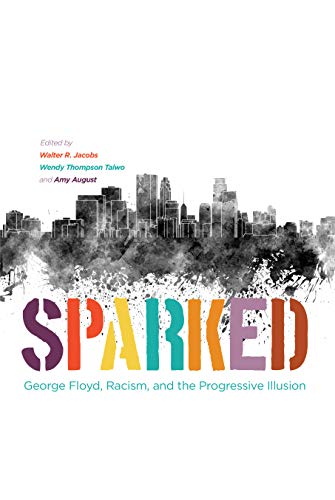
Reflections on race in Minnesota in the wake of George Floyd's death and the uprisings that followed, as told by current and former residents of the state.
On May 25, 2020, George Floyd, an unarmed Black man, was killed by Minneapolis police officers, sparking months of unrest at home and around the world. As millions took to the streets to express their outrage and speak out against systemic racism, injustice, and institutionalized violence, the city of Minneapolis and its residents were deeply shaken. For many, George Floyd's murder and the ensuing uprisings shattered the city's reputation for progressive ideals and a high quality of life. For many others, the incident simply caught on camera a representation of the harsh realities and paradoxes that they have been living with for generations. In the words of Jasmine Mitchell, "the ‘Minnesota nice’ comforts and illusionary progressiveness resides upon the ignoring of White racial terrorism and fears of Blackness, brown immigrants, and resistance to White supremacy."
Sparked brings together the perspectives of social scientists, professors, and other academics who work or have worked in Minnesota. The essays present reflections on racial dynamics in the Twin Cities and the intersection of the wonderful and wretched sides of that existence, revealing deep complexities, ingrained inequities, and diverse personal experiences.
"synopsis" may belong to another edition of this title.
About the Authors
Walter R. Jacobs is a sociologist and the Dean of the College of Social Sciences at San José State University. He is the author of the ethnography Speaking the Lower Frequencies: Students and Media Literacy and coeditor (with Jeffrey Di Leo) of If Classrooms Matter: Progressive Visions of Educational Environments. He spent 14 years on the faculty of the University of Minnesota, including five years as chair of the department of African American & African Studies. Jacobs serves on the board of directors for the Council of Colleges of Arts and Sciences (CCAS) and for StoryCenter, the world-renowned nonprofit organization that uses innovative story development practices and participatory media methods to support people in sharing personal narratives rooted in their own life experiences.
Wendy Thompson Taiwo is an assistant professor of African American studies at San José State University. Her research and teaching interests include Black migration to the Bay Area, Black women and mothering, race and the built environment, and Black visual expressions of social status and class. She previously worked as an assistant professor of Ethnic Studies at Metropolitan State University in the Twin Cities.
Amy August is an assistant professor of sociology at San José State University and the assistant director of the Institute for the Study of Sport, Society, and Social Change, where she collaborates with a team of colleagues and student interns to promote social justice in and through sport. Her research focuses on the classification and instruction of preschoolers in school and sport, families#39; involvement in youth extracurricular activities, and women's gymnastics and the #MeToo movement. August has a PhD in sociology from the University of Minnesota.
Excerpt. © Reprinted by permission. All rights reserved.
From “Will Words Lead to Action?” by Marcia Williams
I must admit that I didn’t want to write this piece. It feels like I am giving away too much by sharing my experiences and emotions. I know that words have power, but Black people have been writing our stories and sharing our truths for over four hundred years—and so much of that time our words have fallen on deaf ears. Constant accusations of "oversensitivity," "making race an issue," or imposing "political correctness" onto "innocent" white folk gets old. It is also extremely painful. Black people are often accused of being angry, and we are—but underneath our anger is a pain so raw, so intense, and so constant that the only way to keep going is to "numb" ourselves to the many faces of racism that reveal themselves day to day. The numbing itself is exhausting, as is the process of deciding which racist comments/actions we will respond to, how to respond to them, or whether to let them go. . . .
I would like to think that the graphic and undeniable murder of George Floyd would be the catalyst we need for revolutionary change to the racial culture of America. But I fear that not many people would be willing to sacrifice their racial privilege, even those who are outraged at this act of police brutality and are now out in the streets protesting. Renouncing such privilege (and certainly relinquishing power) is fundamental to achieving racial equality, and while the protests may provide a glimmer of hope in the moment, it is too easy for white people to turn away and go back to a world where George Floyd’s murder—much like Emmett Till’s—becomes just another piece of American history that they can convince themselves we have moved past. Meanwhile, Black folk are left behind with the Herculean task of trudging through the toxicity of racism—our reality dismissed, our words lost in the wind, and our bodies once again fodder for those who seek to eradicate us from the earth.
"About this title" may belong to another edition of this title.
Search results for Sparked: George Floyd, Racism, and the Progressive...

Stock Image
Sparked George Floyd Racism an
Published by
Minnesota Historical Society Press, 2021
ISBN 10: 1681342081
ISBN 13: 9781681342085
Used
Softcover
Seller: World of Books (was SecondSale), Montgomery, IL, U.S.A.
Seller rating 5 out of 5 stars

Condition: Good. Item in good condition. Textbooks may not include supplemental items i.e. CDs, access codes etc. Seller Inventory # 00102609860
Stock Image
Sparked : George Floyd, Racism, and the Progressive Illusion
Published by
Minnesota Historical Society Press, 2021
ISBN 10: 1681342081
ISBN 13: 9781681342085
Used
Softcover
Seller: Better World Books, Mishawaka, IN, U.S.A.
Seller rating 5 out of 5 stars
Condition: Very Good. Pages intact with possible writing/highlighting. Binding strong with minor wear. Dust jackets/supplements may not be included. Stock photo provided. Product includes identifying sticker. Better World Books: Buy Books. Do Good. Seller Inventory # 40031606-6
Stock Image
Sparked : George Floyd, Racism, and the Progressive Illusion
Published by
Minnesota Historical Society Press, 2021
ISBN 10: 1681342081
ISBN 13: 9781681342085
Used
Softcover
Seller: Better World Books, Mishawaka, IN, U.S.A.
Seller rating 5 out of 5 stars
Condition: Good. Pages intact with minimal writing/highlighting. The binding may be loose and creased. Dust jackets/supplements are not included. Stock photo provided. Product includes identifying sticker. Better World Books: Buy Books. Do Good. Seller Inventory # 52622234-6
Stock Image
Sparked: George Floyd, Racism, and the Progressive Illusion
Published by
Minnesota Historical Society Press, 2021
ISBN 10: 1681342081
ISBN 13: 9781681342085
Used
Paperback
Seller: ThriftBooks-Dallas, Dallas, TX, U.S.A.
Seller rating 5 out of 5 stars
Paperback. Condition: As New. No Jacket. Pages are clean and are not marred by notes or folds of any kind. ~ ThriftBooks: Read More, Spend Less. Seller Inventory # G1681342081I2N00
Stock Image
Sparked: George Floyd, Racism, and the Progressive Illusion
Published by
Minnesota Historical Society Pre, 2021
ISBN 10: 1681342081
ISBN 13: 9781681342085
Used
Paperback
Seller: HPB Inc., Dallas, TX, U.S.A.
Seller rating 5 out of 5 stars
Paperback. Condition: Very Good. Connecting readers with great books since 1972! Used books may not include companion materials, and may have some shelf wear or limited writing. We ship orders daily and Customer Service is our top priority! Seller Inventory # S_465669680
Stock Image
Sparked: George Floyd, Racism, and the Progressive Illusion
Published by
Minnesota Historical Society Pre, 2021
ISBN 10: 1681342081
ISBN 13: 9781681342085
Used
paperback
Seller: HPB-Ruby, Dallas, TX, U.S.A.
Seller rating 5 out of 5 stars
paperback. Condition: Very Good. Connecting readers with great books since 1972! Used books may not include companion materials, and may have some shelf wear or limited writing. We ship orders daily and Customer Service is our top priority! Seller Inventory # S_460505202
Stock Image
Sparked: George Floyd, Racism, and the Progressive Illusion
Published by
Minnesota Historical Society Press, 2021
ISBN 10: 1681342081
ISBN 13: 9781681342085
Used
Paperback
Seller: World of Books Inc, Montgomery, IL, U.S.A.
Seller rating 4 out of 5 stars

Paperback. Condition: Good. Reflections on the murder of George Floyd and the uprisings that followed and on racism in Minnesota, as told by current and former residents of the state. On May 25, 2020, George Floyd, an unarmed Black man, was killed by Minneapolis police officers, sparking months of unrest at home and around the world. As millions took to the streets to express their outrage and speak out against systemic racism, injustice, and institutionalized violence, the city of Minneapolis and its residents were deeply shaken. For many, George Floyd's murder and the ensuing uprisings shattered the city's reputation for progressive ideals and a high quality of life. For many others, the incident simply caught on camera a representation of the harsh realities and paradoxes that they have been living with for generations. In the words of Jasmine Mitchell, the 'Minnesota nice' comforts and illusionary progressiveness resides upon the ignoring of White racial terrorism and fears of Blackness, brown immigrants, and resistance to White supremacy. Sparked brings together the perspectives of social scientists, professors, and other academics who work or have worked in Minnesota. The essays present reflections on racial dynamics in the Twin Cities and the intersection of the wonderful and wretched sides of that existence, revealing deep complexities, ingrained inequities, and diverse personal experiences. Seller Inventory # CIN1681342081G
Stock Image
Sparked: George Floyd, Racism, and the Progressive Illusion
Published by
Minnesota Historical Society Press, 2021
ISBN 10: 1681342081
ISBN 13: 9781681342085
Used
paperback
Seller: Magers and Quinn Booksellers, Minneapolis, MN, U.S.A.
Seller rating 5 out of 5 stars
paperback. Condition: Very Good. May have light to moderate shelf wear and/or a remainder mark. Complete. Clean pages. Seller Inventory # 1312024
Stock Image
Sparked: George Floyd, Racism, and the Progressive Illusion
Published by
Minnesota Historical Society Pre, 2021
ISBN 10: 1681342081
ISBN 13: 9781681342085
Used
paperback
Seller: HPB-Diamond, Dallas, TX, U.S.A.
Seller rating 5 out of 5 stars
paperback. Condition: Very Good. Connecting readers with great books since 1972! Used books may not include companion materials, and may have some shelf wear or limited writing. We ship orders daily and Customer Service is our top priority! Seller Inventory # S_461159260
Seller Image
Sparked : George Floyd, Racism, and the Progressive Illusion
Published by
Minnesota Historical Society Press, 2021
ISBN 10: 1681342081
ISBN 13: 9781681342085
Used
Softcover
Seller: GreatBookPrices, Columbia, MD, U.S.A.
Seller rating 5 out of 5 stars
Condition: good. May show signs of wear, highlighting, writing, and previous use. This item may be a former library book with typical markings. No guarantee on products that contain supplements Your satisfaction is 100% guaranteed. Twenty-five year bookseller with shipments to over fifty million happy customers. Seller Inventory # 42585938-5