
Items related to The Rough Guide to England, 4th Edition
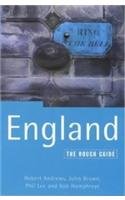
Synopsis
Introduction
Since the 1997 general election, and the rejection of the Conservative party after eighteen years in power, there's been a decidedly upbeat air about England. The election of the "New Labour" government has brought about some genuine changes of atmosphere. There's a lot of talk about the importance of "society", a concept much abused during the laissez-faire years of Thatcherism, and England is now being presented as a component part of Europe, whereas previously the attitude to the continent suggested that the Channel Tunnel was a bridgehead into enemy territory. But in several respects the new world isn't really that new. Many of the less appealing aspects of Conservatism - the under-investment in public services, the assumption that big business knows best - are still with us. And, conversely, many of the features that give England its buzz have not sprung into existence overnight - the celebration of "Cool Britannia" began some time before the arrival of Tony Blair. Indeed, the country has maintained its creative momentum consistently from the "Swinging Sixties" to the present day: the music scene is as vibrant as any in the world; the current crop of young artists has as high a profile as David Hockney ever had; all over Europe there are hi-tech and offbeat postmodern buildings that were born on the drawing boards of London; and when Jean-Paul Gaultier runs short of new ideas he comes to London's markets, outlets for Europe's riskiest street fashion.
However, you only have to scratch the surface and you'll find that England's notorious taste for nostalgia still persists. It's not altogether surprising that the English tend to dwell on former glories - as recently as 1950 London was the capital of the sixth wealthiest nation on the planet, but just three decades later it had slipped from the top twenty. History is constantly repackaged and recycled in England, whether in the form of TV costume dramas or industrial theme parks in which people enact the tasks that once supported their communities. The royal family, though dogged by bad press, continues to occupy a prominent place in the English self-image, a fact demonstrated by the extraordinary manner in which the death of Princess Diana was reported and mourned. The mythical tales of King Arthur and Camelot, the island race that spawned Shakespeare, Drake and Churchill, a golden rural past - these are the notions that lie at the heart of "Englishness", and monuments of the country's past are a major part of its attraction. There's a panoply of medieval and monumental towns; and the countryside yields all manner of delights, from walkers' trails around the hills and lakes, through prehistoric stone circles, to traditional rural villages and their pubs. Virtually every town bears a mark of former wealth and power, whether it be a magnificent Gothic cathedral financed from a monarch's treasury, a parish church funded by the tycoons of the medieval wool trade, or a triumphalist Victorian civic building, raised on the income of the British Empire. In the south of England you'll find old dockyards from which the navy patrolled the oceans, while up north there are mills that employed whole town populations. England's museums and galleries - several of them ranking among the world's finest - are full of treasures trawled from Europe and farther afield. And in their grandiose stuccoed terraces and wide esplanades the old resorts bear testimony to the heyday of the English holiday towns, when Brighton, Bath and diverse other towns were as fashionable and elegant as any European spa.
Contemporary England is at the same time a deeply conservative place and a richly multi-ethnic culture through which runs a strain of individualism that often verges on the anarchic. In essence, England's fascination lies in the tension between its inertia and its adventurousness. Which is the truer image of England at the end of the twentieth century: the record-breaking Sensation art show at the Royal Academy, with its dissected livestock and sexual mutants, or the ranks of Diana memorabilia in souvenir shops across the land?
"synopsis" may belong to another edition of this title.
About the Author
Before turning to crime fiction, Robert Andrews published four thrillers that drew from his own experiences as a Green Beret, a CIA operative, and as an aide to senior U.S. senator John Glenn. He is the author of A Murder of Honor, which Publishers Weekly called "a gem of a thriller." Robert Andrews lives in Washington, D.C.
Phil Lee is an experienced Rough Guides author whose taste for adventure began when he joined the Danish merchant navy. He has written Rough Guides to Amsterdam, Brussels, Mallorca and Menorca, England, the Netherlands, and Canada.
Jules Brown first visited the Lake District when he was nine. He returned regularly throughout his childhood and as an adult. He is the author of The Rough Guide to the Lake District, Pocket Rough Guide Barcelona, and a coauthor of The Best Places to Stay in Britain on a Budget.
Excerpt. © Reprinted by permission. All rights reserved.
Where to go
To get to grips with England, London is the place to start. Nowhere else in the country can match the scope and innovation of the metropolis, a colossal, frenetic city, perhaps not as immediately attractive as its European counterparts, but with so much variety that lack of cash is the only obstacle to a great time. It's here that you'll find England's best spread of nightlife, cultural events, museums, galleries, pubs and restaurants. Each of the other large cities, such as Birmingham, Newcastle, Leeds, Manchester and Liverpool, has its strengths, though to be honest these regional centres don't rank among the most alluring of destinations. For many people they come a long way behind ancient cities such as Lincoln, York, Salisbury, Durham and Winchester, to name just those with the most celebrated of England's cathedrals. Left adrift by the industrialization of the last century and spared the worst of postwar urban development, these cities remain small-scale and manageable, more hospitable than the big commercial and industrial centres. Most beguiling of all are the long-established villages of England, hundreds of which amount to nothing more than a pub, a shop, a gaggle of cottages and a farmhouse offering bed and breakfast - Devon, Cornwall, the Cotswolds and the Yorkshire Dales harbour some especially picturesque specimens, but every county can boast a decent showing of photogenic hamlets.
Evidence of England's pedigree is scattered between its settlements as well. Wherever you're based, you're never more than a few miles from a ruined castle, a majestic country house, a secluded chapel or a monastery, and in some parts of the country you'll come across the sites of civilizations that thrived here before England existed as a nation. In the southwest there are remnants of a Celtic culture that elsewhere was all but eradicated by the Romans, and from the south coast to the northern border you can find traces of prehistoric settlers - the most famous being the megalithic circles of Stonehenge and Avebury.
Then of course there's the English countryside, an extraordinarily diverse terrain from which Constable, Turner, Wordsworth, Emily Bront and a host of other native luminaries took inspiration. Most dramatic and best known are the moors and uplands - Exmoor, Dartmoor, Bodmin Moor, the North York Moors and the Lake District - each of which, especially the Lakes, has its over-visited spots, though a brisk walk will usually take you out of the throng. Quieter areas are tucked away in every corner of England, from the lush vales of Shropshire near the border with Wales, to the flat waterlands of the eastern Fens and the chalk downland of Sussex. It's a similar story on the coast, where the finest sands and most rugged cliffs have long been discovered, and sizeable resorts have grown to exploit many of the choicest locations. But again, if it's peace you're after, you can find it by heading for the exposed strands of Northumbria, the pebbly flat horizons of East Anglia or the crumbling headlands of Dorset.
When to go
Considering the temperateness of the English climate, it's amazing how much mileage the locals get out of the subject - a two-day cold snap is discussed as if it were the onset of a new Ice Age, and a week in the upper 70s Fahrenheit starts rumours of drought. The fact is that English summers rarely get hot and the winters don't get very cold, and there's not a great deal of regional variation, as the chart shows. The average summer temperature in the landlocked Midlands is much the same as down on the southwest beaches, and within a degree or two of the average in the north. Summer rainfall is fairly even over all of England as well, though in general the south gets more hours of sunshine than the north. Differences between the regions are slightly more marked in winter, when the south tends to be appreciably milder and wetter than the north.
The bottom line is that it's impossible to say with any degree of certainty that the weather will be pleasant in any given month. May might be wet and grey one year and gloriously sunny the next, and the same goes for the autumnal months - November stands an equal chance of being crisp and clear or foggy and grim. Obviously, if you're planning to lie on a beach, or camp in the dry, you'll want to go between June and September - a period when you shouldn't go anywhere without booking your accommodation well in advance. Elsewhere, if you're balancing the likely fairness of the weather against the density of the crowds, the best time to get into the countryside or the towns would be between April and early June or in September or October.
"About this title" may belong to another edition of this title.
Search results for The Rough Guide to England, 4th Edition

Stock Image
England: The Rough Guide
Seller: World of Books (was SecondSale), Montgomery, IL, U.S.A.
Seller rating 5 out of 5 stars

Paperback. Condition: Good. An insider's handbook with comprehensive listings of the best places to stay, eat and drink, and visit in all budget ranges and in every county in the country. Seller Inventory # 00092551415
Stock Image
England: The Rough Guide
Seller: World of Books (was SecondSale), Montgomery, IL, U.S.A.
Seller rating 5 out of 5 stars
Paperback. Condition: Very Good. An insider's handbook with comprehensive listings of the best places to stay, eat and drink, and visit in all budget ranges and in every county in the country. Seller Inventory # 00096369461
Seller Image
The Rough Guide to England, 4th Edition
Seller: Zoom Books East, Glendale Heights, IL, U.S.A.
Seller rating 5 out of 5 stars
Condition: good. Book is in good condition and may include underlining highlighting and minimal wear. The book can also include "From the library of" labels. May not contain miscellaneous items toys, dvds, etc. . We offer 100% money back guarantee and 24 7 customer service. Seller Inventory # ZEV.1858285062.G
Stock Image
The Rough Guide to England, 4th Edition
Published by
Rough Guides (edition 4th Edition), 2000
ISBN 10: 1858285062
ISBN 13: 9781858285061
Used
Paperback
Seller: BooksRun, Philadelphia, PA, U.S.A.
Seller rating 5 out of 5 stars
Paperback. Condition: Very Good. 4th Edition. It's a well-cared-for item that has seen limited use. The item may show minor signs of wear. All the text is legible, with all pages included. It may have slight markings and/or highlighting. Seller Inventory # 1858285062-11-1
Stock Image
England: The Rough Guide
Seller: World of Books Inc, Montgomery, IL, U.S.A.
Seller rating 4 out of 5 stars

Paperback. Condition: Good. An insider's handbook with comprehensive listings of the best places to stay, eat and drink, and visit in all budget ranges and in every county in the country. Seller Inventory # CIN1858285062G
Stock Image
England: The Rough Guide
Seller: World of Books Inc, Montgomery, IL, U.S.A.
Seller rating 4 out of 5 stars
Paperback. Condition: Very Good. An insider's handbook with comprehensive listings of the best places to stay, eat and drink, and visit in all budget ranges and in every county in the country. Seller Inventory # CIN1858285062VG
Stock Image
The Rough Guide to England, 4th Edition
Seller: ThriftBooks-Dallas, Dallas, TX, U.S.A.
Seller rating 5 out of 5 stars
Paperback. Condition: Good. No Jacket. Pages can have notes/highlighting. Spine may show signs of wear. ~ ThriftBooks: Read More, Spend Less. Seller Inventory # G1858285062I3N00
Stock Image
The Rough Guide to England, 4th Edition
Seller: HPB Inc., Dallas, TX, U.S.A.
Seller rating 5 out of 5 stars
paperback. Condition: Very Good. Connecting readers with great books since 1972! Used books may not include companion materials, and may have some shelf wear or limited writing. We ship orders daily and Customer Service is our top priority! Seller Inventory # S_441612643
Stock Image
England: The Rough Guide (Rough Guide Travel Guides)
Seller: AwesomeBooks, Wallingford, United Kingdom
Seller rating 5 out of 5 stars
Paperback. Condition: Very Good. England: The Rough Guide (Rough Guide Travel Guides) This book is in very good condition and will be shipped within 24 hours of ordering. The cover may have some limited signs of wear but the pages are clean, intact and the spine remains undamaged. This book has clearly been well maintained and looked after thus far. Money back guarantee if you are not satisfied. See all our books here, order more than 1 book and get discounted shipping. Seller Inventory # 7719-9781858285061
Buy Used
US$ 3.87
US$ 5.50 shipping
Ships from United Kingdom to U.S.A.
Ships from United Kingdom to U.S.A.
Quantity: 2 available
Seller Image
England: The Rough Guide (Rough Guide Travel Guides)
Seller: Country House Library, Gloucester, United Kingdom
Seller rating 5 out of 5 stars
Paperback. Condition: Used; Good. Seller Inventory # CHL1128392
Buy Used
US$ 4.02
US$ 5.47 shipping
Ships from United Kingdom to U.S.A.
Ships from United Kingdom to U.S.A.
Quantity: 1 available