About this Item
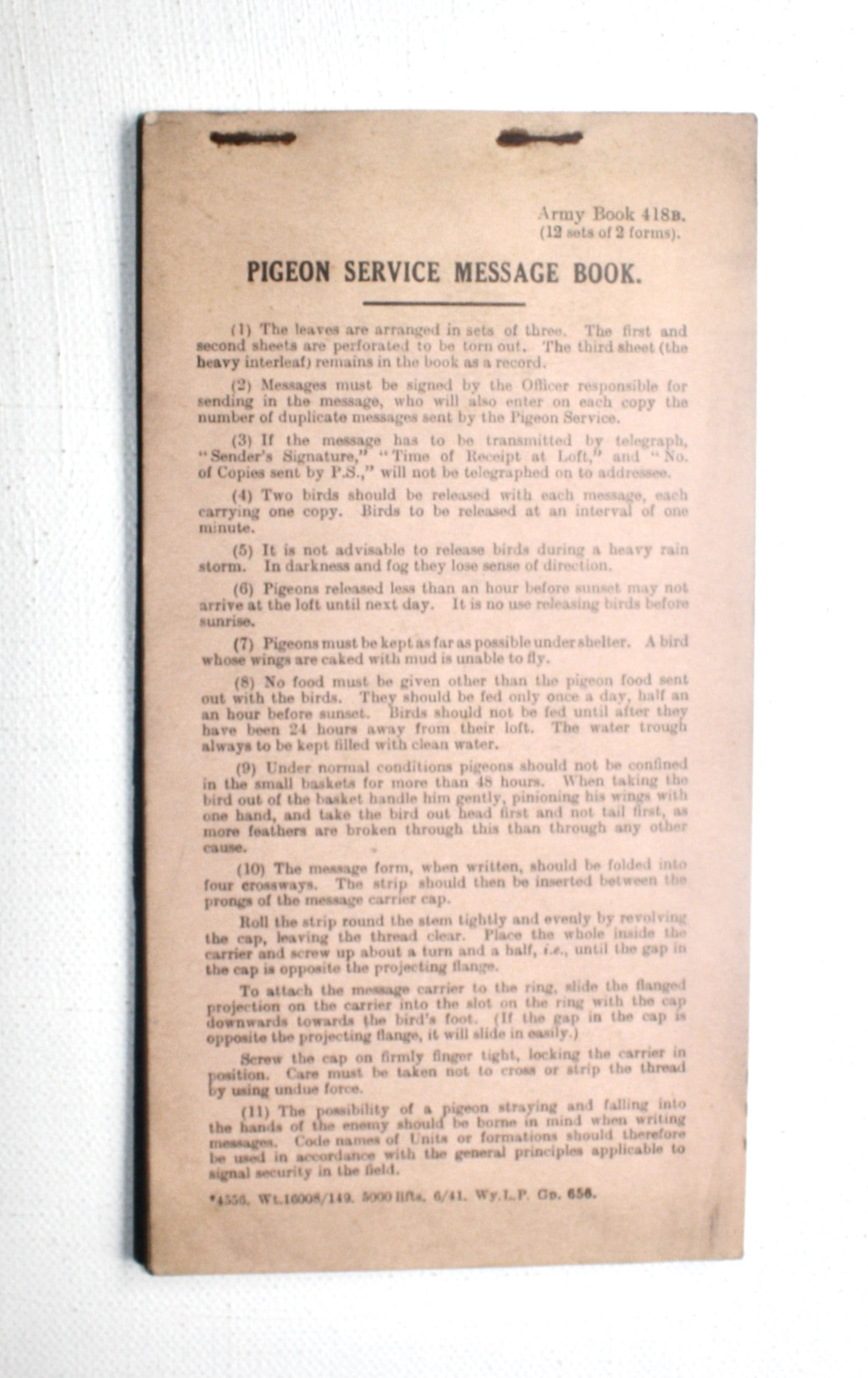
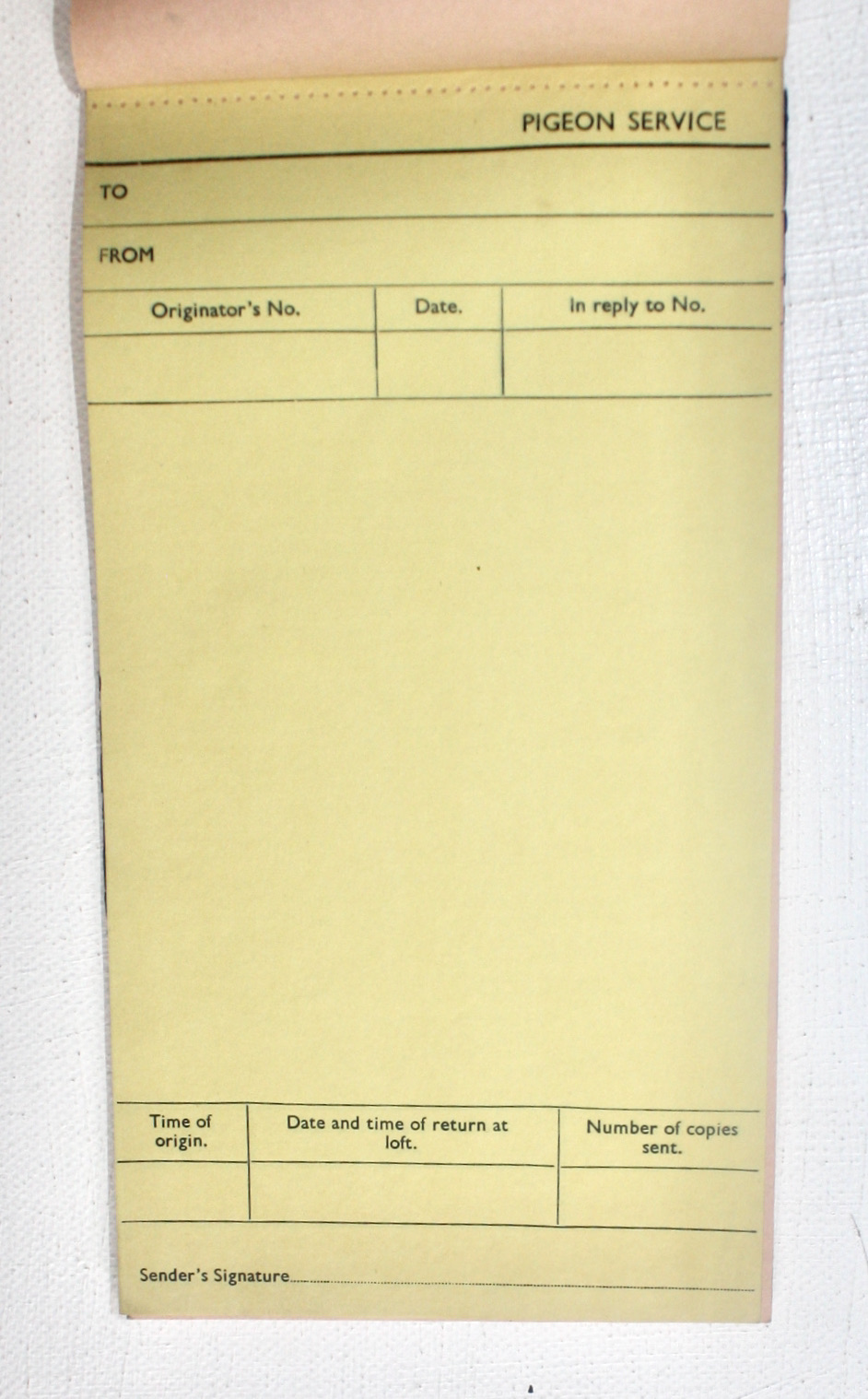
Original pink printed card wraps stapled at the top 10x18cm. Printed 6/41 by Wy.L.P. Gp. 656. Collating complete with instructions to the front, 12 sets of 3 leaves (of which 2 perforated yellow pages to be filled in and torn out and the heavy pink interleaf which remains inside as a record), with original carbon papers inside final leaf. Fine and unused, lightly dusted to the wraps, with staples rusted. This revived the Home Office Pigeon Service headed by Lieutenant-Colonel A.H. Osman during WW1. The birds were provided by some 120,000 members of the International Pigeon Board, which had resolved to assist the War Office in the event of hostilities. In February 1939 the National Pigeon Service Committee was formed to supply RAF reconnaissance craft and bombers with a homing pigeon in case wireless communications broke down. This was followed by the Army Pigeon Service in May 1940, and the Intelligence Services. Part of the Committee's responsibility was to maintain a register, form civilian groups, co-opt members, inspect lofts to ensure no birds of foreign origin were present, and give advice. During the war they provided over 216K young birds. "Army Book 418B" is a revised version of that used in WW1 (Army Book 418). The instructions state each message should be carried by two birds released 1 minute apart. Birds should not be released in heavy rain as it affects their sense of direction, at dusk, or just before sunrise. They need to be kept under shelter to avoid getting mud on their wings, should only be fed with the food supplied at specific times, with a regular supply of clean water. They should not be confined in small baskets for longer than 48 hours, and should be handled carefully. There are also detailed instructions for filling out the form and storing it in its carrier: "The possibility of a pigeon straying and falling into the hands of the enemy should be borne in mind when writing messages. Code names of units or formations should therefore be used in accordance with the general principles applicable to signal security in the field". The form contains fields To, From, Originator's No., Date, In reply to No., space for the message, Time of origin, Date and time of return at loft, Number of copies sent, and Sender's signature. Very rare, with other copies located at Eden Camp (Object 3810), and the National Army Museum (Accession No. 1975-06-35). (Ref. Royal Pigeon Racing Association, "National Pigeon Service").
Seller Inventory # 5526
Contact seller
Report this item