Order Total (1 Item Items):
Shipping Destination:

Susane, First Edition (5 results)
Skip to main search results
Search filters
Product Type
- All Product Types
- Books (4)
- Magazines & Periodicals (No further results match this refinement)
- Comics (No further results match this refinement)
- Sheet Music (No further results match this refinement)
- Art, Prints & Posters (No further results match this refinement)
- Photographs (No further results match this refinement)
- Maps (1)
- Manuscripts & Paper Collectibles (No further results match this refinement)
Condition Learn more
- New (1)
- As New, Fine or Near Fine (No further results match this refinement)
- Very Good or Good (No further results match this refinement)
- Fair or Poor (No further results match this refinement)
- As Described (4)
Binding
Collectible Attributes
- First Edition (5)
- Signed (No further results match this refinement)
- Dust Jacket (2)
- Seller-Supplied Images (2)
- Not Print on Demand (5)
Language (2)
Free Shipping
- Free Shipping to U.S.A. (No further results match this refinement)
Seller Location
Seller Rating
-

Take me there : eine Geschichte zum Verlieben. Susane Colasanti. Aus dem Amerikan. von Barbara Abedi
Seller: Preiswerterlesen1 Buchhaus Hesse, Hückeswagen, Germany
Seller rating 4 out of 5 stars

First Edition
Pp. Condition: Neu. 1. Aufl. 325 S. ; 22 cm Sprache: Deutsch Gewicht in Gramm: 589.
-

Material _ Object _ Form. Mit den gesammelten Schriften von / with the complete writings of Anthony Cragg 1981 - 98 und Beiträgen / and essays by Susane Gaensheimer und Ulrich Wilmes. Herausgegeben von / edited by Helmut Friedel. Katalog zur Ausstellung im Lenbachhaus München.
Language: German
Published by Ostfildern-Ruit, Cantz,, 1998
Seller: Antiquariat Ulrich Heider, Köln, Germany
Seller rating 4 out of 5 stars
First Edition
159 S. mit Farbabbildungen. Erste Ausgabe (sehr gutes Exemplar). Sprache: Deutsch Gewicht in Gramm: 900 Gr.8°. Orig.-Pappband mit Orig.-Umschlag.
-
Le Trésor d'Orphée (1600), livre de tablature de Luth contenant une Susane un iour plusieurs Fantaisies Preludes passe. Maises Gaillardes Pauanes d'Angleterre Pauane Espagnolle fin de Gaillarde Siuttes de Bransles tant à cordes analées qu'austres. Voltes & Courantes. Transcrit pour piano par Henri Quittard (1906)
Published by Paris, Ballard (VN 1600) [1906], 1906
Seller: Musikantiquariat Bernd Katzbichler, Haarbach, D, Germany
Seller rating 4 out of 5 stars
First Edition
80 S. Umschlag. Umschlag lose, mit Händlerstempel, gering fleckig. Erstausgabe dieser Bearbeitungen.
-

Plan de l'Archipel de Mergui depuis la pointe de Tsavaye jusqu'aux Isles Ste. Susane.
Publication Date: 1745
Seller: Geographicus Rare Antique Maps, Brooklyn, NY, U.S.A.
Association Member: ABAA ESA ILAB
Seller rating 4 out of 5 stars
Map First Edition
Very good. The chart has been trimmed to the neatline and laid down on period paper - likely by the original binder. No loss. Size 17.5 x 23.25 Inches. This is the extremely rare 1745 first edition of D'Après de Mannevillette's groundbreaking chart of the Mergui archipelago on the coast of southern Burma. It is the first printed map to show the region in detail and to include evidence of firsthand navigation. For southeast Asia, in particular, Mannevillette's 1745 nautical atlas was ' immediately recognised as being superior to all previous maps of Southeast Asian coasts ' (Suárez, p.238). A Closer Look Although the chart's title orients the reader to the north, the text within the body of the chart is oriented to the east, which for the purpose of reading the chart must be construed as its primary orientation. It covers the coastline of the Tenasserim region from Point Tavoy in the north to Isle St. Suzane in the south. Centered on the town of Mergui (present-day Myeik), the chart prominently presents the island of Kadan Kyun, here named Isle du Roy. Major islands at the rim of the archipelago are also named, such as the Island of Tenasserim and Isla Clara. The chart includes a series of coastal profiles intended to accompany the routes on the chart marked with depth soundings and anchorages. The routes in question run into the archipelago from the northwest, arriving at the anchorages at the Isle du Roy and Mergui. That there were more islands to the archipelago than he depicted, Mannevillette admits: this bank is filled with a quantity of islands, between which the small ships of this country pass to go to Junkseilon (Phuket), Achem (Aceh, on Sumatra) and other places in the surrounding area. Indeed, Malay and Chinese traders relied on the inner waters of the archipelago to avoid monsoons, while pirates and slavers relied on the archipelago because of the impossibility of charting and controlling it. A Contested Frontier The coastline and archipelago depicted here are now part of the southern extent of Myanmar. When the chart was made, most maps presented Tenasserim as part of the Ayutthaya kingdom of Siam; by the 1760s, it was captured by Burma. Great Britain would, in turn, capture the archipelago from Burma at the beginning of the 19th century. A Censored First Edition All maps from the 1745 first edition of the Neptune Oriental are as significant as they are rare. The atlas followed Mannevillette's 1728 voyage to China, wherein he corrected latitudes and made new charts along the route using the most up-to-date hydrographic instruments. When he returned to France, he devised a plan to publish new maps of the route to China, including charts of the Persian Gulf, the Red Sea, and the coasts of India, Malaya, the northern parts of Indonesia, Indochina, and China. His Neptune Oriental , published for the Compagnie des Indes (French East India Company), appeared in 1745 and features twenty-five groundbreaking maps. In reviewing the work, the French Admiralty considered the information to be so accurate and advanced over earlier charts that it threatened French colonial and maritime interests in the Far East. According to Filliozat, 'the French Admiralty considering that the Neptune Oriental was too dangerous. navigation ordered the remaining copies to be destroyed' (Filliozat, Manonmani, Indian Journal of History of Science , 292, 1994, p. 341). Consequently, despite much revised and expanded issues of the Neptune Orientale appearing in 1775 (fifty-nine maps) and 1775 - 1781, the important first edition remains exceedingly rare. While the 1775 edition is common, we note only three surviving examples of the 1745 edition in the OCLC. Publication History and Census This map was engraved by Guillaume d'Heulland for the 1745 first edition of D'Après de Mannevillette's Neptune Oriental . Like all the maps from this edition, most examples were censored and destroyed. The map was replaced in the 1775 second edition of the Neptune.
-
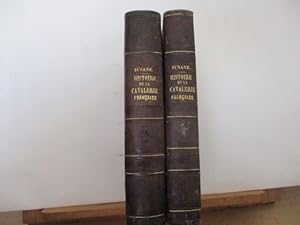
PARIS,Librairie J. Hetzel et Cie, 1874 - Edition Originale -T. 2 & 3 - Reliure 1/2 basane - Dos lisse orné de filets dorés - in-12, 12 x 18 cm - 394 & 342 pages - rousseurs - mouillures - Ref. 48111 Livres 285819354493.