Synopsis
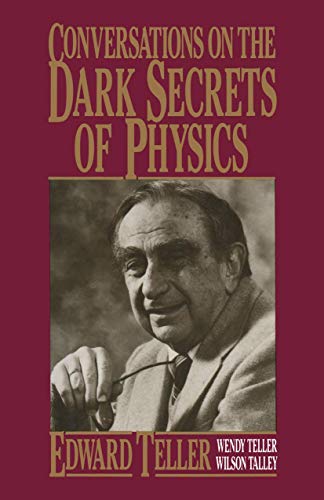
The idea for this book began over four decades ago when Edward Teller began teaching physics appreciation courses at the University of Chicago. Then, as now, Dr. Teller believes that illiteracy in science is an increasingly great danger to American society, not only for our chil dren but also for our growing adult population. On one hand, the future of every individual on this globe is closely related to science and its applications. Fear of the results of science, which has become prevalent in much of the Western World, leads to mistaken decisions in important political affairs. But this book speaks of no fears and of no decisions-only of the facts that can prevent one of them and indirectly guide the others. From the perspective of this book, a second point is even more vii viii PREFACE significant. The first quarter of this century has seen the most won derful and philosophically most important transformation in our thinking. The intellectual and aesthetic values of the points of view of Einstein and Bohr cannot be overestimated. Nor should they be hidden at the bottom of tons of mathematical rubble. Our young people must be exposed to science both because it is useful and because it is fun. Both of these qualities should be taken at a truly high value.
Reviews
These "conversations" on a dozen major themes of modern physics are derived from Edward Teller's physics appreciation course designed for high school students. The eminent physicist's scientific passions and confidence are everywhere on display here, beginning in the "Prolog-Warning" to the reader: "I claim that relativity and the rest of modern physics is not complicated. . . . It is only unusual." From "Relativity" in chapter one he proceeds at full steam through the uncertainty principle, statistical mechanics, Maxwell's Equations, quantum mechanics, superconductors--straight up a steep learning curve of the most challenging and inspiring theories in the science of matter. To their credit, the coauthors (Wendy Teller, a computer scientist, is Edward Teller's daughter; Talley is a University of California professor of applied science) do not spare the general reader all of the mathematical summaries; on the other hand, the occasional footnote-repartee among them is seldom helpful. Teller's "conversations" do not have the charm of Richard Feynman's The Feynman Lectures on Physics , but they have the signature of the scientific human mind at its most admirable task: seeking the "great remaining secrets." Readers are advised to bring a good scientific dictionary and sit up front for this tour of 20th-century physics with a distinguished scientist"scholar" to avoid repetition?/no, Teller has never been noted as a scholar, strictly as a distinguished scientist.gs .
Copyright 1991 Reed Business Information, Inc.
"About this title" may belong to another edition of this title.