
Items related to Moths (Collins New Naturalist)
Synopsis
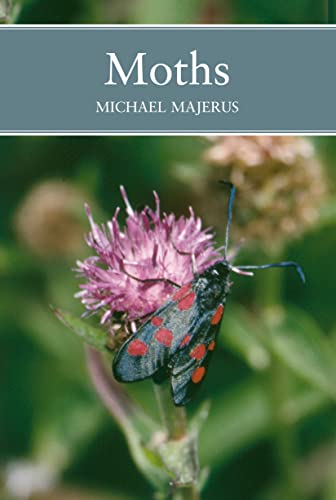
Another volume in the "New Naturalist" series, this book is a comprehensive account of the diverse natural history of these fascinating and popular insects. Michael Majerus, author of the "New Naturalist" book "Ladybirds", examines all aspects of moths, from their life histories to their role as pests to humans. He covers their reproduction, feeding, evolution, habitats and conservation. The book also discusses the enemies of moths, and the ways they have evolved to avoid detection, including camouflage, warning coloration, and mimicry.
"synopsis" may belong to another edition of this title.
About the Author
Michael Majerus is a Fellow of Clare College, Cambridge, and teaches undergraduates about evolution and natural history at the Department of Genetics. He has had a passionate interest in insects, particularly butterflies and moths, since the age of four. He is excellent at popularising science, and is the author of the popular New Naturalist Ladybirds.
From Booklist
With nearly 200,000 species worldwide, moths are the planet's second-largest order of animals (after beetles). They form the major part of the Lepidoptera, far outnumbering their more familiar cousins, butterflies. Majerus, a British entomologist, has produced an extremely thorough book about the lives of these "butterflies of the night." Lengthy chapters cover life history and anatomy, evolution, sex, host plants and habitats, flight and distribution, disease and predators, and defenses. Each chapter discusses the place of moths in the natural world and gives specific examples for each general concept that is discussed. A chapter on melanism points out the influence of moths on the way biologists think about evolution, and a final chapter looks at the wide-ranging impact humans have had on moths (and vice versa). Though the book has a decidedly British slant, the universality of the overall principles transcends this partiality. Its price is steep, but there is no other book that matches the author's thoroughness and timeliness. A must for academic libraries and larger public libraries, and recommended for all others. Nancy Bent
Copyright © American Library Association. All rights reserved
"About this title" may belong to another edition of this title.
Search results for Moths (Collins New Naturalist)

Stock Image
Moths
Seller: PBShop.store UK, Fairford, GLOS, United Kingdom
Seller rating 5 out of 5 stars

PAP. Condition: New. New Book. Shipped from UK. Established seller since 2000. Seller Inventory # AR-9780002201421
Buy New
US$ 24.39
US$ 7.75 shipping
Ships from United Kingdom to U.S.A.
Ships from United Kingdom to U.S.A.
Quantity: 2 available
Stock Image
Moths (Collins New Naturalist)
Seller: WorldofBooks, Goring-By-Sea, WS, United Kingdom
Seller rating 5 out of 5 stars
Paperback. Condition: Very Good. The book has been read, but is in excellent condition. Pages are intact and not marred by notes or highlighting. The spine remains undamaged. Seller Inventory # GOR003063972
Buy Used
US$ 34.01
US$ 7.39 shipping
Ships from United Kingdom to U.S.A.
Ships from United Kingdom to U.S.A.
Quantity: 4 available
Seller Image
New Naturalist No. 90 Moths
Published by
Collins, London, 2002
ISBN 10: 0002201429
ISBN 13: 9780002201421
Used
Paperback
First Edition
Seller: LOE BOOKS, Bathpool, CORNW, United Kingdom
Seller rating 4 out of 5 stars

Paperback. Condition: Fine. Dust Jacket Condition: No Dust Jacket. First Edition. A fine paperback copy; pp. 310. "With colour photographs and diagrams in black and white". Original covers fine, spine fine, unfaded. Contents clean and tight, no inscriptions. A fine copy. Size: 8vo. Book. Seller Inventory # 038065
Buy Used
US$ 47.58
US$ 16.50 shipping
Ships from United Kingdom to U.S.A.
Ships from United Kingdom to U.S.A.
Quantity: 1 available
Seller Image
New Naturalist No. 90 Moths
Published by
Collins, London, 2002
ISBN 10: 0002201429
ISBN 13: 9780002201421
Used
Paperback
First Edition
Seller: LOE BOOKS, Bathpool, CORNW, United Kingdom
Seller rating 4 out of 5 stars
Paperback. Condition: Fine. Dust Jacket Condition: No Dust Jacket. First Edition. A fine paperback copy; pp. 310. "With colour photographs and diagrams in black and white". Original covers fine, spine fine, unfaded. Contents clean and tight, no inscriptions. A fine copy. Size: 8vo. Book. Seller Inventory # 018966
Buy Used
US$ 47.58
US$ 16.50 shipping
Ships from United Kingdom to U.S.A.
Ships from United Kingdom to U.S.A.
Quantity: 1 available
Seller Image
Moths. The New Naturalist.
Published by
1st. Ed. Pub. Collins. 2002, 2002
ISBN 10: 0002201429
ISBN 13: 9780002201421
Used
Softcover
Seller: C. Arden (Bookseller) ABA, Hay-on-Wye, United Kingdom
Seller rating 5 out of 5 stars
Condition: Near Fine. 8vo. Nr. fine softback. Seller Inventory # 61217
Buy Used
US$ 36.70
US$ 30.02 shipping
Ships from United Kingdom to U.S.A.
Ships from United Kingdom to U.S.A.
Quantity: 1 available
Stock Image
Collins New Naturalist Library (90) - Moths
Seller: AwesomeBooks, Wallingford, United Kingdom
Seller rating 5 out of 5 stars
Paperback. Condition: Very Good. Collins New Naturalist Library (90) - Moths This book is in very good condition and will be shipped within 24 hours of ordering. The cover may have some limited signs of wear but the pages are clean, intact and the spine remains undamaged. This book has clearly been well maintained and looked after thus far. Money back guarantee if you are not satisfied. See all our books here, order more than 1 book and get discounted shipping. Seller Inventory # 7719-9780002201421
Buy Used
US$ 63.31
US$ 5.44 shipping
Ships from United Kingdom to U.S.A.
Ships from United Kingdom to U.S.A.
Quantity: 1 available
Stock Image
MOTHS.
Published by
Harper Collins, London, 2002
ISBN 10: 0002201429
ISBN 13: 9780002201421
Used
Soft cover
First Edition
Seller: Any Amount of Books, London, United Kingdom
Seller rating 5 out of 5 stars
Soft cover. 8vo. pp 310, [16] plates. Large format paperback. Copiously illustrated in colour and black and white throughout. ISBN: 0002201429 Slight rubbing at edges, otherwise fine. Excellent condition. Seller Inventory # C22078
Buy Used
US$ 47.58
US$ 24.42 shipping
Ships from United Kingdom to U.S.A.
Ships from United Kingdom to U.S.A.
Quantity: 1 available
Stock Image
Collins New Naturalist Library (90) - Moths
Seller: Bahamut Media, Reading, United Kingdom
Seller rating 4 out of 5 stars
Paperback. Condition: Very Good. Shipped within 24 hours from our UK warehouse. Clean, undamaged book with no damage to pages and minimal wear to the cover. Spine still tight, in very good condition. Remember if you are not happy, you are covered by our 100% money back guarantee. Seller Inventory # 6545-9780002201421
Buy Used
US$ 63.31
US$ 9.21 shipping
Ships from United Kingdom to U.S.A.
Ships from United Kingdom to U.S.A.
Quantity: 1 available
Stock Image
MOTHS
Published by
LONDON HARPERCOLLINS, 2002
ISBN 10: 0002201429
ISBN 13: 9780002201421
Used
Softcover
First Edition
Seller: Hawkridge Books, Bakewell, United Kingdom
Seller rating 5 out of 5 stars
FIRST EDITION. NEW NATURALIST SERIES. A FINE SOFTBACK COPY. 16 COLOUR PLATES AND OVER 180 BLACK AND WHITE PHOTOGRAPHS AND LINE DRAWINGS. Seller Inventory # 43639
Buy Used
US$ 33.98
US$ 39.59 shipping
Ships from United Kingdom to U.S.A.
Ships from United Kingdom to U.S.A.
Quantity: 1 available
Stock Image
The New Naturalist: Moths
Seller: Anybook.com, Lincoln, United Kingdom
Seller rating 5 out of 5 stars
Condition: Good. This is an ex-library book and may have the usual library/used-book markings inside.This book has soft covers. In good all round condition. Please note the Image in this listing is a stock photo and may not match the covers of the actual item,800grams, ISBN:9780002201421. Seller Inventory # 7857385
Buy Used
US$ 58.86
US$ 17.21 shipping
Ships from United Kingdom to U.S.A.
Ships from United Kingdom to U.S.A.
Quantity: 1 available