
Items related to Rivers in the Desert: William Mulholland and the Inventing...
Synopsis
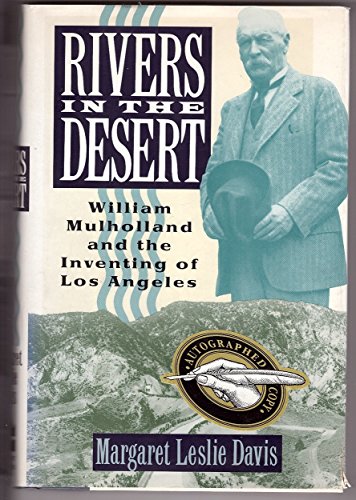
A biography of the engineer who designed and built the Los Angeles Aqueduct traces the rise and fall of William Mulholland, the architect of an aqueduct 250 miles long designed to bring Los Angeles all the water it needed. 15,000 first printing.
"synopsis" may belong to another edition of this title.
Reviews
Davis ( Lovers, Doctors and the Law ) offers an arresting biography of William Mulholland, the visionary Los Angeles Water Department engineer who designed the Owens Valley Aqueduct. Completed in 1913, the aqueduct harnessed a river 250 miles north of L.A. and brought water to a city otherwise doomed to stagnation. Not since Roman times had such an immense water project been undertaken; Mulholland was the first American to make practical use of hydraulic sluicing, a technique that would later solve many of the Panama Canal's construction problems. Although it made Mulholland a hero, the aqueduct also devastated Owens Valley towns, farms and individuals, enriched speculators and fostered corruption. Mulholland's legacy is similarly ambiguous. In 1928, his auxiliary St. Francis Dam, supposedly the safest in the world, collapsed, bringing down its creator's lofty reputation as 12 billion gallons of water sprewed across 65 miles to the sea. Mulholland's depression over the disaster persisted to his death in 1935 at the age of 79. These personal and public dramas make for gripping reading. Photos not seen by PW .
Copyright 1993 Reed Business Information, Inc.
Sluggish account of the financial and political maneuverings that marked efforts to bring water to the arid Los Angeles Basin at the turn of the century. Realizing that their drought-plagued city's growth would be checked unless immense supplies of water could be made readily available, officials of the Los Angeles Department of Water and Power (headed by engineer William Mulholland), in conjunction with local politicians, devised a plan to divert the water of northern California's Owens River through a monumental system of aqueducts, canals, tunnels, and reservoirs 250 miles south to L.A. When word of the plan spread, a land boom resulted, particularly in the desertlike San Fernando Valley. Once the conduit system was in place--after an incredible effort involving thousands of workers and six years of backbreaking labor--irate residents living near the Owens River, deprived of the water essential to their agriculture-based economy, tried to sabotage the system with derringers, dynamite, and demonstrations. The tense situation continued until March 12, 1928, when a major dam in the system collapsed, causing millions of dollars in property damage and more than five hundred deaths. During an official inquiry, Mulholland took responsibility for the catastrophe but was cleared of criminal charges. He died in 1935, a broken man--and in the years since, the Colorado River has replaced the Owens as L.A.'s water source. All this should have made for an engrossing narrative (Mulholland's debacle formed the basis of the film Chinatown), but Davis writes with little color or inflection. Though she centers her narrative on Mulholland, she never gets beneath the surface of his obsessive, autocratic personality--nor does she supply insights into the boomtown boosterism that pervaded official L.A. circles and prompted the grandiose plan in the first place. Exciting when detailing the harrowing dam collapse, but this episode isn't enough to energize an otherwise lackluster presentation. (Thirty b&w photographs--not seen) -- Copyright ©1993, Kirkus Associates, LP. All rights reserved.
A nationally prominent engineer and head of the Los Angeles Department of Water and Power, Mulholland was the man responsible for building the aqueduct that made possible the city's exponential growth in the early part of this century. Unfortunately, his reputation was tarnished when he was held responsible for the collapse of the St. Francis dam in 1928, a tragedy that killed hundreds. Not exactly a biography, this work begins when Mulholland was in his fifties and portrays him as one of the few noncorrupt figures involved in his own spectacular rise and fall. Davis, a Los Angeles lawyer who also appears on TV talk and news shows, tells a dramatic story, although she has a tendency to re-create what people and crowds were thinking without offering any documentation. Recommended for popular collections.
- Gary Williams, Southeastern Ohio Regional Lib., Caldwell
Copyright 1993 Reed Business Information, Inc.
"About this title" may belong to another edition of this title.
Search results for Rivers in the Desert: William Mulholland and the Inventing...

Stock Image
Rivers in the Desert: The Rise and Fall of William Mulholland
Published by
HarperCollins Publishers Inc, 1993
ISBN 10: 0060166983
ISBN 13: 9780060166984
Used
Hardcover
Seller: World of Books (was SecondSale), Montgomery, IL, U.S.A.
Seller rating 5 out of 5 stars

Hardback. Condition: Very Good. Rivers in the Desert is the quintessential American story. It follows the remarkable career of William Mulholland, the visionary who engineered the rise of Los Angeles as the greatest American city west of the Mississippi. He sought to transform the sparse and barren desert into an inhabitable environment by designing the longest aqueduct in the Western Hemisphere, bringing water from the mountains to support a large city. Davis chronicles Mulholland's dramatic ascension to wealth and fame, followed by his tragic downfall after the sudden collapse of the dam he had constructed to safeguard the water supply. The disaster, which killed at least five hundred people, caused his repudiation by allies, friends, and a previously adoring community. Epic in scope, Rivers in the Desert chronicles the history of Los Angeles and examines the tragic fate of the man who rescued it. Margaret L. Davis's Rivers in the Desert: William Mulholland and the Inventing of Los Angeles and Dark Side of Fortune both won the Golden Spur Award for Best Nonfiction Book. Davis is a graduate of Georgetown University and was formerly editor of arts and humanities at the Excite Network. Davis has a law degree and lives in Los Angeles, California. Seller Inventory # CIN0060166983VG
Stock Image
Rivers in the Desert: The Rise and Fall of William Mulholland
Published by
HarperCollins Publishers Inc, 1993
ISBN 10: 0060166983
ISBN 13: 9780060166984
Used
Hardcover
Seller: World of Books (was SecondSale), Montgomery, IL, U.S.A.
Seller rating 5 out of 5 stars
Hardback. Condition: Good. Rivers in the Desert is the quintessential American story. It follows the remarkable career of William Mulholland, the visionary who engineered the rise of Los Angeles as the greatest American city west of the Mississippi. He sought to transform the sparse and barren desert into an inhabitable environment by designing the longest aqueduct in the Western Hemisphere, bringing water from the mountains to support a large city. Davis chronicles Mulholland's dramatic ascension to wealth and fame, followed by his tragic downfall after the sudden collapse of the dam he had constructed to safeguard the water supply. The disaster, which killed at least five hundred people, caused his repudiation by allies, friends, and a previously adoring community. Epic in scope, Rivers in the Desert chronicles the history of Los Angeles and examines the tragic fate of the man who rescued it. Margaret L. Davis's Rivers in the Desert: William Mulholland and the Inventing of Los Angeles and Dark Side of Fortune both won the Golden Spur Award for Best Nonfiction Book. Davis is a graduate of Georgetown University and was formerly editor of arts and humanities at the Excite Network. Davis has a law degree and lives in Los Angeles, California. Seller Inventory # 00103883068
Stock Image
Rivers in the Desert: William Mulholland and the Inventing of Los Angeles
Seller: ThriftBooks-Atlanta, AUSTELL, GA, U.S.A.
Seller rating 5 out of 5 stars
Hardcover. Condition: Good. No Jacket. Pages can have notes/highlighting. Spine may show signs of wear. ~ ThriftBooks: Read More, Spend Less. Seller Inventory # G0060166983I3N00
Stock Image
Rivers in the Desert: William Mulholland and the Inventing of Los Angeles
Seller: ThriftBooks-Dallas, Dallas, TX, U.S.A.
Seller rating 5 out of 5 stars
Hardcover. Condition: Good. No Jacket. Pages can have notes/highlighting. Spine may show signs of wear. ~ ThriftBooks: Read More, Spend Less. Seller Inventory # G0060166983I3N00
Stock Image
Rivers in the Desert: William Mulholland and the Inventing of Los Angeles
Seller: ThriftBooks-Phoenix, Phoenix, AZ, U.S.A.
Seller rating 5 out of 5 stars
Hardcover. Condition: Good. No Jacket. Pages can have notes/highlighting. Spine may show signs of wear. ~ ThriftBooks: Read More, Spend Less. Seller Inventory # G0060166983I3N00
Stock Image
Rivers in the Desert: William Mulholland and the Inventing of Los Angeles
Seller: ThriftBooks-Reno, Reno, NV, U.S.A.
Seller rating 5 out of 5 stars
Hardcover. Condition: Good. No Jacket. Pages can have notes/highlighting. Spine may show signs of wear. ~ ThriftBooks: Read More, Spend Less. Seller Inventory # G0060166983I3N00
Stock Image
Rivers in the Desert: William Mulholland and the Inventing of Los Angeles
Published by
Harpercollins (edition First Edition), 1993
ISBN 10: 0060166983
ISBN 13: 9780060166984
Used
Hardcover
First Edition
Seller: BooksRun, Philadelphia, PA, U.S.A.
Seller rating 5 out of 5 stars
Hardcover. Condition: Very Good. First Edition. With dust jacket. It's a well-cared-for item that has seen limited use. The item may show minor signs of wear. All the text is legible, with all pages included. It may have slight markings and/or highlighting. Seller Inventory # 0060166983-11-1-29
Stock Image
Rivers in the Desert: The Rise and Fall of William Mulholland
Published by
HarperCollins Publishers Inc, 1993
ISBN 10: 0060166983
ISBN 13: 9780060166984
Used
Hardcover
Seller: World of Books Inc, Montgomery, IL, U.S.A.
Seller rating 4 out of 5 stars

Hardback. Condition: Good. Rivers in the Desert is the quintessential American story. It follows the remarkable career of William Mulholland, the visionary who engineered the rise of Los Angeles as the greatest American city west of the Mississippi. He sought to transform the sparse and barren desert into an inhabitable environment by designing the longest aqueduct in the Western Hemisphere, bringing water from the mountains to support a large city. Davis chronicles Mulholland's dramatic ascension to wealth and fame, followed by his tragic downfall after the sudden collapse of the dam he had constructed to safeguard the water supply. The disaster, which killed at least five hundred people, caused his repudiation by allies, friends, and a previously adoring community. Epic in scope, Rivers in the Desert chronicles the history of Los Angeles and examines the tragic fate of the man who rescued it. Margaret L. Davis's Rivers in the Desert: William Mulholland and the Inventing of Los Angeles and Dark Side of Fortune both won the Golden Spur Award for Best Nonfiction Book. Davis is a graduate of Georgetown University and was formerly editor of arts and humanities at the Excite Network. Davis has a law degree and lives in Los Angeles, California. Seller Inventory # CIN0060166983G
Stock Image
Rivers in the Desert: The Rise and Fall of William Mulholland
Published by
HarperCollins Publishers Inc, 1993
ISBN 10: 0060166983
ISBN 13: 9780060166984
Used
Hardcover
Seller: World of Books Inc, Montgomery, IL, U.S.A.
Seller rating 4 out of 5 stars
Hardback. Condition: Very Good. Rivers in the Desert is the quintessential American story. It follows the remarkable career of William Mulholland, the visionary who engineered the rise of Los Angeles as the greatest American city west of the Mississippi. He sought to transform the sparse and barren desert into an inhabitable environment by designing the longest aqueduct in the Western Hemisphere, bringing water from the mountains to support a large city. Davis chronicles Mulholland's dramatic ascension to wealth and fame, followed by his tragic downfall after the sudden collapse of the dam he had constructed to safeguard the water supply. The disaster, which killed at least five hundred people, caused his repudiation by allies, friends, and a previously adoring community. Epic in scope, Rivers in the Desert chronicles the history of Los Angeles and examines the tragic fate of the man who rescued it. Margaret L. Davis's Rivers in the Desert: William Mulholland and the Inventing of Los Angeles and Dark Side of Fortune both won the Golden Spur Award for Best Nonfiction Book. Davis is a graduate of Georgetown University and was formerly editor of arts and humanities at the Excite Network. Davis has a law degree and lives in Los Angeles, California. Seller Inventory # CIN0060166983VG
Stock Image
Rivers in the Desert: William Mulholland and the Inventing of Los Angeles
Seller: HPB Inc., Dallas, TX, U.S.A.
Seller rating 5 out of 5 stars
hardcover. Condition: Very Good. Connecting readers with great books since 1972! Used books may not include companion materials, and may have some shelf wear or limited writing. We ship orders daily and Customer Service is our top priority! Seller Inventory # S_465142044