
Synopsis
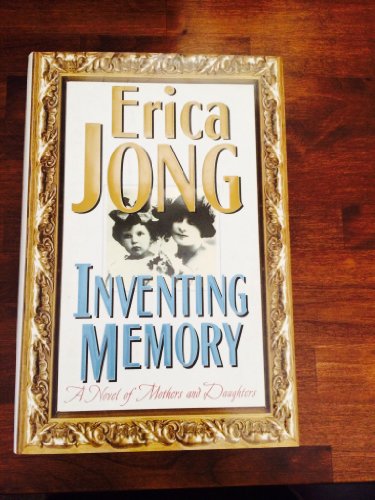
Spanning a hundred years, Inventing Memory brilliantly interweaves the lives of four generations of unforgettable women, from the turn of the last century to the early years of the twenty-first century. Propelled out of 1905 Russia by a pogrom in which she loses her first child, her twin brother, and her father, Sarah Solomon arrives in an America of bowler hats, Irish cops, elevated subway cars, Jewish and Italian anarchists, and labor ferment. Establishing herself as an artist, Sarah lives with and loves two very different men: a landsman, Lev Levitsky, and Sim Coppley, a proper New York WASP who is in love with all things Jewish, including her. While Sarah and Lev embark on an artistic life together that will take them west to a newly established Hollywood, their wild, flapper daughter and avant-garde writer, Salome, cavorts in 1929 Paris with the likes of Henry Miller, Anais Nin, and Gertrude Stein, until she learns a shocking secret that compels her to search for her WASP roots. Salome's daughter, Sally, destined to become one of the 1960's most famous folksingers, is struck like lightning by fame, and with it the ravages of a counterculture that wreaked havoc upon the lives of so many young artists.
We meet Sally - and all of these women - through her daughter, Sara. Born in 1978, trained as an historian and in the process of researching her family history at the prestigious Council on Jewish History in New York, Sara finds herself drawn into the tumultuous lives of her ancestors via a sepia-tone photograph of her great-grandmother Sarah, for whom she was named. A single mother with a young daughter, Sara absorbs all she can of the strength of her great-grandmother and grandmother, and tries to make peace with the ghost of her own neglectful mother; she comes to understand the paradoxical, subjective nature of memory, and the way we invent, reinvent, and assimilate our ancestors.
With Inventing Memory, Erica Jong has written the saga of four generations of talented women connected by the bonds of love, resentment, anger, and memory.
"synopsis" may belong to another edition of this title.
About the Author
Erica Jong, award-winning poet, novelist, and essayist, is best known for seven bestselling novels, including her most recent, Inventing Memory, and her midlife memoir, Fear of Fifty. She is a former president of the Authors Guild and frequent lecturer on women's rights, authors' rights, and free expression both here and abroad. She lives in New York City and Connecticut.
Reviews
The author of the renowned Fear of Flying, among other novels, offers a pastiche of fictionalized anecdotes, breezy philosophical pronouncements, and amusing Yiddish homilies (``When a rogue kisses you, count your teeth'') in a family saga of four generations of Jewish women creating art (and havoc) in and out of New York. ``Sometimes, in dreams, my first-born son comes back to me,'' begins Sarah, the long-dead Levitsky family matriarch who narrates her story from beyond the grave. Sarah's infant son, Dovie, was killed in Russia by Cossacks, a tragedy that prompts the indomitable photographer's assistant to flee to America in search of a better life. Beginning her career in a sweatshop, Sarah soon graduates to drawing catalogue illustrations, then painting the portraits of New York's wealthiest. She eventually marries the protective art dealer Lev Levitsky. The Levitskys make a handsome living off Lev's gallery and Sarah's paintings, with their only anxieties centered on their bohemian writer-daughter, Salome, whose life in Paris includes her own literary magazine and an affair with author Henry Miller. Eventually, though, even Salome settles down enough to give birth to beautiful Sally, who grows up to throw herself into the '60s Greenwich Village folk-music scene, quickly becomes a national icon, then proceeds to destroy herself with drugs and alcohol. By then, though, she's produced her own daughter, Sara. Sara's father wins her in a custody dispute, spirits her away to Montana, and refuses to tell her who her mother is. Inevitably, Sara the adult becomes the family chronicler, determined to use Salome's journal, Sally's '60s interviews, and her own musings over a woman's place in history to re-create the past, get to know these women, and assure their immortality. A clunky but heartfelt work. Still, many of the topics mulled over here (the Jewish immigration to America, the continuing challenges for female artists, women's spirituality) were more effectively addressed in Jong's recent nonfiction (Fear of Fifty, 1994, etc.). (First printing of 150,000; $250,000 ad/promo; author tour; TV & radio satellite tour) -- Copyright ©1997, Kirkus Associates, LP. All rights reserved.
Jong should stick to nonfiction. Her last book, Fear of Fifty (1994), was a frank and well-constructed memoir. Her new novel evinces none of the smarts or style she is capable of, in fact, this multigenerational family saga spanning the entire twentieth century is a maddening mishmash of trivialized history and cliched fantasy. And that's a shame, because several of Jong's characters, Jewish women who exemplify chutzpah and creativity, are engaging and thoroughly enjoyable, particularly the indomitable Sarah who escapes the pogroms of Russia, makes her way alone to America at the tender age of 15, and becomes a successful portrait painter. If Jong had told Sarah's story, and the story of her flapper-writer daughter Salome, and her musician daughter Sally, and her scholarly daughter Sara, in a lucid and dramatic manner, this would have been a fine work of pop fiction. Instead, Jong chose to connect her narrative to every watershed event of the last 100 years, dragging in real people such as Edith Wharton and Gertrude Stein for silly cameos, imitating (badly) D. H. Lawrence and Henry Miller, and using (clumsily) such devices as letters, journals entries, and even a fake interview to stand in for solid, straight-ahead writing. There are some sunny moments when Jong captures the atmosphere of certain times and places, quotes clever Yiddish proverbs, or actually offers some insights into love and the bond between mothers and daughters, but by trying to do too much, she has done too little. Donna Seaman
In Jong's newest work, four generations of talented, beautiful Jewish women?Sarah, Salome, Sally, and Sara?fill ten decades with tragic, action-packed lives shaped by the challenges of Jewish history and the misery created by the deeply flawed men they choose. In the early 1900s, Sarah flees a deadly pogrom in Russia and paints her way to fame and fortune in America. Sarah's daughter, Salome, sleeps and writes her way through literary Paris in the 1920s and 1930s. Salome's daughter, Sally, a tormented product of the Sixties, drowns her soul in a numbing mess of drugs, men, and alcohol while skyrocketing to the top of the music charts. In the new millennium, Sally's child, Sara, with her own daughter in tow, leaves a failing marriage and spurns the love of the only wholly decent man in this tale to unravel the secrets of Judaism and feminism that molded her famous relatives. Jong is a gifted writer who tells a captivating story, but one does have to question her reluctance to part with her now-tired insistence on peppering her novels with scenes of gratuitous vulgarity. It worked in Fear of Flying, but nearly a quarter of a century later, it would have been nice to be able to recommend this title to a broader audience.
-?Beth E. Andersen, Ann Arbor Dist. Lib., Mich.
Copyright 1997 Reed Business Information, Inc.
"About this title" may belong to another edition of this title.
Other Popular Editions of the Same Title

Search results for Inventing Memory: A Novel of Mothers and Daughters

Seller Image
Inventing Memory: A Novel of Mothers and Daughters
Seller: Used Book Company, Egg Harbor Township, NJ, U.S.A.
Seller rating 3 out of 5 stars

Condition: like_new. Shows very minimal signs of wear and previous use. Can include notes highlighting. A portion of your purchase benefits nonprofits! - Note: Edition & format may differ from what is shown in stock photo & item details. May not include supplementary material such as toys, access code, dvds, etc. Seller Inventory # 584ZST000CXA_ns
Stock Image
Inventing Memory: A Novel of M
Seller: World of Books (was SecondSale), Montgomery, IL, U.S.A.
Seller rating 5 out of 5 stars

Condition: Acceptable. Item in acceptable condition! Textbooks may not include supplemental items i.e. CDs, access codes etc. Seller Inventory # 00103193488
Stock Image
Inventing Memory: A Novel of M
Seller: World of Books (was SecondSale), Montgomery, IL, U.S.A.
Seller rating 5 out of 5 stars
Condition: Very Good. Item in very good condition! Textbooks may not include supplemental items i.e. CDs, access codes etc. Seller Inventory # 00093636637
Stock Image
Inventing Memory: A Novel of M
Seller: World of Books (was SecondSale), Montgomery, IL, U.S.A.
Seller rating 5 out of 5 stars
Condition: Good. Item in very good condition! Textbooks may not include supplemental items i.e. CDs, access codes etc. Seller Inventory # 00078553857
Seller Image
Inventing Memory: A Novel of Mothers and Daughters
Seller: Reliant Bookstore, El Dorado, KS, U.S.A.
Seller rating 5 out of 5 stars
Condition: good. This book is in good condition with very minimal damage. Integrity of the book is in good condition with no missing pages. Pages can have minimal notes or highlighting. Cover image on the book may vary. Ships out quickly in a secure plastic mailer! Seller Inventory # 56JTFH000T4V_ns
Stock Image
Inventing Memory: A Novel of Mothers and Daughters
Seller: ThriftBooks-Atlanta, AUSTELL, GA, U.S.A.
Seller rating 5 out of 5 stars
Hardcover. Condition: Good. No Jacket. Pages can have notes/highlighting. Spine may show signs of wear. ~ ThriftBooks: Read More, Spend Less. Seller Inventory # G0060179430I3N00
Stock Image
Inventing Memory: A Novel of Mothers and Daughters
Seller: HPB-Movies, Dallas, TX, U.S.A.
Seller rating 4 out of 5 stars

hardcover. Condition: Very Good. Connecting readers with great books since 1972! Used books may not include companion materials, and may have some shelf wear or limited writing. We ship orders daily and Customer Service is our top priority! Seller Inventory # S_452676042
Stock Image
Inventing Memory : A Novel of Mothers and Daughters
Published by
HarperCollins Publishers, 1997
ISBN 10: 0060179430
ISBN 13: 9780060179434
Used
Hardcover
Seller: Better World Books, Mishawaka, IN, U.S.A.
Seller rating 5 out of 5 stars
Condition: Very Good. Pages intact with possible writing/highlighting. Binding strong with minor wear. Dust jackets/supplements may not be included. Stock photo provided. Product includes identifying sticker. Better World Books: Buy Books. Do Good. Seller Inventory # 48644202-6
Stock Image
Inventing Memory : A Novel of Mothers and Daughters
Published by
HarperCollins Publishers, 1997
ISBN 10: 0060179430
ISBN 13: 9780060179434
Used
Hardcover
Seller: Better World Books, Mishawaka, IN, U.S.A.
Seller rating 5 out of 5 stars
Condition: Good. Pages intact with minimal writing/highlighting. The binding may be loose and creased. Dust jackets/supplements are not included. Stock photo provided. Product includes identifying sticker. Better World Books: Buy Books. Do Good. Seller Inventory # 8216043-75
Stock Image
Inventing Memory: A Novel of Mothers and Daughters
Seller: Wonder Book, Frederick, MD, U.S.A.
Seller rating 5 out of 5 stars
Condition: Very Good. Very Good condition. Like New dust jacket. A copy that may have a few cosmetic defects. May also contain light spine creasing or a few markings such as an owner's name, short gifter's inscription or light stamp. Seller Inventory # B08J-00136