
Items related to Sexual Occupation of Japan: A Novel
Synopsis
In a thriller/love story set amid Japan's volcanic economy and political intrigues, Peter Saxon, an American lawyer, fights to keep a secret, multibillion dollar deal--and himself--alive in a country haunted by the past
"synopsis" may belong to another edition of this title.
About the Author
Richard Setlowe is a former vice president of creative affairs for ABC Pictures.
Reviews
A fearless blend of thriller, love story and sharp lesson in cultural mistrust, Setlowe's latest novel delves potently and with frightening immediacy into Asian nationalism and politics. His plot involves the Japanese mob, high-stakes international economic and sexual rivalries, and old war wounds still complicating relations between Japan and the U.S. Peter Saxon is a lawyer for a huge American media conglomerate, who has traveled to Tokyo to secretly negotiate a major international communications mergerAthe acquisition of Kuribayashi Electronics. During his stay, Saxon is shocked to find that the wife of the Japanese negotiator may be the woman with whom he had a tender love affair 30 years earlier while stationed in Japan during the Vietnam War. Though he yearns to discover whether Michiko Hara is the same person he knew as a nightclub hostess named Lilli, unmasking her identity would bring her great shameAand could scuttle the business deal. Lilli was, after all, a woman who consorted with American servicemen, behavior still considered suspect and humiliating. But Saxon has other troubles, too. The Yakuza (the Japanese mafia), which has mysterious connections to Kuribayashi, tries first to frame him for a murder, then to kill him. Naturally, the business deal languishes while Saxon tries to determine the mob's motives. It becomes clear that certain executives at Kuribayashi have vowed never to sell the coompany to a country that not only destroyed but metaphorically emasculated Japan, through the seduction of Japanese women. Related through heavy doses of flashbacks, the novel has all the plot convolutions and menacing mystery of a good thriller, and turns especially intriguing with the colorful supporting character of Tom Cochran, Saxon's old navy buddy later turned Buddhist monk. Though readers may find Saxon too dispassionate to ignite the love story, the strength of the book is Setlowe's (The Black Sea) piercing observations of the social and cultural chasm that divides Japan and the U.S. With impressive skill, he demonstrates that the tenacious residue of war continues to leave its mark on new generations of Japanese and Americans. Agent, Scott Waxman.(Aug.)
Copyright 1999 Reed Business Information, Inc.
First-rate adult melodrama about the globalization of entertainment and communications networks, not to mention intellectual and spiritual maturity in high finance. Attorney Peter Saxon, representing an American communications conglomerate, flies to Tokyo to seduce Kuribayashi Electronics into a merger. A trillion-dollar return awaits the dominant company that gets the world rewired for HDTV, the biggest event in communications since color television, and Peter wants Kuribayashi to help with the revamping of communications necessary to build up HDTV. As it happens, his business quest turns out to involve certain spiritual issues about the nature of time, obligations, and duties that are just as important as the huge bundles of credit involved. The night before Peter arrives, the man with whom he is supposed to open discussions is murdered with a samurai sword. Kuribayashi, it seems, has ties with the Yakuza, who themselves have moral obligations. The novel's title stems from an incident during Peter's youth. Some 30 years ago, he and his closest buddy, Tommy Cochran, were US fighter pilots stationed in Tokyo, from which they bombed and strafed Vietnam. Out one night with two beautiful Japanese women, they were attacked by an anti-American mob. Peter was deeply attracted to Lilli (not her real name) and is convinced she is now the wife of one the Japanese businessmen attached to Kuribayashi Electronics. His pursuit of her leads to castrated genitals being nailed to his hotel room door, a girl's murder, an attack in a Zen temple, and so on. Tommy has become a Zen monk and assists Peter as his spiritual authority in dealing with Japanese industry giants who do not have the same business motivation as Peter's company. Lucky readers who first discover Setlowe here (The Black Sea, 1991, etc.) will delight in knowing that some thrillers can be great fun and for grownups at the same time. -- Copyright ©1999, Kirkus Associates, LP. All rights reserved.
Love, wartime exploits, and modern business intrigue are successfully intertwined in Setlowe's novel. Hollywood dealmaker Peter Saxon comes to Japan to create a first-of-its-kind venture between an American entertainment giant and a Japanese electronics company. But he is haunted by the ghosts of his experiences in Japan when he was stationed there as a naval flyer in the early days of Vietnam. People connected with the deal are being murdered, and Peter himself is threatened. Who is behind the violence? Is Lilli, his mysterious love from 1965, dead or part of the plot? The alliances and loyalties that were forged in the emotionally charged sixties, and the basic understanding of the Japanese character that he learned from them, stand him well in the delicate negotiations. Although our hero is perhaps too smart, brave, and controlled to be true, his story is powerful enough that the reader will forgive him his perfection. This is an exciting and readable novel, which has the potential, deservedly so, to be enormously popular. Danise Hoover
Peter Saxon is in Japan to arrange a merger between an American media conglomerate and a Japanese electronics giant, a high-stakes game for control of the entertainment and communications industry worldwide. Thirty years earlier, as a pilot in Vietnam, he faced a terror that was only assuaged in the "floating world" of Japanese sex clubs. Now, threatened by an enemy aiming to destroy both him and the history-making deal, the American must confront what happened in the pastAa haunting love affair with a nightclub hostess who had her own history of painAand its legacy in the present: a half-century of Japanese hatred and jealousy that goes back through Vietnam to the devastating fire bombings of World War II. In his fifth novel, Setlowe tells an intelligent and engrossing story of love and war, one crafted with exquisite skill, richly detailed, insightful in its implications, and immensely satisfying. Highly recommended.ARonnie H. Terpening, Univ. of Arizona, Tucson
Copyright 1999 Reed Business Information, Inc.
Excerpt. © Reprinted by permission. All rights reserved.
Chapter One
A Very Dangerous Game"What the hell happened to Okamatsu?"
Ozu looks startled. "Excuse me, please. I do not understand."
The Mitsubishi limousine eases away from the portico of the Imperial Hotel and briefly skirts the tree-lined moat of the Imperial Palace itself, then yaws into the skyscraping stone canyons of the Marunouchi financial district.
"Matami Okamatsu at MITI. In charge of communications and electronics. Had an appointment with him. But I can't get through to him. I don't know if it's a language problem or what, but his office tells me he's no longer there. That someone else will assist me. And then they hang up."
"Oh yes, please, someone at MITI will contact you."
"What happened to Okamatsu?"
"He is no longer there, I think."
This surprises me. Japanese bureaucrats are always there, for life. "I just talked to him a week ago. And confirmed our meeting."
"It is his health, I think."
At my first mention of Okamatsu and the Ministry of International Trade and Industry, Hara had glanced up but now stares out the window, as if the conversation is of absolutely no interest. But there's a tense silence, not comfortable at all.
The glaring neon kaleidoscope of totally incomprehensible calligraphy that surrounds the limo now, at night, feels vaguely threatening, buzzing with a sharp electric hum, the high-tech hieroglyphics of an alien culture.
After the cordial greetings and bowing at the hotel, we ride in uneasy silence for a while. The Japanese, I had been briefed, are very comfortable with silence in business negotiations. But I'm not.
Then Hara says something in Japanese. Ozu translates, "Today's talks went well, I think, Mr. Saxon?"
I turn to Hara, who sits next to me. "I think we understand each other's positions better, Kenji."
"It was a productive reconnaissance flight for you?" Ozu asks without being cued in Japanese by Hara. The translator sits strapped into the jump seat facing me, a small man with close-cropped hair and round rimless glasses, but I can't read his expression in the dark cab. Ozu is a second-level executive whose English is fluent but schoolbook. "Reconnaissance flight" is an odd but telling phrase.
"It was informative, not productive." The fact that they know so much about me personally puts me on edge as much as Ozu's casual arrogance about his knowledge.
He translates, and the question comes back, "Why not productive?"
I smile at Hara. "Kenji, you are not taking the merger proposal seriously. You think it's a ploy, a maneuver to get a higher price. You still believe we are going to sell you the company, the studio, except, of course, the TV stations. We're not. We're here to buy, not sell. Our plan is quite serious."
The limousine stops at a traffic light. Crowds pour across the intersection from four directions, and Japanese faces stare into the dark-tinted windows of the limo, squinting to discover whatever tycoon, politician, or pop star is inside. A girl in her twenties, black feathers of hair framing a delicately lovely face, smiles hesitantly into the windows, seemingly looking right at me, and that face momentarily mesmerizes me. It strums a haunting, poignant cord that all but draws me out of the limo into the street.
"Universal sold. Columbia sold," Ozu asserts, yanking me back to the present.
The Japanese are tap-dancing. There is no way Kuribayashi Electric can finance a buyout. The company is sound, but the collapse of the Asian market has dragged down their sales and income, and their stock is at an historic low, along with the rest of Tokyo's Nikkei index. The Japanese banks are shuffling a trillion dollars in bad debts on the books. But still Hara and Ozu tap-dance, as if they had secret billions to slap on the table.
And I buck-and-wing along with them because to state the truth will offend the Japanese. And I am here to make history.
"Universal was owned and sold by a seventy-seven-year-old agent who wanted to cash in and make the biggest deal of his lifetime for a grand finale," I say. "Six-point-six billion. And he's regretted it every day since. Even after Matsushita bailed out.
"Columbia," I continue, "that was owned and sold by Coca-Cola, a very old and conservative company from our deep South. The good old boys in Atlanta thought they knew all about show business because they spent six hundred million a year on TV commercials with rock stars to sell Coke. But they didn't know dreck from drama."
Ozu looks bewildered. "Dreck?"
"Shit," I translate. "They didn't know shit about the movie business. Their MBAs were projecting steady growth and profit curves and suddenly found themselves on a roller coaster coming round a curve and staring straight down into a fiscal black hole."
"Oh yes," Ozu nods and launches into a long explanation in Japanese.
Hara listens with head cocked, eyes darting from Ozu to me. He repeats the words "roller coaster," but the 1s fade to "ro-wah coastah."
"Do you know what a roller coaster is?"
"Oh yes," Ozu nods. "We have this amusement at Disneyland. Mr. Hara's wife and children like it very much."
I wonder just how hair-raising the roller coaster at the Tokyo Magic Kingdom is. "Coca-Cola wanted off the wild ride. They were ecstatic to sell to Sony for three-point-four billion.
"About this title" may belong to another edition of this title.
Search results for Sexual Occupation of Japan: A Novel

Seller Image
Sexual Occupation of Japan: A Novel
Seller: -OnTimeBooks-, Phoenix, AZ, U.S.A.
Seller rating 5 out of 5 stars

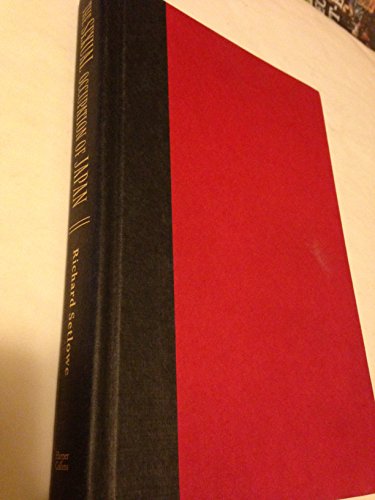
Condition: very_good. Gently read. May have name of previous ownership, or ex-library edition. Binding tight; spine straight and smooth, with no creasing; covers clean and crisp. Minimal signs of handling or shelving. 100% GUARANTEE! Shipped with delivery confirmation, if you're not satisfied with purchase please return item! Ships USPS Media Mail. Seller Inventory # OTV.0060183934.VG
Stock Image
Sexual Occupation of Japan: A Novel
Seller: ThriftBooks-Atlanta, AUSTELL, GA, U.S.A.
Seller rating 5 out of 5 stars
Hardcover. Condition: Good. No Jacket. Missing dust jacket; Pages can have notes/highlighting. Spine may show signs of wear. ~ ThriftBooks: Read More, Spend Less. Seller Inventory # G0060183934I3N01
Stock Image
Sexual Occupation of Japan: A Novel
Published by
HarperCollins, 1999
ISBN 10: 0060183934
ISBN 13: 9780060183936
Used
Hardcover
First Edition
Signed
Seller: Books From California, Simi Valley, CA, U.S.A.
Seller rating 4 out of 5 stars

hardcover. Condition: Very Good. Dust Jacket Condition: Includes dust jacket. Signed. First Edition. First printing with full numberline. Signed by the author on the half-title page. DJ in mylar sleeve. A copy in fine condition. Seller Inventory # mon0003330296
Stock Image
The Sexual Occupation of Japan A Novel
Published by
Harpercollins, New York, 1999
ISBN 10: 0060183934
ISBN 13: 9780060183936
Used
Hardcover
Seller: Willis Monie-Books, ABAA, Cooperstown, NY, U.S.A.
Seller rating 5 out of 5 stars
Hardcover. Condition: Very Good. Dust Jacket Condition: Very Good. First Printing. Seller Inventory # 59600
Stock Image
The Sexual Occupation of Japan
Published by
New York, NY, U.S.A.: Harpercollins, 1999, New York, NY, U.S.A., 1999
ISBN 10: 0060183934
ISBN 13: 9780060183936
Used
Hardcover
First Edition
Seller: Samuel H. Rokusek, Bookseller, Pleasant Prairie, WI, U.S.A.
Seller rating 5 out of 5 stars
Hardcover. Condition: Very Good +. Dust Jacket Condition: Near Fine +. First Edition, First Printing. Hard Cover. Very Good +/Near Fine +. First Edition, First Printing. 8vo - over 7¾" - 9¾" Tall. Original price of $24.00 printed on dust jacket front flap. Jacket has a small scratch now protected in paper backed polyester film. Book has light tail curl with no writing, marking or remainder mark. Not ex-library. Seller Inventory # 001219
Stock Image
Sexual Occupation of Japan: A Novel
Published by
HarperCollins, 1999
ISBN 10: 0060183934
ISBN 13: 9780060183936
Used
Hardcover
First Edition
Seller: Glands of Destiny First Edition Books, Sedro Woolley, WA, U.S.A.
Seller rating 5 out of 5 stars
Hardcover. Condition: Like New. Dust Jacket Condition: Like New. First Edition. Publisher: HarperCollins, New York, 1999. FINE hardcover book in FINE mylar-protected dust-jacket. As new. Unread. First Edition, First Printing. Seller Inventory # 2209080027
Seller Image
SEXUAL OCCUPATION OF JAPAN; A Novel
Published by
Harpercollins, New York, 1999
ISBN 10: 0060183934
ISBN 13: 9780060183936
Used
Hardcover
First Edition
Seller: Rare Book Cellar, Pomona, NY, U.S.A.
Seller rating 5 out of 5 stars
Hardcover. First Edition; First Printing. Fine in a Near Fine dust jacket.; 9.20 X 6 X 1.30 inches; 320 pages. Seller Inventory # 114692