
Items related to Old Man in a Baseball Cap
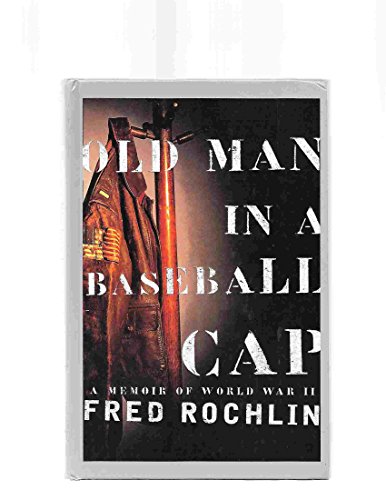
Synopsis
I went to the University of Arizona and I majored in civil engineering because that's what my two brothers had done.
I thought it was the right thing to do.
When I got there, I found that I couldn't pass anything. I couldn't pass a damn thing. I was flunking out and that would be a big scandal in my family. I was getting desperate.
I didn't know what to do.
That December, the Japanese government saw fit to bomb Pearl harbor.
So, next month, January, two weeks before finals, I got very patriotic and I went down and enlisted in the Army Air Corps.
Old Man in a Baseball Cap is a wonderful, hilarious, and haunting memoir. Written when Rochlin was seventy, after he took a storytelling workshop with Spalding Gray, it was originally performed as a monologue and was described by the New York Times as being "about an ordinary man in extraordinary circumstances, [it] has elements of an epic: love and death, honor and betrayal, vengefulness and martyrdom, and ultimately, the fortuitousness of survival."
In 1942 Fred Rochlin joined the Army Air Corps. After eight months of training, he was stationed in Italy, serving as the navigator on a B-24 bomber and flying missions over Germany. Fifty such missions were required for a successful tour of duty. This was the first time that Fred Rochlin had been away from home. He was nineteen years old.
Old Man in a Baseball Cap is an astonishingly fresh, candid look at "the last good war." At once naive and wise, Fred Rochlin's voice is unforgettable.
"synopsis" may belong to another edition of this title.
About the Author
Fred Rochlin lives in Los Angeles, California, with his wife, Harriet. Old Man in a Baseball Cap is his first book.
Reviews
While the public appears eager for sweeping, heroic histories of the "greatest generation," readers would do themselves a disservice to ignore this ground-level view of WWII written by a member of that generation blessed with superb storytelling skills and a survivor's sense of the absurd. This book version of Rochlin's critically acclaimed one-man show of the same name offers a look at WWII that is by turns horrifying, sobering and hilarious. At times, it reads like Catch-22, except it's not fiction. Rochlin was 19 when he joined the Army Air Corps in 1942. His drill sergeant explained how the army decided that Rochlin would be trained as a navigator: "Look, everybody knows you Hebes are good with numbers, and all a navigator is, is just a fucken flying accountant." His duties turned out to include finding a boyfriend for the colonel in charge of his base in Italy after he himself had rebuffed the colonel's advances. And then there was the combat: on his first mission, billed as "a milk run": his plane was hit, the nose gunner fell out and Rochlin wound up covered in the blood of his roommate and bombardier, whose head was blown off. On one of his last missions, his plane was shot down over Yugoslavia and he had to hike for 30 days back to Italy. Along the way, he was forced by Yugoslav Partisans to execute three Nazis point blank, and contracted VD from his walking partner, a Partisan whose seduction routine consisted of announcing that she didn't want to die a virgin. A retired architect who lives in Los Angeles, Rochlin was 71 when he took a storytelling workshop with Spalding Gray. The well-deserved encouragement he received led him to hone his recollections for the theater. The stories retain their power in book form. Dramatic rights to Disney. (Sept.)
Copyright 1999 Reed Business Information, Inc.
Crude and often nonsensical, these stories of Rochlin's WWII experiences were written as monologues for his one-man show. Now in his 70s, Rochlin, a former B-24 navigator, took a storytelling workshop with Spalding Gray, and this is the result. Noting that the ``older I get, the more I remember things that never happened,'' he tells eight tales of varying credibility and tastelessness. In the title story, Rochlinnicknamed Rocketsbails out over Yugoslavia, suffering a fractured jaw and broken ribs. Rescued by partisans, he is, without explanation, cheerfully asked to execute three German prisoners. His only comment: ``It didn't take any courage, you just pulled a trigger.'' His escort for the 400-kilometer stroll back to Italy, the earthy Maruska, following dual bouts of diarrhea, asks, ``You think I no beautiful? I don't want to die virgin. Why don't you put your hand on my siski?'' Following the first night of ``fig-fig,'' he complained his hooey was on fire and it started to drip stuff.'' Several of Rochlin's stories involve a ``glamour boy'' pilot and the colonel he's discovered in bed with, ``in that head-to-toe 69 position . . . Hell, I didn't even know guys did stuff like that.'' When the pilot is killed, the inebriated, grieving colonel tries to rape Rockets; he fends him off and, with the local priests help, fixes him up with a gay portrait painter. In another, quite detailed piece, he assists in a drunken cesarean section on a 14-year-old girl. The final entry has him having sex with his uncle's wife, who later tells him how much she loves her husband and ``will never betray him.'' Huh? Perhaps as staged monologues, in Rochlin's voice, these at least have some semblance of believability and sense. Here, they come off as simply careless, pointless, and offensive. -- Copyright ©1999, Kirkus Associates, LP. All rights reserved.
This simple memoir is not your typical story of World War II. Rochlin has written a collection of brief remembrances that he performs on stage as a one-man show, a monolog of life and death as a navigator on a B-24 bomber in Italy from 1943 to 1945. The eight stories in this short book reveal much about the man and his wartime experiences, from training in Nebraska to bombing missions over Germany, Hungary, and Bulgaria. Rochlin survived 50 missions and made it home, but most of his friends did not. His poignant acknowledgment of their sacrifice and his wonder at his own survival provide a stark glimpse into men at war. Rochlin delivers a baby one day and obliterates a Hungarian village the next. He later parachutes into Yugoslavia and walks more than 400 kilometers to safety, guided by a robust female Yugoslav partisan. His observations of people and events are keen, ribald, and very funny. The book is too short, thoughAjust an appetizer for the rest of Rochlin's tales. Recommended for public libraries.ACol. William D. Bushnell, USMC (ret.), Sebascodegan Island, ME
Copyright 1999 Reed Business Information, Inc.
Spalding Gray's popular autobiographical monologues have changed the face of performance, inspiring hundreds of other would-be Spaldings to transform their memories into theatrical events. Few of these wanna-bes approach the power and wit of their avatar, but Rochlin is an exception. After taking a storytelling workshop with Gray, Rochlin--at 70, no less--wrote and performed a series of solo shows, recounting his experiences as a flight navigator in World War II. His stories of petty officers, unprepared enlisted men, bombing raids gone wrong, and tiny acts of heroism are fascinating enough. But what makes them quite remarkable is Rochlin's willingness to honestly describe, without resorting, for example, to the protection of Joseph Heller's irony, his thoughts and feelings as he confronted the daily terrors of war. From the beginning, Rochlin's simple prose makes us comfortable, as if we were sitting at a table with an old friend or relative, someone who had lived a remarkable life and now was ready, after a glass of wine or two, to share a bit of it. Jack Helbig
Excerpt. © Reprinted by permission. All rights reserved.
Chapter One
In December 1941, I finished my cadet training, was commissioned a second lieutenant, and was ordered to Mather Field near Sacramento, California, to meet the crew I was to be assigned to.
We were to take an eighteen-week training course in practice bombing, formation flying, aerial gunnery, and navigation, and do all the stuff that you have to learn to get ready for combat.
We started training flying the very next day, and the first week, we just flew all over the United States, dropping bombs on bombing ranges, practicing formation flying, aerial gunnery, weird navigation exercises; we did very well, so well that, by the end of the first ten days, we were the hottest crew on the base and had the best record in everything.
Shorty Haden, the bombardier, was my roommate at the BOQ, the Bachelor Officers' Quarters, and we got to be really good friends. We were about the same age, and we'd just talk and talk and talk.
When we weren't flying, all the guys would get off the base, go to Sacramento or San Francisco to try to pick up girls or at least get drunk. Kind of relax, try and have a good time, you know, what guys are supposed to do.
Well, not Shorty, he'd go to town and spend quite a bit of time in church. He was very religious and then he'd go and haunt these little antique shops.
The first Saturday we had off, we all went to the Wagon Wheel Hotel in town. Shorty said he'd meet us back at the base later.
I got in about midnight, and Shorty was there still awake and waiting for me and he was just gushing, alive with excitement, and he said, "Oh, you'll never guess what I found today."
I said, "What?"
And he said, "Look here," and he opened the lid to his foot locker and there were his clothes and three little cups and saucers.
So I said, "Look at what?"
He blurted, "At these, at these," and he took out those little cups and saucers and said, "Aren't they just precious? Can you believe this one is a genuine Worcester, late eighteenth century? Can you believe how lucky I am? Aren't you jealous? And this is a Miessen, and this is turn-of-the-century Wedgwood, not really rare but still very nice."
I tried to be enthusiastic, I didn't want to be a wet blanket.
I said, "Swell. Where'd you find them?"
He said, "Sacramento is just a gold mine, no one here knows what they're worth."
"Yeah, what they cost."
"Only eighty-five dollars."
I said, "Jesus, that's half a month's pay."
He said, "Yes, but they're worth five times that, these are museum pieces. Oh, my mother will be thrilled when she gets these. And I have to borrow fifty dollars from you till payday."
Well, I thought, This guy is a nut case, but what could I do, so I said, "Sure."
The next night, he took my fifty dollars, went to the Officers' Club, got into a poker game and won one hundred twenty-five bucks. Then he paid me back the dough he owed me, got in another poker game and won two hundred dollars and change.
Then he went to Sacramento and brought back a whole mess load of those damn little cups.
So I said, "Shorty, what are you going to do with all those damn little cups and where'd you learn how to play poker so well?"
Shorty said that he was an only child and his mother was a widow and she loved these little cups, had a collection of them, and she and Shorty studied about porcelain almost every evening after school when he was home. He knew all about Spode, and Rockingham and Royal Danish, and St. Ives, and Rouen and Lowestoft, and every other damn cup.
And he said, "And everybody in Jefferson City plays poker and it's not too hard to win if you understand how, just be patient, don't be afraid to fold, play the odds, only bet on the good hands, and the most important thing, don't expect God to intervene to make you win."
He thought the guys at the Officers' Club were nice guys, but just didn't know anything about playing poker.
So I figured Shorty wasn't so nuts after all, he just had the hots for little cups, okay? Look, it takes all kinds of guys.
After three weeks Major Ferguson, the chief training officer, called in the whole crew. We were worried, didn't know if we were in some kind of trouble.
Major Ferguson said, "Your crew has been here three weeks and you've got the best performance record of any crew on the base. Do you men feel you're ready for combat? Do you think you can fly fifty combat missions?"
"Yes sir." We were getting excited.
"Well, you've only been here three weeks, but you're doing better than crews that have finished the whole eighteen-week course. They're desperate for replacements in the 15th Air Force in Italy. Can you handle that?"
"Yes sir."
Major Ferguson said, "Okay, we'll issue the orders this morning. Get packed up and fly to Wichita this afternoon and pick up a new plane there. Good luck, gentlemen."
That was that.
Outside, we said, "Italy -- WOW!" We were excited, we were hoping for England, we didn't want the South Pacific -- never thought of Italy.
We flew to Wichita that afternoon, where we picked up a brand-new bomber, a Consolidated B-24. The next day, we flew from Wichita to Miami. The next day, we flew from there to Trinidad. Next day to Natal, Brazil. Next day, from there across the Atlantic Ocean to Dakar, Senegal, in West Africa. Next day, from there across the Sahara, over the Atlas Mountains into Marrakech, Morocco.
"About this title" may belong to another edition of this title.
Search results for Old Man in a Baseball Cap

Seller Image
Old Man in a Baseball Cap
Seller: Used Book Company, Egg Harbor Township, NJ, U.S.A.
Seller rating 5 out of 5 stars

Condition: Very Good. Shows minimal signs of wear and previous use. Can include minimal notes/highlighting. A portion of your purchase benefits nonprofits! - Note: Edition & format may differ from what is shown in stock photo & item details. May not include supplementary material (toys, access code, dvds, etc). Seller Inventory # 584UZG000OX5_ns
Stock Image
Old Man in a Baseball Cap
Published by
Harper (edition First Edition), 1999
ISBN 10: 006019426X
ISBN 13: 9780060194260
Used
Hardcover
First Edition
Seller: BooksRun, Philadelphia, PA, U.S.A.
Seller rating 5 out of 5 stars
Hardcover. Condition: Fair. First Edition. With dust jacket. The item might be beaten up but readable. May contain markings or highlighting, as well as stains, bent corners, or any other major defect, but the text is not obscured in any way. Seller Inventory # 006019426X-7-1-29
Stock Image
Old Man in a Baseball Cap
Seller: Wonder Book, Frederick, MD, U.S.A.
Seller rating 5 out of 5 stars
Condition: Very Good. Very Good condition. Good dust jacket. With remainder mark. A copy that may have a few cosmetic defects. May also contain light spine creasing or a few markings such as an owner's name, short gifter's inscription or light stamp. Seller Inventory # E16D-00283
Stock Image
Old Man in a Baseball Cap : A Memoir of World War II
Published by
HarperCollins Publishers, 1999
ISBN 10: 006019426X
ISBN 13: 9780060194260
Used
Hardcover
Seller: Better World Books, Mishawaka, IN, U.S.A.
Seller rating 5 out of 5 stars
Condition: Good. Former library copy. Pages intact with minimal writing/highlighting. The binding may be loose and creased. Dust jackets/supplements are not included. Includes library markings. Stock photo provided. Product includes identifying sticker. Better World Books: Buy Books. Do Good. Seller Inventory # GRP16408973
Stock Image
Old Man in a Baseball Cap : A Memoir of World War II
Published by
HarperCollins Publishers, 1999
ISBN 10: 006019426X
ISBN 13: 9780060194260
Used
Hardcover
Seller: Better World Books: West, Reno, NV, U.S.A.
Seller rating 5 out of 5 stars
Condition: Very Good. Pages intact with possible writing/highlighting. Binding strong with minor wear. Dust jackets/supplements may not be included. Stock photo provided. Product includes identifying sticker. Better World Books: Buy Books. Do Good. Seller Inventory # 7615418-6
Stock Image
Old Man in a Baseball Cap
Seller: HPB-Diamond, Dallas, TX, U.S.A.
Seller rating 5 out of 5 stars
hardcover. Condition: Very Good. Connecting readers with great books since 1972! Used books may not include companion materials, and may have some shelf wear or limited writing. We ship orders daily and Customer Service is our top priority! Seller Inventory # S_451608397
Stock Image
Old Man in a Baseball Cap
Seller: HPB-Ruby, Dallas, TX, U.S.A.
Seller rating 5 out of 5 stars
hardcover. Condition: Very Good. Connecting readers with great books since 1972! Used books may not include companion materials, and may have some shelf wear or limited writing. We ship orders daily and Customer Service is our top priority! Seller Inventory # S_470152338
Stock Image
Old Man in a Baseball Cap
Seller: ThriftBooks-Atlanta, AUSTELL, GA, U.S.A.
Seller rating 5 out of 5 stars
Hardcover. Condition: Very Good. No Jacket. Former library book; May have limited writing in cover pages. Pages are unmarked. ~ ThriftBooks: Read More, Spend Less. Seller Inventory # G006019426XI4N10
Seller Image
Old Man in a Baseball Cap
Seller: Goodwill Books, Hillsboro, OR, U.S.A.
Seller rating 5 out of 5 stars
Condition: acceptable. Fairly worn, but readable and intact. If applicable: Dust jacket, disc or access code may not be included. Seller Inventory # GICWV.006019426X.A
Stock Image
Old Man in a Baseball Cap
Seller: Wonder Book, Frederick, MD, U.S.A.
Seller rating 5 out of 5 stars
Condition: As New. Like New condition. Very Good dust jacket. A near perfect copy that may have very minor cosmetic defects. Seller Inventory # E06L-00562