
Items related to The Last Run: A true story of rescue and redemption...
Synopsis
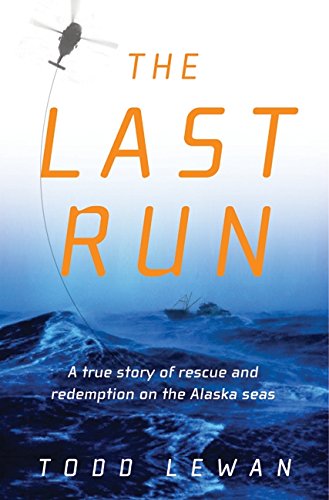
It was the catch of a lifetime. In late January 1998, after a miserable stretch of fishing that hadn't paid for even their groceries, the five-man crew of a seventy-nine-year-old Alaska schooner called the La Conte risked one last run to the Fairweather Grounds, despite the approach of bad weather. The young skipper, a father-to-be, was convinced fish could be found on the shoals, and his instincts were right: they hit the mother lode. For eighteen hours their lines had a fish on every hook: yellow eye, lingcod, calico, halibut, even the occasional sand shark; it was an incredible haul, one that would bring huge profits -- and respect -- back in port.
But they stayed out too long, and a hurricane-force Arctic storm caught them. Though in need of repair herself, the La Conte had weathered bad seas before -- and might have again. But in the cruelest of ironies, the additional burden of its magnificent catch sank the ship, and set the five men -- Bob Doyle, Mike DeCapua, Gig Mork, David Hanlon, and Mark Morley -- afloat in frigid seventy-foot seas. Their radio beacon was sending distress signals to the Coast Guard, but the chances of rescue under such conditions seemed remote.
Eight months later, on a deserted island nearly 800 miles away, two boys found a mutilated corpse that had washed ashore and been mauled by brown bears. A forensics investigator, haunted by the thought that this man's family might never know what had become of him, and with only a single partial fingerprint and scraps of a survival suit for clues, set out to identify the body.
Author Todd Lewan's painstaking investigation into these events began here, too, with the discovery that the man found dead on Shuyak Island had been one of the fishermen aboard the La Conte. Lewan became obsessed with learning what had become of the other crewmen; with understanding how five "end of the roaders" from different parts of the United States had come together in Alaska to fish one of the world's most treacherous patches of ocean in the dead of winter; and with conveying the way in which that "dream catch" represented an opportunity for each of the men to significantly alter his life. In the process he learned of the truly heroic efforts undertaken by no fewer than three different teams of Coast Guard helicopter rescue units to save these desperate men.
Lewan's re-creation of the events themselves -- the discovery of a lost fisherman's remains; the bonding of troubled men on the high seas; the horrifying hours spent fighting to keep from freezing to death in thirty-eight-degree water; the impossibly courageous efforts of the helicopter rescue crews; and the moving account of how one of the survivors, in particular, found during this tempest an unexpected inner strength that allowed him to turn his life around -- makes for an unforgettable tale, a page-turning narrative drama of the first order. It also provides a timeless, affecting portrait of hard-living seekers drawn to Alaska: of adventurers in search of roots, home, and the chance to remake themselves in the spirit of America's last frontier.
"synopsis" may belong to another edition of this title.
About the Author
Todd Lewan joined the Associated Press as a correspondent in 1988. In 1996 he became an editor on AP's international desk, and later a national features writer. In 1998 he received several feature-writing prizes for this story.
From the Back Cover
It was the catch of a lifetime. In late January 1998, after a miserable stretch of fishing that hadn't paid for even their groceries, the five-man crew of a seventy-nine-year-old Alaska schooner called the La Conte risked one last run to the Fairweather Grounds, despite the approach of bad weather. The young skipper, a father-to-be, was convinced fish could be found on the shoals, and his instincts were right: they hit the mother lode. For eighteen hours their lines had a fish on every hook: yellow eye, lingcod, calico, halibut, even the occasional sand shark; it was an incredible haul, one that would bring huge profits -- and respect -- back in port.
But they stayed out too long, and a hurricane-force Arctic storm caught them. Though in need of repair herself, the La Conte had weathered bad seas before -- and might have again. But in the cruelest of ironies, the additional burden of its magnificent catch sank the ship, and set the five men -- Bob Doyle, Mike DeCapua, Gig Mork, David Hanlon, and Mark Morley -- afloat in frigid seventy-foot seas. Their radio beacon was sending distress signals to the Coast Guard, but the chances of rescue under such conditions seemed remote.
Eight months later, on a deserted island nearly 800 miles away, two boys found a mutilated corpse that had washed ashore and been mauled by brown bears. A forensics investigator, haunted by the thought that this man's family might never know what had become of him, and with only a single partial fingerprint and scraps of a survival suit for clues, set out to identify the body.
Author Todd Lewan's painstaking investigation into these events began here, too, with the discovery that the man found dead on Shuyak Island had been one of the fishermen aboard the La Conte. Lewan became obsessed with learning what had become of the other crewmen; with understanding how five "end of the roaders" from different parts of the United States had come together in Alaska to fish one of the world's most treacherous patches of ocean in the dead of winter; and with conveying the way in which that "dream catch" represented an opportunity for each of the men to significantly alter his life. In the process he learned of the truly heroic efforts undertaken by no fewer than three different teams of Coast Guard helicopter rescue units to save these desperate men.
Lewan's re-creation of the events themselves -- the discovery of a lost fisherman's remains; the bonding of troubled men on the high seas; the horrifying hours spent fighting to keep from freezing to death in thirty-eight-degree water; the impossibly courageous efforts of the helicopter rescue crews; and the moving account of how one of the survivors, in particular, found during this tempest an unexpected inner strength that allowed him to turn his life around -- makes for an unforgettable tale, a page-turning narrative drama of the first order. It also provides a timeless, affecting portrait of hard-living seekers drawn to Alaska: of adventurers in search of roots, home, and the chance to remake themselves in the spirit of America's last frontier.
Reviews
Associated Press reporter Lewan offers a taut retelling of the 1998 story of five fishermen whose aging boat sank during an angry storm off the coast of Alaska, and of the predictably nail-biting Coast Guard rescue mission that followed. He capably explores the backgrounds and motivations of not only the small group of deckhands and their green skipper but also of their rescuers via helicopter, recreating believable dialogue and vividly evoking life on the harsh Alaskan coastline. He admirably resists the natural urge to overplay (toward the heroic) the fishermen's actions and unflinchingly looks at their alcoholism, marital discord and epic bouts of bad luck. They're not ennobled by their struggles, but rather simply challenged, changed and, in some cases, broken. But while Lewan focuses on the internal difficulties the men faced on their journey, he skimps on a detailed explanation of the role that overfishing played in the crew's decision to search out distant, more dangerous waters in their attempts to bring home a profitable-enough catch. Nonetheless, the book's flowing style and measured pacing succeed in making a familiar tale (fishermen go out, boat sinks, some don't make it) new and immediate, and in giving readers a sense of why the five fishermen were willing to risk so much for potentially so little.
Copyright © Reed Business Information, a division of Reed Elsevier Inc. All rights reserved.
Excerpt. © Reprinted by permission. All rights reserved.
The Last Run
A True Story of Rescue and Redemption on the Alaska SeasBy Lewan, ToddHarperCollins Publishers
ISBN: 0060196483Chapter One
The body came in with no eyes or ears. There was no nose, either. Nochin, no teeth -- not a single, distinguishing facial mark. There was, in fact,nothing to work with from the neck up, except for a few strands of brittle,soiled hair.
"This is all?"
"That's it."
"Where did the kids find him?"
"In a bear den."
"What?"
"That's right."
"What the hell were they doing in a bear den?"
"Hunting."
"Some kids."
It was chilly in the room. The air-conditioning might have been set toohigh. The air hung stagnant and smelled faintly of ammonia. Under thehard, fluorescent lamplight, the weathered bits of what once had been aman looked insignificant in repose.
The investigator rubbed the gooseflesh on his arms. "Well," he muttered,"let's get this show going."
"All right," the pathologist said. "Where's that recorder?"
"Here."
The pathologist leaned over the examining table. He wore thick glassesover red-rimmed, blue eyes; a white mask covered his mouth and nose. Hehad long, bony fingers gloved in latex. He pressed the record button.
For the record he gave his name, Dr. Michael Propst, the date, August14, 1998, the time, 2:14 P.M. He cleared his throat and began describingwhat he saw. There was noteworthy biological material. Specifically, bonefragments, hair and skin. The bone fragments showed predation?a largebear, most likely, judging by the depth of the marks. The bones, from an arm, a rib cage, a leg, appeared to be human. So did several of the hairs,although some of it had likely once belonged to a deer or a seal. Therewere fragments of a neoprene wet suit, also very much predated, amongthem a sleeve, a right mitten, a trouser leg and a large section of the upperchest. And there was clothing: two white socks, briefs, a T-shirt, sweatpantsand a Casio watchband.
Propst coughed.
The box, he went on, also contained a fair amount of dirt, spruce needlesand other organic debris from the crime scene. He paused the tape.
"They bagged this stuff in a hurry," Propst said. "Can't say I blamethem."
"Anything else?" the investigator asked.
"Yes."
Recording again, Propst made note of five skin fragments. Some haddecomposed more than others. One had had a fingernail still attached toit. The nail, he said, was most likely human.
He stopped the tape and pulled down his mask.
"Man didn't clean under his nails."
"No. What else we got?"
"Look here."
Now the investigator, whose name was David Hanson, leaned over thetable. On the chest of the suit was an emblem, a penguin, and the brandname IMPERIAL stitched across it.
"The manufacturer," Hanson said.
"Apparently."
Hanson ran his forefinger along the inside of the collar and pulled outa tag. On it was a serial number, a lot number and a date of manufacture:March 23, 1989.
"Not new," he said.
"No."
"And still wet," Hanson said. The material had a loamy smell, likedecaying wood chips. "Hang all this stuff in the back room," he said to thelab assistant. "Let it dry out."
As the assistant collected the shreds, Hanson worked his lip with histeeth. He was wearing his navy blue suit, with starched white shirt, tie andblack leather shoes. He was neat, clean, shaved and stern. He'd been a cop six years but a member of the Anchorage crime unit just twenty-two days.He was twenty-eight and this was his first case. It would be nice to get it togo somewhere besides a missing persons file cabinet.
He sighed.
"Is this really all we've got?"
"There is the skin," Propst said.
"Right."
Of the five skin fragments the biggest was no larger than a dime. Threeothers were brittle, yellow, and the last two as sturdy as wet newspaper.
Hanson squinted at them.
"So?"
Propst scratched a fleshy jowl. "Well," he said, "they're human. Remember,they came from inside a survival suit."
"I remember."
"If the fingerprint lab could make prints from these fragments, thenyou could check the prints against what's on file."
"And you think we could make prints from these little things?"
Propst snapped off the latex gloves. "Ask Walter MacFarlane that."
Walter MacFarlane laughed a smoker's laugh, coughed a smoker's coughand then smiled. A big, Savannah smile.
"You've got to be kidding," he drawled.
Hanson smiled back. "No."
MacFarlane's smile soured. He sighed. "All right, what am I supposedto do with this?"
"Make prints," Hanson said. "Or a print. Then ID it."
MacFarlane reached for the magnifying glass. "What makes you thinkthese came from fingertips?" He was examining the fragments now.
"The fingernail."
MacFarlane motioned to his apprentice, Dale Bivins. Bivins was short,with dark hair buzzed to the scalp, a prickly complexion and the eager eyesof a freshman on his way to his first college football game. He'd been at thecrime lab almost a whole week.
"Say, Dale," MacFarlane said, "why don't you take a look at some realold, real dried-out, real decomposed skin?" He removed his glasses, rubbedhis eyes with his palm and took a step back.
"David," he said, "you're asking me to ID a guy who's got enough skinleft over to fill half a matchbox. Normally, that might be tricky. In this case,it'd be like winning the lottery. Look at this skin. As soon as we touch it, it'sgoing to crumble like a cheap cookie."
Propst said, "Walter?"
"Yeah?"
"Did you see this fragment?"
"Which one?"
"This one."
MacFarlane put his glasses back on and squinted at the specimen onthe table. "I did."
"Could you work with it?"
MacFarlane paused. He was trying to figure out if Propst was kidding.No, obviously not. MacFarlane shook his head.
"All right," he said. "Send it on over. I'll give it a shot. But this onehere's a million-to-one horse."
Hanson nodded.
"No promises, now," MacFarlane said.
"No promises," said Hanson.
Continues...Excerpted from The Last Runby Lewan, Todd Excerpted by permission.
All rights reserved. No part of this excerpt may be reproduced or reprinted without permission in writing from the publisher.
Excerpts are provided by Dial-A-Book Inc. solely for the personal use of visitors to this web site.
"About this title" may belong to another edition of this title.
Search results for The Last Run: A true story of rescue and redemption...

Stock Image
The Last Run: A True Story of Rescue and Redemption on the Alaska Seas
Published by
HarperCollins Publishers Inc, 2004
ISBN 10: 0060196483
ISBN 13: 9780060196486
Used
Hardcover
Seller: World of Books (was SecondSale), Montgomery, IL, U.S.A.
Seller rating 5 out of 5 stars

Hardback. Condition: Good. It was the catch of a lifetime. In late January 1998, after a miserable stretch of fishing that hadn't paid for even their groceries, the five-man crew of a seventy-nine-year-old Alaska schooner called the La Conte risked one last run to the Fairweather Grounds, despite the approach of bad weather. The young skipper, a father-to-be, was convinced fish could be found on the shoals, and his instincts were right: they hit the mother lode. For eighteen hours their lines had a fish on every hook: yellow eye, lingcod, calico, halibut, even the occasional sand shark; it was an incredible haul, one that would bring huge profits -- and respect -- back in port. But they stayed out too long, and a hurricane-force Arctic storm caught them. Though in need of repair herself, the La Conte had weathered bad seas before -- and might have again. But in the cruelest of ironies, the additional burden of its magnificent catch sank the ship, and set the five men -- Bob Doyle, Mike DeCapua, Gig Mork, David Hanlon, and Mark Morley -- afloat in frigid seventy-foot seas. Their radio beacon was sending distress signals to the Coast Guard, but the chances of rescue under such conditions seemed remote. Eight months later, on a deserted island nearly 800 miles away, two boys found a mutilated corpse that had washed ashore and been mauled by brown bears. A forensics investigator, haunted by the thought that this man's family might never know what had become of him, and with only a single partial fingerprint and scraps of a survival suit for clues, set out to identify the body. Author Todd Lewan's painstaking investigation into these events began here, too, with the discovery that the man found dead on Shuyak Island had been one of the fishermen aboard the La Conte. Lewan became obsessed with learning what had become of the other crewmen; with understanding how five "end of the roaders" from different parts of the United States had come together in Alaska to fish one of the world's most treacherous patches of ocean in the dead of winter; and with conveying the way in which that "dream catch" represented an opportunity for each of the men to significantly alter his life. In the process he learned of the truly heroic efforts undertaken by no fewer than three different teams of Coast Guard helicopter rescue units to save these desperate men. Lewan's re-creation of the events themselves -- the discovery of a lost fisherman's remains; the bonding of troubled men on the high seas; the horrifying hours spent fighting to keep from freezing to death in thirty-eight-degree water; the impossibly courageous efforts of the helicopter rescue crews; and the moving account of how one of the survivors, in particular, found during this tempest an unexpected inner strength that allowed him to turn his life around -- makes for an unforgettable tale, a page-turning narrative drama of the first order. It also provides a timeless, affecting portrait of hard-living seekers drawn to Alaska: of adventurers in search of roots, home, and the chance to remake themselves in the spirit of America's last frontier. Seller Inventory # 00110286370
Stock Image
The Last Run: A True Story of Rescue and Redemption on the Alaska Seas
Published by
HarperCollins Publishers Inc, 2004
ISBN 10: 0060196483
ISBN 13: 9780060196486
Used
Hardcover
Seller: World of Books (was SecondSale), Montgomery, IL, U.S.A.
Seller rating 5 out of 5 stars
Hardback. Condition: Fair. It was the catch of a lifetime. In late January 1998, after a miserable stretch of fishing that hadn't paid for even their groceries, the five-man crew of a seventy-nine-year-old Alaska schooner called the La Conte risked one last run to the Fairweather Grounds, despite the approach of bad weather. The young skipper, a father-to-be, was convinced fish could be found on the shoals, and his instincts were right: they hit the mother lode. For eighteen hours their lines had a fish on every hook: yellow eye, lingcod, calico, halibut, even the occasional sand shark; it was an incredible haul, one that would bring huge profits -- and respect -- back in port. But they stayed out too long, and a hurricane-force Arctic storm caught them. Though in need of repair herself, the La Conte had weathered bad seas before -- and might have again. But in the cruelest of ironies, the additional burden of its magnificent catch sank the ship, and set the five men -- Bob Doyle, Mike DeCapua, Gig Mork, David Hanlon, and Mark Morley -- afloat in frigid seventy-foot seas. Their radio beacon was sending distress signals to the Coast Guard, but the chances of rescue under such conditions seemed remote. Eight months later, on a deserted island nearly 800 miles away, two boys found a mutilated corpse that had washed ashore and been mauled by brown bears. A forensics investigator, haunted by the thought that this man's family might never know what had become of him, and with only a single partial fingerprint and scraps of a survival suit for clues, set out to identify the body. Author Todd Lewan's painstaking investigation into these events began here, too, with the discovery that the man found dead on Shuyak Island had been one of the fishermen aboard the La Conte. Lewan became obsessed with learning what had become of the other crewmen; with understanding how five "end of the roaders" from different parts of the United States had come together in Alaska to fish one of the world's most treacherous patches of ocean in the dead of winter; and with conveying the way in which that "dream catch" represented an opportunity for each of the men to significantly alter his life. In the process he learned of the truly heroic efforts undertaken by no fewer than three different teams of Coast Guard helicopter rescue units to save these desperate men. Lewan's re-creation of the events themselves -- the discovery of a lost fisherman's remains; the bonding of troubled men on the high seas; the horrifying hours spent fighting to keep from freezing to death in thirty-eight-degree water; the impossibly courageous efforts of the helicopter rescue crews; and the moving account of how one of the survivors, in particular, found during this tempest an unexpected inner strength that allowed him to turn his life around -- makes for an unforgettable tale, a page-turning narrative drama of the first order. It also provides a timeless, affecting portrait of hard-living seekers drawn to Alaska: of adventurers in search of roots, home, and the chance to remake themselves in the spirit of America's last frontier. Seller Inventory # 00108113445
Stock Image
The Last Run: A true story of rescue and redemption on the Alaska seas
Published by
HarperCollins Publishers (edition First Edition), 2004
ISBN 10: 0060196483
ISBN 13: 9780060196486
Used
Hardcover
First Edition
Seller: BooksRun, Philadelphia, PA, U.S.A.
Seller rating 5 out of 5 stars
Hardcover. Condition: Very Good. First Edition. With dust jacket. It's a well-cared-for item that has seen limited use. The item may show minor signs of wear. All the text is legible, with all pages included. It may have slight markings and/or highlighting. Seller Inventory # 0060196483-11-1-29
Stock Image
The Last Run: A true story of rescue and redemption on the Alaska seas
Published by
HarperCollins Publishers, 2004
ISBN 10: 0060196483
ISBN 13: 9780060196486
Used
Hardcover
Seller: Half Price Books Inc., Dallas, TX, U.S.A.
Seller rating 5 out of 5 stars
hardcover. Condition: Very Good. Connecting readers with great books since 1972! Used books may not include companion materials, and may have some shelf wear or limited writing. We ship orders daily and Customer Service is our top priority! Seller Inventory # S_462594306
Stock Image
The Last Run: A true story of rescue and redemption on the Alaska seas
Published by
HarperCollins Publishers, 2004
ISBN 10: 0060196483
ISBN 13: 9780060196486
Used
Hardcover
Seller: ThriftBooks-Atlanta, AUSTELL, GA, U.S.A.
Seller rating 5 out of 5 stars
Hardcover. Condition: Very Good. No Jacket. Former library book; May have limited writing in cover pages. Pages are unmarked. ~ ThriftBooks: Read More, Spend Less. Seller Inventory # G0060196483I4N10
Seller Image
The Last Run: A true story of rescue and redemption on the Alaska seas
Published by
HarperCollins Publishers, 2004
ISBN 10: 0060196483
ISBN 13: 9780060196486
Used
Hardcover
Seller: Blue Vase Books, Interlochen, MI, U.S.A.
Seller rating 5 out of 5 stars
Condition: acceptable. The item is very worn but is perfectly usable. Signs of wear can include aesthetic issues such as scratches, dents, worn and creased covers, folded page corners and minor liquid stains. All pages and the cover are intact, but the dust cover may be missing. Pages may include moderate to heavy amount of notes and highlighting, but the text is not obscured or unreadable. Page edges may have foxing age related spots and browning . May NOT include discs, access code or other supplemental materials. Seller Inventory # BVV.0060196483.A
Stock Image
The Last Run: A true story of rescue and redemption on the Alaska seas
Published by
HarperCollins Publishers, 2004
ISBN 10: 0060196483
ISBN 13: 9780060196486
Used
Hardcover
Seller: Wonder Book, Frederick, MD, U.S.A.
Seller rating 5 out of 5 stars
Condition: Good. Good condition. Acceptable dust jacket. A copy that has been read but remains intact. May contain markings such as bookplates, stamps, limited notes and highlighting, or a few light stains. Seller Inventory # R08C-03340
Stock Image
The Last Run : A True Story of Rescue and Redemption on the Alaska Seas
Published by
HarperCollins Publishers, 2004
ISBN 10: 0060196483
ISBN 13: 9780060196486
Used
Hardcover
First Edition
Seller: Better World Books, Mishawaka, IN, U.S.A.
Seller rating 5 out of 5 stars
Condition: Fine. First edition. Used book that is in almost brand-new condition. May contain a remainder mark. Better World Books: Buy Books. Do Good. Seller Inventory # 52367481-6
Stock Image
The Last Run : A True Story of Rescue and Redemption on the Alaska Seas
Published by
HarperCollins Publishers, 2004
ISBN 10: 0060196483
ISBN 13: 9780060196486
Used
Hardcover
First Edition
Seller: Better World Books: West, Reno, NV, U.S.A.
Seller rating 5 out of 5 stars
Condition: Good. First edition. Former library copy. Pages intact with minimal writing/highlighting. The binding may be loose and creased. Dust jackets/supplements are not included. Includes library markings. Stock photo provided. Product includes identifying sticker. Better World Books: Buy Books. Do Good. Seller Inventory # 219050-6
Stock Image
The Last Run: A True Story of Rescue and Redemption on the Alaska Seas
Published by
HarperCollins Publishers Inc, 2004
ISBN 10: 0060196483
ISBN 13: 9780060196486
Used
Hardcover
Seller: World of Books Inc, Montgomery, IL, U.S.A.
Seller rating 4 out of 5 stars

Hardback. Condition: Good. It was the catch of a lifetime. In late January 1998, after a miserable stretch of fishing that hadn't paid for even their groceries, the five-man crew of a seventy-nine-year-old Alaska schooner called the La Conte risked one last run to the Fairweather Grounds, despite the approach of bad weather. The young skipper, a father-to-be, was convinced fish could be found on the shoals, and his instincts were right: they hit the mother lode. For eighteen hours their lines had a fish on every hook: yellow eye, lingcod, calico, halibut, even the occasional sand shark; it was an incredible haul, one that would bring huge profits -- and respect -- back in port. But they stayed out too long, and a hurricane-force Arctic storm caught them. Though in need of repair herself, the La Conte had weathered bad seas before -- and might have again. But in the cruelest of ironies, the additional burden of its magnificent catch sank the ship, and set the five men -- Bob Doyle, Mike DeCapua, Gig Mork, David Hanlon, and Mark Morley -- afloat in frigid seventy-foot seas. Their radio beacon was sending distress signals to the Coast Guard, but the chances of rescue under such conditions seemed remote. Eight months later, on a deserted island nearly 800 miles away, two boys found a mutilated corpse that had washed ashore and been mauled by brown bears. A forensics investigator, haunted by the thought that this man's family might never know what had become of him, and with only a single partial fingerprint and scraps of a survival suit for clues, set out to identify the body. Author Todd Lewan's painstaking investigation into these events began here, too, with the discovery that the man found dead on Shuyak Island had been one of the fishermen aboard the La Conte. Lewan became obsessed with learning what had become of the other crewmen; with understanding how five "end of the roaders" from different parts of the United States had come together in Alaska to fish one of the world's most treacherous patches of ocean in the dead of winter; and with conveying the way in which that "dream catch" represented an opportunity for each of the men to significantly alter his life. In the process he learned of the truly heroic efforts undertaken by no fewer than three different teams of Coast Guard helicopter rescue units to save these desperate men. Lewan's re-creation of the events themselves -- the discovery of a lost fisherman's remains; the bonding of troubled men on the high seas; the horrifying hours spent fighting to keep from freezing to death in thirty-eight-degree water; the impossibly courageous efforts of the helicopter rescue crews; and the moving account of how one of the survivors, in particular, found during this tempest an unexpected inner strength that allowed him to turn his life around -- makes for an unforgettable tale, a page-turning narrative drama of the first order. It also provides a timeless, affecting portrait of hard-living seekers drawn to Alaska: of adventurers in search of roots, home, and the chance to remake themselves in the spirit of America's last frontier. Seller Inventory # CIN0060196483G