Items related to Calling the Wind: Twentieth Century African-American...
Synopsis
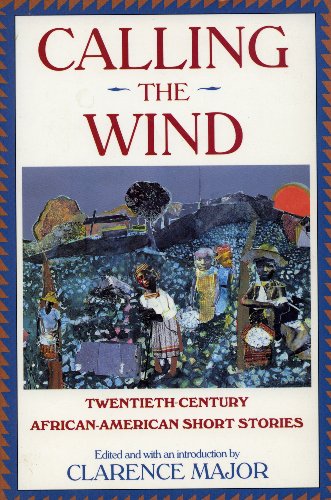
Jean Toomer, Zora Neale Hurston, Charles Wright, and more than fifty other important black authors record the experiences of African Americans from the Reconstruction to the present and demonstrate the evolution of the American short story form. Original.
"synopsis" may belong to another edition of this title.
From Publishers Weekly
A black man comes to the home of a friend's mother, Mrs. Poole, who also is black. This exchange follows: " 'Ah's in trubble, Mis' Poole.' 'W'at you done done now?' 'Shot a man . . . ' 'White man o' niggah?' 'Cain't say.' " No sooner does Mrs. Poole agree to hide him than the sheriff arrives to inform her that her son is dead--and the chief suspect in his murder is the man to whom she has given sanctuary. " 'You ain't noticed anybody pass this evenin'?' " inquires the sheriff. Mrs. Poole, at once a bereaved mother and a jury of one, answers: " 'No.' " This 1930 Nella Larsen story raises peculiarly American questions of justice that recur throughout this anthology, the most comprehensive of its kind in three decades. Can the American legal process be trusted to correctly decide an African American's guilt? Or have two codes of justice--public and private--evolved? In a 1933 tale by Zora Neale Hurston, a husband finds his wife in bed with another man whose promise of a gold coin prompted her unfaithfulness. The husband pockets the coin as a small but torturous reminder of her crime. One morning she discovers the coin under her pillow, his intimate signal of her punishment's end. Two-thirds of this volume consists of stories written after 1962, and these demonstrate how recent writers have not only sustained the stylistic brilliance of Larsen and Hurston but continued to explore these questions of justice. Rich in biblical allusions, Charles Johnson's entry concerns the slave owner Moses's attempt to mold his slave, Mingo, in his own image. When Mingo commits a murder, however, Moses discovers the depth of their connection, telling Mingo: " 'All the wrong, all the good you do . . . it's me indirectly doing it, but without the lies and excuses.' " Johnson keenly uncovers the irony in the master-slave relationship that Major ( Parking Lots ), in his introduction, sees as emerging when the enslaver, forcing himself on the slave, secretly acknowledges "the slave's humanity . . . which he officially denied." This kinship--and the myriad black-white relations that flow from it--is one of the strongest underground currents in American literature since Twain and the slave narratives. This indispensable collection presents the metamorphosis of this kinship, revealing the true--at times warped--shape of our national values of liberty and justice for all.
Copyright 1992 Reed Business Information, Inc.
From Library Journal
This anthology joins the ranks of several recent and diverse collections featuring African American writers: Black Southern Voices ( LJ 9/15/92); Daughters of Africa ( LJ 10/1/92); Erotique Moire/Black Erotica ( LJ 9/1/92); and Memory of Kin: Stories About Family by Black Writers ( LJ 1/91). Editor Major, who has authored numerous works himself, sets out to "include stories that met Poe's definition of the short story as well as stories that effectively defied not just his definition but other conventions." Most of the authors anthologized should be familiar to literary scholars and students of black literature. To those not already familiar with Chester Himes, Langston Hughes, Amiri Baraka, Zora Neale Hurston, Alice Walker, and Gloria Naylor, this collection is a fine introduction. Recommended for public libraries.
- Faye A. Chadwell, Univ. of South Carolina Lib., Columbia
Copyright 1992 Reed Business Information, Inc.
"About this title" may belong to another edition of this title.
- PublisherPerennial
- Publication date1993
- ISBN 10 0060982012
- ISBN 13 9780060982010
- BindingPaperback
- Number of pages656
- EditorMajor Clarence
- Rating
Buy New
Learn more about this copy
US$ 37.36
Shipping:
US$ 4.25
Within U.S.A.

Top Search Results from the AbeBooks Marketplace
Stock Image
Calling the Wind: Twentieth Century African-American Short Stories
Seller: SecondSale, Montgomery, IL, U.S.A.
Seller rating 5 out of 5 stars

Condition: Good. Item in good condition. Textbooks may not include supplemental items i.e. CDs, access codes etc. Seller Inventory # 00054903032
Quantity: 1 available
Stock Image
Calling the Wind: Twentieth Century African-American Short Stories
Seller: HPB Inc., Dallas, TX, U.S.A.
Seller rating 5 out of 5 stars
paperback. Condition: Very Good. Connecting readers with great books since 1972! Used books may not include companion materials, and may have some shelf wear or limited writing. We ship orders daily and Customer Service is our top priority!. Seller Inventory # S_388422913
Quantity: 1 available
Stock Image
Calling the Wind: Twentieth Century African-American Short Stories
Seller: HPB-Diamond, Dallas, TX, U.S.A.
Seller rating 5 out of 5 stars
paperback. Condition: Very Good. Connecting readers with great books since 1972! Used books may not include companion materials, and may have some shelf wear or limited writing. We ship orders daily and Customer Service is our top priority!. Seller Inventory # S_353824788
Quantity: 1 available
Stock Image
Calling the Wind: Twentieth-Century African-American Short Stories
Seller: ThriftBooks-Atlanta, AUSTELL, GA, U.S.A.
Seller rating 5 out of 5 stars
Paperback. Condition: As New. No Jacket. Pages are clean and are not marred by notes or folds of any kind. ~ ThriftBooks: Read More, Spend Less 1.94. Seller Inventory # G0060982012I2N00
Quantity: 1 available
Stock Image
Calling the Wind: Twentieth-Century African-American Short Stories
Seller: ThriftBooks-Dallas, Dallas, TX, U.S.A.
Seller rating 5 out of 5 stars
Paperback. Condition: Very Good. No Jacket. May have limited writing in cover pages. Pages are unmarked. ~ ThriftBooks: Read More, Spend Less 1.94. Seller Inventory # G0060982012I4N00
Quantity: 1 available
Stock Image
Calling the Wind: Twentieth Century African-American Short Stories
Seller: Wonder Book, Frederick, MD, U.S.A.
Seller rating 5 out of 5 stars
Condition: Good. Good condition. A copy that has been read but remains intact. May contain markings such as bookplates, stamps, limited notes and highlighting, or a few light stains. Seller Inventory # S23M-00713
Quantity: 2 available
Stock Image
Calling the Wind: Twentieth Century African-American Short Stories
Seller: Mr. Bookman, Franklin, PA, U.S.A.
Seller rating 5 out of 5 stars
Condition: VeryGood. TRUST OUR FEEDBACK RATING - USED VERY GOOD .2. Construction of the book is very good i.e. Tight spine. No loose pages. Clean pages. No writing, highlighting, marks or underlining on the pages. Some page discoloration. Reasonably tidy looking front cover with only a few minor creases or marks. Minor shelf wear along the edges and sides of the book. All books are mailed out in a bubble wrap mailer to protect your purchase. Orders are ALWAYS shipped same day or next day with FREE TRACKING emailed to you automatically. (WE TRY HARD TO DESCRIBE OUR BOOKS ACCURATELY SO YOU CAN BUY WITH CONFIDENCE). Seller Inventory # 352D3X0027KJ
Quantity: 1 available
Stock Image
Calling the Wind: Twentieth Century African-American Short Stories
Seller: HPB-Emerald, Dallas, TX, U.S.A.
Seller rating 5 out of 5 stars
Paperback. Condition: Very Good. Connecting readers with great books since 1972! Used books may not include companion materials, and may have some shelf wear or limited writing. We ship orders daily and Customer Service is our top priority!. Seller Inventory # S_411525919
Quantity: 1 available
Stock Image
Calling the Wind : Twentieth-Century African-American Short Stories
Published by
HarperCollins Publishers, 1993
ISBN 10: 0060982012
ISBN 13: 9780060982010
Used
Softcover
Seller: Better World Books, Mishawaka, IN, U.S.A.
Seller rating 5 out of 5 stars
Condition: Good. Former library book; may include library markings. Used book that is in clean, average condition without any missing pages. Seller Inventory # 3082466-75
Quantity: 1 available
Stock Image
Calling the Wind : Twentieth-Century African-American Short Stories
Published by
HarperCollins Publishers, 1993
ISBN 10: 0060982012
ISBN 13: 9780060982010
Used
Softcover
Seller: Better World Books, Mishawaka, IN, U.S.A.
Seller rating 5 out of 5 stars
Condition: Very Good. Used book that is in excellent condition. May show signs of wear or have minor defects. Seller Inventory # 9955407-6
Quantity: 1 available