
Items related to Cave of Stars
Synopsis
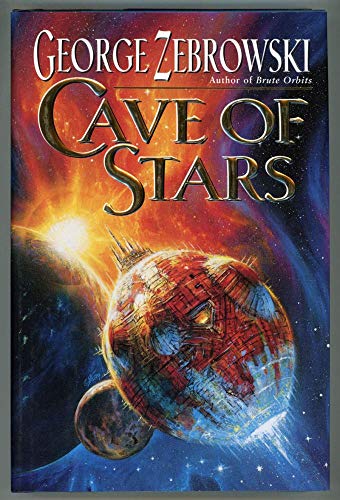
The arrival of survivors from Earth in the Tau Ceti system sparks a cultural conflict that will have long-term consequences for both civilizations
"synopsis" may belong to another edition of this title.
About the Author
George Zebrowski's thirty-five books have been published in more than half a dozen languages. His most recent novels are Brute Orbits, The Killing Star, written with scientist and author Charles Pellegrino, and Stranger Suns, chosen as a New York Times Notable Book. Upcoming is Skylife (coedited with scientist-author Gregory Benford), an anthology chronicling this century's fascination with space habitats in story and science. Zebrowski's classic novel of space habitats, Macrolife, was chosen by Library Journal as one of its one hundred "must read" works of science fiction.
Excerpt. © Reprinted by permission. All rights reserved.
Chapter One
All this began some twelve light-years from the Sun, in the year of 2331, on the fourth planet of Tau Ceti, in the third century after the death of Earth.
Warm wind threw salt spray into Ondro's face. Dark clouds stabbed the sea with lightning. Rain swept across the reef, raced the breakers and dotted the half-moon beach with a million drops. He held his face up to the wash, inhaling land odors from the shower, imagining the continent where all that would have been his went on without him.
He had taken to going out to the beach just before a storm, to be alone when reproaching Josepha. Are you alone now, my love? Do you suffer for what you did? Had she done anything?
He sat down as thunder rolled over the sea. A bolt burned the sand near him, but he felt only a feeble fear at its illusory show of purpose. Those who had arranged his end would not be so easily cheated. The lightning seemed to know enough to avoid that. It both amused and dismayed him that the other exiles preferred inevitable drowning later to a quick, merciful bolt sooner. Hope breathed beneath their daily resignation. They could not help it.
What was reason, after all, but a gray counsel. Tomorrow the ocean might dry up and they could all walk home-and be met halfway by white horses to ride the rest of the way.
He clenched his teeth and shook with the sudden tropical chill as low clouds pulled in over the island. He shivered into sorrow, then lay back and stared up into the hurrying gray masses, seeing Josepha and himself in their first moments together, regarding each other with interest, even wariness, as if each already knew what was to come-she looking tall and slim, long dark hair down her back, he stocky, light-haired, healthy-and felt love for their shy innocence, and despair for the wreck of himself now, for what she was now. Kill me today, he said to the approaching storm. Today.
Her disappearance a week before his arrest, her failure to search him out in prison, had convinced him that she had been a loyal cleric's daughter. Her dark-eyed looks of devotion and tender words had been false from the start, his love for her a leash placed around his neck by the secret police; and instead of the consummation of a marriage night, he had been given only the memories of longing for her pale body.
They had met in their first year at New Vatican University, among the sons and daughters of the professional class-merchants, artisans, engineers, lawyers, and physicians-who had come for their grudging chance at learning, even though their choice of professions was restricted to that of a student's parents.
He had trained in architecture and had planned to return as his father's apprentice. Josepha had studied theology and moral law, hoping to become a lawyer. She had told him that she was being sponsored by a papal official who wished to remain anonymous. Later, she had confided to him that this official was probably her father, but he had been skeptical; the illegitimate children of clerics had been known to make exaggerated claims about their anonymous fathers in the hope of advancement.
In their second year, Josepha had drawn him into a clandestine group that had access to the restricted papal library, where he had learned something of Earth's history, and had come to believe that the papacy had to be abolished, by force if necessary. The very existence of the concealed library, cut out of the rock beneath New Vatican, had convinced him of the urgent need for change. Knowledge that could change the world for the better had been hoarded for three centuries. There was no need for people to work so hard on farms and in the townships. A better and longer life was possible. The endlessly repeated idea of a difficult daily trial as preparation for a life beyond the world began to seem cruel to him, and his faith had been replaced by contempt for the Church. The life it had made for its people was the Way of the Cross, with no reward but death for the common man, while the elite enjoyed temporal power. The fact that the library could be penetrated had convinced him of the regime's fatal weakness.
At the center of the papal library sat a duplicate of the control room from the starship that had brought the original refugees from Earth. The ship itself had been left in high orbit around Ceti IV, but the duplicate control room had been built to transfer from orbit the ship's artificial intelligence and database. Yet millions of books had never been printed out and could be viewed only on aging equipment. The corridors around the central bank were filled with thousands of hastily bound volumes that had been retrieved as they were needed, or as a hedge against failing information storage, or because a cleric had become curious. Pornographic volumes lay tucked away here and there, and sometimes, when Ondro looked for them again, he found they had disappeared. His overwhelming first impression had been that almost no one knew what was in the library anymore and that this amnesia would one day become complete. No one knew if the artificial intelligence still spoke to anyone, but he doubted it; the heavy door to the central control area was locked, and it appeared not to have been opened in many decades.
The official doctrine of the Church was that slow changes were best. The catastrophic example of Earth's brief technological history was to be avoided by educating only a small technical class that would maintain a stable economic government under the Church's moral guidance. In practice, the official doctrine of change meant no change at all.
"About this title" may belong to another edition of this title.
Search results for Cave of Stars

Seller Image
Cave of Stars
Published by
Harpercollins, 1999
ISBN 10: 006105299X
ISBN 13: 9780061052996
Used
Hardcover
First Edition
Seller: Southampton Books, Sag Harbor, NY, U.S.A.
Seller rating 5 out of 5 stars

Hardcover. Condition: Like New. First Edition. First Edition, First Printing. Published by Harpercollins, 1999. Octavo. Hardcover. Book is like new. Dust jacket is like new. Covers have shelf wear. Seller Inventory # 560899
Stock Image
CAVE OF STARS
Published by
HARPER PRISM, USA, 1999
ISBN 10: 006105299X
ISBN 13: 9780061052996
Used
Hardcover
First Edition
Seller: MySEAbooks, Harlingen, TX, U.S.A.
Seller rating 4 out of 5 stars

HARDCOVER. Condition: VERY GOOD. Dust Jacket Condition: FINE. 1ST PRINTING. USA: HARPER PRISM, 1999. 1ST PRINTING. VERY GOOD/FINE. Harper Prism, USA, 1999, hardcover, 1st printing (stated), very good book in a fine jacket, ex-library with usual markings. Seller Inventory # S29037
Seller Image
Cave of Stars
Seller: -OnTimeBooks-, Phoenix, AZ, U.S.A.
Seller rating 5 out of 5 stars
Condition: very_good. Gently read. May have name of previous ownership, or ex-library edition. Binding tight; spine straight and smooth, with no creasing; covers clean and crisp. Minimal signs of handling or shelving. 100% GUARANTEE! Shipped with delivery confirmation, if you're not satisfied with purchase please return item! Ships USPS Media Mail. Seller Inventory # OTV.006105299X.VG
Stock Image
Cave Of Stars
Published by
Harperprism, New York, 1999
ISBN 10: 006105299X
ISBN 13: 9780061052996
Used
Hardcover
Signed
Seller: Willis Monie-Books, ABAA, Cooperstown, NY, U.S.A.
Seller rating 5 out of 5 stars
Hardcover. Condition: Very Good. Dust Jacket Condition: Very Good-. First Printing. Dustjacket has light rubbing to the back and light scratches to the front and back. ; Inscribed by the author on the half-title page. Autographed copy label on the DJ front. Seller Inventory # 165535
Stock Image
Cave of Stars
Seller: HPB-Ruby, Dallas, TX, U.S.A.
Seller rating 5 out of 5 stars
hardcover. Condition: Very Good. Connecting readers with great books since 1972! Used books may not include companion materials, and may have some shelf wear or limited writing. We ship orders daily and Customer Service is our top priority! Seller Inventory # S_447435902
Seller Image
Cave of Stars
Published by
Harpercollins, 1999
ISBN 10: 006105299X
ISBN 13: 9780061052996
Used
Hardcover
First Edition
Seller: Farbeyond Books, LAWRENCE, KS, U.S.A.
Seller rating 5 out of 5 stars
Hardcover. Condition: Near Fine. Dust Jacket Condition: Near Fine. 1st Edition. Sequel to Macrolife. Book jacket has very little shelf wear and edges and corners are still sharp. Blue board covers and interior are in excellent shape; the only thing that keeps this from being as new is a bit of dust-spotting on the top edge. Includes the press release for the book's release. (A-5). Seller Inventory # A200
Stock Image
Cave of Stars
Seller: Robinson Street Books, IOBA, Binghamton, NY, U.S.A.
Seller rating 4 out of 5 stars
Hardcover. Condition: As New. Prompt Shipment, shipped in Boxes, Tracking PROVIDEDNear fine in near fine dust jacket. First edition. Seller Inventory # bing91sp001012
Stock Image
Cave of Stars
Published by
Harpercollins, New York, 1999
ISBN 10: 006105299X
ISBN 13: 9780061052996
Used
Hardcover
First Edition
Seller: All-Ways Fiction, DAYTON, NV, U.S.A.
Seller rating 5 out of 5 stars
Hardcover. Condition: Near Fine. Dust Jacket Condition: Near Fine. First Edition. A First edition, First printing. Book is in Near Fine condition. Boards are clean, not bumped. Fore edges have a tiny bit of shelf wear. Interior is clean and legible. Not remaindered. Dust Jacket is in Near Fine condition. Not chipped or crinkled. Not price clipped. Dust Jacket is covered by Mylar Brodart. All-Ways well boxed, All-Ways fast service. Thanks. Book. Seller Inventory # 031625
Seller Image
Cave of Stars
Published by
HarperPrism, 1999
ISBN 10: 006105299X
ISBN 13: 9780061052996
Used
Hardcover
First Edition
Seller: Southampton Books, Sag Harbor, NY, U.S.A.
Seller rating 5 out of 5 stars
Hardcover. Condition: Like New. First Edition. First Edition, First Printing. Not price-clipped. Published by HarperPrism, 1999. Octavo. Hardcover. Book is like new. Dust jacket is like new with light shelf/edgewear on the back cover.100% positive feedback. 30 day money back guarantee. NEXT DAY SHIPPING! Excellent customer service. Please email with any questions. All books packed carefully and ship with free delivery confirmation/tracking. All books come with free bookmarks. Ships from Sag Harbor, New York. Seller Inventory # 384927
Seller Image
Cave of Stars
Published by
Harpercollins, U.S.A., 1999
ISBN 10: 006105299X
ISBN 13: 9780061052996
Used
Hardcover
First Edition
Seller: SkylarkerBooks, DAYTON, NV, U.S.A.
Seller rating 5 out of 5 stars
Hardcover. Condition: Near Fine. Dust Jacket Condition: Near Fine. 1ST. Excellent Copy - A First Edition, First Printing. Book Is In Near Fine Condition. Boards Are Clean, Not Bumped. Fore Edges Have A Tiny Bit Of Shelf Wear. Interior Is Clean And Legible. Not Remaindered. Dust Jacket Is In Near Fine Condition. Not Chipped Or Crinkled. Not Price Clipped. Dust Jacket Is Covered By Mylar Brodart. Thanks And Enjoy. Book. Seller Inventory # 049662