
Items related to Serena: A Novel
Synopsis
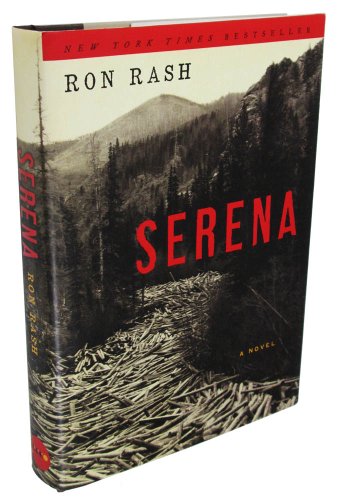
A New York Times bestseller and PEN/Faulkner Award Finalist, Serena by award-winning author Ron Rash is “masterfully written…sprawling, engrossing and—from time to time—nightmarish,” (San Francisco Chronicle); a remarkable novel that “recalls both John Steinbeck and Cormac McCarthy,” (The New Yorker). Rash’s chilling gothic tale of greed, corruption, and revenge set against the backdrop of the 1930s wilderness and America’s burgeoning environmental movement was named a Best Book of the Year by more than a dozen national publications, including the New York Times, Washington Post, San Francisco Chronicle, Chicago Tribune, and Miami Herald. Serena is brilliant contemporary fiction that exquisitely balances beauty and violence, passion and rage, cruelty and love.
"synopsis" may belong to another edition of this title.
About the Author
Ron Rash is the author of the 2009 PEN/Faulkner finalist and New York Times bestseller Serena and Above the Waterfall, in addition to four prizewinning novels, including The Cove, One Foot in Eden, Saints at the River, and The World Made Straight; four collections of poems; and six collections of stories, among them Burning Bright, which won the 2010 Frank O’Connor International Short Story Award, and Chemistry and Other Stories, which was a finalist for the 2007 PEN/Faulkner Award. Twice the recipient of the O. Henry Prize, he teaches at Western Carolina University.
From the Back Cover
The year is 1929, and newlyweds George and Serena Pemberton travel from Boston to the North Carolina mountains where they plan to create a timber empire. Although George has already lived in the camp long enough to father an illegitimate child, Serena is new to the mountains—but she soon shows herself to be the equal of any man, overseeing crews, hunting rattle-snakes, even saving her husband's life in the wilderness. Together this lord and lady of the woodlands ruthlessly kill or vanquish all who fall out of favor. Yet when Serena learns that she will never bear a child, she sets out to murder the son George fathered without her. Mother and child begin a struggle for their lives, and when Serena suspects George is protecting his illegitimate family, the Pembertons' intense, passionate marriage starts to unravel as the story moves toward its shocking reckoning.
Rash's masterful balance of violence and beauty yields a riveting novel that, at its core, tells of love both honored and betrayed.
Reviews
From The Washington Post's Book World/washingtonpost.com Reviewed by Ron Charles Serena, the Lady Macbeth of Ron Rash's stirring new novel, wouldn't fret about getting out the damned spot. She wouldn't even wash her hands; she'd just lick it off. I couldn't take my eyes off this villainess, and any character who does ends up dead. Alluring and repellant, she's the engine in a gothic tale of personal mayhem and environmental destruction set in the mountains of North Carolina during the Depression. We meet her as the new bride of a timber baron arriving to survey 34,000 acres of virgin land that she and her husband, Pemberton, hope to strip as quickly as possible. The other investors don't bring their wives into the mountains like this, but Serena is no ordinary wife. At the start of the novel, the newlyweds are intercepted at the train station by the father of a pregnant 16-year-old girl. Pemberton can't even remember her name, but he doesn't doubt she's carrying his baby; Serena is unfazed. "You're a lucky man," she tells the girl's father, who's seething with drunken rage. "You'll not find a better sire to breed her with." Then she turns to the girl: "But that's the only one you'll have of his. I'm here now." Yikes, is she ever. Wearing her leather jodhpurs and black boots, she strides through the story that follows with frightening self-confidence. She speaks with unquestioned authority to Pemberton's employees, rough-hewn men who've lived in these isolated hills for generations. The orphaned daughter of a wealthy timber man in Colorado, she immediately impresses even the most skeptical lumberjacks with her shrewd knowledge of the business. She can calculate board feet just by glancing at a towering tree, and though she attended finishing school in New England, she prefers the Spartan accommodations of her husband's Appalachian camp. "Money freed to buy more timber tracts," she reassures him. Drill, baby, drill! Rash portrays them as the perfect power couple, not a match made in heaven, perhaps, but someplace much lower. "Their meeting wasn't mere good fortune," Serena insists, "but inevitability." A strapping, commanding man of 27, Pemberton is thrilled to have found a woman so in tune with his spirit, even if she sometimes pushes him toward actions more deadly than prudent. Nothing heats up their bed more than rubbing out a too-cautious investor or a potential opponent. Holding Serena in his arms, feeling her "severe keenness," he's filled with "a sense of being unshackled into some limitless possibility." Serena is a blazing expansion of a short story in Rash's 2007 collection, Chemistry. Among other things, the longer form gives Rash room to set the ambitions of this rapacious couple against a seminal moment in the environmental movement. Even as Pemberton and Serena dream of denuding every mountain in Appalachia, the secretary of the interior, with backing from John D. Rockefeller, is aggressively buying up and seizing property for the creation of Great Smoky Mountains National Park. Owners like Pemberton could make a fortune by raping the land before they lost or sold it to the government. Rash gracefully folds this history into his fictional drama and includes several other real-life figures, such as the nature writer Horace Kephart. The political battle that rumbles in the background of the novel is all too sadly reminiscent of the one we're still fighting over vast tracts of untouched land. Rash, who teaches Appalachian cultural studies at Western Carolina University, constantly reminds us of what's at stake: "As the crews moved forward," he writes, "they left behind an ever-widening wasteland of stumps and slash, brown clogged creeks awash with dead trout. . . . The valley and ridges resembled the skinned hide of some huge animal." But Rash's description of the laborers is filled with awe for the hellish conditions they endure, working six 11-hour shifts a week, in all weather. When winter arrives, frostbite is a fair trade for snakebites. In startling, brief scenes, we see men sliced, impaled, drowned and crushed. "Some used cocaine to keep going and stay alert," he writes, "because once the cutting began a man had to watch for axe blades glancing off trees and saw teeth grabbing a knee and the tongs on the cable swinging free or the cable snapping. . . . If you could gather up all the severed body parts and sew them together, you'd gain an extra worker every month." As the Depression grinds on, though, there are always cheap, willing replacements. In addition to writing short stories, Rash is also a fine poet, and he brings a poet's concision and elliptical tendencies to this novel. As a result, these scenes and conversations constantly suggest more than they show, a technique that renders them alluring, sometimes erotic, often frightening. And his restraint is a necessity to keep this gothic tale from slipping into campiness. That's a real danger when you've got a beautiful murderess striding around the forest with a pet eagle on her wrist and a one-armed goon at her side. Frankly, it's sometimes difficult to catch the author's tone in these passages; the book seems deadly serious, but there are moments -- the bizarre battle between Serena's eagle and a komodo dragon, for instance -- when one suspects that Rash is rolling his eyes, too. But this is the challenge of the gothic novel: managing the accretion of excesses in a way that doesn't break the spell. The blind hag who delivers prophesies to the lumbermen, the insane preacher who warns of impending doom, even the portentous eclipse of the moon -- all these details rise up just right. The only weakness may be Serena herself; as her ambitions begin to outpace her husband's, I couldn't help feeling that she was shrinking toward a caricature of evil. But by then, it's too hypnotic to break away from. Innocent people are in peril, and calamity seems as unstoppable as the millions of board feet Pemberton's men send surging down the river. And the final chapter is as flawless and captivating as anything I've read this year, a perfectly creepy shock that will leave you hearing nothing but the wind between the stumps.
Copyright 2008, The Washington Post. All Rights Reserved.
In this beautifully written gothic novel, Rash paints an unforgettable portrait of a truly frightening woman, an "Ayn Rand [character] taken to sociopathic extremes" (Christian Science Monitor). Drawing comparisons to Lady Macbeth and Medea, critics were repulsed and fascinated by Serena. Though some felt that her wickedness, undiluted by the slightest pangs of compassion or empathy, crossed into the realm of caricature toward the end, they all agreed that it was impossible to put the book down. Serena is not overtly political, despite a depraved doctor named Cheney, but it does provide a stinging indictment of the devastation wrought by greed, unfettered capitalism, and the misuse of power. Readers will be haunted by this extraordinary novel long after the final page is turned.
Copyright 2009 Bookmarks Publishing LLC
Set in 1929, in the rugged mountains of North Carolina, Rash's novel is a tightly knit tale of industrial development, greed, and betrayal. George Pemberton and his new bride, Serena, maintain a close watch over a burgeoning logging empire, dealing with their workers while fighting off the efforts of environmental activists to expand the country's network of national parks. As the title character, a Depression-era Lady Macbeth wholly comfortable in the wilderness drives her husband to commit increasingly malevolent acts, he must also contend with the reemergence of a woman with whom he had an illegitimate child years earlier. Rash's evocative rendering of the blighted landscape and the tough characters who inhabit it recalls both John Steinbeck and Cormac McCarthy, while the malignant character of Serena, who projects a stark unflinching certainty about her actions, propels his finely paced story.
Copyright ©2008 Click here to subscribe to The New Yorker
*Starred Review* Rash’s short stories and previous novels are all set in Appalachia and enriched by the region’s unique history. This is his most gripping work yet, a sweeping saga of unfathomable greed and revenge that grabs the reader’s attention from the first page. The Depression-era tale is centered on newly married George and Serena Pemberton, owners of a logging company in the mountains of North Carolina. Their operation is aimed strictly at maximizing profits, with no regard for either the safety of their workers or the future of the land they’re pillaging. The tragic result of environmental disregard looms large in all of Rash’s fiction, and the Pembertons are his worst villains to date in that respect—leaving behind a “wasteland of stumps and slash and creeks awash with dead trout.” Side plots involve the drastic means, including murder, the couple employs to avoid losing land to environmental groups and Serena’s unflagging pursuit of the young girl who bore George’s son shortly after he and Serena were married. With a setting fraught with danger, and a character maniacal in her march toward domination and riches, Serena is a novel not soon forgotten. --Deborah Donovan
Excerpt. © Reprinted by permission. All rights reserved.
Serena
A NovelBy Ron RashHarperCollins Publishers, Inc.
Copyright © 2008 Ron RashAll right reserved.
ISBN: 9780061470851
Chapter One
When Pemberton returned to the North Carolina mountains after three months in Boston settling his father's estate, among those waiting on the train platform was a young woman pregnant with Pemberton's child. She was accompanied by her father, who carried beneath his shabby frock coat a bowie knife sharpened with great attentiveness earlier that morning so it would plunge as deep as possible into Pemberton's heart.
The conductor shouted "Waynesville" as the train shuddered to a halt. Pemberton looked out the window and saw his partners on the platform, both dressed in suits to meet his bride of two days, an unexpected bonus from his time in Boston. Buchanan, ever the dandy, had waxed his mustache and oiled his hair. His polished bluchers gleamed, the white cotton dress shirt fresh-pressed. Wilkie wore a gray fedora, as he often did to protect his bald pate from the sun. A Princeton Phi Beta Kappa key glinted on the older man's watch fob, a blue silk handkerchief tucked in his breast pocket.
Pemberton opened the gold shell of his watch and found the train on time to the exact minute. He turned to his bride, who'd been napping. Serena's dreams had been especially troubling last night. Twice he'd been waked by her thrashing, her fierce latching onto him until she'd fallen back asleep. He kissed her lightly on the lips and she awoke.
"Not the best place for a honeymoon."
"It suits us well enough," Serena said, leaning into his shoulder. "We're here together, which is all that matters."
Pemberton inhaled the bright aroma of Tre Jur talcum and remembered how he'd not just smelled but tasted its vividness on her skin earlier that morning. A porter strolled up the aisle, whistling a song Pemberton didn't recognize. His gaze returned to the window.
Next to the ticket booth Harmon and his daughter waited, Harmon slouching against the chestnut board wall. It struck Pemberton that males in these mountains rarely stood upright. Instead, they leaned into some tree or wall whenever possible. If none was available they squatted, buttocks against the backs of their heels. Harmon held a pint jar in his hand, what remained of its contents barely covering the bottom. The daughter sat on the bench, her posture upright to better reveal her condition. Pemberton could not recall her first name. He wasn't surprised to see them or that the girl was with child. His child, Pemberton had learned the night before Pemberton and Serena left Boston. Abe Harmon is down here saying he has business to settle with you, business about his daughter, Buchanan had said when he called. It could be just drunken bluster, but I thought you ought to know.
"Our welcoming party includes some of the locals," Pemberton said to his bride.
"As we were led to expect," Serena said.
She placed her right hand on his wrist for a moment, and Pemberton felt the calluses on her upper palm, the plain gold wedding band she wore in lieu of a diamond. The ring was like his in every detail except width. Pemberton stood and retrieved two grips from the overhead compartment. He handed them to the porter, who stepped back and followed as Pemberton led his bride down the aisle and the steps to the platform. There was a gap of two feet between the steel and wood. Serena did not reach for his hand as she stepped onto the planks.
Buchanan caught Pemberton's eye first, gave him a warning nod toward Harmon and his daughter before acknowledging Serena with a stiff formal bow. Wilkie took off his fedora. At five-nine, Serena stood taller than either man, but Pemberton knew other aspects of Serena's appearance helped foster Buchanan and Wilkie's obvious surprise—pants and boots instead of a dress and cloche hat, sun-bronzed skin that belied Serena's social class, lips and cheeks untinted by rouge, hair blonde and thick but cut short in a bob, distinctly feminine yet also austere.
Serena went up to the older man and held out her hand. Though he was, at seventy, over twice her age, Wilkie stared at Serena like a smitten schoolboy, the fedora pressed against his sternum as if to conceal a heart already captured.
"Wilkie, I assume."
"Yes, yes, I am," Wilkie stammered.
"Serena Pemberton," she said, her hand still extended.
Wilkie fumbled with his hat a moment before freeing his right hand and shaking Serena's.
"And Buchanan," Serena said, turning to the other partner. "Correct?"
"Yes."
Buchanan took her proffered hand and cupped it awkwardly in his.
Serena smiled. "Don't you know how to properly shake hands, Mr. Buchanan?"
Pemberton watched with amusement as Buchanan corrected his grip, quickly withdrew his hand. In the year that Boston Lumber Company had operated in these mountains, Buchanan's wife had come only once, arriving in a pink taffeta gown that was soiled before she'd crossed Waynesville's one street and entered her husband's house. She'd spent one night and left on the morning train. Now Buchanan and his wife met once a month for a weekend in Richmond, as far south as Mrs. Buchanan would travel. Wilkie's wife had never left Boston.
Pemberton's partners appeared incapable of further speech. Their eyes shifted to the leather chaps Serena wore, the beige oxford shirt and black jodhpurs. Serena's proper diction and erect carriage confirmed that she'd attended finishing school in New En-gland, as had their wives. But Serena had been born in Colorado and lived there until sixteen, child of a timber man who'd taught his daughter to shake hands firmly and look men in the eye as well as ride and shoot. She'd come east only after her parents' deaths.
The porter laid the grips on the platform and walked back toward the baggage car that held Serena's Saratoga trunk and Pemberton's smaller steamer trunk.
"I assume Campbell got the Arabian to camp," Pemberton said.
"Yes," Buchanan said, "though it nearly killed young Vaughn. That horse isn't just big but quite spirited, ‘cut proud' as they say."
Continues...
Excerpted from Serenaby Ron Rash Copyright © 2008 by Ron Rash. Excerpted by permission.
All rights reserved. No part of this excerpt may be reproduced or reprinted without permission in writing from the publisher.
Excerpts are provided by Dial-A-Book Inc. solely for the personal use of visitors to this web site.
"About this title" may belong to another edition of this title.
Search results for Serena: A Novel

Stock Image
Serena
Published by
HarperCollins Publishers Inc, 2008
ISBN 10: 0061470856
ISBN 13: 9780061470851
Used
Hardcover
Seller: World of Books (was SecondSale), Montgomery, IL, U.S.A.
Seller rating 5 out of 5 stars

Hardback. Condition: Fair. A New York Times bestseller and PEN/Faulkner Award Finalist,Serena by award-winning author Ron Rash is "masterfully written.sprawling, engrossing and--from time to time--nightmarish," (San Francisco Chronicle); a remarkable novel that "recalls both John Steinbeck and Cormac McCarthy," (The New Yorker). Rash's chilling gothic tale of greed, corruption, and revenge set against the backdrop of the 1930s wilderness and America's burgeoning environmental movement was named a Best Book of the Year by more than a dozen national publications, including the New York Times, Washington Post, San Francisco Chronicle, Chicago Tribune, and Miami Herald. Serena is brilliant contemporary fiction that exquisitely balances beauty and violence, passion and rage, cruelty and love. Seller Inventory # 00106845150
Stock Image
Serena
Published by
HarperCollins Publishers Inc, 2008
ISBN 10: 0061470856
ISBN 13: 9780061470851
Used
Hardcover
Seller: World of Books (was SecondSale), Montgomery, IL, U.S.A.
Seller rating 5 out of 5 stars
Hardback. Condition: Good. A New York Times bestseller and PEN/Faulkner Award Finalist,Serena by award-winning author Ron Rash is "masterfully written.sprawling, engrossing and--from time to time--nightmarish," (San Francisco Chronicle); a remarkable novel that "recalls both John Steinbeck and Cormac McCarthy," (The New Yorker). Rash's chilling gothic tale of greed, corruption, and revenge set against the backdrop of the 1930s wilderness and America's burgeoning environmental movement was named a Best Book of the Year by more than a dozen national publications, including the New York Times, Washington Post, San Francisco Chronicle, Chicago Tribune, and Miami Herald. Serena is brilliant contemporary fiction that exquisitely balances beauty and violence, passion and rage, cruelty and love. Seller Inventory # 00106394708
Stock Image
Serena: A Novel
Seller: Your Online Bookstore, Houston, TX, U.S.A.
Seller rating 5 out of 5 stars
Hardcover. Condition: Fair. Seller Inventory # 0061470856-4-19907685
Stock Image
Serena: A Novel
Seller: More Than Words, Waltham, MA, U.S.A.
Seller rating 5 out of 5 stars
Condition: Good. A sound copy with only light wear. Overall a solid copy at a great price! Seller Inventory # WAL-P-5b-0199
Stock Image
Serena: A Novel
Seller: BooksRun, Philadelphia, PA, U.S.A.
Seller rating 5 out of 5 stars
Hardcover. Condition: Very Good. 1. With dust jacket. It's a well-cared-for item that has seen limited use. The item may show minor signs of wear. All the text is legible, with all pages included. It may have slight markings and/or highlighting. Seller Inventory # 0061470856-11-1-29
Stock Image
Serena
Published by
HarperCollins Publishers Inc, 2008
ISBN 10: 0061470856
ISBN 13: 9780061470851
Used
Hardcover
Seller: World of Books Inc, Montgomery, IL, U.S.A.
Seller rating 4 out of 5 stars

Hardback. Condition: Fair. A New York Times bestseller and PEN/Faulkner Award Finalist,Serena by award-winning author Ron Rash is "masterfully written.sprawling, engrossing and--from time to time--nightmarish," (San Francisco Chronicle); a remarkable novel that "recalls both John Steinbeck and Cormac McCarthy," (The New Yorker). Rash's chilling gothic tale of greed, corruption, and revenge set against the backdrop of the 1930s wilderness and America's burgeoning environmental movement was named a Best Book of the Year by more than a dozen national publications, including the New York Times, Washington Post, San Francisco Chronicle, Chicago Tribune, and Miami Herald. Serena is brilliant contemporary fiction that exquisitely balances beauty and violence, passion and rage, cruelty and love. Seller Inventory # CIN0061470856A
Stock Image
Serena
Published by
HarperCollins Publishers Inc, 2008
ISBN 10: 0061470856
ISBN 13: 9780061470851
Used
Hardcover
Seller: World of Books Inc, Montgomery, IL, U.S.A.
Seller rating 4 out of 5 stars
Hardback. Condition: Good. A New York Times bestseller and PEN/Faulkner Award Finalist,Serena by award-winning author Ron Rash is "masterfully written.sprawling, engrossing and--from time to time--nightmarish," (San Francisco Chronicle); a remarkable novel that "recalls both John Steinbeck and Cormac McCarthy," (The New Yorker). Rash's chilling gothic tale of greed, corruption, and revenge set against the backdrop of the 1930s wilderness and America's burgeoning environmental movement was named a Best Book of the Year by more than a dozen national publications, including the New York Times, Washington Post, San Francisco Chronicle, Chicago Tribune, and Miami Herald. Serena is brilliant contemporary fiction that exquisitely balances beauty and violence, passion and rage, cruelty and love. Seller Inventory # CIN0061470856G
Stock Image
Serena: A Novel
Seller: ThriftBooks-Dallas, Dallas, TX, U.S.A.
Seller rating 5 out of 5 stars
Hardcover. Condition: Good. No Jacket. Former library book; Pages can have notes/highlighting. Spine may show signs of wear. ~ ThriftBooks: Read More, Spend Less. Seller Inventory # G0061470856I3N10
Stock Image
Serena: A Novel
Seller: ThriftBooks-Atlanta, AUSTELL, GA, U.S.A.
Seller rating 5 out of 5 stars
Hardcover. Condition: Good. No Jacket. Pages can have notes/highlighting. Spine may show signs of wear. ~ ThriftBooks: Read More, Spend Less. Seller Inventory # G0061470856I3N00
Stock Image
Serena: A Novel
Seller: ThriftBooks-Atlanta, AUSTELL, GA, U.S.A.
Seller rating 5 out of 5 stars
Hardcover. Condition: Good. No Jacket. Former library book; Pages can have notes/highlighting. Spine may show signs of wear. ~ ThriftBooks: Read More, Spend Less. Seller Inventory # G0061470856I3N10