Items related to Observing Development of the Young Child (7th Edition)
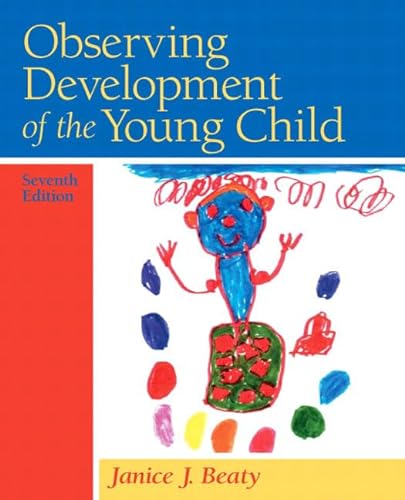
Synopsis
“How can we tell where children stand in their physical, cognitive, socioemotional, language, and creative development? Do we test them? Measure them? Compare them?”
This textbook teaches students how to become observers and how to document their findings using one tool: The Child Development Checklist . The author posits that the best method to determine a child’s strengths is for the teacher to observe the young child in the regular classroom based on a particular set of criteria. The reasons for assessing children in this manner are:
- It allows students of child development to gain an in-depth understanding of real children and their sequences of growth.
- It helps teachers of young children to become aware of each child’s growth and to support individual development with appropriate activities and materials.
Once the child’s strengths have been assessed, the book then provides suitable lesson plans and activities to support the child’s development.
New To This Edition:
NEW! Presents new information on how to become an observer--How to get started, when and how long to observe, what to look for in children, and how to record.
- This is critical for new students and teachers. (See Chapter 1 Ex. p. 9, 11, 12)
NEW! Suggests a lternative approaches to child assessment–These include visual documentation, i.e. art, photos, videos, and using documentation panels.
- This is Important for evaluating both children and program. (See Chapter 1 Ex. pp 23-26).
NEW! Offers new information on self-esteem in young children–Explains how and why a child should develop a secure attachment relationship with a teacher.
- Sets the stage for child’s success. (See Chapter 3 Ex. pp 81-82).
NEW! Includes new research on the brain showing the importance of physical exercise for children–The research shows that exercises increases brain synapses that improve permanent memory development.
- Even clapping helps. (See Chapter 6, Ex.p.267)
"synopsis" may belong to another edition of this title.
About the Author
Janice J. Beaty is a professor emerita, Elmira College, Elmira, New York. She is a full-time writer of early childhood college textbooks and a consultant in early childhood education from her home in Cape Coral, Florida. Her textbooks include Skills for Preschool Teachers, Eighth Edition, 50 Early Childhood Literacy Strategies, Second Edition, 50 Early Childhood Guidance Strategies, Early Literacy in Preschool and Kindergarten, Second Edition with Linda Pratt, Building Bridges with Multicultural Picture Books, Safety in Preschool Programs, and Prosocial Guidance for the Preschool Child. She is also engaged in a literacy mentoring program with the Foster Grandparents Program in Columbia, Missouri.
From the Back Cover
Observing Development of the Young Child, Seventh Edition
Janice J. Beaty, Professor Emerita, Elmira College
Focuses on child development using a unique checklist to document each aspect of development.
This book teaches readers how to observe, record, and interpret development of children ages 3 through 5. It also discusses what these children are like and how to support them in their development with exciting hands on activities.
The text focuses on the six major aspects of child development:
- Emotional
- Social
- Physical
- Cognitive
- Language
- Creative
Teachers can use the author’s unique system of observation, The Child Development Checklist , to determine children’s levels of development. This simple, self-teaching device is also used as an outline for chapters and their content.
Strategies to support development
If You Have Not Checked This Item: Some Helpful Ideas -This expanded feature in each chapter gives students specific suggestions for activities that will help children developmentally in areas not checked on the checklist.
Includes coverage of all stages of development–Includes background research and practical activities to enhance development of each stage throughout the text.
Provides a separate chapter on sharing observational data with parents (Chapter 14)--Provides a unique approach to involving parents in their children's development through child observations at home and developing collaborative portfolios with teachers and children in the classroom.
"About this title" may belong to another edition of this title.
Search results for Observing Development of the Young Child (7th Edition)

Seller Image
Observing Development of the Young Child (7th Edition)
Seller: Zoom Books Company, Lynden, WA, U.S.A.
Seller rating 5 out of 5 stars

Condition: very_good. Book is in very good condition and may include minimal underlining highlighting. The book can also include "From the library of" labels. May not contain miscellaneous items toys, dvds, etc. . We offer 100% money back guarantee and 24 7 customer service. Seller Inventory # ZBV.0135025893.VG
Quantity: 1 available
Stock Image
Observing Development of the Young Child (7th Edition)
Seller: ThriftBooks-Dallas, Dallas, TX, U.S.A.
Seller rating 5 out of 5 stars
Paperback. Condition: Good. No Jacket. Pages can have notes/highlighting. Spine may show signs of wear. ~ ThriftBooks: Read More, Spend Less 1.56. Seller Inventory # G0135025893I3N00
Quantity: 1 available
Stock Image
Observing Development of the Young Child (7th Edition)
Seller: ThriftBooks-Phoenix, Phoenix, AZ, U.S.A.
Seller rating 5 out of 5 stars
Paperback. Condition: Good. No Jacket. Pages can have notes/highlighting. Spine may show signs of wear. ~ ThriftBooks: Read More, Spend Less 1.56. Seller Inventory # G0135025893I3N00
Quantity: 1 available
Stock Image
Observing Development of the Young Child (7th Edition)
Seller: ThriftBooks-Atlanta, AUSTELL, GA, U.S.A.
Seller rating 5 out of 5 stars
Paperback. Condition: Good. No Jacket. Pages can have notes/highlighting. Spine may show signs of wear. ~ ThriftBooks: Read More, Spend Less 1.56. Seller Inventory # G0135025893I3N00
Quantity: 1 available
Stock Image
Observing Development of the Young Child (7th Edition)
Seller: ThriftBooks-Reno, Reno, NV, U.S.A.
Seller rating 5 out of 5 stars
Paperback. Condition: Good. No Jacket. Pages can have notes/highlighting. Spine may show signs of wear. ~ ThriftBooks: Read More, Spend Less 1.56. Seller Inventory # G0135025893I3N00
Quantity: 1 available
Stock Image
Observing Development of the Young Child (7th Edition)
Seller: HPB-Red, Dallas, TX, U.S.A.
Seller rating 5 out of 5 stars
paperback. Condition: Acceptable. Connecting readers with great books since 1972. Used textbooks may not include companion materials such as access codes, etc. May have condition issues including wear and notes/highlighting. We ship orders daily and Customer Service is our top priority! Seller Inventory # S_382144399
Quantity: 1 available
Stock Image
Observing Development of the Young Child (7th Edition)
Seller: BennettBooksLtd, San Diego, NV, U.S.A.
Seller rating 5 out of 5 stars
Paperback. Condition: New. In shrink wrap. Looks like an interesting title! Seller Inventory # Q-0135025893
Quantity: 1 available
Stock Image
Observing Development of the Young Child (7th Edition)
Seller: Toscana Books, AUSTIN, TX, U.S.A.
Seller rating 5 out of 5 stars
Paperback. Condition: new. Excellent Condition.Excels in customer satisfaction, prompt replies, and quality checks. Seller Inventory # Scanned0135025893
Quantity: 1 available