
Items related to The Metaphysics (Penguin Classics)
Synopsis
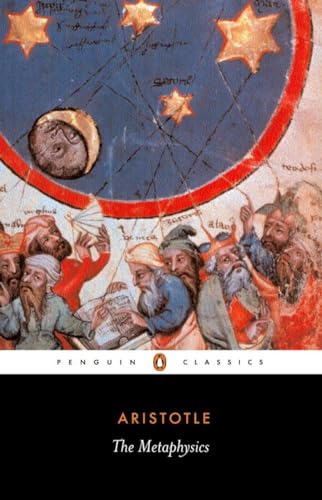
Aristotle's probing inquiry into some of the fundamental problems of philosophy, The Metaphysics is one of the classical Greek foundation-stones of western thought
The Metaphysics presents Aristotle's mature rejection of both the Platonic theory that what we perceive is just a pale reflection of reality and the hard-headed view that all processes are ultimately material. He argued instead that the reality or substance of things lies in their concrete forms, and in so doing he probed some of the deepest questions of philosophy: What is existence? How is change possible? And are there certain things that must exist for anything else to exist at all? The seminal notions discussed in The Metaphysics - of 'substance' and associated concepts of matter and form, essence and accident, potentiality and actuality - have had a profound and enduring influence, and laid the foundations for one of the central branches of Western philosophy.
In this edition Hugh Lawson-Tancred's lucid translation is accompanied by a stimulating introduction in which he highlights the central themes of one of philosophy's supreme masterpieces.
For more than seventy years, Penguin has been the leading publisher of classic literature in the English-speaking world. With more than 1,700 titles, Penguin Classics represents a global bookshelf of the best works throughout history and across genres and disciplines. Readers trust the series to provide authoritative texts enhanced by introductions and notes by distinguished scholars and contemporary authors, as well as up-to-date translations by award-winning translators.
"synopsis" may belong to another edition of this title.
About the Author
Aristotle was born in 384BC. For twenty years he studied at Athens at the Academy of Plato, on whose death in 347 he left, and some time later became tutor to Alexander the Great. On Alexander's succession to the throne of Macedonia in 336, Aristotle returned to Athens and established his school and research institute, the Lyceum. After Alexander's death he was driven out of Athens and fled to Chalcis in Euboea where he died in 322. His writings profoundly affected the whole course of ancient and medieval philosophy.
Hugh Lawson-Tancred was born in 1955 and educated at Eton and Balliol College, Oxford. He is a Departmental Fellow in the Department of Philosophy at Birkbeck College in the University of London. He has published extensively on Aristotle and Plato and is currently engaged in research in computational linguistics. He translates widely from the Slavonic and Scandinavian languages. He is married with a daughter and two sons and lives in North London and Somerset.
"About this title" may belong to another edition of this title.
Search results for The Metaphysics (Penguin Classics)

Stock Image
The Metaphysics
Seller: World of Books (was SecondSale), Montgomery, IL, U.S.A.
Seller rating 5 out of 5 stars

Paperback. Condition: Good. The Metaphysics presents Aristotle's mature rejection of both the Platonic theory that what we perceive is just a pale reflection of reality and the hardheaded view that all processes are ultimately material. He argued instead that the reality or substance of things lies in their concrete forms, and in so doing he probed some of the deepest questions of philosophy: What is existence? How is change possible? And are there certain things that must exist for anything else to exist at all? The seminal notions discussed in The Metaphysics - of 'substance' and associated concepts of matter and form, essence and accident, potentiality and actuality - have had a profound and enduring influence, and laid the foundations for one of the central branches of Western philosophy. Seller Inventory # 00109924304
Stock Image
The Metaphysics
Seller: World of Books (was SecondSale), Montgomery, IL, U.S.A.
Seller rating 5 out of 5 stars
Paperback. Condition: Fair. The Metaphysics presents Aristotle's mature rejection of both the Platonic theory that what we perceive is just a pale reflection of reality and the hardheaded view that all processes are ultimately material. He argued instead that the reality or substance of things lies in their concrete forms, and in so doing he probed some of the deepest questions of philosophy: What is existence? How is change possible? And are there certain things that must exist for anything else to exist at all? The seminal notions discussed in The Metaphysics - of 'substance' and associated concepts of matter and form, essence and accident, potentiality and actuality - have had a profound and enduring influence, and laid the foundations for one of the central branches of Western philosophy. Seller Inventory # 00110050103
Seller Image
The Metaphysics (Penguin Classics)
Seller: Dream Books Co., Denver, CO, U.S.A.
Seller rating 5 out of 5 stars
Condition: acceptable. This copy has clearly been enjoyedâ"expect noticeable shelf wear and some minor creases to the cover. Binding is strong, and all pages are legible. May contain previous library markings or stamps. Seller Inventory # DBV.0140446192.A
Stock Image
The Metaphysics
Seller: World of Books Inc, Montgomery, IL, U.S.A.
Seller rating 4 out of 5 stars

Paperback. Condition: Fair. The Metaphysics presents Aristotle's mature rejection of both the Platonic theory that what we perceive is just a pale reflection of reality and the hardheaded view that all processes are ultimately material. He argued instead that the reality or substance of things lies in their concrete forms, and in so doing he probed some of the deepest questions of philosophy: What is existence? How is change possible? And are there certain things that must exist for anything else to exist at all? The seminal notions discussed in The Metaphysics - of 'substance' and associated concepts of matter and form, essence and accident, potentiality and actuality - have had a profound and enduring influence, and laid the foundations for one of the central branches of Western philosophy. Seller Inventory # CIN0140446192A
Stock Image
The Metaphysics
Seller: World of Books Inc, Montgomery, IL, U.S.A.
Seller rating 4 out of 5 stars
Paperback. Condition: Good. The Metaphysics presents Aristotle's mature rejection of both the Platonic theory that what we perceive is just a pale reflection of reality and the hardheaded view that all processes are ultimately material. He argued instead that the reality or substance of things lies in their concrete forms, and in so doing he probed some of the deepest questions of philosophy: What is existence? How is change possible? And are there certain things that must exist for anything else to exist at all? The seminal notions discussed in The Metaphysics - of 'substance' and associated concepts of matter and form, essence and accident, potentiality and actuality - have had a profound and enduring influence, and laid the foundations for one of the central branches of Western philosophy. Seller Inventory # CIN0140446192G
Stock Image
The Metaphysics (Penguin Classics)
Seller: Lakeside Books, Benton Harbor, MI, U.S.A.
Seller rating 5 out of 5 stars
Condition: New. Brand New! Not Overstocks or Low Quality Book Club Editions! Direct From the Publisher! We're not a giant, faceless warehouse organization! We're a small town bookstore that loves books and loves it's customers! Buy from Lakeside Books! Seller Inventory # OTF-S-9780140446197
Stock Image
Metaphysics
Seller: GreatBookPrices, Columbia, MD, U.S.A.
Seller rating 5 out of 5 stars
Condition: New. Seller Inventory # 638032-n
Stock Image
The Metaphysics (Penguin Classics)
Seller: Picky Books, Akron, OH, U.S.A.
Seller rating 5 out of 5 stars
Paperback. Condition: Very Good. No Jacket. Previous owner inscription on first white page. This is a square and tight copy that is seemingly unread. Seller Inventory # 250723011
Stock Image
Metaphysics
Seller: GreatBookPrices, Columbia, MD, U.S.A.
Seller rating 5 out of 5 stars
Condition: As New. Unread book in perfect condition. Seller Inventory # 638032
Seller Image
The Metaphysics
Seller: Rarewaves.com USA, London, LONDO, United Kingdom
Seller rating 5 out of 5 stars
Paperback. Condition: New. Aristotle's probing inquiry into some of the fundamental problems of philosophy, The Metaphysics is one of the classical Greek foundation-stones of western thought, translated from the with an introduction by Hugh Lawson-Tancred in Penguin Classics.The Metaphysics presents Aristotle's mature rejection of both the Platonic theory that what we perceive is just a pale reflection of reality and the hard-headed view that all processes are ultimately material. He argued instead that the reality or substance of things lies in their concrete forms, and in so doing he probed some of the deepest questions of philosophy: What is existence? How is change possible? And are there certain things that must exist for anything else to exist at all? The seminal notions discussed in The Metaphysics - of 'substance' and associated concepts of matter and form, essence and accident, potentiality and actuality - have had a profound and enduring influence, and laid the foundations for one of the central branches of Western philosophy.Hugh Lawson-Tancred's lucid translation is accompanied by a stimulating introduction in which he highlights the central themes of one of philosophy's supreme masterpieces.Aristotle (384-22 BC) studied at the Academy of Plato for 20 years and then established his own school and research institute, 'The Lyceum'. His writings, which were of extraordinary range, profoundly affected the whole course of ancient and medieval philosophy and are still eagerly studied and debated by philosophers today.If you enjoyed The Metaphysics, you might like Aristotle's The Nicomachean Ethics, also available in Penguin Classics. Seller Inventory # LU-9780140446197
Buy New
US$ 18.80
Free Shipping
Ships from United Kingdom to U.S.A.
Ships from United Kingdom to U.S.A.
Quantity: Over 20 available