
Items related to A River Ran Wild: An Environmental History
Synopsis
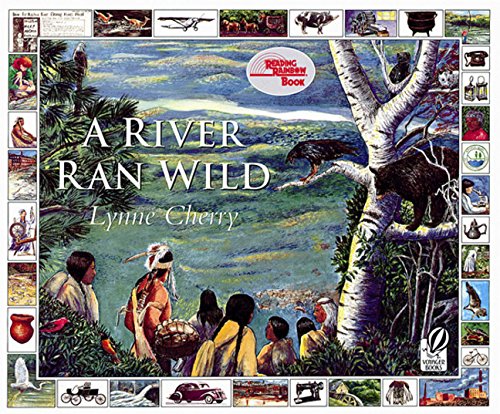
Recounts the history of the Nashua River in New England, from its crystal clear beginnings, to its death by pollution, to its amazing recovery, in order to present one of the most remarkable environmental success stories of our time.
"synopsis" may belong to another edition of this title.
About the Author
LYNNE CHERRY has devoted her life to sharing her concern about environmental issues with others. Her important children's books also include The Armadillo from Amarillo and two tales from the Amazon rain forest: The Great Kapok Tree and The Shaman's Apprentice. She lives in Washington, D.C.
Reviews
Grade 1-4-- In the 15th century, when native people first settled on the banks of the river now called the Nashua, it was a fertile and beautiful place. By the 1960s, the river valley had been ravaged by many years of serious pollution , and fish, birds, and other animals were no longer seen in the area. Through the efforts of Marion Stoddart and the Nashua River Watershed Association, laws were passed that resulted in the restoration of this river and the protection of all rivers. The author gets high marks for documenting the negative impact of industry on the environment and for highlighting the difference one determined person can make. However, young readers lacking historical background need more facts and dates than are included here. Cherry uses borders on pages that detail, for example, some of the inventions conceived in the 19th century; inexplicably, most are labeled but only some are dated. Her note and the maps on the endpapers, which include a timeline, also help to place the events in context. The watercolor and colored-pencil illustrations are sweeping in their subject matter and adequately convey the physical deterioration of the watershed. However, one picture is misleading; although all the animals depicted live in this habitat, they would not all be seen together. The current concern over the environment will make this a sought-after title, since it is brief enough to read aloud to groups of children. With assistance from informed adult readers, it makes an important contribution to literature on water pollution. --Ellen Fader, Westport Public Library, CT
Copyright 1992 Reed Business Information, Inc.
Cherry traces the ecological evolution of New England's Nashua River--how it was respected by generations of Indians, polluted and ultimately deadened in the wake of the industrial revolution and restored in recent years through the efforts of concerned citizens. She delivers this message with a heavier hand than she used in The Great Kapok Tree ; her writing is more complex and ponderous, and less accessible and inviting, than in the earlier work. While this book provides a solid history, it does little to bring the issues or pivotal figures to life. The colorless account of the citizens' battle to clean up the river, for example, reflects little of the passions and energy involved. Though not her best work, Cherry's illustrations tell the story more effectively. (One allegorical painting of an Indian chief's head--superimposed on trees--crying into the river, however, jars with the naturalistic style.) Of particular benefit are the handsome, intricately detailed borders that surround the text: depictions of various period artifacts provide artistic interest and added information. Ages 6-10.
Copyright 1992 Reed Business Information, Inc.
A pictorial history of Massachusetts and New Hampshire's Nashua River, from its valley's settlement 7,000 years ago by ``Indian peoples'' until its recent reclamation. An introductory note summarizes pivotal changes: the arrival of the English; industrialization; and the successful effort, begun in the 60's and largely credited to activist Marion Stoddart, to clean up the river and restore its wildlife. Each double spread examines one period or topic and includes a brief, informative text, attractively bordered with miniature illustrations of significant wildlife, artifacts, or scenes, and a handsome, full-page painting. Contrasts--e.g., between the lush valley the Native Americans found and the dying river, sluggishly running red with dye and pulp from a paper mill--are dramatically telling. An important, intelligently presented story that is emblematic of the need for myriad similar conservation efforts. (Nonfiction/Picture book. 6-10) -- Copyright ©1992, Kirkus Associates, LP. All rights reserved.
"About this title" may belong to another edition of this title.
Search results for A River Ran Wild: An Environmental History

Stock Image
A River Ran Wild: An Environmental History
Published by
Harcourt Children's Books, 1992
ISBN 10: 0152005420
ISBN 13: 9780152005429
Used
Hardcover
Seller: Orion Tech, Kingwood, TX, U.S.A.
Seller rating 5 out of 5 stars

Hardcover. Condition: Fair. Seller Inventory # 0152005420-4-15800228
Stock Image
A River Ran Wild: An Environmental History
Published by
Harcourt Children's Books, 1992
ISBN 10: 0152005420
ISBN 13: 9780152005429
Used
Hardcover
Seller: Your Online Bookstore, Houston, TX, U.S.A.
Seller rating 5 out of 5 stars
Hardcover. Condition: Fair. Seller Inventory # 0152005420-4-16862934
Stock Image
A River Ran Wild: An Environmental History
Published by
Harcourt Children's Books, 1992
ISBN 10: 0152005420
ISBN 13: 9780152005429
Used
Hardcover
Seller: Gulf Coast Books, Cypress, TX, U.S.A.
Seller rating 5 out of 5 stars
Hardcover. Condition: Very Good. Seller Inventory # 0152005420-2-18505410
Stock Image
A River Ran Wild: An Environmental History
Published by
Harcourt Children's Books, 1992
ISBN 10: 0152005420
ISBN 13: 9780152005429
Used
Hardcover
Seller: Your Online Bookstore, Houston, TX, U.S.A.
Seller rating 5 out of 5 stars
Hardcover. Condition: Very Good. Seller Inventory # 0152005420-2-22160624
Stock Image
A River Ran Wild: An Environmental History
Published by
Harcourt Children's Books, 1992
ISBN 10: 0152005420
ISBN 13: 9780152005429
Used
Hardcover
Seller: Orion Tech, Kingwood, TX, U.S.A.
Seller rating 5 out of 5 stars
Hardcover. Condition: Very Good. Seller Inventory # 0152005420-2-21718194
Stock Image
A River Ran Wild: An Environmental History
Published by
Harcourt Children's Books, 1992
ISBN 10: 0152005420
ISBN 13: 9780152005429
Used
Hardcover
Seller: Gulf Coast Books, Cypress, TX, U.S.A.
Seller rating 5 out of 5 stars
Hardcover. Condition: Fair. Seller Inventory # 0152005420-4-17041090
Seller Image
A River Ran Wild: An Environmental History
Published by
Houghton Mifflin Harcourt, 1992
ISBN 10: 0152005420
ISBN 13: 9780152005429
Used
Hardcover
Seller: Zoom Books East, Glendale Heights, IL, U.S.A.
Seller rating 5 out of 5 stars
Condition: good. Book is in good condition and may include underlining highlighting and minimal wear. The book can also include "From the library of" labels. May not contain miscellaneous items toys, dvds, etc. . We offer 100% money back guarantee and 24 7 customer service. Seller Inventory # ZEV.0152005420.G
Seller Image
A River Ran Wild: An Environmental History
Published by
Houghton Mifflin Harcourt, 1992
ISBN 10: 0152005420
ISBN 13: 9780152005429
Used
Hardcover
Seller: Greenworld Books, Arlington, TX, U.S.A.
Seller rating 5 out of 5 stars
Condition: very_good. Fast Free Shipping â" Very Good condition book with a firm cover and clean pages. Shows normal use and some light wear or limited notes markings. A solid, nice copy to enjoy. Seller Inventory # GWV.0152005420.VG
Seller Image
A River Ran Wild: An Environmental History
Published by
Houghton Mifflin Harcourt, 1992
ISBN 10: 0152005420
ISBN 13: 9780152005429
Used
Hardcover
Seller: ZBK Books, Carlstadt, NJ, U.S.A.
Seller rating 5 out of 5 stars
Condition: very_good. Fast & Free Shipping â" Very Good condition book with a firm cover and clean pages. Shows normal use and some light wear or limited notes markings. A solid, nice copy to enjoy. Seller Inventory # ZWV.0152005420.VG
Stock Image
A River Ran Wild: An Environmental History
Published by
Houghton Mifflin Harcourt (edition First Edition), 1992
ISBN 10: 0152005420
ISBN 13: 9780152005429
Used
Hardcover
First Edition
Seller: BooksRun, Philadelphia, PA, U.S.A.
Seller rating 5 out of 5 stars
Hardcover. Condition: Very Good. First Edition. With dust jacket. It's a well-cared-for item that has seen limited use. The item may show minor signs of wear. All the text is legible, with all pages included. It may have slight markings and/or highlighting. Seller Inventory # 0152005420-11-1-29