
Items related to Winter Lullaby
Synopsis
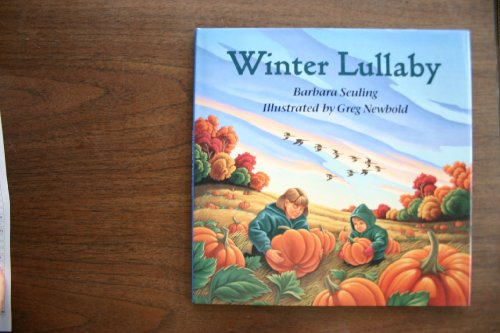
As the natural world changes with the beginning of winter, young children worry about where the ducks and other animals will go to be safe and warm, in a revealing story about what animals do to survive winter's cold fury.
"synopsis" may belong to another edition of this title.
About the Authors
No Bio
No Bio
Reviews
PreSchool-Grade 2-This picture book addresses the curious disappearance of nature's summertime animal population when the weather turns cold. Bees head for their hives, bats go to their caves, and birds fly south toward kinder climates. Seven animals in all, including humans, make their escape to warmth. The poetic text consistently puts forth a free-verse question ("When ice covers/the mountain lake like a crust,/where do the fish go?") followed by a rhymed-couplet answer ("They swim below,/where warm streams flow") on the next double spread. The literary qualities-subtle alliteration and assonance as well as rhyme-work well for reading aloud. A three year old may not immediately grasp that a "Breeze [blowing] the petals off the flowers" is an obvious indication of a change of season, but Newbold's illustrations explain it nicely with a pared-down realism of bold but not overly bright acrylic paintings. The artist's pallet complements the text well. Warm-tinted oranges and yellows highlight the waning summer days, while winter's tones are cool blues, whites, and grays. The landscapes depicted seem to be the same rural American countryside, but the insertion of one desert setting interrupts the regionally flavored flow. As a whole, the format seems just a bit haphazard, despite the fine words and pretty pictures.
Peg Solonika, Carnegie Library of Pittsburgh,
Copyright 1998 Reed Business Information, Inc.
As autumn turns to winter, the wind blows, the ground turns cold and the "white frost creeps," forcing animals to find protective shelter. "When the snow falls/ over the freshwater pond,/ where do the ducks go?/ Across the sky,/ southward they fly." Seuling's (The Teeny Tiny Woman) text sets up a rhythm of simple questions on one spread, answered with the turn of a page by rhyming couplets that may well lull youngsters into a participatory drowsiness. Children can repeat the easily memorized, sing-song verses in response to an adult reading the questions. Newbold's broad scope of variously lit, softly rounded rural scenesAfrom farm to forest to desert to mountain valleyAbrings soothing balm to day's end. Ages 3-6.
Copyright 1998 Reed Business Information, Inc.
This carefully crafted question-and-answer book is more than a lullaby; its excellent content need not be saved for bedtime. Alternating spreads ask questions and then provide answers: ``When wind whistles through the evergreen forest, where do the bats go?'' is answered in the next spread, ``To caverns deep, for a long sleep.'' The series of questions explains natural phenomena--where bees, snakes, mice, fish, etc., go when it becomes too cold for them. The last of the questions in this quick but compelling read comes as two children return home from sledding, chilly and ready for a cozy perch on their father's lap by the fireplace. The pastoral illustrations offer first expansive views of nature, followed by close-up depictions of the animals' snug retreats; a patchwork of crops is shown from a distance or from overheard, its vegetation slightly rounded; a desert scene comes with a dramatic sky. From mountains to desert, from hayloft to underwater stream, the imagery and ideas offer delight. (Picture book. 3-6) -- Copyright ©1998, Kirkus Associates, LP. All rights reserved.
Ages 3^-6. Ideal autumn reading, Winter Lullaby artfully responds to questions about where animals go as winter approaches. Petals flutter across a tawny horizon from sunflowers that dominate the first double-page spread; on the turn of the page, bees are seen congregating in a hole in a gnarled tree "inside their hives till spring arrives." Curled up in a bale of straw, mice are shown up in "the loft, in something soft." An aerial view of snow-covered fields shows ducks fleeing winter "across the sky, southward they fly." Newbold's richly colored, dynamic acrylic paintings fill the pages, leaving no room for margins, and Seuling's poetically phrased, minimal text occupies one framed block of print per double-page spread. Chilly shadows creep over the hills as a family returns home from sledding; where do people go when their fingertips and noses are cold? "Out of the storm, where it is warm" is the reply as the firelight reflects off a father and his children nestled together in an armchair reading a book--a picture-perfect conclusion to a frosty night and to a beautifully delivered natural history lesson. Ellen Mandel
"About this title" may belong to another edition of this title.
Search results for Winter Lullaby

Stock Image
Winter Lullaby
Published by
Harcourt Childrens Books, 1998
ISBN 10: 0152014039
ISBN 13: 9780152014032
Used
Hardcover
Seller: ThriftBooks-Phoenix, Phoenix, AZ, U.S.A.
Seller rating 5 out of 5 stars

Hardcover. Condition: Very Good. No Jacket. Newbold, Greg (illustrator). May have limited writing in cover pages. Pages are unmarked. ~ ThriftBooks: Read More, Spend Less. Seller Inventory # G0152014039I4N00
Stock Image
Winter Lullaby
Published by
Harcourt Childrens Books, 1998
ISBN 10: 0152014039
ISBN 13: 9780152014032
Used
Hardcover
Seller: ThriftBooks-Atlanta, AUSTELL, GA, U.S.A.
Seller rating 5 out of 5 stars
Hardcover. Condition: Good. No Jacket. Newbold, Greg (illustrator). Missing dust jacket; Pages can have notes/highlighting. Spine may show signs of wear. ~ ThriftBooks: Read More, Spend Less. Seller Inventory # G0152014039I3N01
Stock Image
Winter Lullaby
Published by
Harcourt Childrens Books, 1998
ISBN 10: 0152014039
ISBN 13: 9780152014032
Used
Hardcover
Seller: ThriftBooks-Atlanta, AUSTELL, GA, U.S.A.
Seller rating 5 out of 5 stars
Hardcover. Condition: Very Good. No Jacket. Newbold, Greg (illustrator). May have limited writing in cover pages. Pages are unmarked. ~ ThriftBooks: Read More, Spend Less. Seller Inventory # G0152014039I4N00
Stock Image
Winter Lullaby
Published by
Harcourt Childrens Books, 1998
ISBN 10: 0152014039
ISBN 13: 9780152014032
Used
Hardcover
Seller: ThriftBooks-Dallas, Dallas, TX, U.S.A.
Seller rating 5 out of 5 stars
Hardcover. Condition: Good. No Jacket. Newbold, Greg (illustrator). Pages can have notes/highlighting. Spine may show signs of wear. ~ ThriftBooks: Read More, Spend Less. Seller Inventory # G0152014039I3N00
Stock Image
Winter Lullaby
Published by
Harcourt Childrens Books, 1998
ISBN 10: 0152014039
ISBN 13: 9780152014032
Used
Hardcover
Seller: Goodwill Books, Hillsboro, OR, U.S.A.
Seller rating 5 out of 5 stars
Condition: acceptable. Newbold, Greg (illustrator). Fairly worn, but readable and intact. If applicable: Dust jacket, disc or access code may not be included. Seller Inventory # GICWV.0152014039.A
Stock Image
Winter Lullaby
Published by
Houghton Mifflin Harcourt Publishing Company, 1998
ISBN 10: 0152014039
ISBN 13: 9780152014032
Used
Hardcover
Seller: World of Books (was SecondSale), Montgomery, IL, U.S.A.
Seller rating 5 out of 5 stars
Hardback. Condition: Good. Newbold, Greg (illustrator). As the natural world changes with winter's approach, young children worry about the creatures they see around them. Where do the ducks and other animals go? Will they find shelter from the cold? Will they be safe and warm? In Winter Lullaby, Barbara Seuling's reassuring, gentle verse and Greg Newbold's breathtaking paintings reveal what animals do to survive as winter takes hold. Seller Inventory # CIN0152014039G
Stock Image
Winter Lullaby
Published by
Houghton Mifflin Harcourt Publishing Company, 1998
ISBN 10: 0152014039
ISBN 13: 9780152014032
Used
Hardcover
Seller: World of Books (was SecondSale), Montgomery, IL, U.S.A.
Seller rating 5 out of 5 stars
Hardback. Condition: Very Good. Newbold, Greg (illustrator). As the natural world changes with winter's approach, young children worry about the creatures they see around them. Where do the ducks and other animals go? Will they find shelter from the cold? Will they be safe and warm? In Winter Lullaby, Barbara Seuling's reassuring, gentle verse and Greg Newbold's breathtaking paintings reveal what animals do to survive as winter takes hold. Seller Inventory # CIN0152014039VG
Stock Image
Winter Lullaby
Published by
Harcourt Childrens Books, 1998
ISBN 10: 0152014039
ISBN 13: 9780152014032
Used
Hardcover
Seller: Goodwill Books, Hillsboro, OR, U.S.A.
Seller rating 5 out of 5 stars
Condition: good. Newbold, Greg (illustrator). Signs of wear and consistent use. Seller Inventory # GICWV.0152014039.G
Stock Image
Winter Lullaby
Published by
Houghton Mifflin Harcourt Publishing Company, 1998
ISBN 10: 0152014039
ISBN 13: 9780152014032
Used
Hardcover
First Edition
Seller: Better World Books: West, Reno, NV, U.S.A.
Seller rating 5 out of 5 stars
Condition: Very Good. Newbold, Greg (illustrator). 1st. Former library copy. Pages intact with possible writing/highlighting. Binding strong with minor wear. Dust jackets/supplements may not be included. Includes library markings. Stock photo provided. Product includes identifying sticker. Better World Books: Buy Books. Do Good. Seller Inventory # 14323967-6
Stock Image
Winter Lullaby
Published by
Houghton Mifflin Harcourt Publishing Company, 1998
ISBN 10: 0152014039
ISBN 13: 9780152014032
Used
Hardcover
First Edition
Seller: Better World Books, Mishawaka, IN, U.S.A.
Seller rating 5 out of 5 stars
Condition: Good. Newbold, Greg (illustrator). 1st. Former library copy. Pages intact with minimal writing/highlighting. The binding may be loose and creased. Dust jackets/supplements are not included. Includes library markings. Stock photo provided. Product includes identifying sticker. Better World Books: Buy Books. Do Good. Seller Inventory # 3131289-6