
Items related to Hitch: A Riveting Young Adult Adventure of Survival...
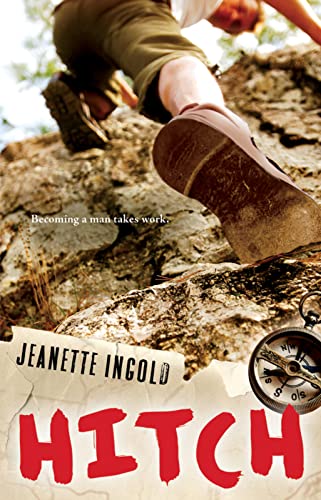
Hitch: A Riveting Young Adult Adventure of Survival and Self-Discovery During the Great Depression - Softcover
Synopsis
- Christopher Award - "Better to light one candle than to curse the darkness"
- Society of School Librarians International Best Book
Historical fiction at its best! From the author of The Big Burn comes this captivating story of a boy striving to become a man amidst the hard times of the 1930s Great Depression.
Teenager Moss Trawnley is on his own and desperate when he joins Franklin Roosevelt's Civilian Conservation Corps. The CCC means a job at a Montana camp and money for his family. Self-esteem and self-reliance. Friends and being a leader. A crash course in living with nature. And it means facing hard times and building something good. Includes reader's guide.
Double whammy. Good book. Good boy book. . .It's a coming-of-age novel worthy of your time. --Treasure Chest for Tweens
This is a must read book!! If you like realistic fiction then you should definitely read this novel. --East Meadow Public Library YA Book Log, review by a middle school student
An excellent piece of historical fiction which helps people today to appreciate events that took place in the past. Written with humor, pathos, and a keen understanding of the times. -Through the Looking Glass Book Reviews
Great for boys. --YA Books Central
Felt like a well-done film where one can't help but root for the hero. Although intended for young adults, anyone will find Hitch a great read. --Historical Novel Society
- New York Public Library Book for the Teen Age
- Texas Tayshas book list
- National Endowment for the Humanities/American Library Association We the People Bookshelf
"synopsis" may belong to another edition of this title.
About the Author
JEANETTE INGOLD is the author of award-winning historical fiction and contemporary stories for young adult and middle school readers. Her realistic novels, read in schools and featured in One Book - One Community programs, include Hitch; Mountain Solo; The Big Burn; Pictures, 1918; Airfield; The Window; and Paper Daughter. Jeanette lives and writes in Montana.
From the Back Cover
Moss Trawnley is only seventeen years old, but he has his future all planned out. He's been accepted to technical school, and if he watches every penny he earns at the airfield, he just might be able to afford tuition. But it only takes two words from his boss to shatter his dreams: You're fired.
Suddenly homeless and jobless, Moss is desperate for a way to support himself. But during the Great Depression, finding a job is next to impossible, and with so many people out of work, it seems as if the whole country is waiting in a bread line. With no other options, Moss signs up for a six-month hitch with President Roosevelt's Civilian Conservation Corps--at least it will give him something to eat and a roof over his head. But what starts out as a meal ticket turns into the adventure of a lifetime.
- A CHRISTOPHER AWARD WINNER
- A SOCIETY OF SCHOOL LIBRARIANS INTERNATIONAL BEST BOOK
"Ingold's passion for her subject, crisp narrative and lively dialogue carry this fine story of a young man finding a way to make a difference in a difficult time."--Kirkus Reviews
"Readers will be readily caught up in the camp's trials and successes through to the dramatic ending...A wholly appealing exploration of the historic period."--The Bulletin
Excerpt. © Reprinted by permission. All rights reserved.
I woke up shivering in the boxcar where I'd spent the night. Late October might be the tail end of summer in Texas, but it wasn't up here, wherever here was.
I coughed and ran my tongue over the grit clinging to my teeth. My body jangled with the vibration coming up from the train wheels.
Sharp lines of sunlight edged the wide, almost closed doors of the car and lay in stripes across the forms of men sprawled around me. We must have passed out of the dust storm, I thought, remembering the day before, when the train rushing north across farmland had entered a blackness of blowing dirt unlike anything I had ever seen.
First I'd wondered if the huge cloud moving toward us, too dark brown for rain, might be smoke. Then somebody called it for what it was, just before we got swallowed up in a violent torrent of sandpapering earth.
I'd fallen asleep to the howl of it.
Leaning into the boxcar door, I pushed it open. A wedge had kept it from shutting all the way- a safety against the bar-latch on the outside coming down and locking us in. Dazzlingly bright light flooded the car, and someone demanded, "You trying to blind us?"
"Sorry," I said, sliding the door far enough shut that the sunlight wasn't shining right on him.
He got up long enough to relieve himself against a wall, belch, scratch, and swear 'cause a bottle he picked up turned out empty. "Blind me again, kid," he said, "and I'll throw you under the wheels."
I turned away. That wasn't the worst I'd heard in the days since I left Muddy Springs and my job at the little Texas airport where I'd worked.
Days! It seemed more like weeks or months I'd been gone, like my last afternoon there happened in a different life even.
I closed my eyes to the endless country outside- butte and prairie land now, desolate looking- and saw again that scene I'd gone over and over. Lord, what a fool I'd been, playing at my job like I was some kid.
Dancing at it. Dancing!
"Come on, Miss McDonough! Hurry back!" I'd said aloud, swinging out my broom like it was my girl I was spinning across a dance floor. Of all the weekends for Beatty to be off to Dallas with her aunt and uncle. I had news to tell her.
I'd been accepted to radio school, and tuition was even in a range I could afford if I watched every penny till next July when I could start. A thick letter from the school, along with a thinner one from my ma that I hadn't read yet, burned a hole in my back pocket.
Beatty and I, we had it planned. Come May- just another seven months- we'd be high school graduates, class of 1936. Then Beatty, who loved flying like she was born to it, would start flying full-time, for pay. She'd do contract work, like her teacher, Annie Boudreau, did. And I'd get serious about turning radios into more than a hobby.
I gave the broom another fancy turn. There wasn't anybody to see. The afternoon plane was long gone, and I had the Muddy Springs Airport terminal to myself. I just needed to finish sweeping, and then I could go up to my room and read all the radio-school pamphlets from start to finish.
"You always dance with brooms?" a man called out, and I whirled around, feeling like a right fool. I recognized one of the airport directors, a Mr. Kliber, that I knew by sight but no more.
"I'm 'feared you missed everybody," I told him. I explained how Grif- Beatty's uncle, who managed the airport- was away till Monday, and that his assistant had knocked off for the day.
"Actually, it's you I came to see," Mr. Kliber said.
Puzzled, I said, "Yes, sir?"
"It's like this, Moss," he said, and commenced beating around the bush so bad I couldn't get what he was telling me. Then he finally said it straight out.
"You're firing me?" I asked. My voice sounded like it was coming out of somebody else's throat.
"I have to let you go," he said. "You can understand, Moss. The man we're hiring- I'll be honest, he's a cousin of mine- has a wife and children to take care of."
I nodded, feeling numb. I did understand. With Texas and the rest of the country deep in the Depression, a body had to understand favoring a family man over a teenager on his own.
It was just that I hadn't thought anybody else would want my part-time job, being the airport's janitor, mechanic's assistant, night watchman, and general gofer. I'd patched it together by pitching in wherever I'd seen a need. I got twelve dollars a week for doing it, and the room upstairs. Enough to live on, send some home to help my family, and save a bit.
I dragged my attention back to Mr. Kliber, who seemed bound to explain why his cousin had to have my job, now that he'd lost his own in a machine shop up in Oklahoma.
I broke in. "You needn't explain," I said. "I know how it is."
"You can have a couple days more," Mr. Kliber said. "I wish I didn't have to spring it on you this fast, but Orville's already on his way."
I went after a gum wrapper and dropped it into my dustpan, buying time to get control of the panic welling up. "I guess if I'm going, I best think about when to start," I said.
Maybe, I thought, as the train crossed a trestle, that was where I went wrong. For certain, I shouldn't have been so hasty to leave, shouldn't have let my pride get so wounded over being fired that I couldn't stay to face my friends.
I shouldn't have taken off without even leaving them a good-bye, telling myself I'd write when I had something proud to say.
But then there was that other letter, the one from my ma, in Spanish Creek, Louisiana.
Up in my bedroom above the terminal lobby, I'd read it. Now I took it out and read it again, the flimsy paper rattling in the wind.
Dear Son, she'd written, I hope you are keeping well. I wished I could say we are but I am having a time making ends meet. We only did get money once from the WPA job I told you yr pa was on and then no more. I do not know if he is hurt or killed or taken off again without a say-so to anybody. If it is that he ought to be ashamed. Except for what you send, I would be at wits end caring for your brothers and sisters. But I don't complain, being just thankful the Lord gave me a good son. Yr loving mother, Bertha Trawnley.
That hadn't left me any choice. Maybe I could have found a way to hang on in Muddy Springs myself, but there was no way I'd have gotten something that paid enough so that I could send Ma the help she needed.
The hobo in the corner swore at me again, but I ignored him. The car reeked, so I wasn't about to close the door on anything less than another dust storm.
I'd lay money my father wasn't hurt or killed. He just wasn't doing his duty to his family like he ought. Just like he hadn't done it for a time now. Not since walking away from us two years ago. Not since before that, come down to it.
That last night in Muddy Springs I'd thought carefully about where my own duty lay and come up with a clear answer.
First I needed to mail my radio-school savings to Ma.
Then I needed to go find my pa at his WPA job in Montana and see he was all right. And if he was, then remind him he had a family to take care of. If I presented it careful, he'd realize he needed to send his wages home regular.
I wasn't sure what would come then. Maybe I could find some kind of job for myself up there, for the time being. Maybe I could even find some way to help him.
I'd packed my suitcase quickly- I didn't have much to put in it besides a few clothes, the letter from the radio school, and a picture of Beatty in front of an airplane. I left the next morning.
And now here I was, hundreds of miles from Texas. Well, one thing was for sure. I was more than ready to get to Montana and be done riding freight cars forever.
Copyright © 2005 by Jeanette Ingold
All rights reserved. No part of this publication may be reproduced or transmitted in any form or by any means, electronic or mechanical, including photocopy, recording, or any information storage and retrieval system, without permission in writing from the publisher.
Requests for permission to make copies of any part of the work should be mailed to the following address:
Permissions Department, Harcourt, Inc.,
6277 Sea Harbor Drive, Orlando, Florida 32887-6777.
I coughed and ran my tongue over the grit clinging to my teeth. My body jangled with the vibration coming up from the train wheels.
Sharp lines of sunlight edged the wide, almost closed doors of the car and lay in stripes across the forms of men sprawled around me. We must have passed out of the dust storm, I thought, remembering the day before, when the train rushing north across farmland had entered a blackness of blowing dirt unlike anything I had ever seen.
First I'd wondered if the huge cloud moving toward us, too dark brown for rain, might be smoke. Then somebody called it for what it was, just before we got swallowed up in a violent torrent of sandpapering earth.
I'd fallen asleep to the howl of it.
Leaning into the boxcar door, I pushed it open. A wedge had kept it from shutting all the way- a safety against the bar-latch on the outside coming down and locking us in. Dazzlingly bright light flooded the car, and someone demanded, "You trying to blind us?"
"Sorry," I said, sliding the door far enough shut that the sunlight wasn't shining right on him.
He got up long enough to relieve himself against a wall, belch, scratch, and swear 'cause a bottle he picked up turned out empty. "Blind me again, kid," he said, "and I'll throw you under the wheels."
I turned away. That wasn't the worst I'd heard in the days since I left Muddy Springs and my job at the little Texas airport where I'd worked.
Days! It seemed more like weeks or months I'd been gone, like my last afternoon there happened in a different life even.
I closed my eyes to the endless country outside- butte and prairie land now, desolate looking- and saw again that scene I'd gone over and over. Lord, what a fool I'd been, playing at my job like I was some kid.
Dancing at it. Dancing!
"Come on, Miss McDonough! Hurry back!" I'd said aloud, swinging out my broom like it was my girl I was spinning across a dance floor. Of all the weekends for Beatty to be off to Dallas with her aunt and uncle. I had news to tell her.
I'd been accepted to radio school, and tuition was even in a range I could afford if I watched every penny till next July when I could start. A thick letter from the school, along with a thinner one from my ma that I hadn't read yet, burned a hole in my back pocket.
Beatty and I, we had it planned. Come May- just another seven months- we'd be high school graduates, class of 1936. Then Beatty, who loved flying like she was born to it, would start flying full-time, for pay. She'd do contract work, like her teacher, Annie Boudreau, did. And I'd get serious about turning radios into more than a hobby.
I gave the broom another fancy turn. There wasn't anybody to see. The afternoon plane was long gone, and I had the Muddy Springs Airport terminal to myself. I just needed to finish sweeping, and then I could go up to my room and read all the radio-school pamphlets from start to finish.
"You always dance with brooms?" a man called out, and I whirled around, feeling like a right fool. I recognized one of the airport directors, a Mr. Kliber, that I knew by sight but no more.
"I'm 'feared you missed everybody," I told him. I explained how Grif- Beatty's uncle, who managed the airport- was away till Monday, and that his assistant had knocked off for the day.
"Actually, it's you I came to see," Mr. Kliber said.
Puzzled, I said, "Yes, sir?"
"It's like this, Moss," he said, and commenced beating around the bush so bad I couldn't get what he was telling me. Then he finally said it straight out.
"You're firing me?" I asked. My voice sounded like it was coming out of somebody else's throat.
"I have to let you go," he said. "You can understand, Moss. The man we're hiring- I'll be honest, he's a cousin of mine- has a wife and children to take care of."
I nodded, feeling numb. I did understand. With Texas and the rest of the country deep in the Depression, a body had to understand favoring a family man over a teenager on his own.
It was just that I hadn't thought anybody else would want my part-time job, being the airport's janitor, mechanic's assistant, night watchman, and general gofer. I'd patched it together by pitching in wherever I'd seen a need. I got twelve dollars a week for doing it, and the room upstairs. Enough to live on, send some home to help my family, and save a bit.
I dragged my attention back to Mr. Kliber, who seemed bound to explain why his cousin had to have my job, now that he'd lost his own in a machine shop up in Oklahoma.
I broke in. "You needn't explain," I said. "I know how it is."
"You can have a couple days more," Mr. Kliber said. "I wish I didn't have to spring it on you this fast, but Orville's already on his way."
I went after a gum wrapper and dropped it into my dustpan, buying time to get control of the panic welling up. "I guess if I'm going, I best think about when to start," I said.
Maybe, I thought, as the train crossed a trestle, that was where I went wrong. For certain, I shouldn't have been so hasty to leave, shouldn't have let my pride get so wounded over being fired that I couldn't stay to face my friends.
I shouldn't have taken off without even leaving them a good-bye, telling myself I'd write when I had something proud to say.
But then there was that other letter, the one from my ma, in Spanish Creek, Louisiana.
Up in my bedroom above the terminal lobby, I'd read it. Now I took it out and read it again, the flimsy paper rattling in the wind.
Dear Son, she'd written, I hope you are keeping well. I wished I could say we are but I am having a time making ends meet. We only did get money once from the WPA job I told you yr pa was on and then no more. I do not know if he is hurt or killed or taken off again without a say-so to anybody. If it is that he ought to be ashamed. Except for what you send, I would be at wits end caring for your brothers and sisters. But I don't complain, being just thankful the Lord gave me a good son. Yr loving mother, Bertha Trawnley.
That hadn't left me any choice. Maybe I could have found a way to hang on in Muddy Springs myself, but there was no way I'd have gotten something that paid enough so that I could send Ma the help she needed.
The hobo in the corner swore at me again, but I ignored him. The car reeked, so I wasn't about to close the door on anything less than another dust storm.
I'd lay money my father wasn't hurt or killed. He just wasn't doing his duty to his family like he ought. Just like he hadn't done it for a time now. Not since walking away from us two years ago. Not since before that, come down to it.
That last night in Muddy Springs I'd thought carefully about where my own duty lay and come up with a clear answer.
First I needed to mail my radio-school savings to Ma.
Then I needed to go find my pa at his WPA job in Montana and see he was all right. And if he was, then remind him he had a family to take care of. If I presented it careful, he'd realize he needed to send his wages home regular.
I wasn't sure what would come then. Maybe I could find some kind of job for myself up there, for the time being. Maybe I could even find some way to help him.
I'd packed my suitcase quickly- I didn't have much to put in it besides a few clothes, the letter from the radio school, and a picture of Beatty in front of an airplane. I left the next morning.
And now here I was, hundreds of miles from Texas. Well, one thing was for sure. I was more than ready to get to Montana and be done riding freight cars forever.
Copyright © 2005 by Jeanette Ingold
All rights reserved. No part of this publication may be reproduced or transmitted in any form or by any means, electronic or mechanical, including photocopy, recording, or any information storage and retrieval system, without permission in writing from the publisher.
Requests for permission to make copies of any part of the work should be mailed to the following address:
Permissions Department, Harcourt, Inc.,
6277 Sea Harbor Drive, Orlando, Florida 32887-6777.
"About this title" may belong to another edition of this title.
Search results for Hitch: A Riveting Young Adult Adventure of Survival...

Stock Image
Hitch
Seller: World of Books (was SecondSale), Montgomery, IL, U.S.A.
Seller rating 5 out of 5 stars

Paperback. Condition: Fair. Teenager Moss Trawnley is in desperate need of work, and so he decides to head out west as a member of Roosevelt's Civilian Conservation Corps to help protect Montana's wildlife from devastating erosion and wildfires. Despite the grueling work, Moss has time to play baseball, make lifelong friends, and rediscover what he almost lost in the Great Depression: himself. Bringing an important era of U.S. history to life, this riveting coming-of-age story will appeal to any teen who has dreamed of adventure and survival in the great outdoors. Includes a reader's guide. Seller Inventory # 00099992117
Stock Image
Hitch
Seller: World of Books (was SecondSale), Montgomery, IL, U.S.A.
Seller rating 5 out of 5 stars
Paperback. Condition: Good. Teenager Moss Trawnley is in desperate need of work, and so he decides to head out west as a member of Roosevelt's Civilian Conservation Corps to help protect Montana's wildlife from devastating erosion and wildfires. Despite the grueling work, Moss has time to play baseball, make lifelong friends, and rediscover what he almost lost in the Great Depression: himself. Bringing an important era of U.S. history to life, this riveting coming-of-age story will appeal to any teen who has dreamed of adventure and survival in the great outdoors. Includes a reader's guide. Seller Inventory # 00100072596
Seller Image
Hitch
Seller: Greenworld Books, Arlington, TX, U.S.A.
Seller rating 5 out of 5 stars
Condition: acceptable. Fast Free Shipping â" A well-loved copy with text fully readable and cover pages intact. May display wear such as writing, highlighting, bends, folds or library marks. Still a complete and usable book. Seller Inventory # GWV.015205619X.A
Stock Image
Hitch
Seller: More Than Words, Waltham, MA, U.S.A.
Seller rating 5 out of 5 stars
Condition: Good. . . All orders guaranteed and ship within 24 hours. Before placing your order for please contact us for confirmation on the book's binding. Check out our other listings to add to your order for discounted shipping. Seller Inventory # WAL-T-1e-02240
Stock Image
Hitch: A Riveting Young Adult Adventure of Survival and Self-Discovery During the Great Depression
Published by
Clarion Books (edition Reprint), 2006
ISBN 10: 015205619X
ISBN 13: 9780152056193
Used
Paperback
Seller: BooksRun, Philadelphia, PA, U.S.A.
Seller rating 5 out of 5 stars
Paperback. Condition: Very Good. Reprint. It's a well-cared-for item that has seen limited use. The item may show minor signs of wear. All the text is legible, with all pages included. It may have slight markings and/or highlighting. Seller Inventory # 015205619X-11-1
Stock Image
Hitch
Published by
HMH Books for Young Readers, 2006
ISBN 10: 015205619X
ISBN 13: 9780152056193
Used
Paperback
Seller: HPB-Diamond, Dallas, TX, U.S.A.
Seller rating 5 out of 5 stars
Paperback. Condition: Very Good. Connecting readers with great books since 1972! Used books may not include companion materials, and may have some shelf wear or limited writing. We ship orders daily and Customer Service is our top priority! Seller Inventory # S_471977690
Stock Image
Hitch
Seller: HPB Inc., Dallas, TX, U.S.A.
Seller rating 5 out of 5 stars
paperback. Condition: Very Good. Connecting readers with great books since 1972! Used books may not include companion materials, and may have some shelf wear or limited writing. We ship orders daily and Customer Service is our top priority! Seller Inventory # S_477900176
Stock Image
Hitch
Seller: HPB-Ruby, Dallas, TX, U.S.A.
Seller rating 5 out of 5 stars
paperback. Condition: Very Good. Connecting readers with great books since 1972! Used books may not include companion materials, and may have some shelf wear or limited writing. We ship orders daily and Customer Service is our top priority! Seller Inventory # S_480614817
Stock Image
Hitch
Published by
HMH Books for Young Readers, 2006
ISBN 10: 015205619X
ISBN 13: 9780152056193
Used
Paperback
Seller: Half Price Books Inc., Dallas, TX, U.S.A.
Seller rating 5 out of 5 stars
Paperback. Condition: Very Good. Connecting readers with great books since 1972! Used books may not include companion materials, and may have some shelf wear or limited writing. We ship orders daily and Customer Service is our top priority! Seller Inventory # S_444929193
Stock Image
Hitch
Published by
HMH Books for Young Readers, 2006
ISBN 10: 015205619X
ISBN 13: 9780152056193
Used
Paperback
Seller: HPB-Emerald, Dallas, TX, U.S.A.
Seller rating 5 out of 5 stars
Paperback. Condition: Very Good. Connecting readers with great books since 1972! Used books may not include companion materials, and may have some shelf wear or limited writing. We ship orders daily and Customer Service is our top priority! Seller Inventory # S_418278573