
Items related to The Civil Rights Era: Origins and Development of National...
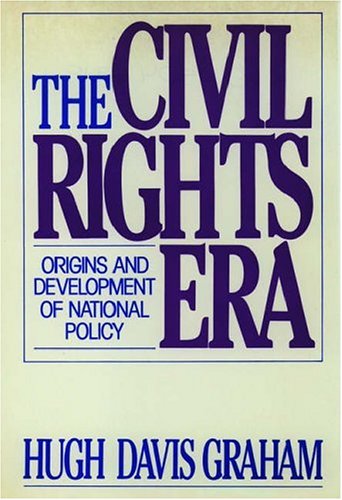
Synopsis
The civil rights era conjures up a wide range of dramatic images--sit-ins at segregated diners, burning churches, the massive march on Washington, police dogs and firehoses turned on protesters, and Dr. Martin Luther King, Jr., lying dead from an assassin's bullet. But off the streets another civil rights struggle was also waged, less violent and far less visible but no less momentous, as the vast machinery of the Federal government turned to the task of securing equal rights.
The Civil Rights Era offers the first comprehensive history of this other side of the battle for civil rights. Based on extensive research in the Kennedy, Johnson, and Nixon presidential archives, the National Archives, and special collections of the Library of Congress, this groundbreaking study recreates the intense debates in Congress and the White House that led to the breakthrough laws of 1964 and 1965--the Civil Rights Act and the Voting Rights Act--which banned discrimination against minorities and women. Graham then follows the implementation of these policies through a thickening maze of federal agencies and court decisions. In so doing, he reveals exactly how, in the dozen years from Kennedy through Nixon, the classic liberal agenda of non-discrimination evolved into the controversial program of affirmative action. Lyndon Johnson emerges as a key figure, but surprisingly enough, it was Richard Nixon who established the preferential quotas of the Philadelphia Plan. There are other surprising findings as well: for instance, Graham argues that despite similarities in rhetoric and tactics, the black civil rights and feminist movements during the 1960s switched philosophical positions. While black organizations shifted their demands from a "color-blind Constitution" to racial preferences, feminist leaders rejected special-protection laws in favor of the Equal Rights Amendment.
The Civil Rights Era represents the definitive account of a revolution in government policy, offering keen insight into the civil rights legacy currently being challenged by the Supreme Court. Brilliantly researched and intelligently written, it offers a behind-the-scenes look at a pivotal moment in American history.
"synopsis" may belong to another edition of this title.
About the Author
About the Author:
Hugh Davis Graham is Professor of History and Policy Sciences at the University of Maryland, Baltimore County, and is the author of The Uncertain Triumph.
Reviews
Graham (history, Univ. of Maryland) has taken a unique approach to the civil rights revolution of the 1960s and 1970s. He has eschewed the dramatic--protests, violence--to focus on "the obscure and complex phase of implementation" of laws. This work, then, becomes the first administrative history of this movement. Central to Graham's approach is a clear sense of irony, as he traces a tortuous bureaucratic path. What began in the early 1960s as "negative" laws and regulations to protect blacks from discrimination became in the 1970s affirmative action decisions, which included women as well as blacks. The book is a major milestone in the study of recent American life and politics. Given its thoroughness and complexity, it will be most useful for experts in the field.
- Anthony O. Edmonds, Ball State Univ., Muncie, Ind.
Copyright 1990 Reed Business Information, Inc.
"About this title" may belong to another edition of this title.
Search results for The Civil Rights Era: Origins and Development of National...

Stock Image
The Civil Rights Era: Origins and Development of National Policy, 1960-1972
Published by
Oxford University Press, 1990
ISBN 10: 0195045319
ISBN 13: 9780195045314
Used
Hardcover
Seller: World of Books (was SecondSale), Montgomery, IL, U.S.A.
Seller rating 5 out of 5 stars

Hardback. Condition: Good. The civil rights era conjures up a wide range of dramatic images--sit-ins at segregated diners, burning churches, the massive march on Washington, police dogs and firehoses turned on protesters, and Dr. Martin Luther King, Jr., lying dead from an assassin's bullet. But off the streets another civil rights struggle was also waged, less violent and far less visible but no less momentous, as the vast machinery of the Federal government turned to the task of securing equal rights. The Civil Rights Era offers the first comprehensive history of this other side of the battle for civil rights. Based on extensive research in the Kennedy, Johnson, and Nixon presidential archives, the National Archives, and special collections of the Library of Congress, this groundbreaking study recreates the intense debates in Congress and the White House that led to the breakthrough laws of 1964 and 1965--the Civil Rights Act and the Voting Rights Act--which banned discrimination against minorities and women. Graham then follows the implementation of these policies through a thickening maze of federal agencies and court decisions. In so doing, he reveals exactly how, in the dozen years from Kennedy through Nixon, the classic liberal agenda of non-discrimination evolved into the controversial program of affirmative action. Lyndon Johnson emerges as a key figure, but surprisingly enough, it was Richard Nixon who established the preferential quotas of the Philadelphia Plan. There are other surprising findings as well: for instance, Graham argues that despite similarities in rhetoric and tactics, the black civil rights and feminist movements during the 1960s switched philosophical positions. While black organizations shifted their demands from a color-blind Constitution to racial preferences, feminist leaders rejected special-protection laws in favor of the Equal Rights Amendment. The Civil Rights Era represents the definitive account of a revolution in government policy, offering keen insight into the civil rights legacy currently being challenged by the Supreme Court. Brilliantly researched and intelligently written, it offers a behind-the-scenes look at a pivotal moment in American history. Seller Inventory # 00109815669
Stock Image
The Civil Rights Era: Origins and Development of National Policy, 1960-1972
Published by
Oxford University Press, 1990
ISBN 10: 0195045319
ISBN 13: 9780195045314
Used
Hardcover
Seller: World of Books (was SecondSale), Montgomery, IL, U.S.A.
Seller rating 5 out of 5 stars
Hardback. Condition: Fair. The civil rights era conjures up a wide range of dramatic images--sit-ins at segregated diners, burning churches, the massive march on Washington, police dogs and firehoses turned on protesters, and Dr. Martin Luther King, Jr., lying dead from an assassin's bullet. But off the streets another civil rights struggle was also waged, less violent and far less visible but no less momentous, as the vast machinery of the Federal government turned to the task of securing equal rights. The Civil Rights Era offers the first comprehensive history of this other side of the battle for civil rights. Based on extensive research in the Kennedy, Johnson, and Nixon presidential archives, the National Archives, and special collections of the Library of Congress, this groundbreaking study recreates the intense debates in Congress and the White House that led to the breakthrough laws of 1964 and 1965--the Civil Rights Act and the Voting Rights Act--which banned discrimination against minorities and women. Graham then follows the implementation of these policies through a thickening maze of federal agencies and court decisions. In so doing, he reveals exactly how, in the dozen years from Kennedy through Nixon, the classic liberal agenda of non-discrimination evolved into the controversial program of affirmative action. Lyndon Johnson emerges as a key figure, but surprisingly enough, it was Richard Nixon who established the preferential quotas of the Philadelphia Plan. There are other surprising findings as well: for instance, Graham argues that despite similarities in rhetoric and tactics, the black civil rights and feminist movements during the 1960s switched philosophical positions. While black organizations shifted their demands from a color-blind Constitution to racial preferences, feminist leaders rejected special-protection laws in favor of the Equal Rights Amendment. The Civil Rights Era represents the definitive account of a revolution in government policy, offering keen insight into the civil rights legacy currently being challenged by the Supreme Court. Brilliantly researched and intelligently written, it offers a behind-the-scenes look at a pivotal moment in American history. Seller Inventory # 00105342148
Stock Image
The Civil Rights Era: Origins and Development of National Policy, 1960-1972
Published by
Oxford University Press, 1990
ISBN 10: 0195045319
ISBN 13: 9780195045314
Used
Hardcover
Seller: ThriftBooks-Dallas, Dallas, TX, U.S.A.
Seller rating 5 out of 5 stars
Hardcover. Condition: Fair. No Jacket. Readable copy. Pages may have considerable notes/highlighting. ~ ThriftBooks: Read More, Spend Less. Seller Inventory # G0195045319I5N00
Stock Image
The Civil Rights Era: Origins and Development of National Policy, 1960-1972
Published by
Oxford University Press, 1990
ISBN 10: 0195045319
ISBN 13: 9780195045314
Used
Hardcover
Seller: ThriftBooks-Dallas, Dallas, TX, U.S.A.
Seller rating 5 out of 5 stars
Hardcover. Condition: Good. No Jacket. Pages can have notes/highlighting. Spine may show signs of wear. ~ ThriftBooks: Read More, Spend Less. Seller Inventory # G0195045319I3N00
Stock Image
The Civil Rights Era: Origins and Development of National Policy, 1960-1972
Published by
Oxford University Press, 1990
ISBN 10: 0195045319
ISBN 13: 9780195045314
Used
Hardcover
Seller: ThriftBooks-Atlanta, AUSTELL, GA, U.S.A.
Seller rating 5 out of 5 stars
Hardcover. Condition: Fair. No Jacket. Missing dust jacket; Readable copy. Pages may have considerable notes/highlighting. ~ ThriftBooks: Read More, Spend Less. Seller Inventory # G0195045319I5N01
Stock Image
The Civil Rights Era : Origins and Development of National Policy, 1960-1972
Published by
Oxford University Press, Incorporated, 1990
ISBN 10: 0195045319
ISBN 13: 9780195045314
Used
Hardcover
Seller: Better World Books: West, Reno, NV, U.S.A.
Seller rating 5 out of 5 stars
Condition: Good. Former library copy. Pages intact with minimal writing/highlighting. The binding may be loose and creased. Dust jackets/supplements are not included. Includes library markings. Stock photo provided. Product includes identifying sticker. Better World Books: Buy Books. Do Good. Seller Inventory # GRP96733497
Stock Image
The Civil Rights Era : Origins and Development of National Policy, 1960-1972
Published by
Oxford University Press, Incorporated, 1990
ISBN 10: 0195045319
ISBN 13: 9780195045314
Used
Hardcover
Seller: Better World Books, Mishawaka, IN, U.S.A.
Seller rating 5 out of 5 stars
Condition: Good. Former library copy. Pages intact with minimal writing/highlighting. The binding may be loose and creased. Dust jackets/supplements are not included. Includes library markings. Stock photo provided. Product includes identifying sticker. Better World Books: Buy Books. Do Good. Seller Inventory # GRP96733497
Stock Image
The Civil Rights Era: Origins and Development of National Policy, 1960-1972
Published by
Oxford University Press, 1990
ISBN 10: 0195045319
ISBN 13: 9780195045314
Used
Hardcover
Seller: HPB-Red, Dallas, TX, U.S.A.
Seller rating 5 out of 5 stars
hardcover. Condition: Good. Connecting readers with great books since 1972! Used textbooks may not include companion materials such as access codes, etc. May have some wear or writing/highlighting. We ship orders daily and Customer Service is our top priority! Seller Inventory # S_376541633
Stock Image
The Civil Rights Era: Origins and Development of National Policy, 1960-1972
Published by
Oxford University Press, 1990
ISBN 10: 0195045319
ISBN 13: 9780195045314
Used
Hardcover
Seller: World of Books Inc, Montgomery, IL, U.S.A.
Seller rating 4 out of 5 stars

Hardback. Condition: Fair. The civil rights era conjures up a wide range of dramatic images--sit-ins at segregated diners, burning churches, the massive march on Washington, police dogs and firehoses turned on protesters, and Dr. Martin Luther King, Jr., lying dead from an assassin's bullet. But off the streets another civil rights struggle was also waged, less violent and far less visible but no less momentous, as the vast machinery of the Federal government turned to the task of securing equal rights. The Civil Rights Era offers the first comprehensive history of this other side of the battle for civil rights. Based on extensive research in the Kennedy, Johnson, and Nixon presidential archives, the National Archives, and special collections of the Library of Congress, this groundbreaking study recreates the intense debates in Congress and the White House that led to the breakthrough laws of 1964 and 1965--the Civil Rights Act and the Voting Rights Act--which banned discrimination against minorities and women. Graham then follows the implementation of these policies through a thickening maze of federal agencies and court decisions. In so doing, he reveals exactly how, in the dozen years from Kennedy through Nixon, the classic liberal agenda of non-discrimination evolved into the controversial program of affirmative action. Lyndon Johnson emerges as a key figure, but surprisingly enough, it was Richard Nixon who established the preferential quotas of the Philadelphia Plan. There are other surprising findings as well: for instance, Graham argues that despite similarities in rhetoric and tactics, the black civil rights and feminist movements during the 1960s switched philosophical positions. While black organizations shifted their demands from a color-blind Constitution to racial preferences, feminist leaders rejected special-protection laws in favor of the Equal Rights Amendment. The Civil Rights Era represents the definitive account of a revolution in government policy, offering keen insight into the civil rights legacy currently being challenged by the Supreme Court. Brilliantly researched and intelligently written, it offers a behind-the-scenes look at a pivotal moment in American history. Seller Inventory # CIN0195045319A
Stock Image
The Civil Rights Era: Origins and Development of National Policy, 1960-1972
Published by
Oxford University Press, 1990
ISBN 10: 0195045319
ISBN 13: 9780195045314
Used
Hardcover
Seller: World of Books Inc, Montgomery, IL, U.S.A.
Seller rating 4 out of 5 stars
Hardback. Condition: Good. The civil rights era conjures up a wide range of dramatic images--sit-ins at segregated diners, burning churches, the massive march on Washington, police dogs and firehoses turned on protesters, and Dr. Martin Luther King, Jr., lying dead from an assassin's bullet. But off the streets another civil rights struggle was also waged, less violent and far less visible but no less momentous, as the vast machinery of the Federal government turned to the task of securing equal rights. The Civil Rights Era offers the first comprehensive history of this other side of the battle for civil rights. Based on extensive research in the Kennedy, Johnson, and Nixon presidential archives, the National Archives, and special collections of the Library of Congress, this groundbreaking study recreates the intense debates in Congress and the White House that led to the breakthrough laws of 1964 and 1965--the Civil Rights Act and the Voting Rights Act--which banned discrimination against minorities and women. Graham then follows the implementation of these policies through a thickening maze of federal agencies and court decisions. In so doing, he reveals exactly how, in the dozen years from Kennedy through Nixon, the classic liberal agenda of non-discrimination evolved into the controversial program of affirmative action. Lyndon Johnson emerges as a key figure, but surprisingly enough, it was Richard Nixon who established the preferential quotas of the Philadelphia Plan. There are other surprising findings as well: for instance, Graham argues that despite similarities in rhetoric and tactics, the black civil rights and feminist movements during the 1960s switched philosophical positions. While black organizations shifted their demands from a color-blind Constitution to racial preferences, feminist leaders rejected special-protection laws in favor of the Equal Rights Amendment. The Civil Rights Era represents the definitive account of a revolution in government policy, offering keen insight into the civil rights legacy currently being challenged by the Supreme Court. Brilliantly researched and intelligently written, it offers a behind-the-scenes look at a pivotal moment in American history. Seller Inventory # CIN0195045319G