
Items related to Simulating Humans: Computer Graphics Animation and...
Synopsis
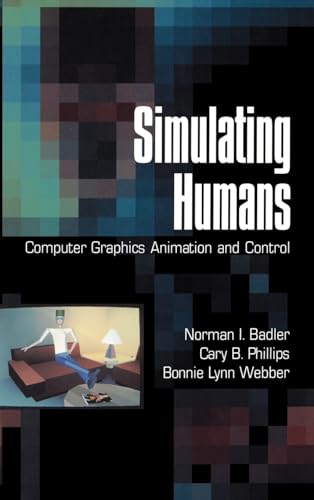
During the past decade, high-performance computer graphics have found application in an exciting and expanding range of new domains. Among the most dramatic developments has been the incorporation of real-time interactive manipulation and display for human figures. Though actively pursued by several research groups, the problem of providing a synthetic or surrogate human for engineers and designers already familiar with computer-aided design techniques was most comprehensively solved by Norman Badler's computer graphics laboratory at the University of Pennsylvania. The breadth of that effort as well as the details of its methodology and software environment are presented in this volume. The book is intended for human factors engineers interested in understanding how a computer-graphics surrogate human can augment their analyses of designed environments. It will also inform design engineers of the state of the art in human figure modeling, and hence of the human-centered design central to the emergent concept of concurrent engineering. In fulfilling these goals, the book additionally documents for the entire computer graphics community a major research effort in the interactive control of articulated human figures.
"synopsis" may belong to another edition of this title.
About the Author
Bonnie Lynn Webber is Professor of Computer and Information Science at the University of Pennsylvania.
From the Back Cover
During the past decade, high-performance computer graphics have found application in an exciting and expanding range of new domains. Among the most dramatic developments has been the incorporation of real-time interactive manipulation and display for human figures. Though actively pursued by several research groups, the problem of providing a synthetic or surrogate human for engineers and designers already familiar with computer-aided design techniques was most comprehensively solved by Norman Badler's Computer Graphics Laboratory at the University of Pennsylvania. The breadth of that effort as well as the details of its methodology and software environment are presented in this volume. The book is intended for human factors engineers interested in understanding how a computer-graphics surrogate human can augment their analyses of designed environments. It will also inform design engineers of the state of the art in human figure modeling, and hence of the human-centered design central to the emergent concept of concurrent engineering. In fulfilling these goals, the book additionally documents for the entire computer graphics community a major research effort in the interactive control of articulated human figures.
"About this title" may belong to another edition of this title.
Search results for Simulating Humans: Computer Graphics Animation and...

Stock Image
Simulating Humans: Computer Graphics Animation and Control
Published by
Oxford University Press, 1993
ISBN 10: 0195073592
ISBN 13: 9780195073591
Used
Hardcover
Seller: ThriftBooks-Dallas, Dallas, TX, U.S.A.
Seller rating 5 out of 5 stars

Hardcover. Condition: Very Good. No Jacket. May have limited writing in cover pages. Pages are unmarked. ~ ThriftBooks: Read More, Spend Less. Seller Inventory # G0195073592I4N00
Stock Image
Simulating Humans: Computer Graphics, Animation, and Control (eng)
Print on DemandSeller: Brook Bookstore On Demand, Napoli, NA, Italy
Seller rating 5 out of 5 stars
Condition: new. Questo è un articolo print on demand. Seller Inventory # 0b6c8d7311b4eac3c190084501f1826e
Buy New
US$ 264.17
US$ 7.63 shipping
Ships from Italy to U.S.A.
Ships from Italy to U.S.A.
Quantity: Over 20 available
Seller Image
Simulating Humans : Computer Graphics Animation and Control
Seller: GreatBookPrices, Columbia, MD, U.S.A.
Seller rating 5 out of 5 stars
Condition: New. Seller Inventory # 73612-n
Seller Image
Simulating Humans : Computer Graphics Animation and Control
Published by
Oxford University Press, 1993
ISBN 10: 0195073592
ISBN 13: 9780195073591
Used
Hardcover
Seller: GreatBookPrices, Columbia, MD, U.S.A.
Seller rating 5 out of 5 stars
Condition: As New. Unread book in perfect condition. Seller Inventory # 73612
Stock Image
Simulating Humans
Print on DemandSeller: PBShop.store US, Wood Dale, IL, U.S.A.
Seller rating 5 out of 5 stars
HRD. Condition: New. New Book. Shipped from UK. THIS BOOK IS PRINTED ON DEMAND. Established seller since 2000. Seller Inventory # L1-9780195073591
Stock Image
Simulating Humans
Print on DemandSeller: PBShop.store UK, Fairford, GLOS, United Kingdom
Seller rating 5 out of 5 stars
HRD. Condition: New. New Book. Delivered from our UK warehouse in 4 to 14 business days. THIS BOOK IS PRINTED ON DEMAND. Established seller since 2000. Seller Inventory # L1-9780195073591
Buy New
US$ 310.06
US$ 6.64 shipping
Ships from United Kingdom to U.S.A.
Ships from United Kingdom to U.S.A.
Quantity: Over 20 available
Seller Image
Simulating Humans : Computer Graphics Animation and Control
Seller: GreatBookPricesUK, Woodford Green, United Kingdom
Seller rating 5 out of 5 stars
Condition: New. Seller Inventory # 73612-n
Buy New
US$ 310.04
US$ 19.83 shipping
Ships from United Kingdom to U.S.A.
Ships from United Kingdom to U.S.A.
Quantity: Over 20 available
Stock Image
Simulating Humans: Computer Graphics Animation and Control
Seller: Ria Christie Collections, Uxbridge, United Kingdom
Seller rating 5 out of 5 stars
Condition: New. In English. Seller Inventory # ria9780195073591_new
Buy New
US$ 335.34
US$ 14.92 shipping
Ships from United Kingdom to U.S.A.
Ships from United Kingdom to U.S.A.
Quantity: Over 20 available
Seller Image
Simulating Humans
Published by
Oxford University Press Inc, US, 1993
ISBN 10: 0195073592
ISBN 13: 9780195073591
New
Hardcover
Seller: Rarewaves.com USA, London, LONDO, United Kingdom
Seller rating 5 out of 5 stars
Hardback. Condition: New. Though actively pursued by several research groups, the problem of providing a synthetic or surrogate human for an engineer or designer already used to Computer Aided Design techniques has been most comprehensively solved by Norman Badler's computer graphics laboratory at the University of Pennsylvania - one of the world leaders in the field of simulated human figures in computer graphics. For human factors engineers, this book provides current knowledge of how a computer graphics surrogate human can augment their analyses of designed environments; for design engineers it presents the cutting edge in human figure modelling and hence human-centred design and for the computer graphics community it presents a major research effort in the interactive control of articulated human figures. This book constitutes the state of the art in simulating human figures, discusses the many areas of application and predicts the future in this exciting, fast moving field. Seller Inventory # LU-9780195073591
Buy New
US$ 353.60
Free Shipping
Ships from United Kingdom to U.S.A.
Ships from United Kingdom to U.S.A.
Quantity: Over 20 available
Seller Image
Simulating Humans : Computer Graphics Animation and Control
Published by
Oxford University Press, 1993
ISBN 10: 0195073592
ISBN 13: 9780195073591
Used
Hardcover
Seller: GreatBookPricesUK, Woodford Green, United Kingdom
Seller rating 5 out of 5 stars
Condition: As New. Unread book in perfect condition. Seller Inventory # 73612
Buy Used
US$ 337.55
US$ 19.83 shipping
Ships from United Kingdom to U.S.A.
Ships from United Kingdom to U.S.A.
Quantity: Over 20 available