
Items related to The Color of America Has Changed: How Racial Diversity...
The Color of America Has Changed: How Racial Diversity Shaped Civil Rights Reform in California, 1941-1978 - Hardcover
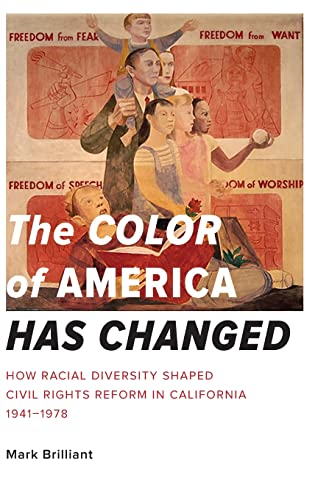
Synopsis
From the moment that the attack on the "problem of the color line," as W.E.B. DuBois famously characterized the problem of the twentieth century, began to gather momentum nationally during World War II, California demonstrated that the problem was one of color lines.
In The Color of America Has Changed, Mark Brilliant examines California's history to illustrate how the civil rights era was a truly nationwide and multiracial phenomenon-one that was shaped and complicated by the presence of not only blacks and whites, but also Mexican Americans, Japanese Americans, and Chinese Americans, among others. Focusing on a wide range of legal and legislative initiatives pursued by a diverse group of reformers, Brilliant analyzes the cases that dismantled the state's multiracial system of legalized segregation in the 1940s and subsequent battles over fair employment practices, old-age pensions for long-term resident non-citizens, fair housing, agricultural labor, school desegregation, and bilingual education. He concludes with the conundrum created by the multiracial affirmative action program at issue in the United States Supreme Court's 1978 Regents of the University of California v. Bakke decision. The Golden State's status as a civil rights vanguard for the nation owes in part to the numerous civil rights precedents set there and to the disparate challenges of civil rights reform in multiracial places.
While civil rights historians have long set their sights on the South and recently have turned their attention to the North, advancing a "long civil rights movement" interpretation, Mark Brilliant calls for a new understanding of civil rights history that more fully reflects the racial diversity of America.
"synopsis" may belong to another edition of this title.
About the Author
Mark Brilliant is an Assistant Professor of History and American Studies at the University of California, Berkeley.
"About this title" may belong to another edition of this title.
Search results for The Color of America Has Changed: How Racial Diversity...

Stock Image
The Color of America Has Changed: How Racial Diversity Shaped Civil Rights Reform in California, 1941-1978
Published by
Oxford University Press Inc, 2010
ISBN 10: 0195160509
ISBN 13: 9780195160505
Used
Hardcover
Seller: World of Books (was SecondSale), Montgomery, IL, U.S.A.
Seller rating 5 out of 5 stars

Hardback. Condition: Fair. Historians of the Civil Rights Movement have long set their sights on the struggles of African Americans in the South and, more recently, North. In doing so, they either omit the West or merge it with the North, defined as anything outside the former Confederacy. Historians of the American West have long set the region apart from the South and North, citing racial diversity as one of the West's defining characteristics. This book integrates the two, examining the Civil Rights Movement in the West in order to bring the West to the Civil Rights Movement. In particular, it explores the challenge that California's racial diversity posed for building a multiracial civil rights movement, focusing on litigation and legislation initiatives advanced by civil rights reformers (lawyers, legislators, and advocacy organizations) on behalf of the state's different racial groups. A tension between sameness and difference cut through California's civil rights history. On the one hand, the state's civil rights reformers embraced a common goal - equality of opportunity through anti-discrimination litigation and legislation. To this end, they often analogized the plights of racial minorities, accentuating the racism in general that each group faced in order to help facilitate coalition building across groups. This tension - and its implications for the cultivation of a multiracial civil rights movement - manifested itself from the moment that one San Francisco-based NAACP leader expressed his wish for "a united front of all the minority groups" in 1944. Variations proved major enough to force the litigation down discrete paths, reflective of how legalized segregation affected African Americans, Japanese Americans, and Mexican Americans in different ways. This "same but different" tension continued into the 1950s and 1960s, as civil rights reformers ventured down anti-discrimination roads that began where legalized segregation ended. In the end, despite their endorsement of a common goal and calls for a common struggle, California's civil rights reformers managed to secure little coalescence - and certainly nothing comparable to the movement in the South. Instead, the state's civil rights struggles unfolded along paths that were mostly separate. The different axes of racialized discrimination that confronted the state's different racialized groups called forth different avenues of redress, creating a civil rights landscape criss-crossed with color lines rather than bi-sected by any single color line. Seller Inventory # 00105982264
Stock Image
The Color of America Has Changed: How Racial Diversity Shaped Civil Rights Reform in California, 1941-1978
Published by
Oxford University Press Inc, 2010
ISBN 10: 0195160509
ISBN 13: 9780195160505
Used
Hardcover
Seller: World of Books (was SecondSale), Montgomery, IL, U.S.A.
Seller rating 5 out of 5 stars
Hardback. Condition: Good. Historians of the Civil Rights Movement have long set their sights on the struggles of African Americans in the South and, more recently, North. In doing so, they either omit the West or merge it with the North, defined as anything outside the former Confederacy. Historians of the American West have long set the region apart from the South and North, citing racial diversity as one of the West's defining characteristics. This book integrates the two, examining the Civil Rights Movement in the West in order to bring the West to the Civil Rights Movement. In particular, it explores the challenge that California's racial diversity posed for building a multiracial civil rights movement, focusing on litigation and legislation initiatives advanced by civil rights reformers (lawyers, legislators, and advocacy organizations) on behalf of the state's different racial groups. A tension between sameness and difference cut through California's civil rights history. On the one hand, the state's civil rights reformers embraced a common goal - equality of opportunity through anti-discrimination litigation and legislation. To this end, they often analogized the plights of racial minorities, accentuating the racism in general that each group faced in order to help facilitate coalition building across groups. This tension - and its implications for the cultivation of a multiracial civil rights movement - manifested itself from the moment that one San Francisco-based NAACP leader expressed his wish for "a united front of all the minority groups" in 1944. Variations proved major enough to force the litigation down discrete paths, reflective of how legalized segregation affected African Americans, Japanese Americans, and Mexican Americans in different ways. This "same but different" tension continued into the 1950s and 1960s, as civil rights reformers ventured down anti-discrimination roads that began where legalized segregation ended. In the end, despite their endorsement of a common goal and calls for a common struggle, California's civil rights reformers managed to secure little coalescence - and certainly nothing comparable to the movement in the South. Instead, the state's civil rights struggles unfolded along paths that were mostly separate. The different axes of racialized discrimination that confronted the state's different racialized groups called forth different avenues of redress, creating a civil rights landscape criss-crossed with color lines rather than bi-sected by any single color line. Seller Inventory # 00102968838
Stock Image
The Color of America Has Changed: How Racial Diversity Shaped Civil Rights Reform in California, 1941-1978
Published by
Oxford University Press, 2010
ISBN 10: 0195160509
ISBN 13: 9780195160505
Used
Hardcover
Seller: HPB-Red, Dallas, TX, U.S.A.
Seller rating 5 out of 5 stars
hardcover. Condition: Good. Connecting readers with great books since 1972! Used textbooks may not include companion materials such as access codes, etc. May have some wear or writing/highlighting. We ship orders daily and Customer Service is our top priority! Seller Inventory # S_465290051
Stock Image
The Color of America Has Changed: How Racial Diversity Shaped Civil Rights Reform in California, 1941-1978
Published by
Oxford University Press, USA, 2010
ISBN 10: 0195160509
ISBN 13: 9780195160505
Used
Hardcover
Seller: Bookmans, Tucson, AZ, U.S.A.
Seller rating 5 out of 5 stars
Hardcover. Condition: Good. . Satisfaction 100% guaranteed. Seller Inventory # mon0002618938
Stock Image
The Color of America Has Changed: How Racial Diversity Shaped Civil Rights Reform in California, 1941-1978
Published by
Oxford University Press Inc, 2010
ISBN 10: 0195160509
ISBN 13: 9780195160505
Used
Hardcover
Seller: World of Books Inc, Montgomery, IL, U.S.A.
Seller rating 4 out of 5 stars

Hardback. Condition: Fair. Historians of the Civil Rights Movement have long set their sights on the struggles of African Americans in the South and, more recently, North. In doing so, they either omit the West or merge it with the North, defined as anything outside the former Confederacy. Historians of the American West have long set the region apart from the South and North, citing racial diversity as one of the West's defining characteristics. This book integrates the two, examining the Civil Rights Movement in the West in order to bring the West to the Civil Rights Movement. In particular, it explores the challenge that California's racial diversity posed for building a multiracial civil rights movement, focusing on litigation and legislation initiatives advanced by civil rights reformers (lawyers, legislators, and advocacy organizations) on behalf of the state's different racial groups. A tension between sameness and difference cut through California's civil rights history. On the one hand, the state's civil rights reformers embraced a common goal - equality of opportunity through anti-discrimination litigation and legislation. To this end, they often analogized the plights of racial minorities, accentuating the racism in general that each group faced in order to help facilitate coalition building across groups. This tension - and its implications for the cultivation of a multiracial civil rights movement - manifested itself from the moment that one San Francisco-based NAACP leader expressed his wish for "a united front of all the minority groups" in 1944. Variations proved major enough to force the litigation down discrete paths, reflective of how legalized segregation affected African Americans, Japanese Americans, and Mexican Americans in different ways. This "same but different" tension continued into the 1950s and 1960s, as civil rights reformers ventured down anti-discrimination roads that began where legalized segregation ended. In the end, despite their endorsement of a common goal and calls for a common struggle, California's civil rights reformers managed to secure little coalescence - and certainly nothing comparable to the movement in the South. Instead, the state's civil rights struggles unfolded along paths that were mostly separate. The different axes of racialized discrimination that confronted the state's different racialized groups called forth different avenues of redress, creating a civil rights landscape criss-crossed with color lines rather than bi-sected by any single color line. Seller Inventory # CIN0195160509A
Stock Image
The Color of America Has Changed: How Racial Diversity Shaped Civil Rights Reform in California, 1941-1978
Published by
Oxford University Press Inc, 2010
ISBN 10: 0195160509
ISBN 13: 9780195160505
Used
Hardcover
Seller: World of Books Inc, Montgomery, IL, U.S.A.
Seller rating 4 out of 5 stars
Hardback. Condition: Good. Historians of the Civil Rights Movement have long set their sights on the struggles of African Americans in the South and, more recently, North. In doing so, they either omit the West or merge it with the North, defined as anything outside the former Confederacy. Historians of the American West have long set the region apart from the South and North, citing racial diversity as one of the West's defining characteristics. This book integrates the two, examining the Civil Rights Movement in the West in order to bring the West to the Civil Rights Movement. In particular, it explores the challenge that California's racial diversity posed for building a multiracial civil rights movement, focusing on litigation and legislation initiatives advanced by civil rights reformers (lawyers, legislators, and advocacy organizations) on behalf of the state's different racial groups. A tension between sameness and difference cut through California's civil rights history. On the one hand, the state's civil rights reformers embraced a common goal - equality of opportunity through anti-discrimination litigation and legislation. To this end, they often analogized the plights of racial minorities, accentuating the racism in general that each group faced in order to help facilitate coalition building across groups. This tension - and its implications for the cultivation of a multiracial civil rights movement - manifested itself from the moment that one San Francisco-based NAACP leader expressed his wish for "a united front of all the minority groups" in 1944. Variations proved major enough to force the litigation down discrete paths, reflective of how legalized segregation affected African Americans, Japanese Americans, and Mexican Americans in different ways. This "same but different" tension continued into the 1950s and 1960s, as civil rights reformers ventured down anti-discrimination roads that began where legalized segregation ended. In the end, despite their endorsement of a common goal and calls for a common struggle, California's civil rights reformers managed to secure little coalescence - and certainly nothing comparable to the movement in the South. Instead, the state's civil rights struggles unfolded along paths that were mostly separate. The different axes of racialized discrimination that confronted the state's different racialized groups called forth different avenues of redress, creating a civil rights landscape criss-crossed with color lines rather than bi-sected by any single color line. Seller Inventory # CIN0195160509G
Seller Image
The Color of America Has Changed: How Racial Diversity Shaped Civil Rights Reform in California, 1941-1978
Published by
Oxford University Press, 2010
ISBN 10: 0195160509
ISBN 13: 9780195160505
Used
Hardcover
Seller: Goodwill of Silicon Valley, SAN JOSE, CA, U.S.A.
Seller rating 4 out of 5 stars
Condition: very_good. Supports Goodwill of Silicon Valley job training programs. The cover and pages are in very good condition! The cover and any other included accessories are also in very good condition showing some minor use. The spine is straight, there are no rips tears or creases on the cover or the pages. Seller Inventory # GWSVV.0195160509.VG
Seller Image
The Color of America Has Changed: How Racial Diversity Shaped Civil Rights Reform in California, 1941-1978
Published by
Oxford University Press, NY, 2010
ISBN 10: 0195160509
ISBN 13: 9780195160505
Used
Hardcover
Seller: Kenneth Mallory Bookseller ABAA, Decatur, GA, U.S.A.
Seller rating 5 out of 5 stars
Hardcover. Condition: Very Good. Hardcover. xii, 349pp+ index. Very good hardback in a very good dustjacket. Seller Inventory # 30701
Stock Image
The Color of America Has Changed: How Racial Diversity Shaped Civil Rights Reform in California, 1941-1978
Seller: GoldBooks, Denver, CO, U.S.A.
Seller rating 5 out of 5 stars
Hardcover. Condition: new. New Copy. Customer Service Guaranteed. Seller Inventory # 5N73_53_0195160509
Seller Image
Color of America Has Changed : How Racial Diversity Shaped Civil Rights Reform in California, 1941-1978
Seller: GreatBookPrices, Columbia, MD, U.S.A.
Seller rating 5 out of 5 stars
Condition: New. Seller Inventory # 12113487-n