
Items related to Clear and to the Point: 8 Psychological Principles...
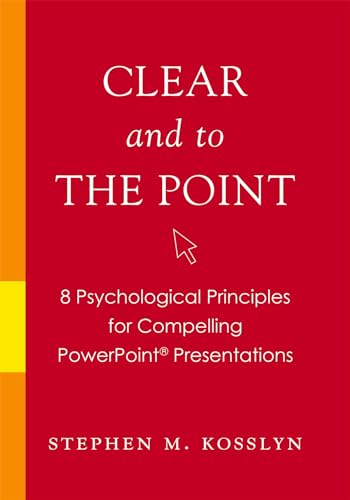
Clear and to the Point: 8 Psychological Principles for Compelling PowerPoint Presentations - Softcover
Synopsis
True or False?
Most PowerPoint presentations are:
BLcompelling BLilluminating BLinformative BLclear and to the point
Answer: False
Make a change following the principles of Stephen Kosslyn:
BLa world authority on the visual brain BLa clear and engaging writer
Making PowerPoint presentations that are clear, compelling, memorable, and even enjoyable is not an obscure art. In this book, Stephen Kosslyn, a renowned cognitive neuroscientist, presents eight simple principles for constructing a presentation that takes advantage of the information modern science has discovered about perception, memory, and cognition. Using hundreds of images and sample slides, he shows the common mistakes many people make and the simple ways to fix them. For example, never use underlining to emphasize a word--the line will cut off the bottom of letters that have descending lines (such as p and g), which interferes with the brain's ability to recognize text. Other tips include why you should state your conclusion at the beginning of a presentation, when to use a line graph versus a bar graph, and how to use color correctly. By following Kosslyn's principles, anyone will be able to produce a presentation that works!
"synopsis" may belong to another edition of this title.
About the Author
Stephen M. Kosslyn is the former Chair of the Department of Psychology, currently Dean of Social Science and John Lindsley Professor of Psychology at Harvard University. A leading authority on the nature of visual mental imagery and visual communication, he has received numerous honors for his work in this field. His previous books include Image and Mind, Wet Mind: The New Cognitive Neuroscience (with Koenig), and Psychology: The Brain, the Person, the World (with Rosenberg).
"About this title" may belong to another edition of this title.
Search results for Clear and to the Point: 8 Psychological Principles...

Stock Image
Clear and to the Point: 8 psychological principles for compelling PowerPoint presentations
Published by
Oxford University Press Inc, 2007
ISBN 10: 0195320697
ISBN 13: 9780195320695
Used
Paperback
Seller: World of Books (was SecondSale), Montgomery, IL, U.S.A.
Seller rating 5 out of 5 stars

Paperback. Condition: Good. Making PowerPoint presentations that are clear, compelling, memorable, and even enjoyable is not an obscure art. In this book, Stephen Kosslyn, a renowned cognitive neuroscientist, presents eight simple principles for constructing a presentation that takes advantage of the information modern science has discovered about perception, memory, and cognition. Using hundreds of images and sample slides, he shows the common mistakes many people make and the simple ways to fix them. For example, never use underlining to emphasize a word, the line will cut off the bottom of letters that have descending lines (such as p and g), which interferes with the brain's ability to recognize text. Other tips include why you should state your conclusion at the beginning of a presentation, when to use a line graph versus a bar graph, and how to use color correctly. By following Kosslyn's principles, anyone will be able to produce a presentation that works! Seller Inventory # 00089656215
Stock Image
Clear and to the Point: 8 psychological principles for compelling PowerPoint presentations
Published by
Oxford University Press Inc, 2007
ISBN 10: 0195320697
ISBN 13: 9780195320695
Used
Paperback
Seller: World of Books (was SecondSale), Montgomery, IL, U.S.A.
Seller rating 5 out of 5 stars
Paperback. Condition: Very Good. Making PowerPoint presentations that are clear, compelling, memorable, and even enjoyable is not an obscure art. In this book, Stephen Kosslyn, a renowned cognitive neuroscientist, presents eight simple principles for constructing a presentation that takes advantage of the information modern science has discovered about perception, memory, and cognition. Using hundreds of images and sample slides, he shows the common mistakes many people make and the simple ways to fix them. For example, never use underlining to emphasize a word, the line will cut off the bottom of letters that have descending lines (such as p and g), which interferes with the brain's ability to recognize text. Other tips include why you should state your conclusion at the beginning of a presentation, when to use a line graph versus a bar graph, and how to use color correctly. By following Kosslyn's principles, anyone will be able to produce a presentation that works! Seller Inventory # 00107620948
Stock Image
Clear and to the Point: 8 Psychological Principles for Compelling PowerPoint Presentations
Published by
Oxford University Press, 2007
ISBN 10: 0195320697
ISBN 13: 9780195320695
Used
paperback
Seller: Your Online Bookstore, Houston, TX, U.S.A.
Seller rating 5 out of 5 stars
paperback. Condition: Very Good. Seller Inventory # 0195320697-2-35150539
Seller Image
Clear and to the Point: 8 Psychological Principles for Compelling PowerPoint Presentations
Published by
Oxford University Press, 2007
ISBN 10: 0195320697
ISBN 13: 9780195320695
Used
Softcover
Seller: Zoom Books East, Glendale Heights, IL, U.S.A.
Seller rating 5 out of 5 stars
Condition: good. Book is in good condition and may include underlining highlighting and minimal wear. The book can also include "From the library of" labels. May not contain miscellaneous items toys, dvds, etc. . We offer 100% money back guarantee and 24 7 customer service. Seller Inventory # ZEV.0195320697.G
Stock Image
Clear and to the Point: 8 Psychological Principles for Compelling PowerPoint Presentations
Published by
Oxford University Press (edition 1), 2007
ISBN 10: 0195320697
ISBN 13: 9780195320695
Used
Paperback
Seller: BooksRun, Philadelphia, PA, U.S.A.
Seller rating 5 out of 5 stars
Paperback. Condition: Very Good. 1. It's a well-cared-for item that has seen limited use. The item may show minor signs of wear. All the text is legible, with all pages included. It may have slight markings and/or highlighting. Seller Inventory # 0195320697-11-18
Stock Image
Clear and to the Point: 8 Psychological Principles for Compelling PowerPoint Presentations
Published by
Oxford University Press (edition 1), 2007
ISBN 10: 0195320697
ISBN 13: 9780195320695
Used
Paperback
Seller: BooksRun, Philadelphia, PA, U.S.A.
Seller rating 5 out of 5 stars
Paperback. Condition: Very Good. 1. It's a well-cared-for item that has seen limited use. The item may show minor signs of wear. All the text is legible, with all pages included. It may have slight markings and/or highlighting. Seller Inventory # 0195320697-8-6
Seller Image
Clear and to the Point: 8 Psychological Principles for Compelling PowerPoint Presentations
Published by
Oxford University Press, 2007
ISBN 10: 0195320697
ISBN 13: 9780195320695
Used
Softcover
Seller: Bay State Book Company, North Smithfield, RI, U.S.A.
Seller rating 5 out of 5 stars
Condition: good. The book is in good condition with all pages and cover intact, including the dust jacket if originally issued. The spine may show light wear. Pages may contain some notes or highlighting, and there might be a "From the library of" label. Boxed set packaging, shrink wrap, or included media like CDs may be missing. Seller Inventory # BSM.1FL5X
Stock Image
Clear and to the Point : 8 Psychological Principles for Compelling PowerPoint Presentations
Published by
Oxford University Press, Incorporated, 2007
ISBN 10: 0195320697
ISBN 13: 9780195320695
Used
Softcover
First Edition
Seller: Better World Books, Mishawaka, IN, U.S.A.
Seller rating 5 out of 5 stars
Condition: Fine. 1st Edition. Used book that is in almost brand-new condition. May contain a remainder mark. Better World Books: Buy Books. Do Good. Seller Inventory # 17035861-75
Stock Image
Clear and to the Point : 8 Psychological Principles for Compelling PowerPoint Presentations
Published by
Oxford University Press, Incorporated, 2007
ISBN 10: 0195320697
ISBN 13: 9780195320695
Used
Softcover
First Edition
Seller: Better World Books, Mishawaka, IN, U.S.A.
Seller rating 5 out of 5 stars
Condition: Very Good. 1st Edition. Pages intact with possible writing/highlighting. Binding strong with minor wear. Dust jackets/supplements may not be included. Stock photo provided. Product includes identifying sticker. Better World Books: Buy Books. Do Good. Seller Inventory # 5909322-6
Stock Image
Clear and to the Point : 8 Psychological Principles for Compelling PowerPoint Presentations
Published by
Oxford University Press, Incorporated, 2007
ISBN 10: 0195320697
ISBN 13: 9780195320695
Used
Softcover
First Edition
Seller: Better World Books, Mishawaka, IN, U.S.A.
Seller rating 5 out of 5 stars
Condition: Good. 1st Edition. Former library copy. Pages intact with minimal writing/highlighting. The binding may be loose and creased. Dust jackets/supplements are not included. Includes library markings. Stock photo provided. Product includes identifying sticker. Better World Books: Buy Books. Do Good. Seller Inventory # GRP81803914