
Items related to The Living Constitution (Inalienable Rights)
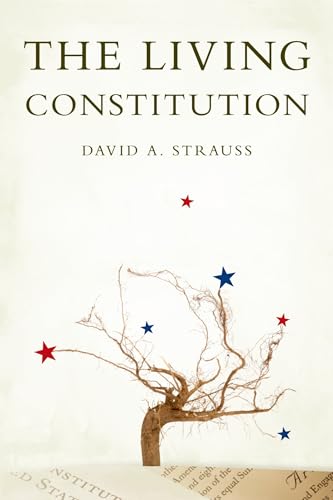
Synopsis
Supreme Court Justice Antonin Scalia once remarked that the theory of an evolving, "living" Constitution effectively "rendered the Constitution useless." He wanted a "dead Constitution," he joked, arguing it must be interpreted as the framers originally understood it.
In The Living Constitution, leading constitutional scholar David Strauss forcefully argues against the claims of Scalia, Clarence Thomas, Robert Bork, and other "originalists," explaining in clear, jargon-free English how the Constitution can sensibly evolve, without falling into the anything-goes flexibility caricatured by opponents. The living Constitution is not an out-of-touch liberal theory, Strauss further shows, but a mainstream tradition of American jurisprudence--a common-law approach to the Constitution, rooted in the written document but also based on precedent. Each generation has contributed precedents that guide and confine judicial rulings, yet allow us to meet the demands of today, not force us to follow the commands of the long-dead Founders. Strauss explores how judicial decisions adapted the Constitution's text (and contradicted original intent) to produce some of our most profound accomplishments: the end of racial segregation, the expansion of women's rights, and the freedom of speech. By contrast, originalism suffers from fatal flaws: the impossibility of truly divining original intent, the difficulty of adapting eighteenth-century understandings to the modern world, and the pointlessness of chaining ourselves to decisions made centuries ago.
David Strauss is one of our leading authorities on Constitutional law--one with practical knowledge as well, having served as Assistant Solicitor General of the United States and argued eighteen cases before the United States Supreme Court. Now he offers a profound new understanding of how the Constitution can remain vital to life in the twenty-first century.
"synopsis" may belong to another edition of this title.
About the Author
David A. Strauss is the Gerald Ratner Distinguished Service Professor of Law at the University of Chicago, and one of the nation's leading constitutional law scholars. He has also served as Special Counsel to the United States Senate Judiciary Committee and Assistant Solicitor General of the United States, and argued eighteen cases before the United States Supreme Court. David Strauss is an editor of the Supreme Court Review.
Reviews
The concept of a living Constitution that evolves over time is not a formula for untethered judicial activism but a necessary—and venerable—mode of interpretation, argues this scintillating treatise. University of Chicago law prof Strauss mounts a devastating attack on originalism (the doctrine most vociferously advocated by Supreme Court Justice Antonin Scalia) that constitutional law should hew to the written Constitution and the intent of its framers; such an approach, Strauss argues, is rife with contradictions, fraudulent history (it's often impossible to know what the framers meant or how they might think about modern-day issues), and ideological bias. The more fruitful—and historically dominant—interpretive school of living constitutionalism, he contends, follows a tacit common-law approach focused less on the text than on judicial precedent and changing notions of fairness and sound policy. Strauss offers meticulous accounts of how common-law processes revolutionized the consensus on core constitutional issues like freedom of speech and civil rights; indeed, he insists, they can transform our understanding of the Constitution more profoundly than formal amendments do. Writing in prose that laymen will find lucid and inviting, Strauss makes the usually fuzzy idea of a living Constitution rigorous and substantive. (May)
Copyright © Reed Business Information, a division of Reed Elsevier Inc. All rights reserved.
"About this title" may belong to another edition of this title.
Search results for The Living Constitution (Inalienable Rights)

Stock Image
The Living Constitution
Published by
Oxford University Press Inc, 2010
ISBN 10: 0195377273
ISBN 13: 9780195377279
Used
Hardcover
Seller: World of Books (was SecondSale), Montgomery, IL, U.S.A.
Seller rating 5 out of 5 stars

Hardback. Condition: Good. In The Living Constitution (part of the Inalienable Rights book series) acclaimed constitutional scholar David Strauss argues that these two approaches are reconcilable. Seller Inventory # 00110930659
Stock Image
The Living Constitution
Published by
Oxford University Press, Incorporated, 2010
ISBN 10: 0195377273
ISBN 13: 9780195377279
Used
Hardcover
Seller: Better World Books, Mishawaka, IN, U.S.A.
Seller rating 5 out of 5 stars
Condition: Good. Former library copy. Pages intact with minimal writing/highlighting. The binding may be loose and creased. Dust jackets/supplements are not included. Includes library markings. Stock photo provided. Product includes identifying sticker. Better World Books: Buy Books. Do Good. Seller Inventory # 325423-6
Stock Image
The Living Constitution
Published by
Oxford University Press, Incorporated, 2010
ISBN 10: 0195377273
ISBN 13: 9780195377279
Used
Hardcover
Seller: Better World Books, Mishawaka, IN, U.S.A.
Seller rating 5 out of 5 stars
Condition: Good. Pages intact with minimal writing/highlighting. The binding may be loose and creased. Dust jackets/supplements are not included. Stock photo provided. Product includes identifying sticker. Better World Books: Buy Books. Do Good. Seller Inventory # 4356066-75
Stock Image
The Living Constitution
Published by
Oxford University Press Inc, 2010
ISBN 10: 0195377273
ISBN 13: 9780195377279
Used
Hardcover
Seller: World of Books Inc, Montgomery, IL, U.S.A.
Seller rating 4 out of 5 stars

Hardback. Condition: Good. In The Living Constitution (part of the Inalienable Rights book series) acclaimed constitutional scholar David Strauss argues that these two approaches are reconcilable. Seller Inventory # CIN0195377273G
Seller Image
The Living Constitution (Inalienable Rights)
Published by
Oxford University Press, 2010
ISBN 10: 0195377273
ISBN 13: 9780195377279
Used
Hardcover
Seller: -OnTimeBooks-, Phoenix, AZ, U.S.A.
Seller rating 5 out of 5 stars
Condition: very_good. Gently read. May have name of previous ownership, or ex-library edition. Binding tight; spine straight and smooth, with no creasing; covers clean and crisp. Minimal signs of handling or shelving. 100% GUARANTEE! Shipped with delivery confirmation, if you're not satisfied with purchase please return item! Ships USPS Media Mail. Seller Inventory # OTV.0195377273.VG
Stock Image
The Living Constitution (INALIENABLE RIGHTS)
Published by
Oxford University Press, 2010
ISBN 10: 0195377273
ISBN 13: 9780195377279
Used
Hardcover
Seller: HPB-Ruby, Dallas, TX, U.S.A.
Seller rating 5 out of 5 stars
Hardcover. Condition: Very Good. Connecting readers with great books since 1972! Used books may not include companion materials, and may have some shelf wear or limited writing. We ship orders daily and Customer Service is our top priority! Seller Inventory # S_487531027
Stock Image
Living Constitution
Published by
Oxford University Press, 2010
ISBN 10: 0195377273
ISBN 13: 9780195377279
Used
Hardcover
Seller: GreatBookPrices, Columbia, MD, U.S.A.
Seller rating 5 out of 5 stars
Condition: good. May show signs of wear, highlighting, writing, and previous use. This item may be a former library book with typical markings. No guarantee on products that contain supplements Your satisfaction is 100% guaranteed. Twenty-five year bookseller with shipments to over fifty million happy customers. Seller Inventory # 9088822-5
Stock Image
The Living Constitution (Inalienable Rights)
Published by
Oxford University Press, 2010
ISBN 10: 0195377273
ISBN 13: 9780195377279
Used
Hardcover
First Edition
Seller: Textbooks_Source, Columbia, MO, U.S.A.
Seller rating 5 out of 5 stars
hardcover. Condition: Good. 1st Edition. Ships in a BOX from Central Missouri! May not include working access code. Will not include dust jacket. Has used sticker(s) and some writing or highlighting. UPS shipping for most packages, (Priority Mail for AK/HI/APO/PO Boxes). Seller Inventory # 001028933U
Stock Image
Living Constitution
Seller: GreatBookPrices, Columbia, MD, U.S.A.
Seller rating 5 out of 5 stars
Condition: New. Seller Inventory # 9088822-n
Seller Image
The Living Constitution (Hardback or Cased Book)
Published by
Oxford University Press, USA 5/13/2010, 2010
ISBN 10: 0195377273
ISBN 13: 9780195377279
New
Hardcover
Seller: BargainBookStores, Grand Rapids, MI, U.S.A.
Seller rating 5 out of 5 stars
Hardback or Cased Book. Condition: New. The Living Constitution. Book. Seller Inventory # BBS-9780195377279