
Items related to Conscience: A Very Short Introduction
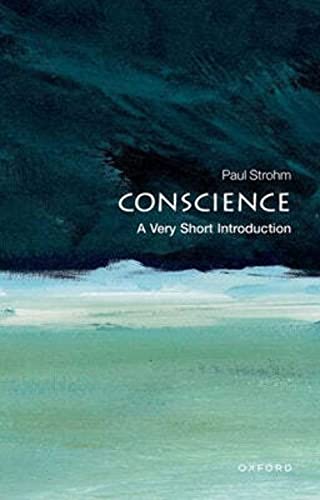
Synopsis
From Cicero and Augustine through the middle ages and into the Reformation, this Very Short Introduction considers conscience as a matter of human rights and obligations, as well as an important issue in contemporary politics. Written by Paul Strohm, an eminent authority in the field and an engaging writer, this compact book provides a thought provoking introduction to a compelling topic. Arranged chronologically to focus on a series of important moments in the history of conscience--from Augustine's episode of conscience to the rise of conscience as a secular ideal--the volume explores a wide variety of texts and events, providing a concise introduction to the evolution of ideas and debates about conscience.
"synopsis" may belong to another edition of this title.
About the Author
Paul Strohm is the Anna Garbedian Professor of the Humanities at Columbia University.
"About this title" may belong to another edition of this title.
Search results for Conscience: A Very Short Introduction

Stock Image
Conscience: A Very Short Introduction
Published by
Oxford University Press, 2011
ISBN 10: 019956969X
ISBN 13: 9780199569694
Used
Paperback
Seller: World of Books (was SecondSale), Montgomery, IL, U.S.A.
Seller rating 5 out of 5 stars

Paperback. Condition: Very Good. Where does our conscience come from? How reliable is it? In the West conscience has been relied upon for two thousand years as a judgement that distinguishes right from wrong. It has effortlessly moved through every period division and timeline between the ancient, medieval, and modern. The Romans identified it, the early Christians appropriated it, and Reformation Protestants and loyal Catholics relied upon its advice and admonition. Today it is embraced with equal conviction by non-religious and religious alike. Considering its deep historical roots and exploring what it has meant to successive generations, Paul Strohm highlights why this particularly European concept deserves its reputation as 'one of the prouder Western contributions to human rights and human dignity throughout the world.' Using examples from popular culture including the Disney classic Pinocchio, as well as examples from contemporary politics, he explores the work of thinkers such as Nietzsche, Freud, and Aquinas, to show how and why conscience remains a motivating and important principle in the contemporary world. Seller Inventory # 00108988748
Stock Image
Conscience: A Very Short Introduction
Published by
Oxford University Press, 2011
ISBN 10: 019956969X
ISBN 13: 9780199569694
Used
Paperback
Seller: World of Books Inc, Montgomery, IL, U.S.A.
Seller rating 4 out of 5 stars

Paperback. Condition: Very Good. Where does our conscience come from? How reliable is it? In the West conscience has been relied upon for two thousand years as a judgement that distinguishes right from wrong. It has effortlessly moved through every period division and timeline between the ancient, medieval, and modern. The Romans identified it, the early Christians appropriated it, and Reformation Protestants and loyal Catholics relied upon its advice and admonition. Today it is embraced with equal conviction by non-religious and religious alike. Considering its deep historical roots and exploring what it has meant to successive generations, Paul Strohm highlights why this particularly European concept deserves its reputation as 'one of the prouder Western contributions to human rights and human dignity throughout the world.' Using examples from popular culture including the Disney classic Pinocchio, as well as examples from contemporary politics, he explores the work of thinkers such as Nietzsche, Freud, and Aquinas, to show how and why conscience remains a motivating and important principle in the contemporary world. Seller Inventory # CIN019956969XVG
Stock Image
Conscience : A Very Short Introduction
Published by
Oxford University Press, Incorporated, 2011
ISBN 10: 019956969X
ISBN 13: 9780199569694
Used
Softcover
Seller: Better World Books, Mishawaka, IN, U.S.A.
Seller rating 5 out of 5 stars
Condition: Good. Former library copy. Pages intact with minimal writing/highlighting. The binding may be loose and creased. Dust jackets/supplements are not included. Includes library markings. Stock photo provided. Product includes identifying sticker. Better World Books: Buy Books. Do Good. Seller Inventory # GRP94861101
Stock Image
Conscience: A Very Short Introduction Format: Paperback
Seller: INDOO, Avenel, NJ, U.S.A.
Seller rating 5 out of 5 stars
Condition: New. Seller Inventory # 9780199569694
Seller Image
Conscience (Paperback)
Published by
Oxford University Press, Oxford, 2011
ISBN 10: 019956969X
ISBN 13: 9780199569694
New
Paperback
Seller: Grand Eagle Retail, Bensenville, IL, U.S.A.
Seller rating 5 out of 5 stars
Paperback. Condition: new. Paperback. Where does our conscience come from? How reliable is it?In the West conscience has been relied upon for two thousand years as a judgement that distinguishes right from wrong. It has effortlessly moved through every period division and timeline between the ancient, medieval, and modern. The Romans identified it, the early Christians appropriated it, and Reformation Protestants and loyal Catholics relied upon its advice and admonition. Todayit is embraced with equal conviction by non-religious and religious alike.Considering its deep historical roots and exploring what it has meant to successive generations, PaulStrohm highlights why this particularly European concept deserves its reputation as 'one of the prouder Western contributions to human rights and human dignity throughout the world.'Using examples from popular culture including the Disney classic Pinocchio, as well as examples from contemporary politics, he explores the work of thinkers such as Nietzsche, Freud, and Aquinas, to show how and why conscience remains a motivating and important principle in thecontemporary world.ABOUT THE SERIES: The Very Short Introductions series from Oxford University Press contains hundreds of titles in almost every subject area. These pocket-sized books arethe perfect way to get ahead in a new subject quickly. Our expert authors combine facts, analysis, perspective, new ideas, and enthusiasm to make interesting and challenging topics highly readable. Where does our conscience come from, and how reliable is it? Exploring its deep historical roots, Paul Strohm considers what conscience has meant to successive generations. Using examples from popular culture and contemporary politics he demonstrates that conscience is as important today as it has ever been. Shipping may be from multiple locations in the US or from the UK, depending on stock availability. Seller Inventory # 9780199569694
Seller Image
Conscience : A Very Short Introduction
Seller: GreatBookPrices, Columbia, MD, U.S.A.
Seller rating 5 out of 5 stars
Condition: New. Seller Inventory # 12218424-n
Stock Image
Conscience
Seller: Majestic Books, Hounslow, United Kingdom
Seller rating 4 out of 5 stars
Condition: New. pp. 152 Illus. Seller Inventory # 5547470
Buy New
US$ 6.39
US$ 8.62 shipping
Ships from United Kingdom to U.S.A.
Ships from United Kingdom to U.S.A.
Quantity: 2 available
Stock Image
Conscience
Seller: PBShop.store US, Wood Dale, IL, U.S.A.
Seller rating 5 out of 5 stars
PAP. Condition: New. New Book. Shipped from UK. Established seller since 2000. Seller Inventory # FU-9780199569694
Seller Image
Conscience
Published by
Oxford University Press, GB, 2011
ISBN 10: 019956969X
ISBN 13: 9780199569694
New
Paperback
Seller: Rarewaves USA, HEBRON, KY, U.S.A.
Seller rating 5 out of 5 stars
Paperback. Condition: New. Where does our conscience come from? How reliable is it? In the West conscience has been relied upon for two thousand years as a judgement that distinguishes right from wrong. It has effortlessly moved through every period division and timeline between the ancient, medieval, and modern. The Romans identified it, the early Christians appropriated it, and Reformation Protestants and loyal Catholics relied upon its advice and admonition. Today it is embraced with equal conviction by non-religious and religious alike. Considering its deep historical roots and exploring what it has meant to successive generations, Paul Strohm highlights why this particularly European concept deserves its reputation as 'one of the prouder Western contributions to human rights and human dignity throughout the world.' Using examples from popular culture including the Disney classic Pinocchio, as well as examples from contemporary politics, he explores the work of thinkers such as Nietzsche, Freud, and Aquinas, to show how and why conscience remains a motivating and important principle in the contemporary world. ABOUT THE SERIES: The Very Short Introductions series from Oxford University Press contains hundreds of titles in almost every subject area. These pocket-sized books are the perfect way to get ahead in a new subject quickly. Our expert authors combine facts, analysis, perspective, new ideas, and enthusiasm to make interesting and challenging topics highly readable. Seller Inventory # LU-9780199569694
Stock Image
Conscience: A Very Short Introduction
Seller: California Books, Miami, FL, U.S.A.
Seller rating 5 out of 5 stars
Condition: New. Seller Inventory # I-9780199569694