
Items related to Knowledge: A Very Short Introduction
Synopsis
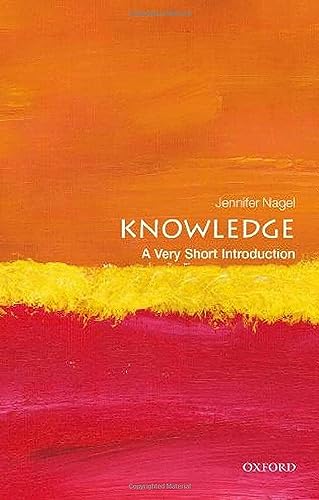
What is knowledge? How does it differ from mere belief? Do you need to be able to justify a claim in order to count as knowing it? How can we know that the outer world is real and not a dream?
Questions like these are ancient ones, and the branch of philosophy dedicated to answering them - epistemology - has been active for thousands of years. In this thought-provoking Very Short Introduction, Jennifer Nagel considers these classic questions alongside new puzzles arising from recent discoveries about humanity, language, and the mind. Nagel explains the formation of major historical theories of knowledge, and shows how contemporary philosophers have developed new ways of understanding knowledge, using ideas from logic, linguistics, and psychology. Covering topics ranging from relativism and the problem of scepticism to the trustworthiness of internet sources, Nagel examines how progress has been made in understanding knowledge, using everyday examples to explain the key issues and debates
ABOUT THE SERIES: The Very Short Introductions series from Oxford University Press contains hundreds of titles in almost every subject area. These pocket-sized books are the perfect way to get ahead in a new subject quickly. Our expert authors combine facts, analysis, perspective, new ideas, and enthusiasm to make interesting and challenging topics highly readable.
"synopsis" may belong to another edition of this title.
About the Author
Jennifer Nagel is Associate Professor of Philosophy and Associate Chair at the University of Toronto. Her research covers both historical and contemporary topics in epistemology. She has published on scepticism and empirical knowledge in Descartes and Locke and has also written a series of articles on intuitive ascriptions of knowledge.
"About this title" may belong to another edition of this title.
Search results for Knowledge: A Very Short Introduction

Stock Image
Knowledge: A Very Short Introduction
Published by
Oxford University Press, 2014
ISBN 10: 019966126X
ISBN 13: 9780199661268
Used
Paperback
Seller: World of Books (was SecondSale), Montgomery, IL, U.S.A.
Seller rating 5 out of 5 stars

Paperback. Condition: Good. What is knowledge? How does it differ from mere belief? Do you need to be able to justify a claim in order to count as knowing it? How can we know that the outer world is real and not a dream? Questions like these are ancient ones, and the branch of philosophy dedicated to answering them - epistemology - has been active for thousands of years. In this thought-provoking Very Short Introduction, Jennifer Nagel considers these classic questions alongside new puzzles arising from recent discoveries about humanity, language, and the mind. Nagel explains the formation of major historical theories of knowledge, and shows how contemporary philosophers have developed new ways of understanding knowledge, using ideas from logic, linguistics, and psychology. Covering topics ranging from relativism and the problem of scepticism to the trustworthiness of internet sources, Nagel examines how progress has been made in understanding knowledge, using everyday examples to explain the key issues and debates ABOUT THE SERIES: The Very Short Introductions series from Oxford University Press contains hundreds of titles in almost every subject area. These pocket-sized books are the perfect way to get ahead in a new subject quickly. Our expert authors combine facts, analysis, perspective, new ideas, and enthusiasm to make interesting and challenging topics highly readable. Seller Inventory # 00110948824
Stock Image
Knowledge: A Very Short Introduction
Published by
Oxford University Press, 2014
ISBN 10: 019966126X
ISBN 13: 9780199661268
Used
Paperback
Seller: World of Books (was SecondSale), Montgomery, IL, U.S.A.
Seller rating 5 out of 5 stars
Paperback. Condition: Fair. What is knowledge? How does it differ from mere belief? Do you need to be able to justify a claim in order to count as knowing it? How can we know that the outer world is real and not a dream? Questions like these are ancient ones, and the branch of philosophy dedicated to answering them - epistemology - has been active for thousands of years. In this thought-provoking Very Short Introduction, Jennifer Nagel considers these classic questions alongside new puzzles arising from recent discoveries about humanity, language, and the mind. Nagel explains the formation of major historical theories of knowledge, and shows how contemporary philosophers have developed new ways of understanding knowledge, using ideas from logic, linguistics, and psychology. Covering topics ranging from relativism and the problem of scepticism to the trustworthiness of internet sources, Nagel examines how progress has been made in understanding knowledge, using everyday examples to explain the key issues and debates ABOUT THE SERIES: The Very Short Introductions series from Oxford University Press contains hundreds of titles in almost every subject area. These pocket-sized books are the perfect way to get ahead in a new subject quickly. Our expert authors combine facts, analysis, perspective, new ideas, and enthusiasm to make interesting and challenging topics highly readable. Seller Inventory # CIN019966126XA
Stock Image
Knowledge: A Very Short Introduction
Published by
Oxford University Press, 2014
ISBN 10: 019966126X
ISBN 13: 9780199661268
Used
Paperback
Seller: World of Books Inc, Montgomery, IL, U.S.A.
Seller rating 4 out of 5 stars

Paperback. Condition: Good. What is knowledge? How does it differ from mere belief? Do you need to be able to justify a claim in order to count as knowing it? How can we know that the outer world is real and not a dream? Questions like these are ancient ones, and the branch of philosophy dedicated to answering them - epistemology - has been active for thousands of years. In this thought-provoking Very Short Introduction, Jennifer Nagel considers these classic questions alongside new puzzles arising from recent discoveries about humanity, language, and the mind. Nagel explains the formation of major historical theories of knowledge, and shows how contemporary philosophers have developed new ways of understanding knowledge, using ideas from logic, linguistics, and psychology. Covering topics ranging from relativism and the problem of scepticism to the trustworthiness of internet sources, Nagel examines how progress has been made in understanding knowledge, using everyday examples to explain the key issues and debates ABOUT THE SERIES: The Very Short Introductions series from Oxford University Press contains hundreds of titles in almost every subject area. These pocket-sized books are the perfect way to get ahead in a new subject quickly. Our expert authors combine facts, analysis, perspective, new ideas, and enthusiasm to make interesting and challenging topics highly readable. Seller Inventory # CIN019966126XG
Stock Image
Knowledge: A Very Short Introduction
Published by
Oxford University Press, 2014
ISBN 10: 019966126X
ISBN 13: 9780199661268
Used
Paperback
Seller: World of Books Inc, Montgomery, IL, U.S.A.
Seller rating 4 out of 5 stars
Paperback. Condition: Fair. What is knowledge? How does it differ from mere belief? Do you need to be able to justify a claim in order to count as knowing it? How can we know that the outer world is real and not a dream? Questions like these are ancient ones, and the branch of philosophy dedicated to answering them - epistemology - has been active for thousands of years. In this thought-provoking Very Short Introduction, Jennifer Nagel considers these classic questions alongside new puzzles arising from recent discoveries about humanity, language, and the mind. Nagel explains the formation of major historical theories of knowledge, and shows how contemporary philosophers have developed new ways of understanding knowledge, using ideas from logic, linguistics, and psychology. Covering topics ranging from relativism and the problem of scepticism to the trustworthiness of internet sources, Nagel examines how progress has been made in understanding knowledge, using everyday examples to explain the key issues and debates ABOUT THE SERIES: The Very Short Introductions series from Oxford University Press contains hundreds of titles in almost every subject area. These pocket-sized books are the perfect way to get ahead in a new subject quickly. Our expert authors combine facts, analysis, perspective, new ideas, and enthusiasm to make interesting and challenging topics highly readable. Seller Inventory # CIN019966126XA
Seller Image
Knowledge: A Very Short Introduction
Published by
Oxford University Press, 2014
ISBN 10: 019966126X
ISBN 13: 9780199661268
Used
Softcover
Seller: clickgoodwillbooks, Indianapolis, IN, U.S.A.
Seller rating 4 out of 5 stars
Condition: acceptable. Used - Acceptable: All pages and the cover are intact, but shrink wrap, dust covers, or boxed set case may be missing. Pages may include limited notes, highlighting, or minor water damage but the text is readable. Item may be missing bundled media. Seller Inventory # CSIV.019966126X.A
Stock Image
Knowledge: A Very Short Introduction
Seller: Deadstock Gear, Fort Oglethorpe, GA, U.S.A.
Seller rating 5 out of 5 stars
paperback. Condition: Very Good. Item may have minor cosmetic defects (such as marks, wears, cuts, bends, or crushes) on the cover, spine, pages, or dust cover. Shrink wrap, dust covers, or boxed set case may be missing. Item may contain remainder marks on outside edges. Item may be missing bundled media. Satisfaction guaranteed. Thank you! Seller Inventory # 09-04-2026-Bulk-Shelf 42/B022
Stock Image
Knowledge: A Very Short Introduction (Very Short Introductions)
Published by
Oxford University Press, 2014
ISBN 10: 019966126X
ISBN 13: 9780199661268
Used
Paperback
Seller: HPB-Diamond, Dallas, TX, U.S.A.
Seller rating 5 out of 5 stars
Paperback. Condition: Very Good. Connecting readers with great books since 1972! Used books may not include companion materials, and may have some shelf wear or limited writing. We ship orders daily and Customer Service is our top priority! Seller Inventory # S_486880367
Stock Image
Knowledge: A Very Short Introduction
Published by
Oxford University Press (edition 1), 2014
ISBN 10: 019966126X
ISBN 13: 9780199661268
Used
Paperback
Seller: BooksRun, Philadelphia, PA, U.S.A.
Seller rating 5 out of 5 stars
Paperback. Condition: Very Good. 1. It's a well-cared-for item that has seen limited use. The item may show minor signs of wear. All the text is legible, with all pages included. It may have slight markings and/or highlighting. Seller Inventory # 019966126X-11-1
Stock Image
Knowledge: A Very Short Introduction
Published by
Oxford University Press, 2014
ISBN 10: 019966126X
ISBN 13: 9780199661268
New
Soft cover
Seller: Mesquite Booksellers, Tucson, AZ, U.S.A.
Seller rating 5 out of 5 stars
Soft cover. Condition: New. This is a special sale item which will be shipped in an envelope, not a box. If you order this from outside the United States, we will request an additional payment to help cover the postage. Every order includes tracking and originates in Tucson, AZ. We list over 2,000 philosophy titles, and invite you to have a look! ~Mesquite Booksellers. Seller Inventory # 1418
Stock Image
Knowledge : A Very Short Introduction
Published by
Oxford University Press, Incorporated, 2014
ISBN 10: 019966126X
ISBN 13: 9780199661268
Used
Softcover
Seller: Better World Books, Mishawaka, IN, U.S.A.
Seller rating 5 out of 5 stars
Condition: Good. Former library copy. Pages intact with minimal writing/highlighting. The binding may be loose and creased. Dust jackets/supplements are not included. Includes library markings. Stock photo provided. Product includes identifying sticker. Better World Books: Buy Books. Do Good. Seller Inventory # 17073099-20