
Items related to Exploring the Scientific Method: Cases and Questions
Synopsis
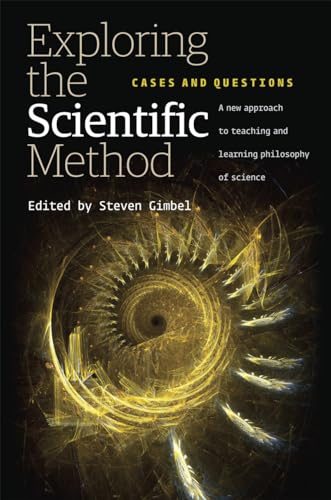
From their grade school classrooms forward, students of science are encouraged to memorize and adhere to the “scientific method”—a model of inquiry consisting of five to seven neatly laid-out steps, often in the form of a flowchart. But walk into the office of a theoretical physicist or the laboratory of a biochemist and ask “Which step are you on?” and you will likely receive a blank stare. This is not how science works. But science does work, and here award-winning teacher and scholar Steven Gimbel provides students the tools to answer for themselves this question: What actually is the scientific method?
Exploring the Scientific Method pairs classic and contemporary readings in the philosophy of science with milestones in scientific discovery to illustrate the foundational issues underlying scientific methodology. Students are asked to select one of nine possible fields—astronomy, physics, chemistry, genetics, evolutionary biology, psychology, sociology, economics, or geology—and through carefully crafted case studies trace its historical progression, all while evaluating whether scientific practice in each case reflects the methodological claims of the philosophers. This approach allows students to see the philosophy of science in action and to determine for themselves what scientists do and how they ought to do it.
Exploring the Scientific Method will be a welcome resource to introductory science courses and all courses in the history and philosophy of science.
"synopsis" may belong to another edition of this title.
About the Author
Steven Gimbel is associate professor of philosophy at Gettysburg College. He is the author of several books, including The Grateful Dead and Philosophy and Defending Einstein, and the 2005 recipient of the Luther W. and Bernice L. Thompson Distinguished Teaching Award.
"About this title" may belong to another edition of this title.
Search results for Exploring the Scientific Method: Cases and Questions

Stock Image
Exploring the Scientific Method: Cases and Questions
Published by
University of Chicago Press (edition ), 2011
ISBN 10: 0226294838
ISBN 13: 9780226294834
Used
Paperback
Seller: BooksRun, Philadelphia, PA, U.S.A.
Seller rating 5 out of 5 stars

Paperback. Condition: Fair. The item might be beaten up but readable. May contain markings or highlighting, as well as stains, bent corners, or any other major defect, but the text is not obscured in any way. Seller Inventory # 0226294838-7-1
Stock Image
Exploring the Scientific Method: Cases and Questions
Published by
University of Chicago Press, 2011
ISBN 10: 0226294838
ISBN 13: 9780226294834
Used
Paperback
Seller: HPB-Red, Dallas, TX, U.S.A.
Seller rating 5 out of 5 stars
Paperback. Condition: Good. Connecting readers with great books since 1972! Used textbooks may not include companion materials such as access codes, etc. May have some wear or writing/highlighting. We ship orders daily and Customer Service is our top priority! Seller Inventory # S_476273100
Stock Image
Exploring the Scientific Method: Cases and Questions
Published by
University of Chicago Press, 2011
ISBN 10: 0226294838
ISBN 13: 9780226294834
Used
Paperback
Seller: HPB-Red, Dallas, TX, U.S.A.
Seller rating 5 out of 5 stars
Paperback. Condition: Acceptable. Connecting readers with great books since 1972. Used textbooks may not include companion materials such as access codes, etc. May have condition issues including wear and notes/highlighting. We ship orders daily and Customer Service is our top priority! Seller Inventory # S_469083468
Stock Image
Exploring the Scientific Method: Cases and Questions
Published by
University of Chicago Press, 2011
ISBN 10: 0226294838
ISBN 13: 9780226294834
Used
Paperback
Seller: ThriftBooks-Atlanta, AUSTELL, GA, U.S.A.
Seller rating 5 out of 5 stars
Paperback. Condition: Good. No Jacket. Former library book; Pages can have notes/highlighting. Spine may show signs of wear. ~ ThriftBooks: Read More, Spend Less. Seller Inventory # G0226294838I3N10
Seller Image
Exploring the Scientific Method: Cases and Questions
Published by
University of Chicago Press, 2011
ISBN 10: 0226294838
ISBN 13: 9780226294834
Used
Softcover
Seller: Goodwill Industries, Spokane, WA, U.S.A.
Seller rating 5 out of 5 stars
Condition: good. Condition: Good â" Used book with some visible wear. May include stickers on the cover, wear or absence of the dust jacket, wear to the spine or inside cover, slight corner curling, minor staining, and wear along the fore edge. All orders are shipped via UPS Mail Innovations and may take up to 10 business days from the initial scan to be delivered. Seller Inventory # INWV.0226294838.G
Stock Image
Exploring the Scientific Method: Cases and Questions
Published by
University of Chicago Press, 2011
ISBN 10: 0226294838
ISBN 13: 9780226294834
Used
Paperback
Seller: Textbook Bookie, Little Rock, AR, U.S.A.
Seller rating 5 out of 5 stars
Paperback. Condition: Fair. Book in Fair condition. Seller Inventory # 9780226294834-acceptable
Stock Image
Exploring the Scientific Method : Cases and Questions
Published by
University of Chicago Press, 2011
ISBN 10: 0226294838
ISBN 13: 9780226294834
Used
Softcover
Seller: Better World Books: West, Reno, NV, U.S.A.
Seller rating 5 out of 5 stars
Condition: Good. Pages intact with minimal writing/highlighting. The binding may be loose and creased. Dust jackets/supplements are not included. Stock photo provided. Product includes identifying sticker. Better World Books: Buy Books. Do Good. Seller Inventory # 39031157-6
Stock Image
Exploring the Scientific Method: Cases and Questions
Published by
University of Chicago Press, 2011
ISBN 10: 0226294838
ISBN 13: 9780226294834
Used
Soft cover
Seller: Tim's Used Books Provincetown Mass., Provincetown, MA, U.S.A.
Seller rating 5 out of 5 stars
Soft cover. Condition: Good. Very neat underlining here and there. No highlighting marks in text. Not a library book. Ships today in a cardboard enclosure, with tracking. One copy only of this title at this price. The book you see listed here is the book you'll receive. Tim's Used Books, open shop in Provincetown, Mass., recognized for great books and great service since 1991. shelf LL/second from right--bottom. Seller Inventory # 269189
Stock Image
Exploring the Scientific Method: Cases and Questions
Published by
University of Chicago Press, 2011
ISBN 10: 0226294838
ISBN 13: 9780226294834
Used
paperback
Seller: kelseyskorner, Blaine, WA, U.S.A.
Seller rating 5 out of 5 stars
paperback. Condition: Good. Softcover book in good condition with minor underlining. Seller Inventory # 1-5251420
Stock Image
Exploring the Scientific Method: Cases and Questions
Published by
University Of Chicago Press, 2011
ISBN 10: 0226294838
ISBN 13: 9780226294834
New
Softcover
Seller: Kennys Bookshop and Art Galleries Ltd., Galway, GY, Ireland
Seller rating 5 out of 5 stars
Condition: New. Provides students the tools to answer for themselves this question: What actually is the scientific method? This title pairs classic and contemporary readings in the philosophy of science with milestones in scientific discovery to illustrate the foundational issues underlying scientific methodology. Editor(s): Gimbel, Steven. Num Pages: 512 pages, 4 tables. BIC Classification: PDA; PDX. Category: (G) General (US: Trade). Dimension: 229 x 152 x 23. Weight in Grams: 568. . 2011. Paperback. . . . . Seller Inventory # V9780226294834
Buy New
US$ 38.80
US$ 10.66 shipping
Ships from Ireland to U.S.A.
Ships from Ireland to U.S.A.
Quantity: 1 available