
Items related to Fair Not Flat: How to Make the Tax System Better and...
Synopsis
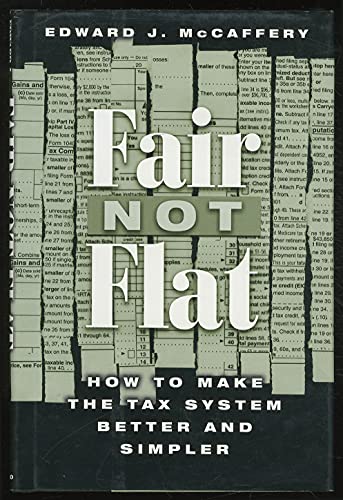
Everyone knows that the current tax system is unfair. Some of the richest people in America pay no tax, while a huge share of the tax burden falls on the rest of us. A mere glance at the tax code confirms that it is far too complex, with volumes of rules that no ordinary person could possibly comprehend. What is to be done? Some conservatives have called for a so-called flat tax. But a flat tax is not necessarily a simple tax, and "flat" means "more" for most taxpayers: a rise in middle-class taxes to finance tax cuts for the rich. Is there another choice?
In clear, easy-to-understand language, Edward J. McCaffery proposes a straightforward and fair alternative. A "fair not flat" tax that is consistent and progressive would tax spending, not income and savings. And if it were collected at its lower levels through a national sales tax, most people would not have to file a return. A supplemental tax on spending for the wealthiest individuals would make the national sales tax progressive. Under McCaffery's system, a family of four would pay no tax on their first $20,000 in spending, and 15 percent on the next $60,000. Only the few families who spend more than $80,000 a year would be subject to the supplemental tax. Necessities would be taxed less than ordinary and luxury items. No one would be taxed directly on savings. The estate and gift or so-called death tax would be abolished, for the simple reason that dead people don't spend. The "fair not flat" tax would fall on heirs when and as they spend their good fortune. Perhaps best of all, most Americans would not have to fill out tax returns.
Simpler, more efficient, fairer, and more reflective of America's current social values, McCaffery's "fair not flat" tax could help get us out of the tax mess that politicians and special interests have gotten us into, improving the whole country in the process. Read Fair Not Flat to find out how.
“In Fair Not Flat, Mr. McCaffery lays out the case for a consumption tax. He does so in a reader-friendly way, presenting his argument with very few footnotes, equations or technical terms. The consumption of the book, so to speak, is not at all taxing. And its argument is well worth pondering.”—Bruce Bartlett, Wall Street Journal
"synopsis" may belong to another edition of this title.
About the Author
Edward J. McCaffery is the Maurice Jones Jr. Professor of Law at the University of Southern California and Visiting Professor of Law and Economics at the California Institute of Technology. He is the author of Taxing Women, also published by the University of Chicago Press.
From the Back Cover
Everyone knows that the current tax system is unfair. Some of the richest people in America pay no tax, perfectly legally, while heavy tax burdens fall on the rest of us. A mere glance at the tax code confirms that it is far too complex, with volumes of rules that no ordinary person could possibly comprehend. What is to be done? Some conservatives have called for a so-called flat tax. But a flat tax is not necessarily a simple tax, and in any event "flat" means "more" for most taxpayers: a rise in taxes on the middle class to finance tax cuts for the rich. What's fair about that? Is there a better alternative?
In clear, easy-to-understand language, Edward J. McCaffery offers a straightforward and fair proposal. A "fair not flat" tax that is consistent and progressive would tax spending, not work and savings. And if it were collected at its lower levels through a national sales tax, most people would not even have to file onerous tax returns. A supplemental tax on spending for the wealthiest individuals would make the national sales tax progressive. Under McCaffery's system, the average family of four would pay no tax on their first $20,000 in spending, and 15 percent on the next $60,000 they spend-only the few families who spend more than $80,000 a year would be subject to the supplemental tax. Necessities would be taxed less than ordinary and luxury items. No one would be taxed directly when he or she saved. And as an added bonus, the estate and gift or so-called death tax would be abolished.
Simpler, more efficient, fairer, and better reflective of America's current social values, McCaffery's "fair not flat" tax could help get us out of the tax mess that politicians and special interests have gotten us into, improving the whole country in the process. Read Fair Not Flat to find out how.
From the Inside Flap
Everyone knows that the current tax system is unfair. Some of the richest people in America pay no tax, perfectly legally, while heavy tax burdens fall on the rest of us. A mere glance at the tax code confirms that it is far too complex, with volumes of rules that no ordinary person could possibly comprehend. What is to be done? Some conservatives have called for a so-called flat tax. But a flat tax is not necessarily a simple tax, and in any event "flat" means "more" for most taxpayers: a rise in taxes on the middle class to finance tax cuts for the rich. What's fair about that? Is there a better alternative?
In clear, easy-to-understand language, Edward J. McCaffery offers a straightforward and fair proposal. A "fair not flat" tax that is consistent and progressive would tax spending, not work and savings. And if it were collected at its lower levels through a national sales tax, most people would not even have to file onerous tax returns. A supplemental tax on spending for the wealthiest individuals would make the national sales tax progressive. Under McCaffery's system, the average family of four would pay no tax on their first $20,000 in spending, and 15 percent on the next $60,000 they spend-only the few families who spend more than $80,000 a year would be subject to the supplemental tax. Necessities would be taxed less than ordinary and luxury items. No one would be taxed directly when he or she saved. And as an added bonus, the estate and gift or so-called death tax would be abolished.
Simpler, more efficient, fairer, and better reflective of America's current social values, McCaffery's "fair not flat" tax could help get us out of the tax mess that politicians and special interests have gotten us into, improving the whole country in the process. Read Fair Not Flat to find out how.
In clear, easy-to-understand language, Edward J. McCaffery offers a straightforward and fair proposal. A "fair not flat" tax that is consistent and progressive would tax spending, not work and savings. And if it were collected at its lower levels through a national sales tax, most people would not even have to file onerous tax returns. A supplemental tax on spending for the wealthiest individuals would make the national sales tax progressive. Under McCaffery's system, the average family of four would pay no tax on their first $20,000 in spending, and 15 percent on the next $60,000 they spend-only the few families who spend more than $80,000 a year would be subject to the supplemental tax. Necessities would be taxed less than ordinary and luxury items. No one would be taxed directly when he or she saved. And as an added bonus, the estate and gift or so-called death tax would be abolished.
Simpler, more efficient, fairer, and better reflective of America's current social values, McCaffery's "fair not flat" tax could help get us out of the tax mess that politicians and special interests have gotten us into, improving the whole country in the process. Read Fair Not Flat to find out how.
Reviews
Tax-law expert McCaffery is a professor of law at the University of Southern California (USC) and director of the USC-Caltech Center for the Study of Law and Politics. In this articulate follow-up to Taxing Women, he provides an accessible and effective analysis of the present federal income tax and estate- and gift-tax systems and proposes an innovative approach that would replace both with a consistent progressive consumption tax. The author asserts that this proposal could simplify the system, reduce the negative impact of politicians and special interest groups, and make taxation fairer in general. This simple book covers a wide array of topics, ranging from the history of the U.S. tax system to the problems associated with previous tax reform initiatives, including the Tax Reform Act of 1986 and present discussions regarding implementation of a flat tax. A glossary, a list of further readings, and examples drawn from recent popular works (e.g., Robert T. Kiyosaki's Rich Dad, Poor Dad) enhance the text. Provocative and persuasively argued, this book is recommended for both academic and public libraries. Norm Hutcherson, California State Univ., Bakersfield
Copyright 2002 Cahners Business Information, Inc.
"About this title" may belong to another edition of this title.
Search results for Fair Not Flat: How to Make the Tax System Better and...

Stock Image
Fair Not Flat: How to Make the Tax System Better and Simpler
Published by
University of Chicago Press, 2002
ISBN 10: 0226555607
ISBN 13: 9780226555607
Used
Hardcover
Seller: ThriftBooks-Reno, Reno, NV, U.S.A.
Seller rating 5 out of 5 stars

Hardcover. Condition: Good. No Jacket. Pages can have notes/highlighting. Spine may show signs of wear. ~ ThriftBooks: Read More, Spend Less. Seller Inventory # G0226555607I3N00
Stock Image
Fair Not Flat: How to Make the Tax System Better and Simpler
Published by
University of Chicago Press, 2002
ISBN 10: 0226555607
ISBN 13: 9780226555607
Used
Hardcover
Seller: ThriftBooks-Dallas, Dallas, TX, U.S.A.
Seller rating 5 out of 5 stars
Hardcover. Condition: Good. No Jacket. Pages can have notes/highlighting. Spine may show signs of wear. ~ ThriftBooks: Read More, Spend Less. Seller Inventory # G0226555607I3N00
Stock Image
Fair Not Flat: How to Make the Tax System Better and Simpler
Published by
University of Chicago Press, 2002
ISBN 10: 0226555607
ISBN 13: 9780226555607
Used
Hardcover
Seller: ThriftBooks-Atlanta, AUSTELL, GA, U.S.A.
Seller rating 5 out of 5 stars
Hardcover. Condition: Very Good. No Jacket. May have limited writing in cover pages. Pages are unmarked. ~ ThriftBooks: Read More, Spend Less. Seller Inventory # G0226555607I4N00
Stock Image
Fair Not Flat: How to Make the Tax System Better and Simpler
Published by
University of Chicago Press, 2002
ISBN 10: 0226555607
ISBN 13: 9780226555607
Used
Hardcover
Seller: ThriftBooks-Atlanta, AUSTELL, GA, U.S.A.
Seller rating 5 out of 5 stars
Hardcover. Condition: Good. No Jacket. Pages can have notes/highlighting. Spine may show signs of wear. ~ ThriftBooks: Read More, Spend Less. Seller Inventory # G0226555607I3N00
Seller Image
Fair Not Flat: How to Make the Tax System Better and Simpler
Published by
University of Chicago Press, 2002
ISBN 10: 0226555607
ISBN 13: 9780226555607
Used
Hardcover
First Edition
Seller: Between the Covers-Rare Books, Inc. ABAA, Gloucester City, NJ, U.S.A.
Seller rating 5 out of 5 stars
Hardcover. Condition: Fine. Dust Jacket Condition: Fine. First edition. 178pp. Fine in fine dust jacket. Seller Inventory # 381388
Stock Image
FAIR NOT FLAT: HOW to MAKE the TAX SYSTEM BETTER and SIMPLER; Signed + Letter. *
Published by
UNIVERSITY of CHICAGO PRESS, * * * * *, 2002
ISBN 10: 0226555607
ISBN 13: 9780226555607
Used
Hardcover
First Edition
Signed
Seller: L. Michael, North Hollywood, CA, U.S.A.
Seller rating 5 out of 5 stars
Hardcover. Condition: As New. Dust Jacket Condition: Fine. 2002 B00k: As New/, (illustrator). 1st Edition. B00k: As New/, $95.43 0226555607 FAIR NOT FLAT: HOW to MAKE the TAX SYSTEM BETTER and SIMPLER; Signed + Letter. McCAFFERY, Edward J. UNIVERSITY of CHICAGO PRESS 2002 1sT Edition, 1sT Printing Black Ends With A Grey Center Spine, With Title In White Letters, Dust Jacket: Fine/, Shelf, Slight Shelf, Edge And Corner Wear. Front Interior Flap, $28.00. Hard Cover B0k: As New/, Shelf, Edge And Corner Wear. 178 Numbered Pages, Printed On Off White Paper, In As New/ Condition, That Appear To Lightly Viewed And Are Otherwise Clean and Tight To The Spine. Gift Inscription, Signed By Author With A Fine Tipped Black Pen, On Title Page, As Follows, 'To Bob & Judy, Regards Ed'. Including A Printed Emailed Page On Directions To His Office, From Author. No Tears. No Odors, No Other Writing, No Other Names, No Stains. = Description Applies To This B00K, Only. = This Author Signed Book Has A Special Significance, Is Hard To Find, Will Be Packaged And Shipped = Carefully, To Avoid Shipping Damage And Will Make It, An Excellent Addition To Your Own Personal Library Collection, Or As A Gift, For The Discriminating Reader / Collector. = WORLD WIDE SHIPPING, AVAILABLE. =*=* California State Law Now Requires The Following Notice Be Given: *=*=* Seller Did Not See And Was Not Present When This Item Was Signed. No Certificate Of Authenticity Is Included In This Sale/Purchase Price. If You Would Like A Certificate Of Authenticity, You Can Obtain One At Your Own Convenience And Expense, Which Is Not Included In The Purchase Price Of This Item. =*=*. Signed by Author(s). Seller Inventory # 011153
Stock Image
Fair Not Flat: How to Make the Tax System Better and Simpler
Published by
University of Chicago Press, 2002
ISBN 10: 0226555607
ISBN 13: 9780226555607
Used
Hardcover
Seller: tttkelly1, Fresno, TX, U.S.A.
Seller rating 4 out of 5 stars

hardcover. Condition: Very Good. Hardcover Book, Seller Inventory # 2602010047
Stock Image
Fair Not Flat: How to Make the Tax System Better and Simpler
Published by
University of Chicago Press, 2002
ISBN 10: 0226555607
ISBN 13: 9780226555607
New
Hardcover
Seller: BennettBooksLtd, Los Angeles, CA, U.S.A.
Seller rating 5 out of 5 stars
hardcover. Condition: New. In shrink wrap. Looks like an interesting title! Seller Inventory # Q-0226555607