
Items related to Making PCR: A Story of Biotechnology
Synopsis
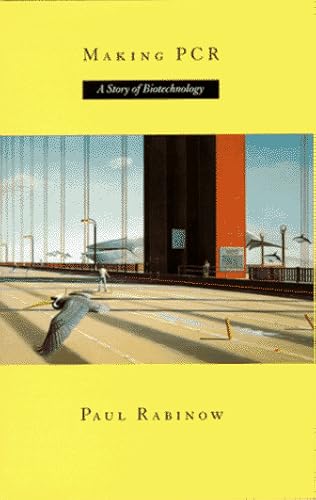
Making PCR is the fascinating, behind-the-scenes account of the invention of one of the most significant biotech discoveries in our time—the polymerase chain reaction. Transforming the practice and potential of molecular biology, PCR extends scientists' ability to identify and manipulate genetic materials and accurately reproduces millions of copies of a given segment in a short period of time. It makes abundant what was once scarce—the genetic material required for experimentation.
Making PCR explores the culture of biotechnology as it emerged at Certus Corporation during the 1980s and focuses on its distinctive configuration of scientific, technical, social, economic, political, and legal elements, each of which had its own separate trajectory over the preceding decade. The book contains interviews with the remarkable cast of characters who made PCR, including Kary Mullin, the maverick who received the Nobel prize for "discovering" it, as well as the team of young scientists and the company's business leaders.
This book shows how a contingently assembled practice emerged, composed of distinctive subjects, the site where they worked, and the object they invented.
"Paul Rabinow paints a . . . picture of the process of discovery in Making PCR: A Story of Biotechnology [and] teases out every possible detail. . . . Makes for an intriguing read that raises many questions about our understanding of the twisting process of discovery itself."—David Bradley, New Scientist
"Rabinow's book belongs to a burgeoning genre: ethnographic studies of what scientists actually do in the lab. . . . A bold move."—Daniel Zalewski, Lingua Franca
"[Making PCR is] exotic territory, biomedical research, explored. . . . Rabinow describes a dance: the immigration and repatriation of scientists to and from the academic and business worlds."—Nancy Maull, New York Times Book Review
"synopsis" may belong to another edition of this title.
About the Author
Paul Rabinow (1944-2021) was a professor of anthropology at the University of California, Berkeley.
Reviews
Rabinow, a writer and anthropologist at UC-Berkeley, has written an "ethnographic account" of the Cetus Corporation during the invention of PCR, the polymerase chain reaction, a method for increasing the DNA in samples to usable levels and one of the most important techniques in biotechnology. This "ethnography," however, is both opinionated and, at times, obtuse. After his descriptive and analytical introduction, Rabinow collects a series of interviews with staff (current and former) of Cetus and intersperses them with further exposition, observations and analysis. The book's best feature is the interviews, which allow the principals to tell their story-an intriguing story of how, at first fortuitously, then seemingly through sheer perseverance, an extremely powerful tool was invented. And this despite aggression, egotism, eccentricity, a lack of competent leadership and some bizarrely flawed personalities, such as Kary Mullis, who received a Nobel prize in 1993 for inventing PCR and who, in this account, outdoes Donald Trump in arrogance and immaturity. Rabinow's prose ranges from clear, fairly technical descriptions to self-conscious pedantry. His disclaimer that his account and his "diagnosis" are dependent on a particular perspective appears to be his justification for specious reasoning (he links Ronald Reagan's presidency with the penetration of "capital into nature," even though the landmark Supreme Court decision allowing patent protections for genetic engineering was decided five months before Reagan's election). Unfortunately, Rabinow's long-winded introduction and conclusion detract from the story rather than further our understanding of it.
Copyright 1996 Reed Business Information, Inc.
"About this title" may belong to another edition of this title.
Search results for Making PCR: A Story of Biotechnology

Stock Image
Making PCR A Story of Biotechn
Published by
University Of Chicago Press, 1996
ISBN 10: 0226701468
ISBN 13: 9780226701462
Used
Hardcover
Seller: World of Books (was SecondSale), Montgomery, IL, U.S.A.
Seller rating 5 out of 5 stars

Condition: Good. Item in good condition. Textbooks may not include supplemental items i.e. CDs, access codes etc. Seller Inventory # 00104127980
Stock Image
Making PCR: A Story of Biotechnology
Published by
University of Chicago Press, 1996
ISBN 10: 0226701468
ISBN 13: 9780226701462
Used
Hardcover
Seller: Used Book Company, Egg Harbor Township, NJ, U.S.A.
Seller rating 5 out of 5 stars
Condition: As New. Shows minimal signs of wear and previous use. Can include minimal notes/highlighting. A portion of your purchase benefits nonprofits! - Note: Edition & format may differ from what is shown in stock photo & item details. May not include supplementary material (toys, access code, dvds, etc). Seller Inventory # UBCV.0226701468.LN
Stock Image
Making PCR: A Story of Biotechnology
Published by
University of Chicago Press, 1996
ISBN 10: 0226701468
ISBN 13: 9780226701462
Used
Hardcover
Seller: Greenworld Books, Arlington, TX, U.S.A.
Seller rating 5 out of 5 stars
Condition: very_good. Fast Free Shipping â" Very Good condition book with a firm cover and clean pages. Shows normal use and some light wear or limited notes markings. A solid, nice copy to enjoy. Seller Inventory # GWV.0226701468.VG
Stock Image
Making PCR: A Story of Biotechnology
Published by
The University of Chicago Press, 1996
ISBN 10: 0226701468
ISBN 13: 9780226701462
Used
Hardcover
Seller: World of Books Inc, Montgomery, IL, U.S.A.
Seller rating 4 out of 5 stars

Hardback. Condition: Good. This study tells the behind-the-scenes story of the invention of the PCR, the polymerase chain reaction. Blending narrative description and interviews with the major players, it explores what it means to be a scientist today. Seller Inventory # CIN0226701468G
Stock Image
Making PCR : A Story of Biotechnology
Published by
University of Chicago Press, 1996
ISBN 10: 0226701468
ISBN 13: 9780226701462
Used
Hardcover
Seller: Better World Books, Mishawaka, IN, U.S.A.
Seller rating 5 out of 5 stars
Condition: Good. Pages intact with minimal writing/highlighting. The binding may be loose and creased. Dust jackets/supplements are not included. Stock photo provided. Product includes identifying sticker. Better World Books: Buy Books. Do Good. Seller Inventory # 4319588-20
Stock Image
Making PCR : A Story of Biotechnology
Published by
University of Chicago Press, 1996
ISBN 10: 0226701468
ISBN 13: 9780226701462
Used
Hardcover
Seller: Better World Books: West, Reno, NV, U.S.A.
Seller rating 5 out of 5 stars
Condition: Good. Former library copy. Pages intact with minimal writing/highlighting. The binding may be loose and creased. Dust jackets/supplements are not included. Includes library markings. Stock photo provided. Product includes identifying sticker. Better World Books: Buy Books. Do Good. Seller Inventory # GRP17170155
Stock Image
Making PCR: A Story of Biotechnology
Published by
University of Chicago Press, 1996
ISBN 10: 0226701468
ISBN 13: 9780226701462
Used
Hardcover
Seller: ThriftBooks-Atlanta, AUSTELL, GA, U.S.A.
Seller rating 5 out of 5 stars
Hardcover. Condition: Good. No Jacket. Pages can have notes/highlighting. Spine may show signs of wear. ~ ThriftBooks: Read More, Spend Less. Seller Inventory # G0226701468I3N00
Stock Image
Making PCR: A Story of Biotechnology
Published by
University of Chicago Press, 1996
ISBN 10: 0226701468
ISBN 13: 9780226701462
Used
Hardcover
Seller: ThriftBooks-Dallas, Dallas, TX, U.S.A.
Seller rating 5 out of 5 stars
Hardcover. Condition: Good. No Jacket. Pages can have notes/highlighting. Spine may show signs of wear. ~ ThriftBooks: Read More, Spend Less. Seller Inventory # G0226701468I3N00
Stock Image
Making PCR: A Story of Biotechnology
Published by
University of Chicago Press May 1996, 1996
ISBN 10: 0226701468
ISBN 13: 9780226701462
Used
Hardcover
Seller: Inquiring Minds, Saugerties, NY, U.S.A.
Seller rating 4 out of 5 stars
Hardcover. Condition: Used - Good. Seller Inventory # 546261
Stock Image
Making PCR: A Story of Biotechnology
Published by
University of Chicago Press, Chicago, 1996
ISBN 10: 0226701468
ISBN 13: 9780226701462
Used
Hardcover
First Edition
Seller: Bookplate, Chestertown, MD, U.S.A.
Seller rating 4 out of 5 stars
Hardcover. Condition: Very Good. Dust Jacket Condition: Very Good. 1st Edition. Internally clean, unmarked copy with DJ with light sun fading but VG overall. TM. Seller Inventory # ABE-1574307418736