
Synopsis
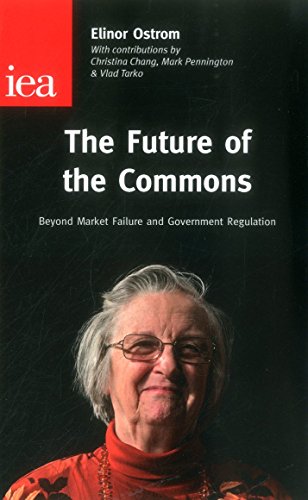
Traditional economic models of how to manage environmental problems relating to renewable natural resources, such as fisheries, have tended to recommend either government regulation or privatisation and the explicit definition of property rights. These traditional models ignore the practical reality of natural resource management. Many communities are able to spontaneously develop their own approaches to managing such common-pool resources. In the words of Mark Pennington: '[Professor Ostrom's] book Governing the Commons is a superb testament to the understanding that can be gained when economists observe in close-up detail how people craft arrangements to solve problems in ways often beyond the imagination of textbook theorists.' In particular, communities are often able to find stable and effective ways to define the boundaries of a common-pool resource, define the rules for its use and effectively enforce those rules. The effective management of a natural resource often requires 'polycentric' systems of governance where various entities have some role in the process. Government may play a role in some circumstances, perhaps by providing information to resource users or by assisting enforcement processes through court systems. Elinor Ostrom's work in this field, for which she won the Nobel Prize in economics in 2009, was grounded in the detailed empirical study of how communities managed common-pool resources in practice. It is essential that we avoid the 'panacea problem'. There is no correct way to manage common-pool resources that will always be effective. Different ways of managing resources will be appropriate in different contexts - for example within different cultures or where there are different physical characteristics of a natural resource. Nevertheless, there are principles that we can draw from the detailed study of the salient features of different cases to help us understand how different common-pool resources might be best managed; which rules systems and systems of organisation have the best chance of success or failure; and so on. Elinor Ostrom's approach has been praised by the left, who often see it as being opposed to free-market privatisation initiatives. In fact, her approach sits firmly within the classical liberal tradition of political economy. She observes communities freely choosing their own mechanisms to manage natural resource problems without government coercion or planning. In developing a viable approach to the management of the commons, it is important, among other things, that a resource can be clearly defined and that the rules governing the use of the resource are adapted to local conditions. This suggests that rules imposed from outside, such as by government agencies, are unlikely to be successful. There are important areas of natural resource management where Elinor Ostrom's ideas should be adopted to avoid environmental catastrophe. Perhaps the most obvious example relevant to the UK is in European Union fisheries policy. Here, there is one centralised model for the management of the resource that is applied right across the European Union, ignoring all the evidence about the failure of that approach.
"synopsis" may belong to another edition of this title.
About the Author
Elinor Ostrom was the Arthur F. Bentley Professor of Political Science and codirector of the Workshop in Political Theory and Policy Analysis, both at Indiana University, and an Economic Sciences Nobel Laureate. She is the author of Governing the Commons: The Evolution of Institutions for Collective Action and Understanding Institutional Diversity. Christina Chang is a lead economic analyst at the Catholic Agency for Overseas Development (CAFOD). Mark Pennington is a professor of public policy and political science at King’s College, University of London. Vlad Torko is a PhD and research fellow at the Mercatus Center at George Mason University, a research center dedicated to bridging the gap between academic research and public policy problems.
"About this title" may belong to another edition of this title.
Search results for Future of the Commons (Institute of Economic Affairs:...

Stock Image
The Future of the Commons (Institute of Economic Affairs: Occasional Papers)
Published by
Institute Of Economic Affairs, 2012
ISBN 10: 0255366531
ISBN 13: 9780255366533
Used
Softcover
Seller: World of Books (was SecondSale), Montgomery, IL, U.S.A.
Seller rating 5 out of 5 stars

Condition: Very Good. Item in very good condition! Textbooks may not include supplemental items i.e. CDs, access codes etc. Seller Inventory # 00106468874
Stock Image
The Future of the Commons: Beyond Market Failure and Government R
Seller: Hawking Books, Edgewood, TX, U.S.A.
Seller rating 4 out of 5 stars

Condition: Good. Good Condition. Five star seller - Buy with confidence! Seller Inventory # X0255366531X3
Stock Image
Future of the Commons
Seller: ThriftBooks-Dallas, Dallas, TX, U.S.A.
Seller rating 5 out of 5 stars
Paperback. Condition: Very Good. No Jacket. May have limited writing in cover pages. Pages are unmarked. ~ ThriftBooks: Read More, Spend Less. Seller Inventory # G0255366531I4N00
Seller Image
Future of the Commons : Beyond Market Failure and Government Regulations
Seller: GreatBookPrices, Columbia, MD, U.S.A.
Seller rating 5 out of 5 stars
Condition: As New. Unread book in perfect condition. Seller Inventory # 19092752
Seller Image
Future of the Commons : Beyond Market Failure and Government Regulations
Seller: GreatBookPrices, Columbia, MD, U.S.A.
Seller rating 5 out of 5 stars
Condition: New. Seller Inventory # 19092752-n
Seller Image
The Future of the Commons
Published by
Institute of Economic Affairs, GB, 2012
ISBN 10: 0255366531
ISBN 13: 9780255366533
New
Paperback
Seller: Rarewaves.com USA, London, LONDO, United Kingdom
Seller rating 5 out of 5 stars
Paperback. Condition: New. Traditional economic models of how to manage environmental problems relating to renewable natural resources, such as fisheries, have tended to recommend either government regulation or privatisation and the explicit definition of property rights. These traditional models ignore the practical reality of natural resource management. Many communities are?able to spontaneously develop their own approaches to managing such common-pool resources. In the words of Mark Pennington: '[Professor Ostrom's] book Governing the Commons is a superb testament to the understanding that can be gained when economists observe in close-up detail how people craft arrangements to solve problems in ways often beyond the imagination of textbook theorists.' In particular, communities are often able to find stable and effective ways to define the boundaries of a common-pool resource, define the rules for its use and effectively enforce those rules. The effective management of a natural resource often requires 'polycentric' systems of governance where various entities have some role in the process.Government may play a role?in some circumstances, perhaps by providing information to resource users or by assisting enforcement processes through court systems. Elinor Ostrom's work in this field, for which she won the ?Nobel Prize in economics in 2009, was grounded in the detailed empirical study of how communities managed common-pool resources in practice. It is essential that we avoid the 'panacea problem'. There is no correct way to manage common-pool resources that will always be effective. Different ways of managing resources will be appropriate in different contexts - for example within different cultures or where there are different physical characteristics of a natural resource. Nevertheless, there are principles that we can draw from?the detailed study of the salient features of different cases to help us understand how different common-pool resources might be best managed; which rules systems and systems of organisation have the best chance of success or failure; and so on. Elinor Ostrom's approach has been praised by the left, who often see it as being opposed to free-market privatisation initiatives.In fact, her approach sits firmly within the classical liberal tradition of political economy. She observes communities freely choosing their own mechanisms to manage natural resource problems without government coercion or planning. In developing a viable approach to the management of?the commons, it is important, among other things, that a resource can be clearly defined and that the rules governing the use of the resource are adapted to local conditions. This suggests that rules imposed from outside, such as by government agencies, are unlikely to be successful. There are important areas of natural resource management where Elinor Ostrom's ideas should be adopted to avoid environmental catastrophe. Perhaps the most obvious example relevant to the UK is in European Uni. Seller Inventory # LU-9780255366533
Buy New
US$ 17.98
Free Shipping
Ships from United Kingdom to U.S.A.
Ships from United Kingdom to U.S.A.
Quantity: 5 available
Seller Image
The Future of the Commons
Published by
Institute of Economic Affairs, GB, 2012
ISBN 10: 0255366531
ISBN 13: 9780255366533
New
Paperback
Seller: Rarewaves USA, OSWEGO, IL, U.S.A.
Seller rating 5 out of 5 stars
Paperback. Condition: New. Traditional economic models of how to manage environmental problems relating to renewable natural resources, such as fisheries, have tended to recommend either government regulation or privatisation and the explicit definition of property rights. These traditional models ignore the practical reality of natural resource management. Many communities are?able to spontaneously develop their own approaches to managing such common-pool resources. In the words of Mark Pennington: '[Professor Ostrom's] book Governing the Commons is a superb testament to the understanding that can be gained when economists observe in close-up detail how people craft arrangements to solve problems in ways often beyond the imagination of textbook theorists.' In particular, communities are often able to find stable and effective ways to define the boundaries of a common-pool resource, define the rules for its use and effectively enforce those rules. The effective management of a natural resource often requires 'polycentric' systems of governance where various entities have some role in the process.Government may play a role?in some circumstances, perhaps by providing information to resource users or by assisting enforcement processes through court systems. Elinor Ostrom's work in this field, for which she won the ?Nobel Prize in economics in 2009, was grounded in the detailed empirical study of how communities managed common-pool resources in practice. It is essential that we avoid the 'panacea problem'. There is no correct way to manage common-pool resources that will always be effective. Different ways of managing resources will be appropriate in different contexts - for example within different cultures or where there are different physical characteristics of a natural resource. Nevertheless, there are principles that we can draw from?the detailed study of the salient features of different cases to help us understand how different common-pool resources might be best managed; which rules systems and systems of organisation have the best chance of success or failure; and so on. Elinor Ostrom's approach has been praised by the left, who often see it as being opposed to free-market privatisation initiatives.In fact, her approach sits firmly within the classical liberal tradition of political economy. She observes communities freely choosing their own mechanisms to manage natural resource problems without government coercion or planning. In developing a viable approach to the management of?the commons, it is important, among other things, that a resource can be clearly defined and that the rules governing the use of the resource are adapted to local conditions. This suggests that rules imposed from outside, such as by government agencies, are unlikely to be successful. There are important areas of natural resource management where Elinor Ostrom's ideas should be adopted to avoid environmental catastrophe. Perhaps the most obvious example relevant to the UK is in European Uni. Seller Inventory # LU-9780255366533
Stock Image
The Future of the Commons (Paperback)
Published by
Institute of Economic Affairs, London, 2012
ISBN 10: 0255366531
ISBN 13: 9780255366533
New
Paperback
Seller: Grand Eagle Retail, Bensenville, IL, U.S.A.
Seller rating 5 out of 5 stars
Paperback. Condition: new. Paperback. Traditional economic models of how to manage environmental problems relating to renewable natural resources, such as fisheries, have tended to recommend either government regulation or privatisation and the explicit definition of property rights. These traditional models ignore the practical reality of natural resource management. Many communities areable to spontaneously develop their own approaches to managing such common-pool resources. In the words of Mark Pennington: '[Professor Ostrom's] book Governing the Commons is a superb testament to the understanding that can be gained when economists observe in close-up detail how people craft arrangements to solve problems in ways often beyond the imagination of textbook theorists.' In particular, communities are often able to find stable and effective ways to define the boundaries of a common-pool resource, define the rules for its use and effectively enforce those rules. The effective management of a natural resource often requires 'polycentric' systems of governance where various entities have some role in the process.Government may play a rolein some circumstances, perhaps by providing information to resource users or by assisting enforcement processes through court systems. Elinor Ostrom's work in this field, for which she won the Nobel Prize in economics in 2009, was grounded in the detailed empirical study of how communities managed common-pool resources in practice. It is essential that we avoid the 'panacea problem'. There is no correct way to manage common-pool resources that will always be effective. Different ways of managing resources will be appropriate in different contexts - for example within different cultures or where there are different physical characteristics of a natural resource. Nevertheless, there are principles that we can draw fromthe detailed study of the salient features of different cases to help us understand how different common-pool resources might be best managed; which rules systems and systems of organisation have the best chance of success or failure; and so on. Elinor Ostrom's approach has been praised by the left, who often see it as being opposed to free-market privatisation initiatives.In fact, her approach sits firmly within the classical liberal tradition of political economy. She observes communities freely choosing their own mechanisms to manage natural resource problems without government coercion or planning. In developing a viable approach to the management ofthe commons, it is important, among other things, that a resource can be clearly defined and that the rules governing the use of the resource are adapted to local conditions. This suggests that rules imposed from outside, such as by government agencies, are unlikely to be successful. There are important areas of natural resource management where Elinor Ostrom's ideas should be adopted to avoid environmental catastrophe. Perhaps the most obvious example relevant to the UK is in European Union fisheries policy. Here, there is one centralised model for the management of the resource that is applied right across the European Union, ignoring all the evidence about the failure of that approach. Shipping may be from multiple locations in the US or from the UK, depending on stock availability. Seller Inventory # 9780255366533
Stock Image
The Future of the Commons
Seller: PBShop.store UK, Fairford, GLOS, United Kingdom
Seller rating 5 out of 5 stars
PAP. Condition: New. New Book. Shipped from UK. Established seller since 2000. Seller Inventory # CX-9780255366533
Buy New
US$ 16.83
US$ 4.40 shipping
Ships from United Kingdom to U.S.A.
Ships from United Kingdom to U.S.A.
Quantity: 15 available
Stock Image
The Future of the Commons: Beyond Market Failure and Government Regulations (Institute of Economic Affairs: Occasional Papers)
Seller: WorldofBooks, Goring-By-Sea, WS, United Kingdom
Seller rating 5 out of 5 stars
Paperback. Condition: Very Good. The book has been read, but is in excellent condition. Pages are intact and not marred by notes or highlighting. The spine remains undamaged. Seller Inventory # GOR004555089
Buy Used
US$ 15.37
US$ 7.49 shipping
Ships from United Kingdom to U.S.A.
Ships from United Kingdom to U.S.A.
Quantity: 4 available