
Items related to The Beauty of Numbers in Nature: Mathematical Patterns...
The Beauty of Numbers in Nature: Mathematical Patterns and Principles from the Natural World (Mit Press) - Softcover
Synopsis
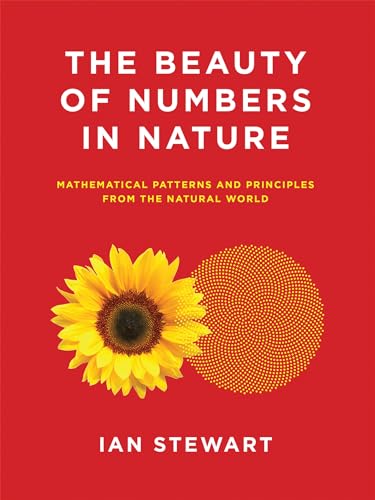
From a zebra's stripes to a spider's web: an engaging examination of patterns in nature and the mathematics that underlie them.
From a zebra's stripes to a spider's web, from sand dunes to snowflakes, nature is full of patterns underlaid by mathematical principles. In The Beauty of Numbers in Nature, Ian Stewart shows how life forms from the principles of mathematics. Each chapter in The Beauty of Numbers in Nature explores a different kind of patterning system and its mathematical underpinnings. In doing do, the book also uncovers some universal patterns—both in nature and made by humans—from the basic geometry of ancient Greece to the complexities of fractals.
Stewart draws on a wide range of sources to examine the mathematics of patterns: the Pythagoreans' obsession with numbers as the philosophical basis of the universe; a great mathematician who wondered about how a violin makes music; a clerk in a patent office who realized that space and time can get mixed together; a maverick mathematician who questioned why nature spurns such regular geometric shapes as spheres and cylinders in favor of jagged lightning bolts, asymmetrically branching trees, and the uneven terrain of mountainsides.
The book begins with a simple and often-asked question about the shape and individual uniqueness of snowflakes. How can such a strange mixture of regularity and irregularity exist in a tiny bit of frozen water? By the end of the book, readers will have learned that mathematical patterns can come in many guises, some of which don't resemble patterns at all.
"synopsis" may belong to another edition of this title.
About the Author
Ian Stewart is Emeritus Professor of Mathematics at the University of Warwick, U.K., and a Fellow of the Royal Society. He is the author or coauthor of more than 100 books, including Does God Play Dice? and (with Terry Pratchett and Jack Cohen) The Science of Discworld series. His app Incredible Numbers won a Digital Book World Award, and he was cowinner of the 2015 Lewis Thomas Prize for Writing about Science.
"About this title" may belong to another edition of this title.
Search results for The Beauty of Numbers in Nature: Mathematical Patterns...

Stock Image
The Beauty of Numbers in Nature: Mathematical Patterns and Principles from the Natural World (Mit Press)
Published by
The MIT Press (edition Illustrated), 2017
ISBN 10: 0262534282
ISBN 13: 9780262534284
Used
Paperback
Seller: BooksRun, Philadelphia, PA, U.S.A.
Seller rating 5 out of 5 stars

Paperback. Condition: Very Good. Illustrated. It's a well-cared-for item that has seen limited use. The item may show minor signs of wear. All the text is legible, with all pages included. It may have slight markings and/or highlighting. Seller Inventory # 0262534282-11-1
Seller Image
The Beauty of Numbers in Nature: Mathematical Patterns and Principles from the Natural World (Mit Press)
Seller: Vive Liber Books, Somers, CT, U.S.A.
Seller rating 5 out of 5 stars
Condition: good. Good condition USED book. Pages are clean with normal wear. May have limited markings inside from previous owner. Seller Inventory # VLM.19TK
Seller Image
The Beauty of Numbers in Nature: Mathematical Patterns and Principles from the Natural World (Mit Press)
Seller: 2nd Life Books, Burlington, NJ, U.S.A.
Seller rating 5 out of 5 stars
Condition: very_good. Used book in very good condition. May have some minor wear. May NOT include discs, or access code or other supplemental material. Ships directly from Amazon and is eligible for Prime or super saver FREE shipping. We ship Monday-Saturday and respond to inquiries within 24 hours. Seller Inventory # BXM.F2TD
Seller Image
The Beauty of Numbers in Nature: Mathematical Patterns and Principles from the Natural World (Mit Press)
Seller: Greenworld Books, Arlington, TX, U.S.A.
Seller rating 5 out of 5 stars
Condition: very_good. Fast Free Shipping â" Very Good condition book with a firm cover and clean pages. Shows normal use and some light wear or limited notes markings. A solid, nice copy to enjoy. Seller Inventory # GWV.0262534282.VG
Stock Image
The Beauty of Numbers in Nature: Mathematical Patterns and Principles from the Natural World
Seller: World of Books (was SecondSale), Montgomery, IL, U.S.A.
Seller rating 5 out of 5 stars
Paperback. Condition: Good. From a zebra's stripes to a spider's web: an engaging examination of patterns in nature and the mathematics that underlie them.From a zebra's stripes to a spider's web, from sand dunes to snowflakes, nature is full of patterns underlaid by mathematical principles. In The Beauty of Numbers in Nature, Ian Stewart shows how life forms from the principles of mathematics. Each chapter in The Beauty of Numbers in Nature explores a different kind of patterning system and its mathematical underpinnings. In doing do, the book also uncovers some universal patterns--both in nature and made by humans--from the basic geometry of ancient Greece to the complexities of fractals.Stewart draws on a wide range of sources to examine the mathematics of patterns: the Pythagoreans' obsession with numbers as the philosophical basis of the universe; a great mathematician who wondered about how a violin makes music; a clerk in a patent office who realized that space and time can get mixed together; a maverick mathematician who questioned why nature spurns such regular geometric shapes as spheres and cylinders in favor of jagged lightning bolts, asymmetrically branching trees, and the uneven terrain of mountainsides.The book begins with a simple and often-asked question about the shape and individual uniqueness of snowflakes. How can such a strange mixture of regularity and irregularity exist in a tiny bit of frozen water? By the end of the book, readers will have learned that mathematical patterns can come in many guises, some of which don't resemble patterns at all. Seller Inventory # CIN0262534282G
Seller Image
The Beauty of Numbers in Nature: Mathematical Patterns and Principles from the Natural World (Mit Press)
Seller: Goodwill of Ventura and Santa Barbara Counties, Oxnard, CA, U.S.A.
Seller rating 5 out of 5 stars
Condition: very_good. Very good: The book does not look new and has been read but is in excellent condition. There is no obvious damage to the cover the dust jacket if applicable is included for hard covers. There are no missing or damaged pages, no creases or tears, and no underlining highlighting of text or writing in the margins. It may have very minimal identifying marks on the inside cover as well as very minimal wear and tear. See the seller's listing for full details and a description of any imperfections. Seller Inventory # VSBV.0262534282.VG
Stock Image
The Beauty of Numbers in Nature: Mathematical Patterns and Principles from the Natural World
Seller: World of Books Inc, Montgomery, IL, U.S.A.
Seller rating 4 out of 5 stars

Paperback. Condition: Good. From a zebra's stripes to a spider's web: an engaging examination of patterns in nature and the mathematics that underlie them.From a zebra's stripes to a spider's web, from sand dunes to snowflakes, nature is full of patterns underlaid by mathematical principles. In The Beauty of Numbers in Nature, Ian Stewart shows how life forms from the principles of mathematics. Each chapter in The Beauty of Numbers in Nature explores a different kind of patterning system and its mathematical underpinnings. In doing do, the book also uncovers some universal patterns--both in nature and made by humans--from the basic geometry of ancient Greece to the complexities of fractals.Stewart draws on a wide range of sources to examine the mathematics of patterns: the Pythagoreans' obsession with numbers as the philosophical basis of the universe; a great mathematician who wondered about how a violin makes music; a clerk in a patent office who realized that space and time can get mixed together; a maverick mathematician who questioned why nature spurns such regular geometric shapes as spheres and cylinders in favor of jagged lightning bolts, asymmetrically branching trees, and the uneven terrain of mountainsides.The book begins with a simple and often-asked question about the shape and individual uniqueness of snowflakes. How can such a strange mixture of regularity and irregularity exist in a tiny bit of frozen water? By the end of the book, readers will have learned that mathematical patterns can come in many guises, some of which don't resemble patterns at all. Seller Inventory # CIN0262534282G
Stock Image
The Beauty of Numbers in Nature: Mathematical Patterns and Principles from the Natural World (The MIT Press)
Seller: HPB Inc., Dallas, TX, U.S.A.
Seller rating 5 out of 5 stars
Paperback. Condition: Very Good. Connecting readers with great books since 1972! Used books may not include companion materials, and may have some shelf wear or limited writing. We ship orders daily and Customer Service is our top priority! Seller Inventory # S_484955013
Stock Image
The Beauty of Numbers in Nature. Mathematical Patterns and Principles from the Natural World
Published by
MIT Press, Cambridge, Mass., 2017
ISBN 10: 0262534282
ISBN 13: 9780262534284
Used
Paperback
Seller: Research Ink, Takoma Park, MD, U.S.A.
Seller rating 5 out of 5 stars
Paperback. Condition: As new. 224 pp. book. Seller Inventory # 35056
Stock Image
The Beauty of Numbers in Nature Mathematical Patterns & Principles from the Natural World
Seller: Harry Alter, Sylva, NC, U.S.A.
Seller rating 5 out of 5 stars
paperback, Condition: Very Good, MIT Press, c.2017, trade paperbk., 223pp., color illusts., NF $. Seller Inventory # 106241