Items related to The Story of Han Xiangzi: The Alchemical Adventures...
The Story of Han Xiangzi: The Alchemical Adventures of a Daoist Immortal (China Program Books) - Hardcover
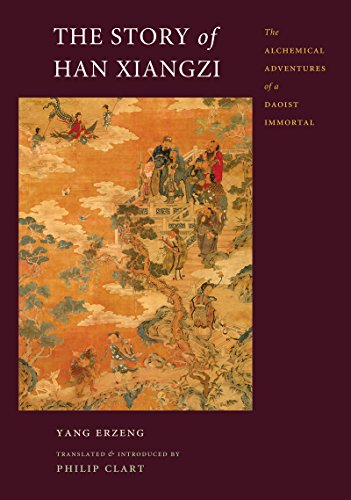

In this seventeenth-century Chinese novel, Han Xiangzi, best known as one of the Eight Immortals, seeks and achieves immortality and then devotes himself to converting his materialistic, politically ambitious Confucian uncle - Han Yu, a real historical figure - to Daoism. Written in lively vernacular prose interspersed with poems and songs, the novel takes its readers across China, to the heavens, and into the underworld. Readers listen to debates among Confucians, Daoists, and Buddhists and witness trials of faith and the performance of magical feats. In the mode of the famous religious novel Journey to the West (also known in English as Monkey), The Story of Han Xiangzi uses colorful characters, twists of plot, witty dialogue, and action suitable for a superhero comic book to convey its religious message-that worldly life is ephemeral and that true contentment can be found only through Daoist cultivation.
This is the first translation into any Western language of Han Xiangzi quanzhuan (literally, The Complete Story of Han Xiangzi). On one level, the novel is a delightful adventure; on another, it is serious theology. Although The Story of Han Xiangzi's irreverent attitude toward the Confucian establishment prevented its acceptance by literary critics in imperial China, it has remained popular among Chinese readers for four centuries.
Philip Clart's Introduction outlines the Han Xiangzi story cycle, presents Yang Erzeng in his social context, assesses the literary merits and religious significance of the text, and explores the theory and practice of inner alchemy. This unabridged translation will appeal to students of Chinese literature and to general readers who enjoy international fiction, as well as to readers with an interest in Daoism.
This is the first translation into any Western language of Han Xiangzi quanzhuan (literally, The Complete Story of Han Xiangzi). On one level, the novel is a delightful adventure; on another, it is serious theology. Although The Story of Han Xiangzi's irreverent attitude toward the Confucian establishment prevented its acceptance by literary critics in imperial China, it has remained popular among Chinese readers for four centuries.
Philip Clart's Introduction outlines the Han Xiangzi story cycle, presents Yang Erzeng in his social context, assesses the literary merits and religious significance of the text, and explores the theory and practice of inner alchemy. This unabridged translation will appeal to students of Chinese literature and to general readers who enjoy international fiction, as well as to readers with an interest in Daoism.
"synopsis" may belong to another edition of this title.
Book Description:
From the Publisher:
New in paperback, this 17th-centuy novel uses colorful charachters, twists of plot, witty dialogue, and action suitable to a superhero comic book to explain Daoism.
"This first English translation of this important work of Chinese popular religious fiction must be considered a major contribution to the field. . . . Recommended." -Choice
"About this title" may belong to another edition of this title.
- PublisherUniversity of Washington Press
- Publication date2007
- ISBN 10 0295986905
- ISBN 13 9780295986906
- BindingHardcover
- Number of pages508
- Rating
Buy New
Learn more about this copy
US$ 101.09
Shipping:
US$ 4.00
Within U.S.A.
Top Search Results from the AbeBooks Marketplace
Stock Image
The Story of Han Xiangzi: The Alchemical Adventures of a Daoist Immortal (China Program Books)
Published by
University of Washington Press
(2007)
ISBN 10: 0295986905
ISBN 13: 9780295986906
New
Hardcover
Quantity: 1
Seller:
Rating

Book Description Hardcover. Condition: new. New. Fast Shipping and good customer service. Seller Inventory # Holz_New_0295986905
Buy New
US$ 101.09
Convert currency
Stock Image
The Story of Han Xiangzi: The Alchemical Adventures of a Daoist Immortal (China Program Books)
Published by
University of Washington Press
(2007)
ISBN 10: 0295986905
ISBN 13: 9780295986906
New
Hardcover
Quantity: 1
Seller:
Rating
Book Description Hardcover. Condition: new. New Copy. Customer Service Guaranteed. Seller Inventory # think0295986905
Buy New
US$ 102.00
Convert currency
Stock Image
The Story of Han Xiangzi: The Alchemical Adventures of a Daoist Immortal (China Program Books)
Published by
University of Washington Press
(2007)
ISBN 10: 0295986905
ISBN 13: 9780295986906
New
Hardcover
Quantity: 1
Seller:
Rating
Book Description Hardcover. Condition: new. New. Seller Inventory # Wizard0295986905
Buy New
US$ 102.83
Convert currency
Stock Image
The Story of Han Xiangzi: The Alchemical Adventures of a Daoist Immortal (China Program Book)
Published by
University of Washington Press
(2007)
ISBN 10: 0295986905
ISBN 13: 9780295986906
New
Hardcover
Quantity: 2
Seller:
Rating
Book Description Hardcover. Condition: New. Brand New!. Seller Inventory # VIB0295986905
Buy New
US$ 167.23
Convert currency